
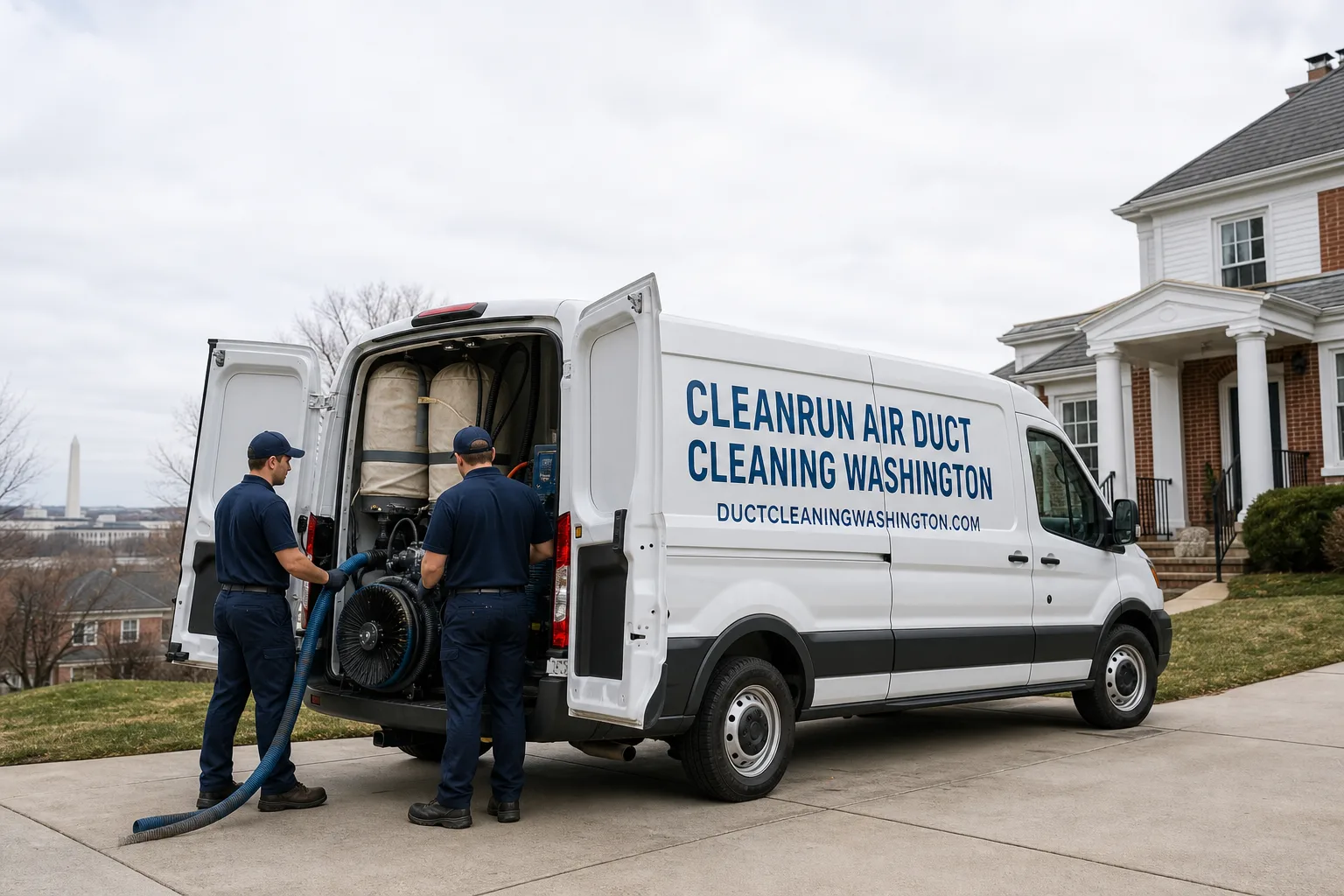
Whole-system duct and dryer vent check with before-and-after photos - you see exactly what came out of your vents
That "$99 whole-house special" is a bait ad - the real number appears once they are in your hallway, or the "clean" is a shop-vac at the register. We photograph the inside of your ducts before and after instead.
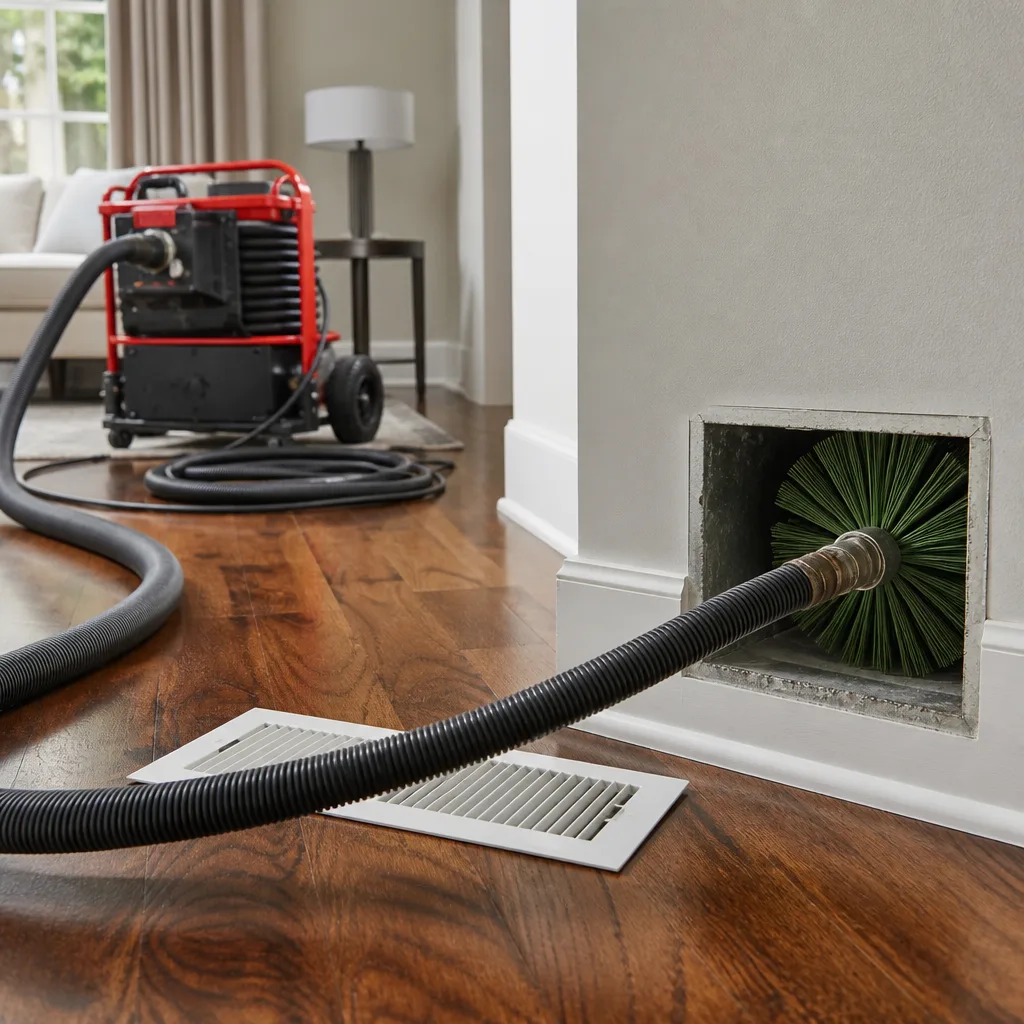
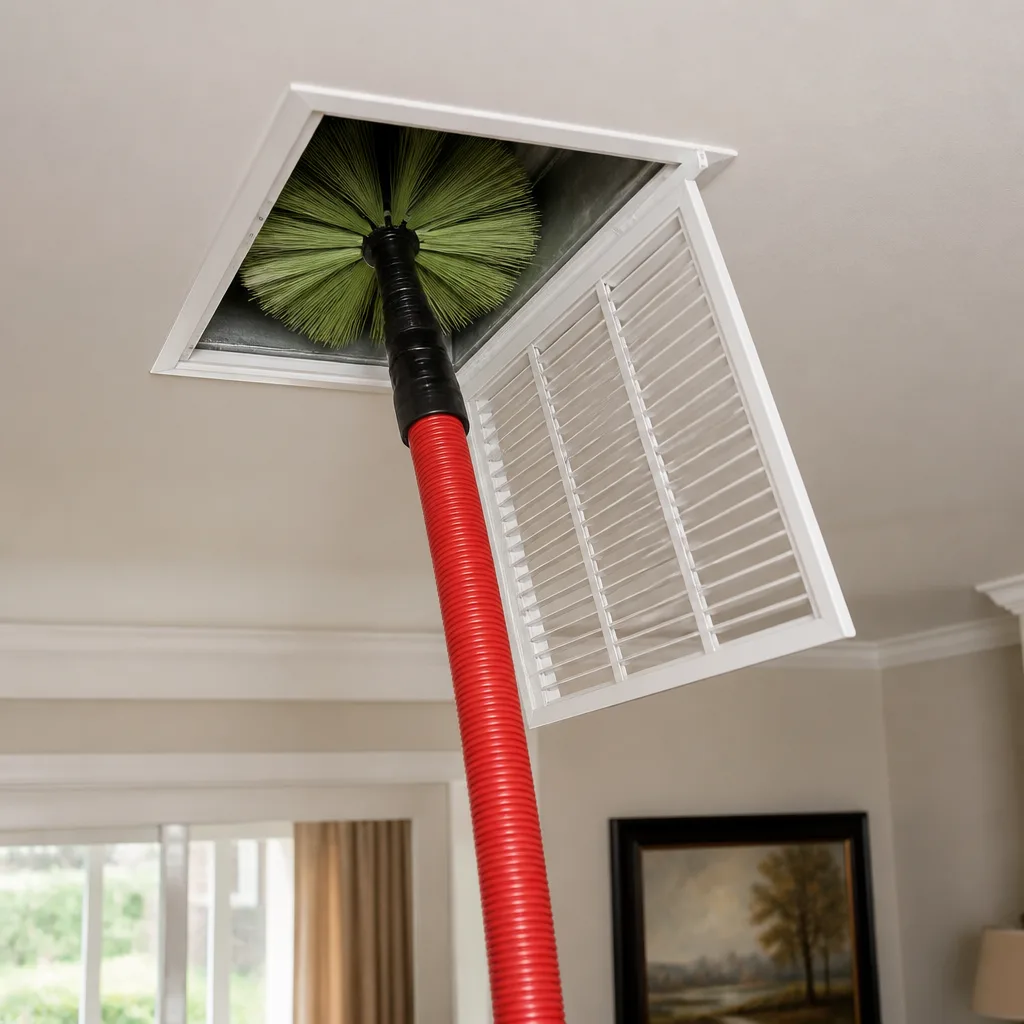
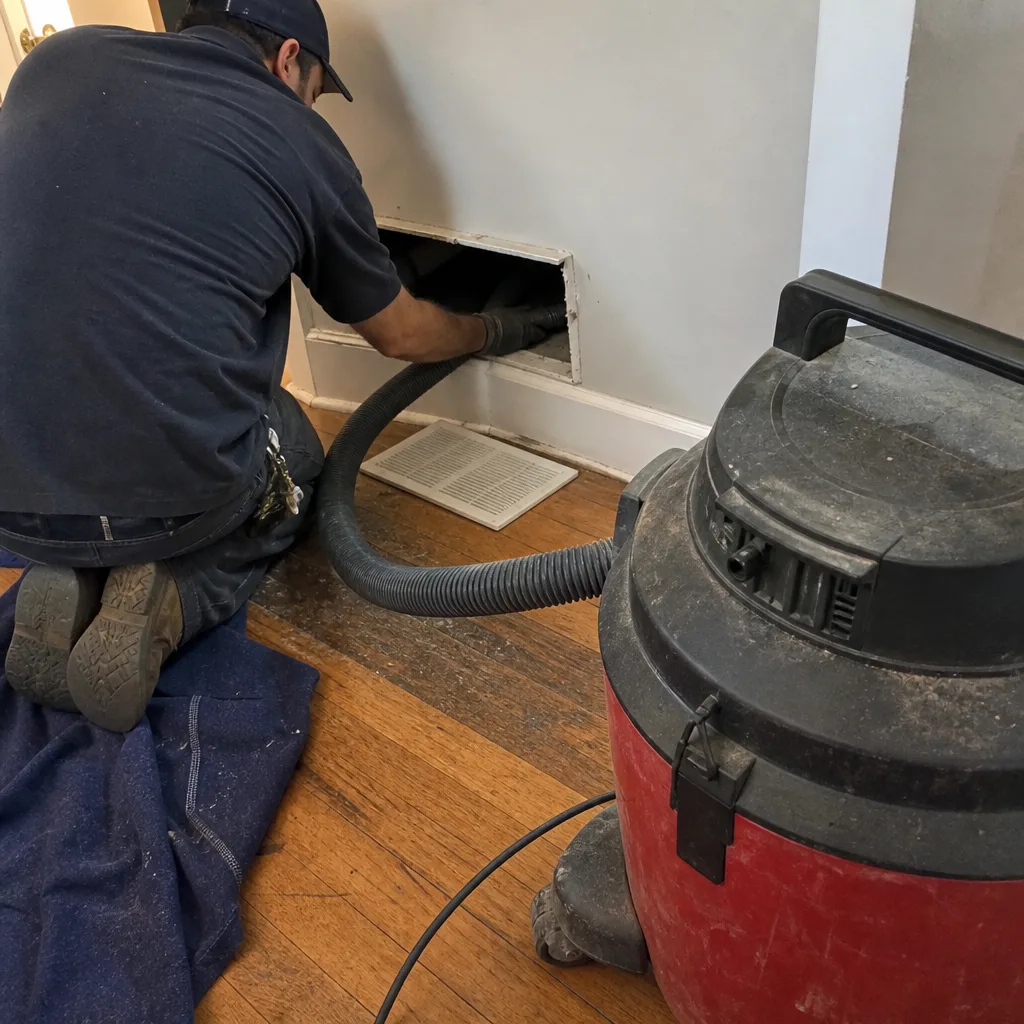 Before
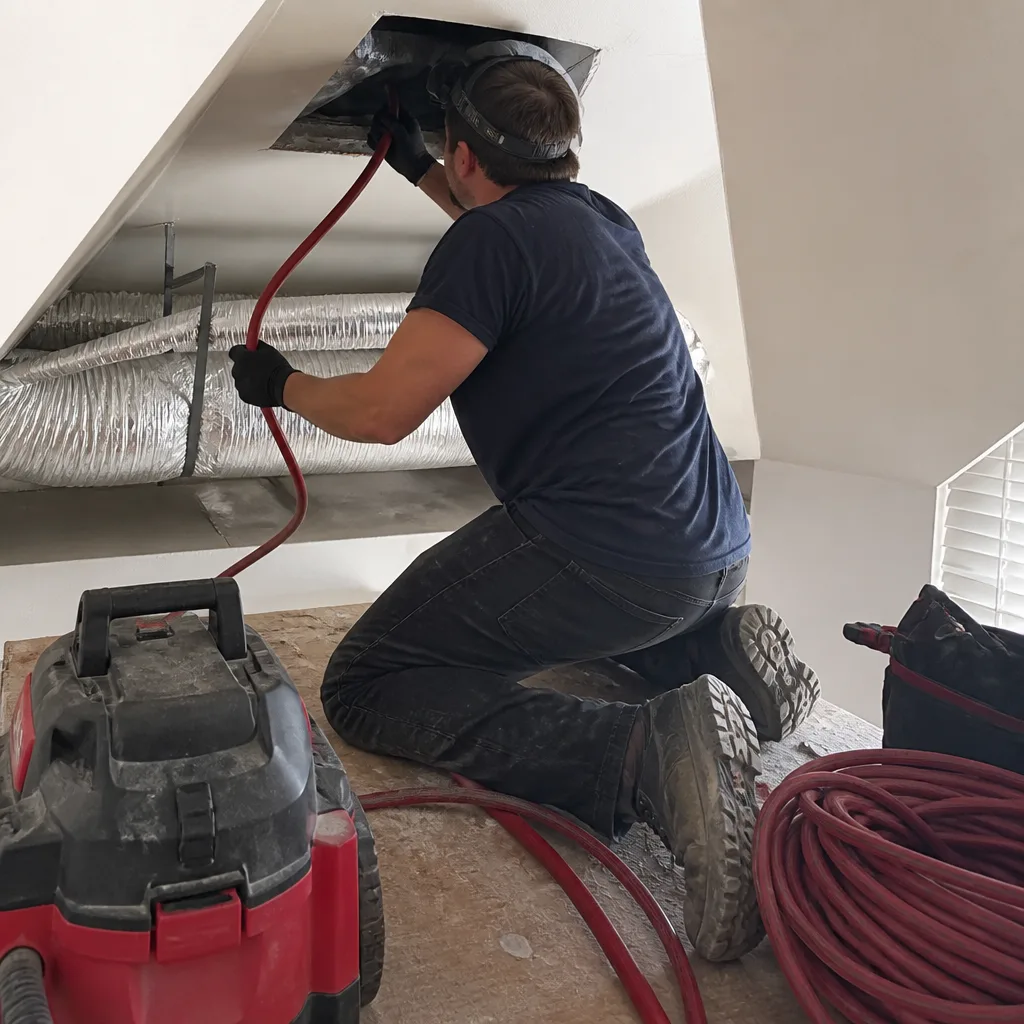 After
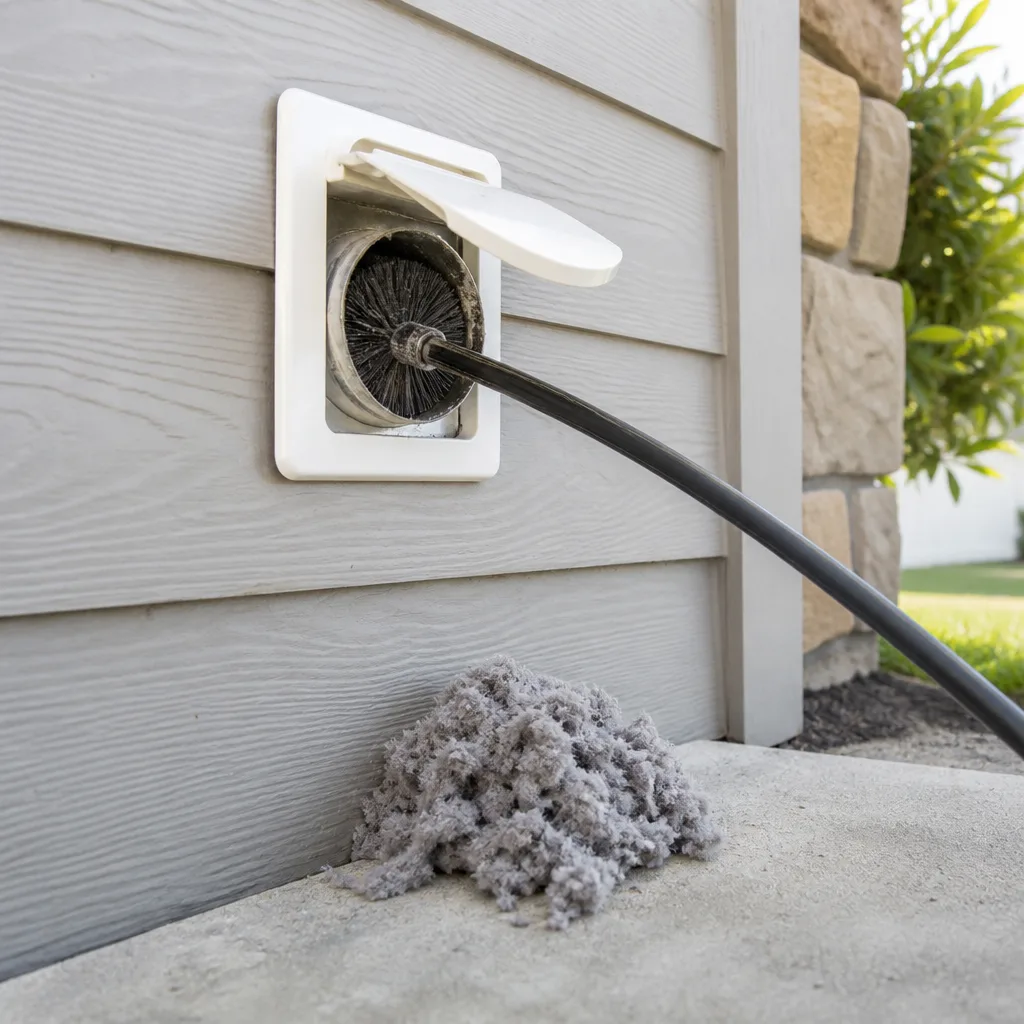
After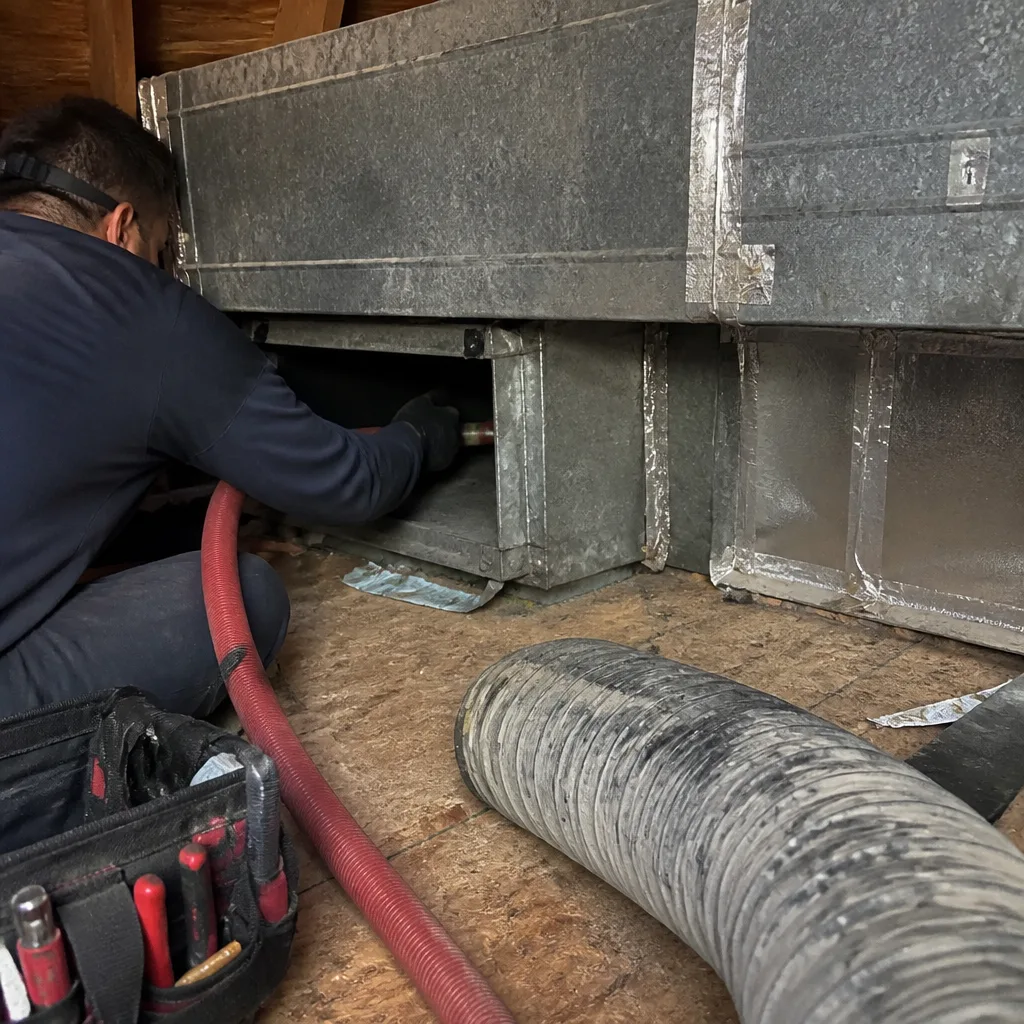 Before
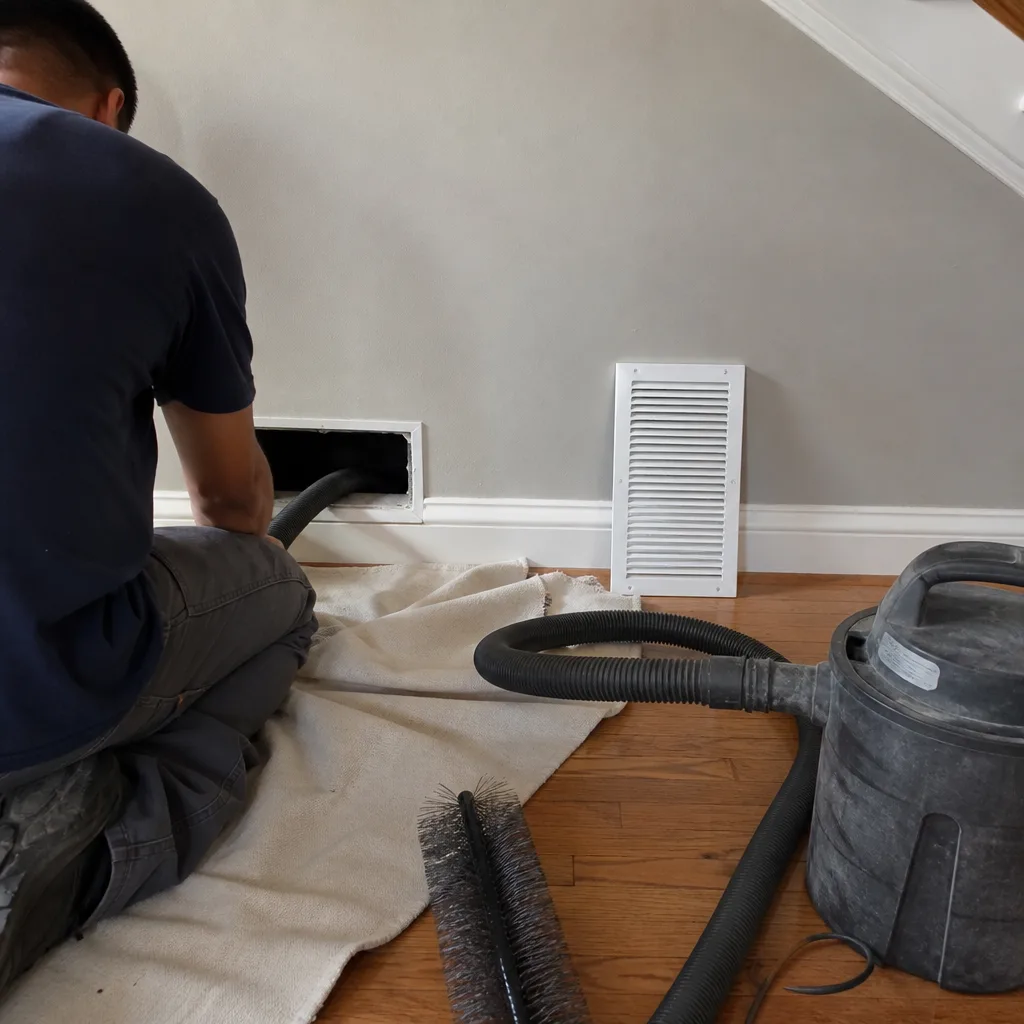 After
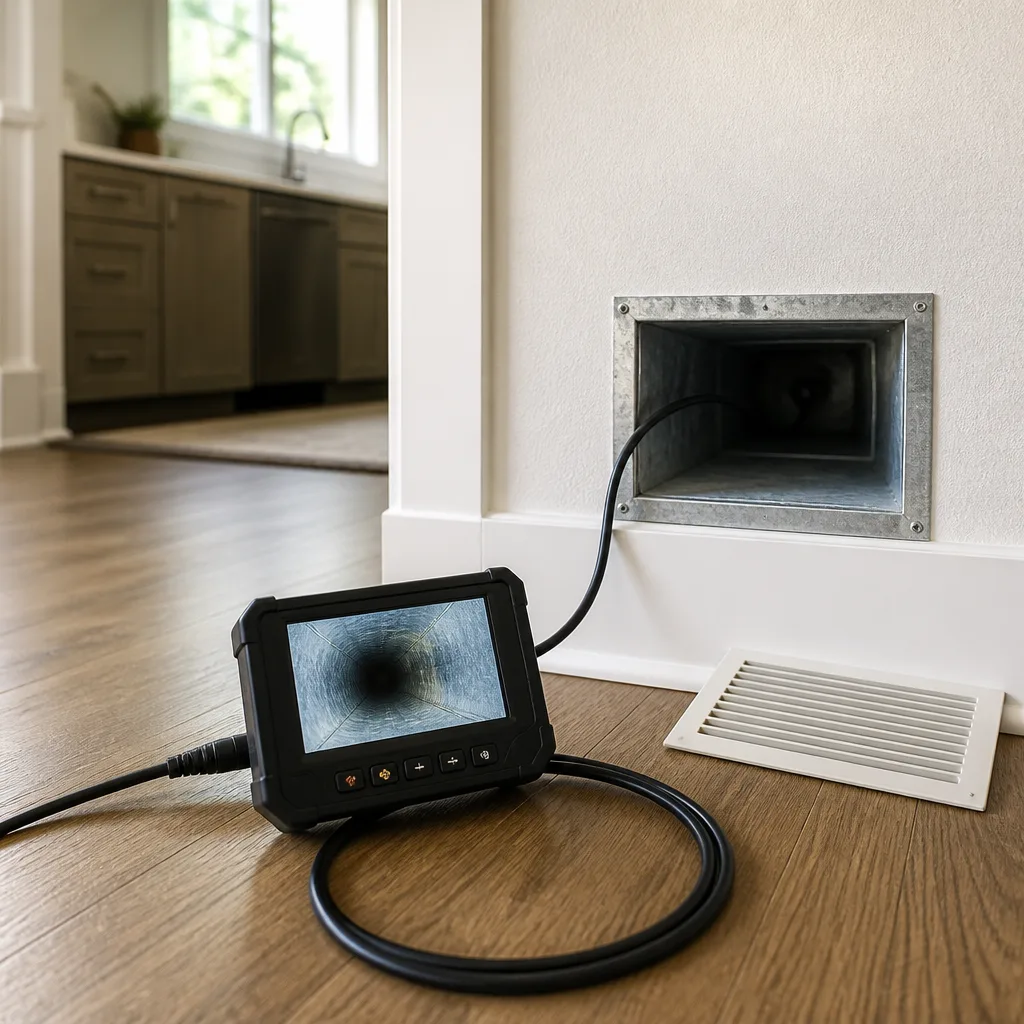
After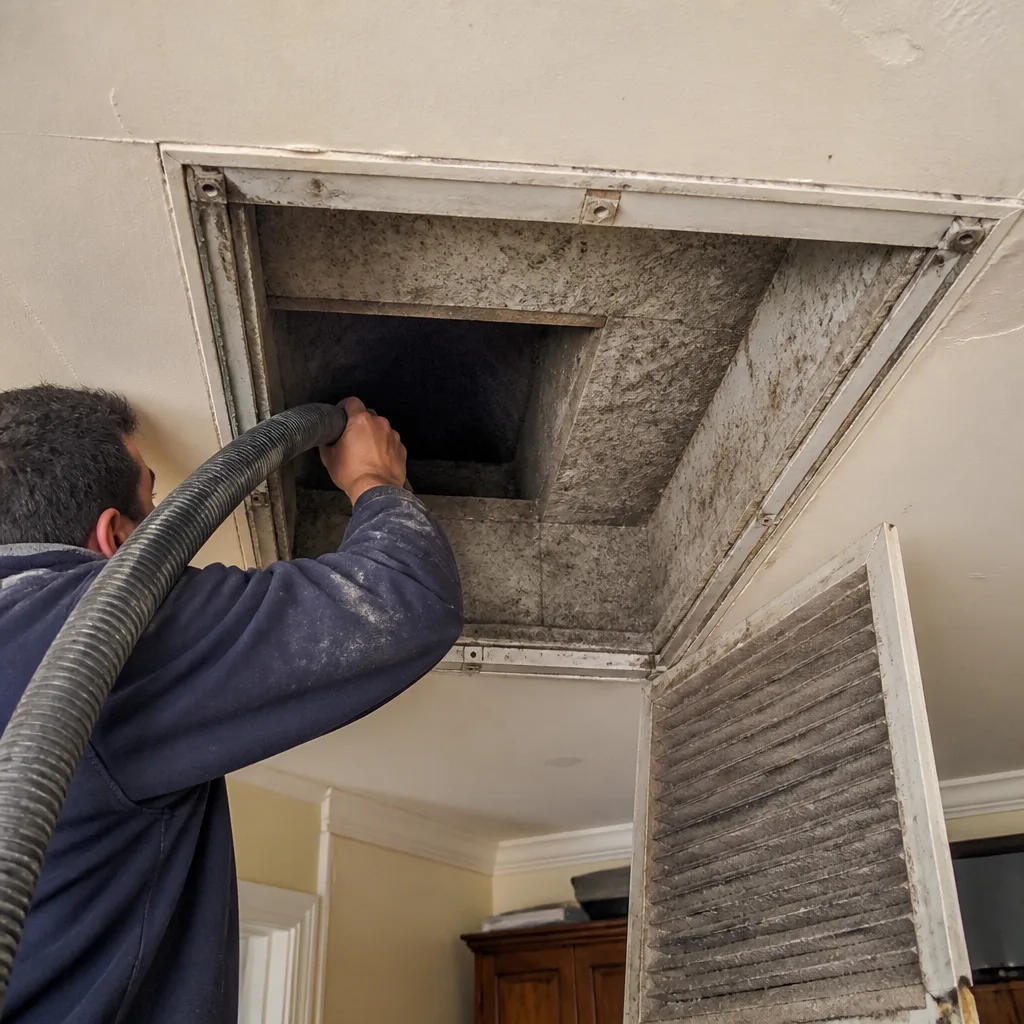 Before
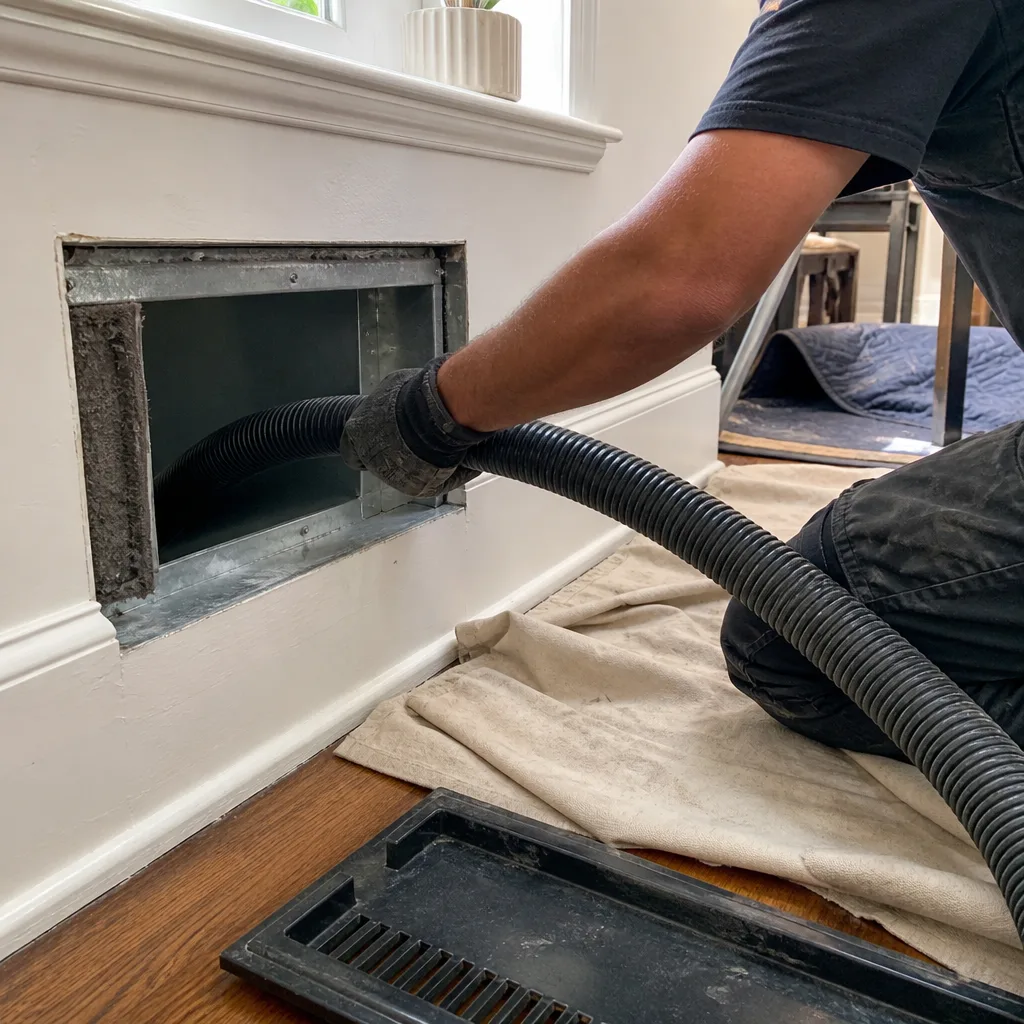 After
AfterHow Much Does Air Duct Cleaning Cost in Washington, DC?
Air Duct Cleaning Near Me in Washington, DC costs between $299 and $699 for a typical single-family home, with most CleanRun jobs landing in the $350-$550 range depending on home size, system age, and what the camera actually finds inside the ductwork. That price includes a written scope before any work starts, professional-grade negative-pressure extraction using Rotobrush and Nikro equipment, and a documented photo record of every duct run delivered to you when the crew leaves.
Air Duct Cleaning Cost Breakdown (2026)
Before quoting any number, CleanRun puts a written price in front of you. That is Haven Standard Clause 1 – no exceptions, no “call for a quote.” Here is what that written price typically reflects for Washington, DC homes in 2026:
| Service Item | Typical DC Market Price Range | Notes |
|---|---|---|
| Whole-home duct cleaning, up to 10 vents | $299 – $399 | Condos, rowhouses, and smaller Capitol Hill homes |
| Whole-home duct cleaning, 11-20 vents | $399 – $499 | Typical 3-4 bed single-family in Petworth, Brookland, or Takoma |
| Whole-home duct cleaning, 21+ vents | $499 – $699 | Larger homes in Cleveland Park, American University Park, or Wesley Heights |
| Dryer vent cleaning (add-on) | $89 – $139 | Required separately; clogged dryer vents are a fire hazard |
| Air handler / HVAC cabinet cleaning | $79 – $150 | Coil, blower wheel, and drain pan; common add-on for older systems |
| Sanitizing treatment (EPA-registered fogger) | $99 – $175 | Recommended after mold indicators or pest evidence found on camera |
| Duct sealing (per linear foot, sheet metal) | $4 – $9/ft | Common in DC rowhouses where original ductwork dates to 1960s-1980s |
| Emergency / same-day service | $75 – $125 premium | Added to base price; all calls answered live, 24/7 |
What Those Numbers Actually Mean on a Real Job
A three-bedroom rowhouse in Bloomingdale with 14 supply and return vents, a single-zone HVAC, and ductwork last cleaned before the 2020 sale typically runs $429-$479 with CleanRun. That is the written price before a panel comes off. If the camera at the first elbow shows 3-4 inches of debris accumulation – common in DC homes where the previous owner ran no filter for several years – the scope does not change and neither does the price. The written price covers what was agreed. If the camera finds something genuinely outside the original scope, like a collapsed flex duct run or active mold growth, that gets photographed, shown to you, and quoted separately before any additional work starts.
The $79 coupon floating around DC is not a price. It is a door-opener for upselling once a technician is inside your home. A shop vac attached to one register and passed off as “duct cleaning” does not meet NADCA standards and does not photograph well – which is exactly why companies offering that price do not take before-and-after photos. Every CleanRun job uses Rotobrush agitation heads and Nikro negative-pressure extraction units, and the photos go to you whether the ductwork looks bad or reasonably clean.
What Affects Air Duct Cleaning Pricing in Washington, DC
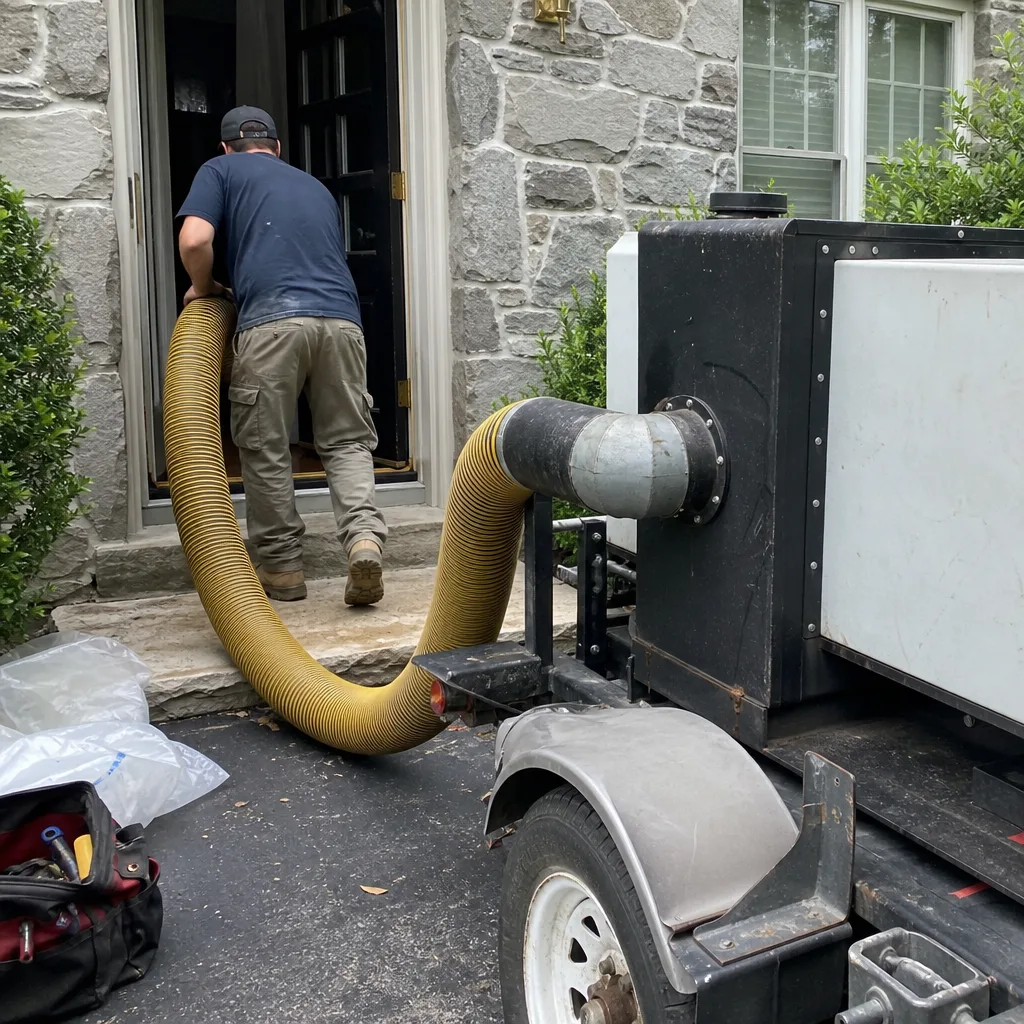
Washington’s housing stock is genuinely unusual. The mix of pre-war rowhouses in Shaw and Columbia Heights, post-war ramblers in Shepherd Park, 1980s condo conversions near Dupont Circle, and newer construction in Navy Yard means no two duct systems age the same way. These are the factors that move the price on a real DC job:
- Number of vents and duct runs: Pricing scales with the number of supply and return registers, not just square footage. A 2,400-square-foot rowhouse in Petworth can have fewer total duct runs than a 1,800-square-foot split-level in Chevy Chase DC because of how the original contractors routed the sheet metal. CleanRun counts every register on the written quote before work starts.
- System age and duct material: Pre-1980 DC homes often have rigid sheet metal ductwork with original joints that have lost their mastic seal over 40-50 years. Cleaning is straightforward; sealing those joints after cleaning adds cost but meaningfully reduces the conditioned air you are currently losing into unconditioned attic or basement space. Homes built between 1985 and 2005 frequently have flex duct that can collapse, kink, or develop tears at connection points – those findings get documented on camera and quoted before repair.
- Debris load and last service date: In Capitol Hill Victorian rowhouses that changed hands two or three times since 2010, it is common to find accumulated debris dating back 15 or more years. Heavy debris loads require more agitation passes and longer extraction time. The camera shows what is actually there; the price reflects the real scope.
- HVAC configuration – single zone vs. multi-zone: Many newer DC condo buildings and post-2005 additions use zoned HVAC with separate air handlers. Each air handler is a separate system with its own plenum (the central distribution box the ductwork branches from) and its own set of runs. Multi-zone homes are quoted per system.
- Accessibility of the plenum and main trunk: In some Anacostia-area bungalows and Brightwood bungalows with low crawl-space clearances, accessing the main trunk line requires additional setup time. Finished basement drop ceilings enclosing ductwork are similarly common in DC rowhouses and affect labor time.
- DC’s climate and humidity profile: Washington averages about 40 inches of rain per year and carries high summer humidity – consistently above 70% relative humidity from June through September. That combination accelerates microbial growth inside duct systems that have any air leakage or condensation issue at the air handler. Homes in lower-lying neighborhoods near the Anacostia River, like Riverside and Fairlawn, show higher rates of biofilm and mold indicators on camera than comparable homes on higher ground in Forest Hills.
BeforeAfterIs Air Duct Cleaning Worth It in Washington, DC?
The honest answer depends on what the camera finds, not on a pre-sale pitch. CleanRun has been photographing the inside of DC-area duct systems since 2013, across more than 52,000 homes served. Here is what those photos actually show:
Duct cleaning earns its cost when the camera reveals significant debris accumulation at the first elbow (within 18-24 inches of each register), visible biofilm or mold indicators on the supply side of the plenum, pest evidence (rodent droppings, insect casings) in the main trunk, or heavy construction-dust load from a recent renovation. In those cases, a functional HVAC system is recirculating contaminated air across every room in the house on every heating or cooling cycle, which is why Full System Cleaning matters. The cleaning removes what is documented on camera before the job and confirms its removal on camera after.
Duct cleaning adds less value when the system is less than 5 years old, has been cleaned within the past 3-4 years, and the camera shows light surface dust consistent with normal filter bypass. In that case, we say so. The written scope reflects what was found, not what maximizes the invoice.
Washington homeowners who bought in the 2017-2023 price surge and inherited older duct systems from the previous owner are the most common CleanRun customer in DC. They paid a premium for the house and they want documented evidence of what they have – not a verbal reassurance. The before-and-after photo record is part of that.
How the CleanRun Process Works – and Why It Prices the Way It Does
Step 1: Written Price Before Anything Opens
The technician counts every register, photographs the air handler cabinet, notes duct material and system age, and produces a written price. That price is agreed before any panel comes off. This is Haven Standard Clause 1. It is the whole reason CleanRun does not run $79 specials: a real written price for a real scope cannot be $79.
Step 2: Camera-First Documentation
Before extraction begins, the Rotobrush inspection camera goes into every accessible duct run from the register end. What it finds is photographed and logged. Customers in DC who have gotten “duct cleaning” from a coupon company before are often surprised to see what was left behind on those previous visits – shop-vac suction does not reach the main trunk line, and it does not document what it skips.
Step 3: Negative-Pressure Extraction
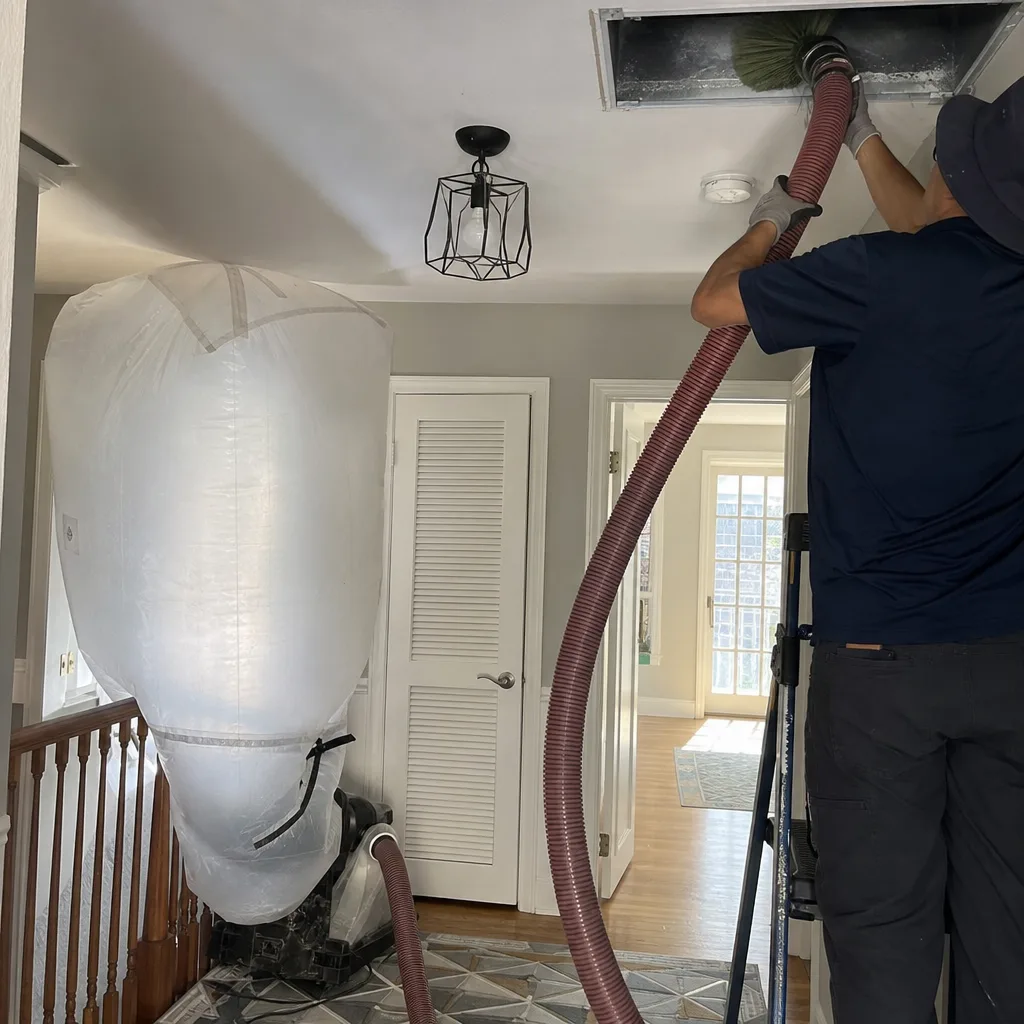
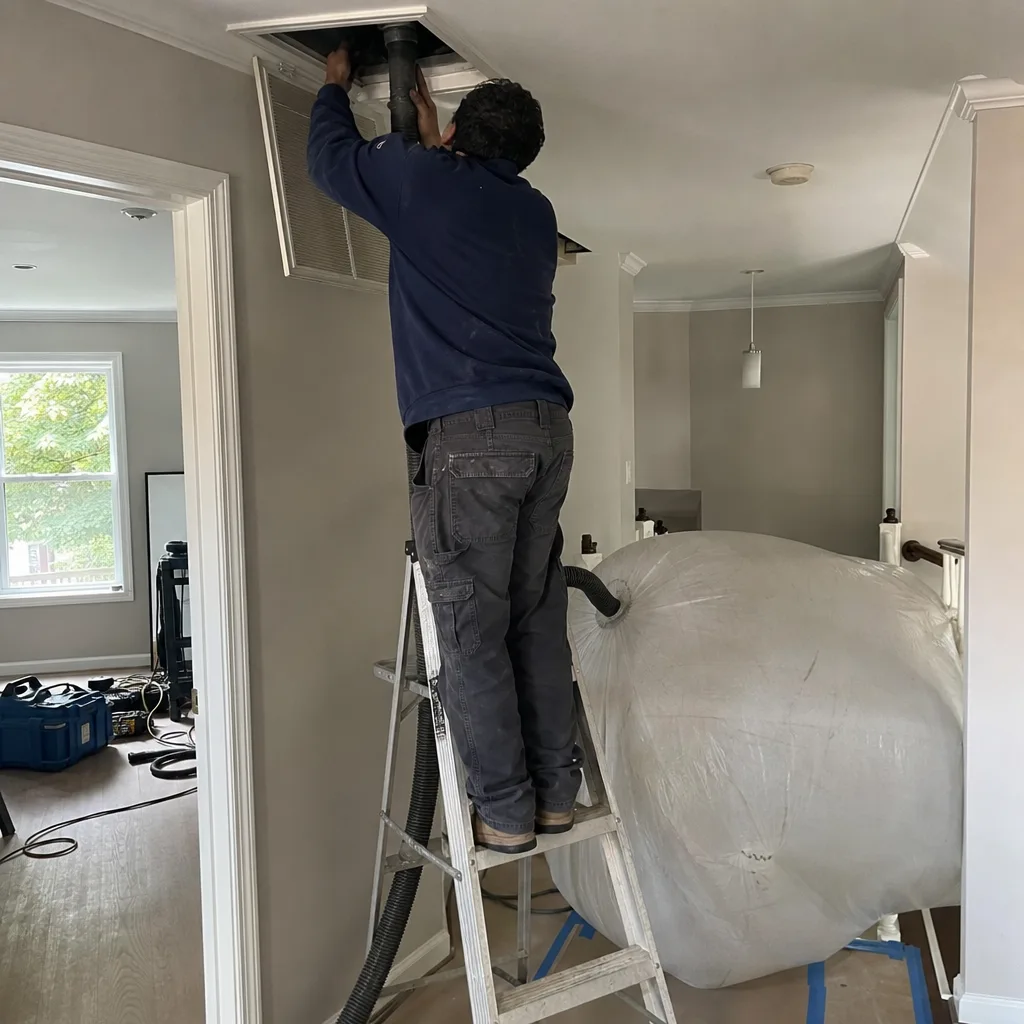
Nikro extraction units create negative pressure (a sealed vacuum environment) inside the duct system while Rotobrush agitation heads dislodge debris from duct walls. Debris moves toward the collection point under negative pressure rather than being blown around. This is the method NADCA standards describe for proper Air Duct Cleaning, and it is measurably different from running a shop vac at one register while the system is open at others.
Step 4: Documented Photo Record Delivered
When the job is done, you get the photos – before and after, every run. That record is yours. It is part of the standard deliverable on every CleanRun job, not an add-on. If you are a Washington homeowner preparing for a home sale, that documented photo record is a useful disclosure document. If you are a buyer who just closed on a rowhouse in LeDroit Park, it is the baseline against which you measure the next cleaning 3-4 years from now.
The 365-Day Done Right Promise
Every CleanRun job in Washington, DC is backed by the 365-Day Done Right Promise: if the work is not right, we make it right. That is a written commitment on every job – not a policy subject to manager discretion. If a duct run we cleaned shows contamination on re-inspection within 365 days and that contamination traces to the original job scope, the remedy is covered. No argument, no “contact our customer service team.” Tomas Reyes built CleanRun on that standard and it applies to every Washington job the same way it applied to the first one in 2013.
How to Save on Air Duct Cleaning in Washington, DC
The most expensive duct cleaning you can buy in Washington is the $79 special that leaves debris in the trunk line, skips documentation, and requires a full professional cleaning six months later when you figure out what happened. That said, there are legitimate ways to get real work done at a sensible price:
- Bundle dryer vent cleaning with duct cleaning: Scheduling both on the same visit saves mobilization cost. A dryer vent cleaning that would be $99-$139 as a standalone call drops into the combined job at a lower effective rate. Clogged dryer vents are a documented fire risk, not a soft upsell – if your duct cleaning crew is already in the house, adding the dryer vent is the logical time to do it.
- Get a written second opinion: If you have a competitor quote in hand, CleanRun will put a written number next to it for free. Not a phone estimate – a written number. This is available at no cost. Call (240) 363-3380 and tell the person who answers that you have an existing quote you want compared.
- Know your vent count before you call: Walk your home and count every supply and return register. When you call, giving that number produces a more accurate written quote on the first contact and reduces scope changes at the job.
- Time the job before or after HVAC season peaks: The DC market’s peak demand for duct cleaning runs March-May (pre-cooling-season) and September-October (pre-heating-season). Scheduling in January-February or July-August often produces faster availability, though CleanRun’s written price does not vary by season.
- Do not pay for sanitizing if the camera doesn’t find a reason: Sanitizing with an EPA-registered fogger is worthwhile when the camera finds biofilm, mold indicators, or pest evidence. If the camera shows clean ductwork with normal debris, you do not need it and a technician following the Haven Standard will not push it.
- Maintain a quality filter between cleanings: A MERV 8 or MERV 11 filter, replaced every 60-90 days in Washington’s high-humidity, high-pollen environment, meaningfully reduces debris accumulation between professional cleanings. It also protects the air handler coil from dust loading that narrows airflow and raises energy costs.
What to Watch Out For in the DC Duct Cleaning Market
Washington, DC has an active market for what the industry calls “bait-and-switch duct cleaning.” The pattern is consistent: a $79 or $99 coupon, a van with a residential shop vac, a technician who opens a few registers and runs the vac for 20 minutes, followed by a verbal claim that the ductwork is “severely contaminated” and needs an upgraded package at $400-$900 with no written documentation of what was actually found.
The tell is simple: ask for the before photos. If a company is doing the work they describe, they have photographs of what the camera found before extraction began. If there are no before photos, there was no camera, and there was no meaningful cleaning. CleanRun has taken before-and-after photos on every job since 2013. The photos belong to the customer. If a company cannot produce them, the work they claim to have done is not verifiable.
DC residents in Columbia Heights, Brightwood, and Trinidad have reported this pattern through the DC Office of Consumer Protection. The written price before work starts – Haven Standard Clause 1 – eliminates the mechanism by which that bait-and-switch works. If the price is in writing before any panel opens, there is no leverage for a mid-job upsell.
FAQs – Air Duct Cleaning Cost in Washington, DC
How much does air duct cleaning cost in Washington, DC?
Air duct cleaning in Washington, DC costs between $299 and $699 for most single-family homes, with the majority of CleanRun jobs in the city falling between $350 and $550. Smaller condos and Capitol Hill rowhouses with 8-10 vents are typically at the lower end; larger homes in Cleveland Park, Spring Valley, or Shepherd Park with 20+ registers land closer to $599-$699. The written price is delivered before any work starts – that number does not change once work begins unless the camera finds something genuinely outside the agreed scope, and even then it is requoted in writing before anything additional happens. Call (240) 363-3380 for your written estimate – all calls are answered live, 24/7.
Why do some DC companies advertise $79 duct cleaning?
$79 is a door-opener, not a price for real work. At that price point, the “cleaning” typically means one technician with a residential shop vac making contact at a few registers – no agitation heads, no negative-pressure extraction of the main trunk, no camera documentation. The NADCA standard for duct cleaning requires the entire system to be put under negative pressure and cleaned from the inside using equipment sized for commercial extraction. A Rotobrush agitation system plus a Nikro extraction unit costs more to operate than $79 covers for a single home. What the $79 model actually does is position the technician inside your home to upsell a “contamination treatment” or “sanitizing package” at prices that often exceed what a legitimate whole-home cleaning would have cost. Get the before-and-after photos in writing before you agree to anything. If the company does not take them, that is your answer.
How often should Washington, DC homeowners clean their air ducts?
Every 3-5 years is the standard interval for most Washington homes. That said, DC’s humidity profile – 70%+ relative humidity for roughly four months of the year – accelerates biofilm formation inside duct systems compared to drier climates, so homes with any history of HVAC moisture issues (condensation on supply registers, musty smell on first cooling day of the year) warrant inspection closer to the 3-year mark. Homes with pets, a recent renovation, or a previous owner who ran no filtration should be inspected regardless of the calendar. The camera tells you what the timeline actually looks like – not the calendar.
Does air duct cleaning really improve air quality or is it marketing?
The EPA is careful to say duct cleaning has not been proven to prevent health problems, and CleanRun will not tell you otherwise. What the photos consistently show in DC homes – particularly those with older duct systems, past renovation work, or documented moisture history – is debris accumulation and biological growth that the HVAC system recirculates on every cycle. Removing documented contamination from the system removes a documented source. Whether that translates to measurable health improvement for a specific person is a medical question, not an HVAC question. What the before-and-after photos show is a cleaner system. That is what the price pays for.
Can I clean my own air ducts to save money?
You can remove and vacuum the register covers yourself, and that is worth doing a couple of times a year. What a homeowner with a shop vac cannot do is create negative pressure in the main trunk line, agitate debris off duct walls 15 feet into a run, or photograph and document the interior of every branch. Consumer vacuums also lack the filtration to capture fine particulate during extraction – they redistribute it rather than remove it. DIY register cleaning is a reasonable maintenance step between professional services; it is not a substitute for Commercial Duct Cleaning standards that involve the plenum, main trunk, and all branch runs. If you’re in Washington and want a straight answer on what your system actually needs, call (240) 363-3380 – the estimate is free and the written price will tell you exactly what you are getting.
Does CleanRun serve all Washington, DC neighborhoods?
CleanRun serves all Washington, DC neighborhoods – from Capitol Hill and Anacostia on the east side to Georgetown, Foxhall, and American University Park on the west. Petworth, Brookland, Takoma, Columbia Heights, Brightwood, LeDroit Park, Shaw, Navy Yard, Riverside, Forest Hills, and Shepherd Park are all regular service areas. DC rowhouse ductwork – particularly the original sheet-metal systems in pre-war homes – is something the CleanRun crew knows well after more than a decade of service in the city. You can read more about what CleanRun does across its full service area on the home page.
Key Takeaways
- Air duct cleaning in Washington, DC costs $299-$699 for most homes; the typical CleanRun job lands between $350-$550.
- The written price is delivered before any work starts – Haven Standard Clause 1. No exceptions, no on-the-spot upsells.
- Before-and-after photos of every duct run are included as a standard deliverable on every job, not an add-on.
- $79 coupons are not prices for real work. Ask any company for the before photos – if they do not have them, the work is not verifiable.
- DC’s humidity profile and aging rowhouse duct systems make 3-5 year cleaning intervals appropriate for most homes in the city.
- Every CleanRun job in Washington is backed by the 365-Day Done Right Promise – in writing, not in marketing language.
- Free second opinions on competitor estimates are available at no cost – call (240) 363-3380 with the written quote in hand.
- Equipment used includes Rotobrush, Nikro, Abatement Technologies, Honeywell, Aprilaire, and Guardsman – trade-recognized names you can look up independently.
Get Your Written Price for Washington, DC Air Duct Cleaning
If you are a Washington homeowner ready to know what your duct system actually looks like and what cleaning it actually costs – in writing, before anyone touches a panel – call CleanRun at (240) 363-3380. Every call is answered live. The written estimate is free. Tomas Reyes and the CleanRun crew have been photographing the inside of DC duct systems since 2013, and the price you see before the job starts is the price you pay when it ends.
Bring a competitor’s written estimate and CleanRun will put its own number next to it, also in writing, at no charge. That is what Haven Standard pricing looks like in practice.
Written by Tomas Reyes, Owner at CleanRun Air Duct Cleaning Washington, serving Washington, DC since 2013.
Pricing reflects the Washington, DC market as of 2026. CleanRun Air Duct Cleaning Washington offers free estimates – call (240) 363-3380.
What Our Customers Say
"Flat price agreed up front, no per-vent add-ons at the end. That was the whole reason I did not call the coupon company."
- Suzanne B."My allergies genuinely improved. They also told me the ducts did not need sealing, which I had been quoted for elsewhere."
- Petra K."The before and after photographs of each run are the reason I used them. You cannot argue with what came out of the return."
- Marguerite O.