
Whole-system duct and dryer vent check with before-and-after photos - you see exactly what came out of your vents
That "$99 whole-house special" is a bait ad - the real number appears once they are in your hallway, or the "clean" is a shop-vac at the register. We photograph the inside of your ducts before and after instead.
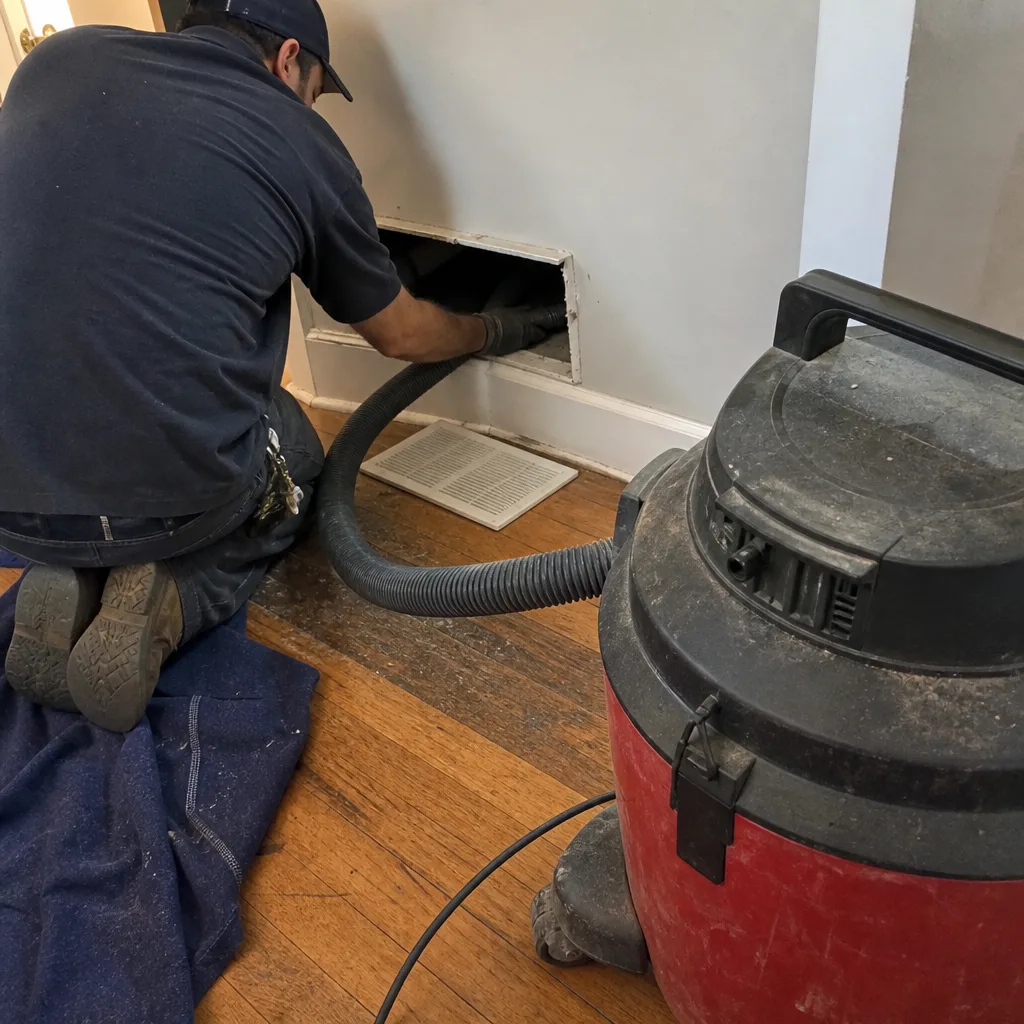 Before
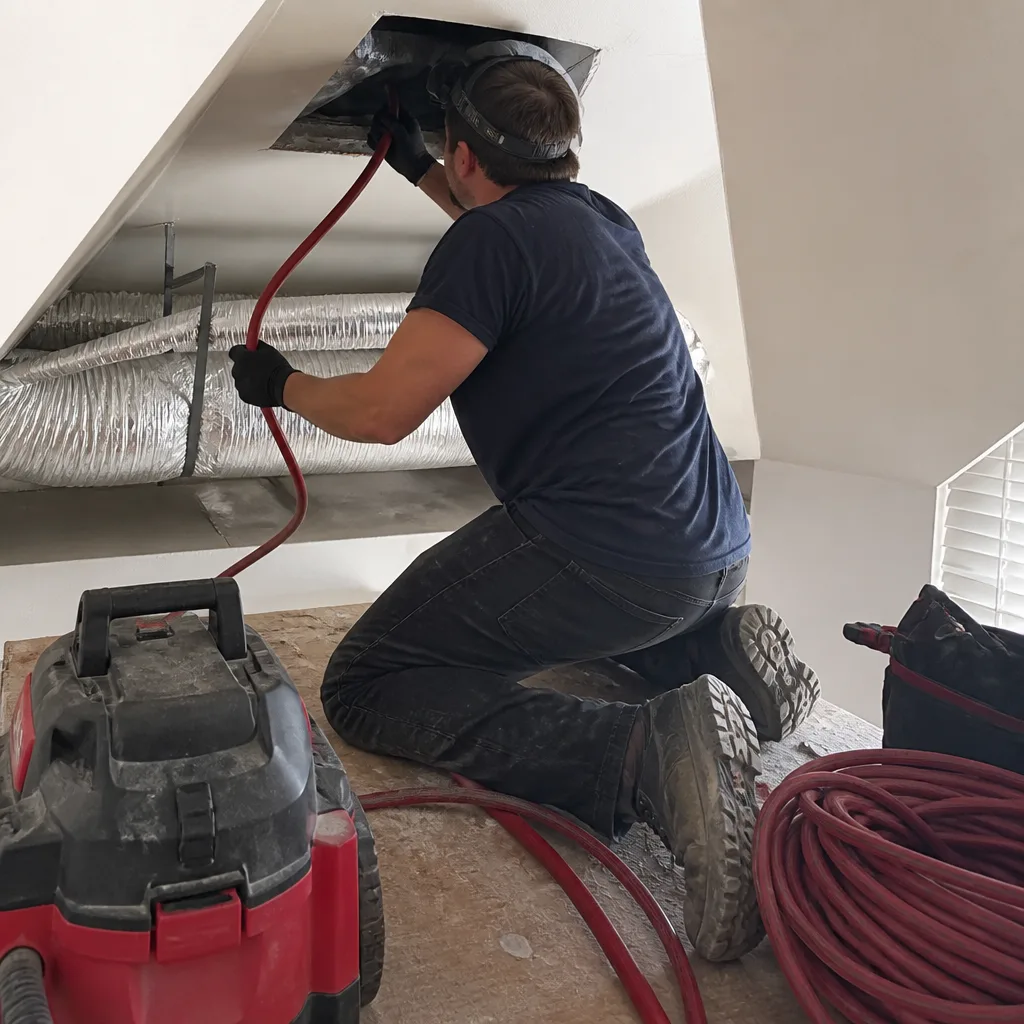 After
After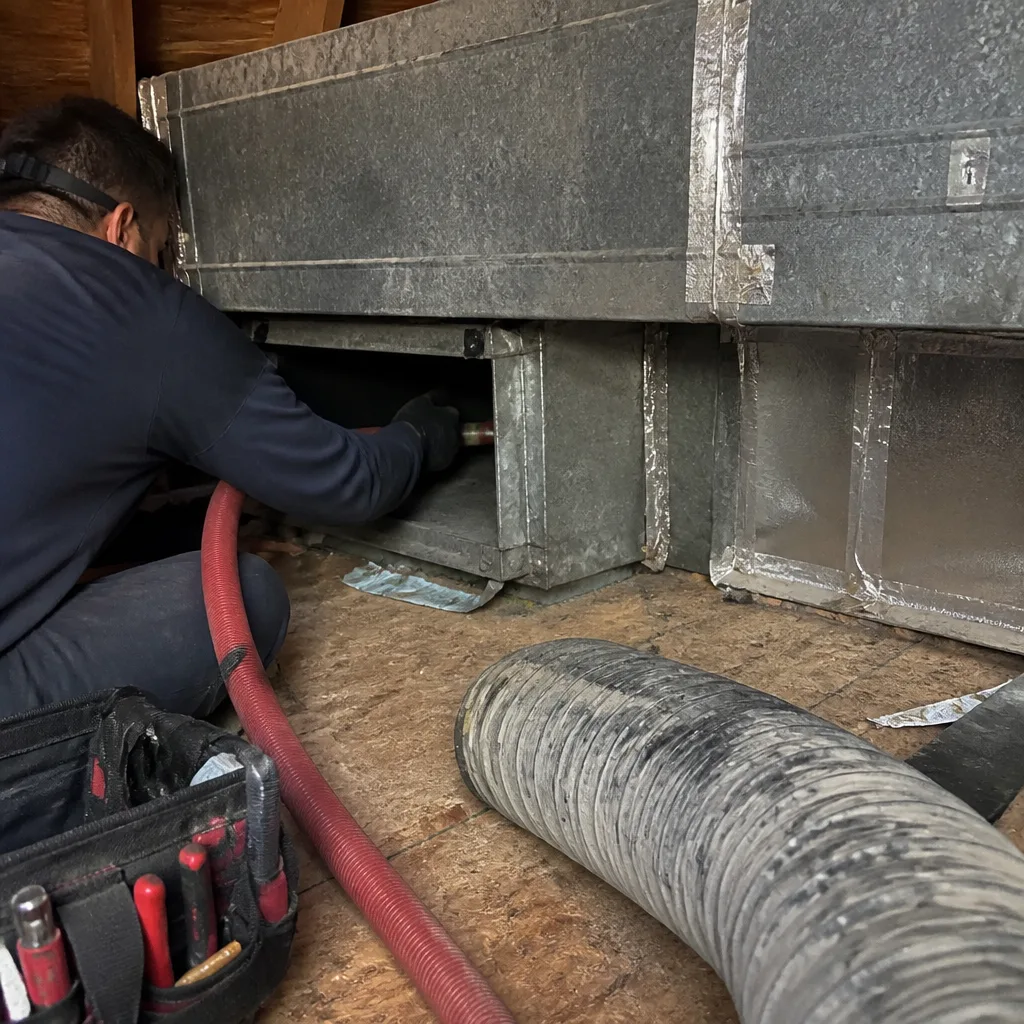 Before
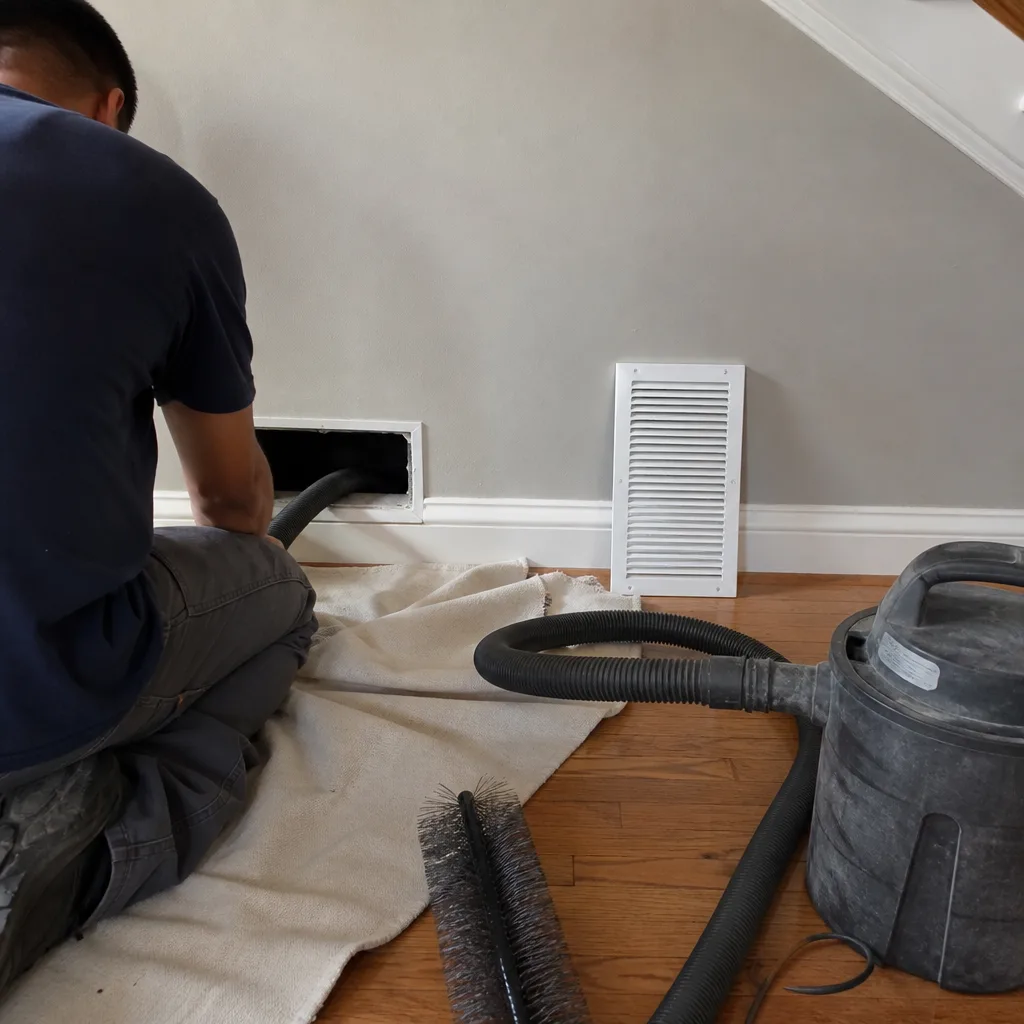 After
After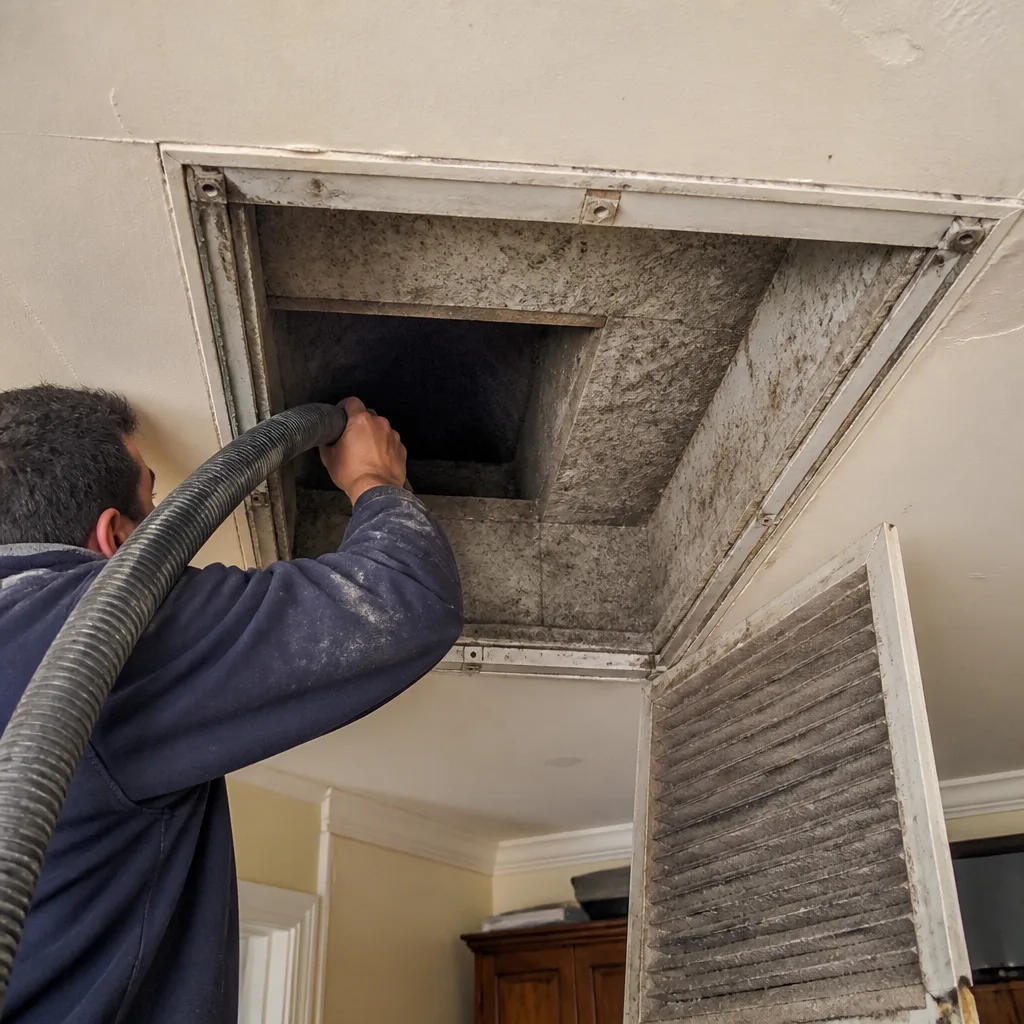 Before
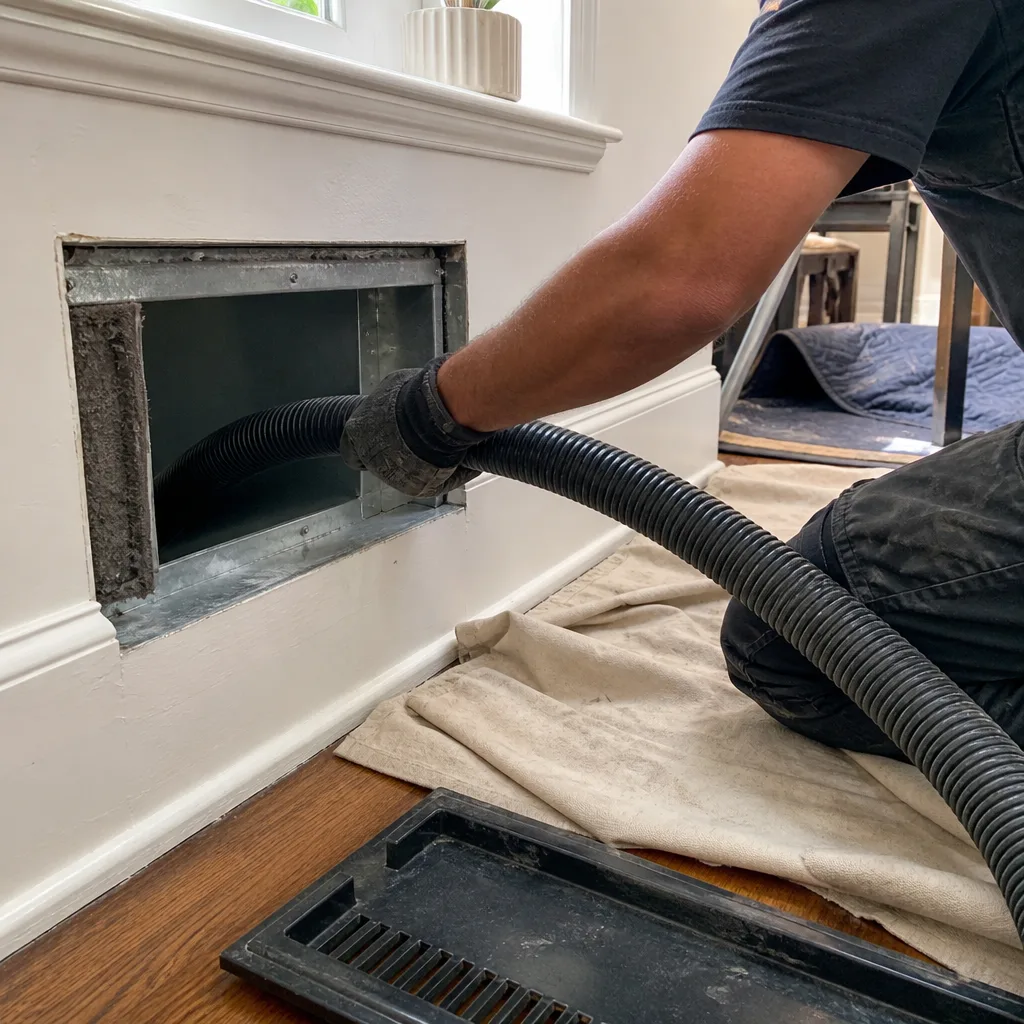 After
AfterVent Cleaning in Washington, DC
Our Dryer Vent Cleaning services in Washington, DC typically run between $109 and $229 for a standard single-story residential vent run, completed in a single visit with a written price before any work begins. CleanRun Air Duct Cleaning Washington photographs every vent run before and after the job – so you’re not taking anyone’s word for what was found inside. If you’d like a number before scheduling, call (240) 363-3380 and a live person will pick up.
Vent cleaning is the focused service within our broader Dryer Vent Cleaning in Washington offering – the part that deals specifically with clearing the duct path that carries hot, humid air from your dryer drum to the exterior of your home. It sounds simple. It usually isn’t. Washington homes, particularly the rowhouses in Capitol Hill, Columbia Heights, and Petworth, were often built or retrofitted with vent paths that take three or four 90-degree turns before reaching the exterior wall. Each bend collects lint. After a few years, that lint compresses into a partial or full obstruction that forces your dryer to work harder, run longer, and eventually fail sooner than it should.
Tomas Reyes built CleanRun’s vent cleaning process around one principle: show the customer what the camera found before quoting any work. That standard has held since 2013, across more than 52,000 homes served throughout the Washington metro area.
When You Need Vent Cleaning
- Your dryer takes two or more cycles to dry a normal load. This is the clearest field indicator of restricted airflow. The drum is heating, but the moisture has nowhere to go efficiently, so the clothes come out damp or still warm and damp after a full cycle.
- The exterior vent hood isn’t opening fully during operation. On most Washington rowhouses, the exterior flap or louvered cap is accessible from the alley or a side wall. If the flap barely lifts when the dryer is running, the airflow behind it is already compromised – lint build-up is the most common cause.
- Your laundry room feels unusually warm or humid mid-cycle. When the exhaust path is blocked, heat and moisture back-pressure into the room instead of exhausting outside. In Georgetown and Logan Circle homes with interior laundry closets, this shows up as visible condensation on nearby walls or a persistent musty smell.
- It’s been more than 12 months since the vent was last cleaned. The US Fire Administration links clogged dryer vents to roughly 2,900 residential fires per year nationally. In Washington, DC, DCRA (Department of Consumer and Regulatory Affairs) code does not specify a mandatory cleaning interval, but most dryer manufacturers void their warranty if documented annual cleaning isn’t maintained. Twelve months is the standard.
- You’ve recently moved into a home built before 2005 with an accordion-style flexible duct. Older Washington properties – and there are many, particularly in Anacostia, Brookland, and Brightwood – were frequently vented using corrugated plastic or foil flex duct. That ribbed interior surface catches lint at every ridge. It also violates current IRC (International Residential Code) Section M1502, which requires smooth-wall rigid or semi-rigid metal duct. If the camera shows flex duct, replacement is part of the solution, not optional.
- The dryer’s exterior vent cap is capped with a bird screen or mesh. Several Washington-area municipalities and homeowners associations use mesh-covered exterior caps, particularly in historic districts where aesthetics are regulated. Mesh caps trap lint from the outside in, creating a blockage that no amount of interior brushing will fully solve without also addressing the cap itself.
Our Vent Cleaning Process
-
Written Price Delivered Before Any Work Starts
Before a panel comes off or a brush enters the duct, you receive a written price. This is Haven Standard Clause 1 – it’s non-negotiable and applies to every job, every time. The price accounts for your vent path length, number of elbows, duct material, and exterior cap type. If we find additional scope once the camera is in – a crushed section, disconnected joint, or a cap that needs replacement – we stop, show you the photograph, and give you an updated written price before continuing. There are no surprise line items on the invoice.
-
Camera Inspection of the Full Vent Path
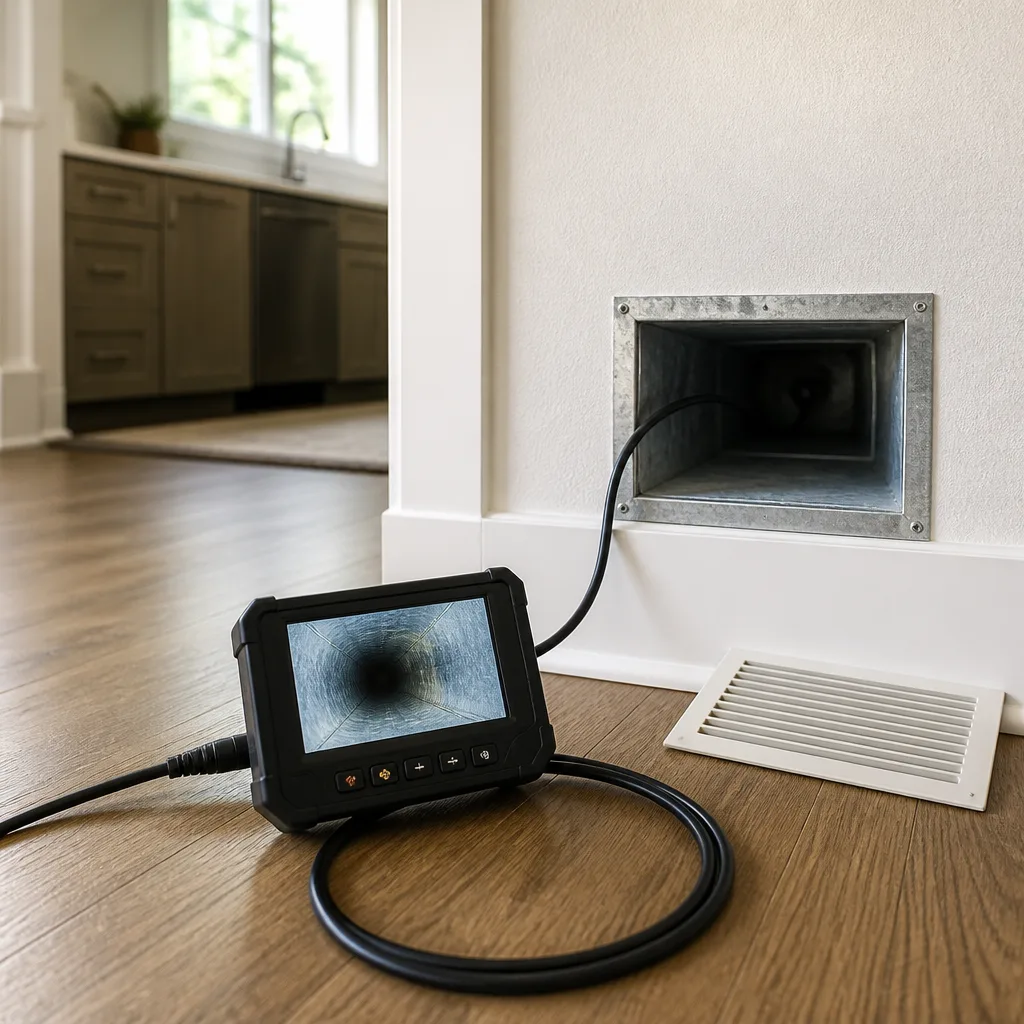
We run a flexible Dryer Vent Inspection camera through the full duct run from the dryer connection point to the exterior termination. The camera records what it finds: lint density at each elbow, any visible crushing or kinking, joint separations, and the condition of the exterior cap. You see the footage. In Washington rowhouses, it’s common to find a 4-inch smooth-wall run that transitions mid-path to a section of corrugated flex – often where a previous contractor took a shortcut through a finished wall. The camera catches it; a shop-vac operator working blind doesn’t.
-
Negative-Pressure Extraction with Rotary Brush Agitation
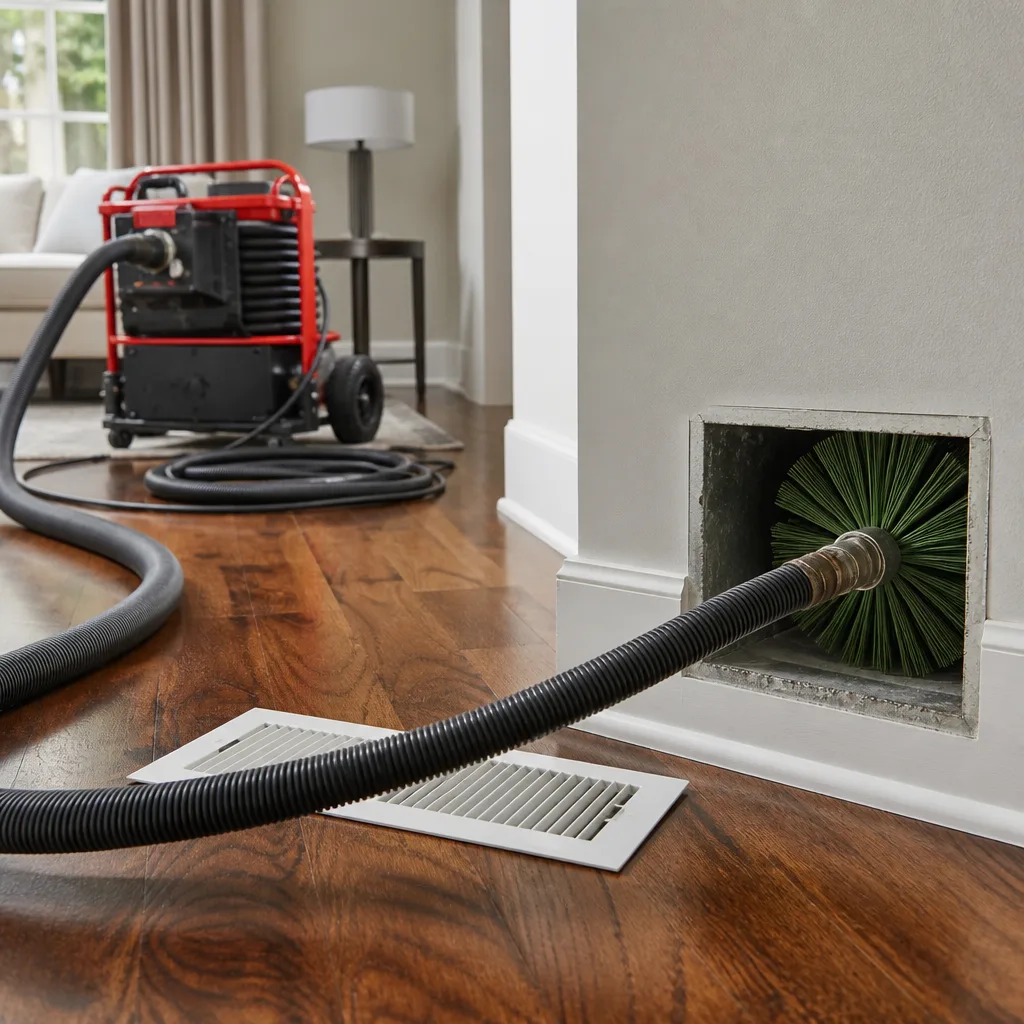
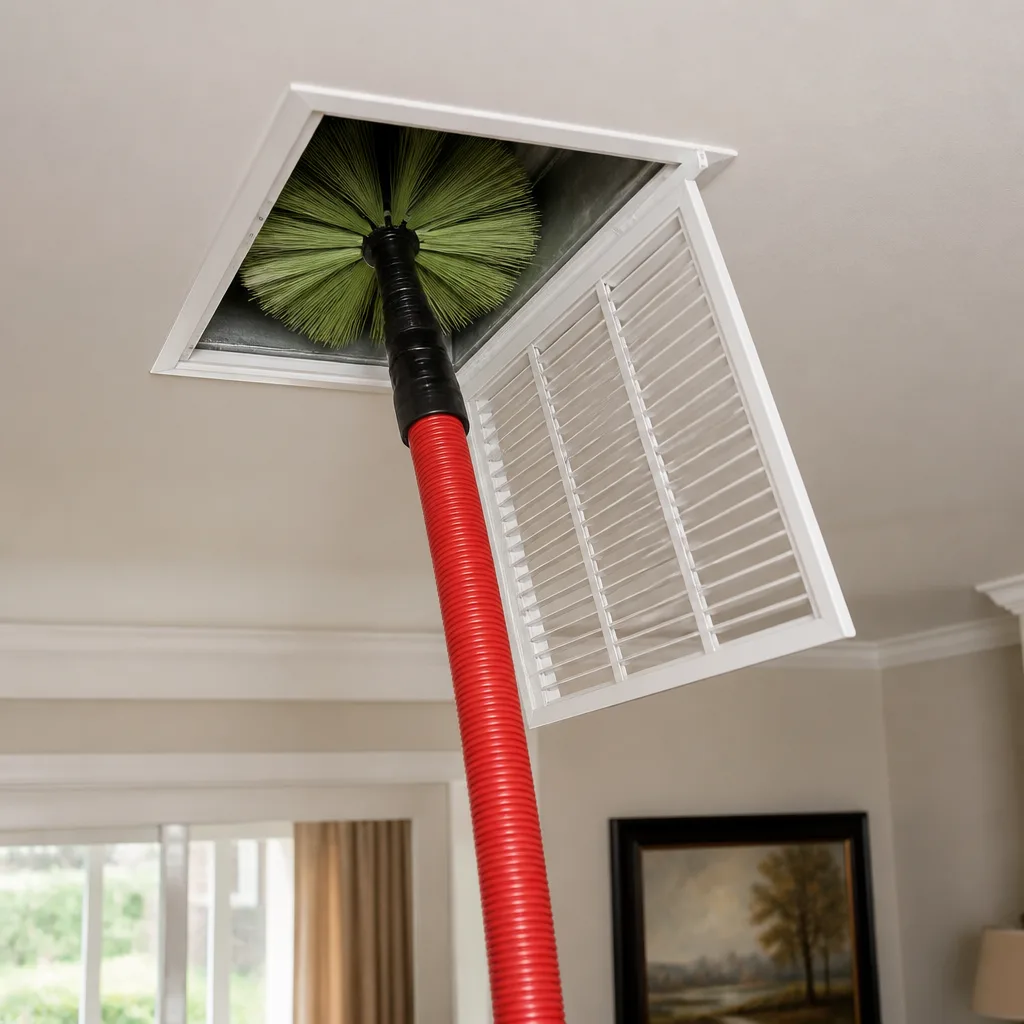
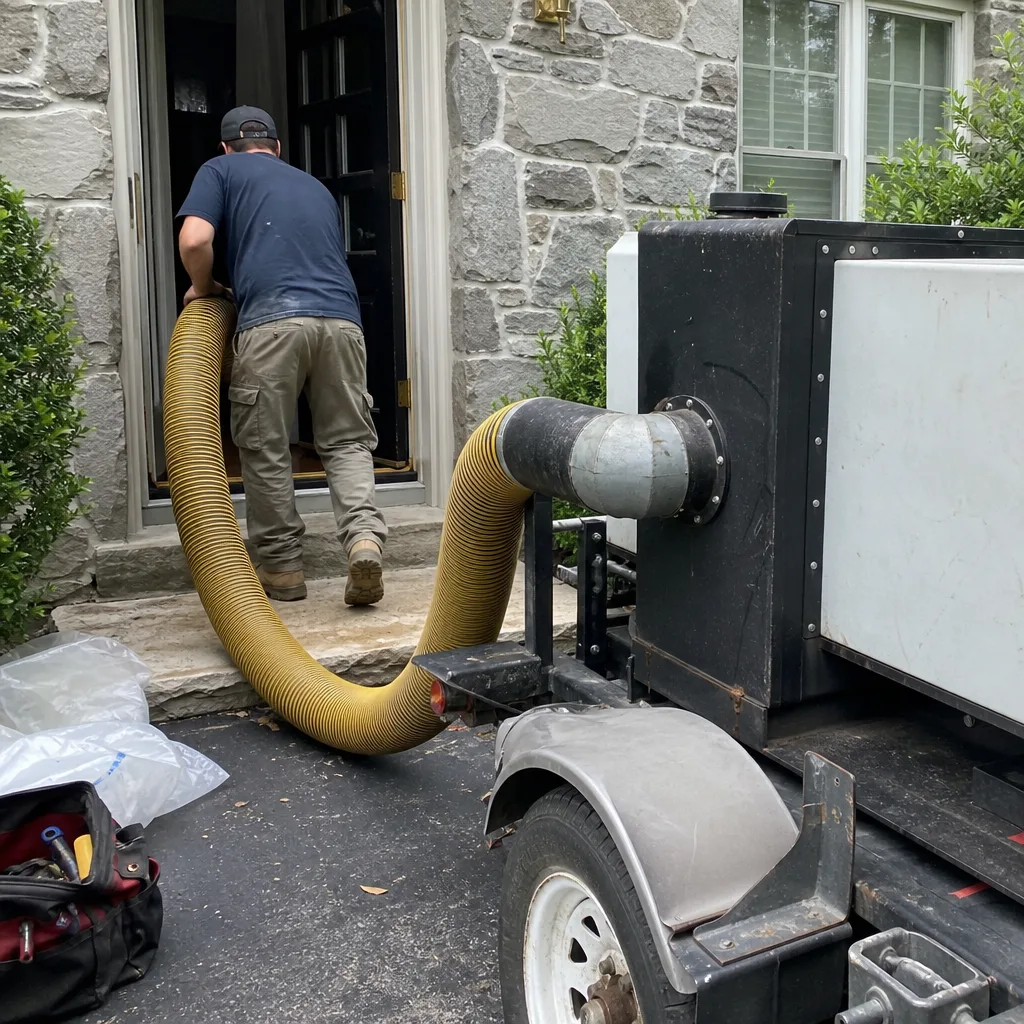
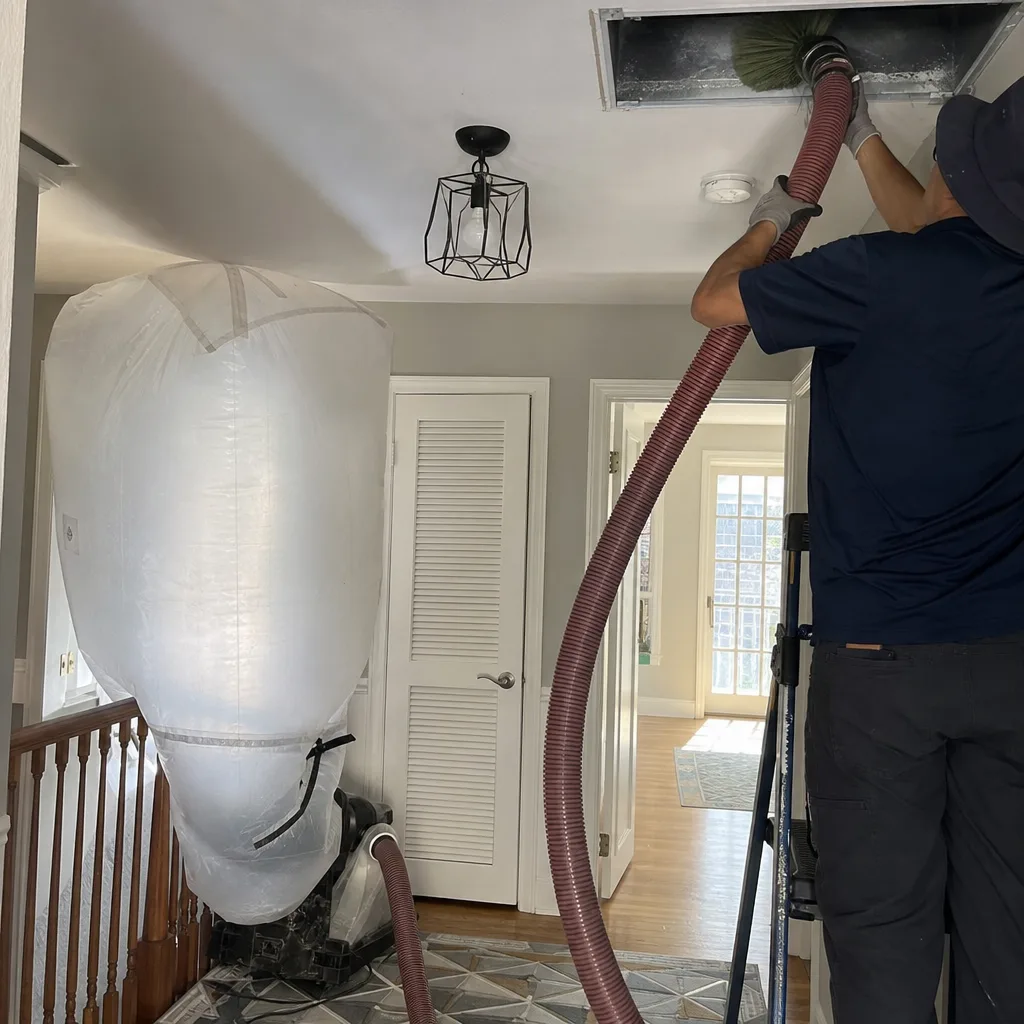
We attach a HEPA-filtered vacuum unit – typically a Nikro or Rotobrush system – to establish negative pressure inside the duct run. Negative pressure means the interior of the duct is kept at lower air pressure than the surrounding room, so loosened lint and debris travel toward the collection unit rather than back into your laundry room. Simultaneously, a rotary brush works through the duct from the dryer end, agitating compacted lint off the interior walls and moving it toward the extraction point. This is not a leaf blower in reverse. The difference shows in the before-and-after photographs.
-
Exterior Cap Inspection and Clearing
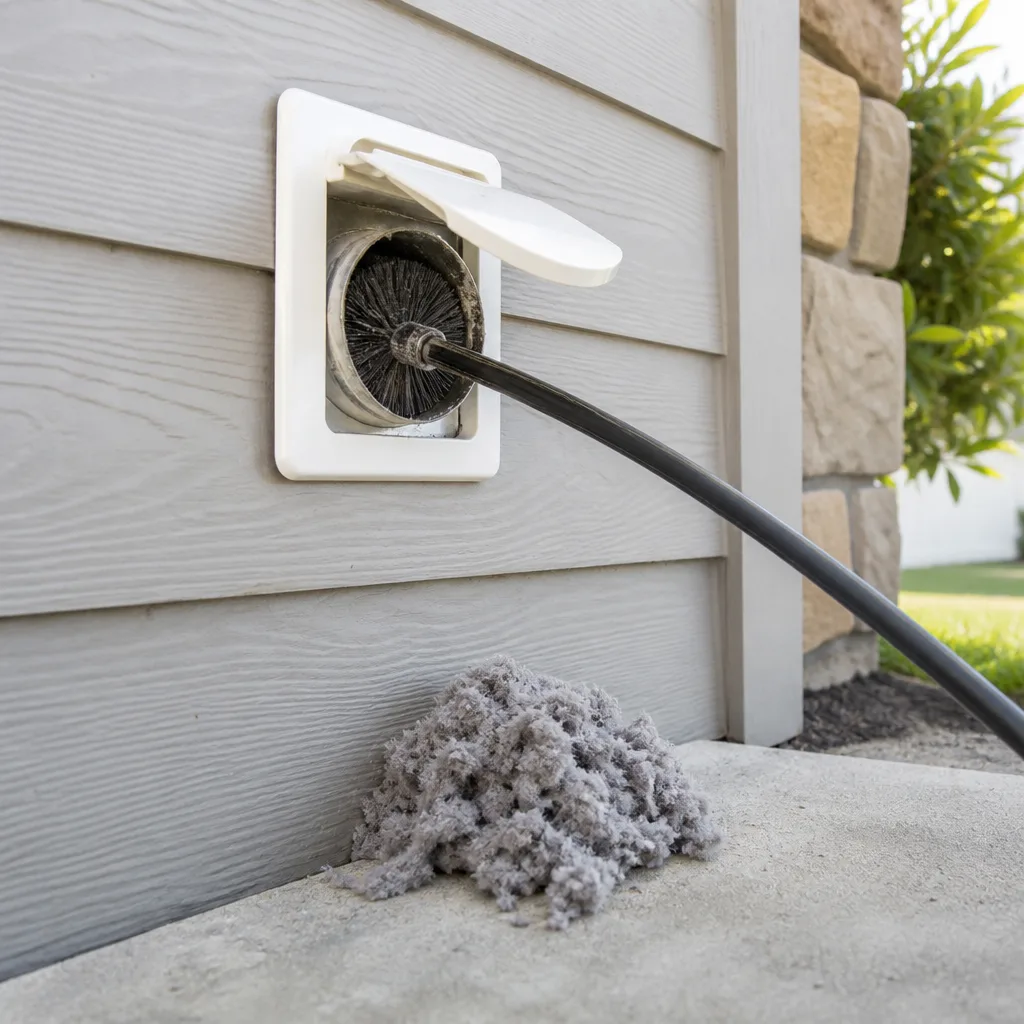
The exterior vent termination is inspected and cleared separately. We check that the flap or louvers open freely, that no mesh screen has been installed over the opening, and that the cap is properly sealed to the exterior wall surface. In Washington’s older building stock, exterior caps are frequently caulked shut by successive paint jobs or have simply rusted to a permanently closed position. A dryer with a properly cleaned interior duct and a stuck exterior cap is still a fire hazard.
-
Airflow Verification
After cleaning, we measure airflow at the exterior termination during a dryer run. We’re looking for airflow consistent with the dryer manufacturer’s specification for that duct length and configuration. If the reading is below spec after cleaning, the camera goes back in – because restricted flow after a thorough clean usually means a crushed section, a disconnected joint, or an interior obstruction that wasn’t lint. We don’t close the job until the numbers make sense.
-
Documented Photo Record Delivered to You
Every job concludes with a documented photo record – before and after images of the interior duct run, the exterior cap, and any areas of specific concern. This record is delivered to you as a standard job deliverable, not something you have to ask for. It’s what makes the 365-Day Done Right Promise meaningful: if a question comes up six months from now about what was done and what was found, the photographic record answers it. CleanRun has maintained this practice on every job since 2013.
BeforeAfterVent Cleaning Pricing in Washington, DC
If you’re wondering How Much Does Dryer Vent Cleaning Cost? (2026 Price Guide) - Washington, DC, vent cleaning in Washington, DC falls in a specific and predictable cost range – we put it in writing before the job starts, and the number on the invoice matches the number you agreed to. Here’s what the range looks like and what moves it up or down.
| Scope | Typical Price Range |
|---|---|
| Standard vent run (up to 25 ft, 2 elbows or fewer, ground-level exterior cap) | $109 – $149 |
| Extended vent run (25-50 ft, 3-5 elbows, or upper-floor routing) | $149 – $199 |
| Roof-terminated vent or complex routing through finished walls | $199 – $229 |
| Exterior cap replacement (standard louvered cap, installed) | $45 – $85 |
| Flexible duct replacement with code-compliant rigid metal (per linear foot) | $12 – $22 |
Several things affect where your job lands in those ranges. Vent path length is the biggest single factor – a Capitol Hill rowhouse where the laundry was moved to a second-floor hallway closet may route 40 feet of duct through finished walls and two floors before reaching the exterior. That takes more time and a longer brush run than a basement laundry room with a 12-foot straight run to the back wall. The number of elbows matters almost as much as the footage: each 90-degree turn in a 4-inch duct reduces effective airflow and collects lint preferentially on the inside radius. Three elbows in a 20-foot run is more labor than two elbows in a 30-foot run.
Roof-terminated vents – more common in Washington condominiums and newer construction in Navy Yard and NoMa – add access time and, if the cap is a dampered roof cap rather than a wall-mount louvered cap, additional inspection steps. We price those separately so you’re not paying for roof access on a job that terminates at a side wall.
The written price you receive accounts for all of this. Call (240) 363-3380 and we’ll put a number in writing before anything is scheduled – no “it depends” and no estimates that shift on arrival.
FAQs – Vent Cleaning in Washington, DC
How often should dryer vents be cleaned in Washington, DC?
Most Washington households should clean their dryer vent once a year. DC doesn’t have a code-mandated cleaning interval for residential properties, but the 12-month standard aligns with most dryer manufacturer warranty requirements and the NFPA 54 guidance on appliance venting maintenance. Households that run the dryer daily – common in multi-person rowhouses in Petworth or Columbia Heights – often need cleaning every 8 to 10 months because lint accumulates faster with higher dryer use. If you’re unsure, the camera inspection that starts every CleanRun job will tell you exactly what’s in the duct before you commit to any cleaning scope. Call (240) 363-3380 for a written quote with no prior obligation.
Can I clean my dryer vent myself?
You can brush the first 6 to 10 feet of a straight, accessible vent run with a consumer lint brush kit, and for very short runs with a direct exterior termination, that handles most of the lint. But most Washington homes don’t have that vent path. The rowhouse construction common in DC routes vents through multiple floors and walls with several elbows – sections that a hand-operated brush kit cannot reach or agitate effectively. More to the point, a consumer brush pushes lint inward rather than extracting it under negative pressure, so compacted debris at an elbow often gets compressed further rather than removed. The fire risk from an inadequately cleaned vent is the reason we recommend a professional inspection at least annually, and particularly before using a vent that hasn’t been serviced in more than 18 months.
What’s the difference between vent cleaning and duct cleaning?
Vent cleaning refers specifically to the dryer exhaust duct – the 4-inch (typically) metal path that carries hot air and lint from your dryer to the outside of your home. Duct cleaning refers to the HVAC system – the supply and return air ducts that move conditioned air through your home. They are separate systems, cleaned with different equipment, for different reasons. A dryer vent cleaning doesn’t touch your HVAC ducts, and HVAC duct cleaning doesn’t address your dryer exhaust path. CleanRun handles both, but they are scoped and priced separately – if a contractor quotes you both in a single low number, ask them to break it out in writing.
What happens if a dryer vent is blocked and I keep using the dryer?
A partially blocked dryer vent forces the dryer to run longer cycles to achieve the same drying result – each extra cycle deposits more lint against the existing blockage, accelerating the restriction. As the blockage increases, the dryer’s internal temperature rises because the moisture and heat can’t exhaust properly. At a certain threshold, accumulated lint at a hot point in the duct path can ignite. The US Fire Administration data attributes roughly 2,900 residential dryer fires per year to this failure mode, with failure to clean the vent as the leading cause. Beyond the fire risk, a severely restricted vent puts the dryer motor and heating element under sustained stress and shortens the appliance’s usable life significantly. If your dryer is running long cycles and your vent hasn’t been serviced recently, call (240) 363-3380 – we’ll give you a written price and get the camera in the duct before any work starts.
Why Washington Homeowners Choose CleanRun
Since 2013, CleanRun has completed dryer vent work in more than 52,000 Washington-area homes – rowhouses in Shaw and Bloomingdale, condominiums in Navy Yard and NoMa, Craftsman bungalows in Petworth and Brightwood, and everything in between. The vent configurations vary. The documentation standard doesn’t.
Every job operates under the H.A.V.E.N. Standard. Haven Standard Clause 1 means you have a written price before work starts – always. Haven Standard Clause 3 means the technician arriving at your door is background-checked, uniformed, and identified by name before arrival. The 365-Day Done Right Promise means that if the work isn’t right, CleanRun makes it right – in writing, not subject to manager approval.
The equipment on the truck is professional-grade: Rotobrush and Nikro systems for rotary brush agitation and negative-pressure extraction. You can look both up independently before agreeing to a price. That’s the point. We name the tools because equipment names are verifiable, and verifiable details are how you tell the difference between a company that does the work and one that sells the visit.
If you have a competitor’s written estimate, bring it. CleanRun offers a free second opinion on any written quote – we put our own number next to it in writing and let you compare. No pressure. The numbers speak.
CleanRun is independently owned and operated under the Haven Standard. Learn more about our full service offering on the home page, or go directly to our Dryer Vent Cleaning in Washington page for information on the broader service category this work falls under.
Schedule Vent Cleaning in Washington, DC
Call (240) 363-3380 to schedule your vent cleaning. A live person answers every call. You’ll receive a written price before any work is scheduled, a documented photo record when the job is done, and the 365-Day Done Right Promise in writing – not as a policy statement, but as an accountable commitment attached to your specific job. That’s the CleanRun standard, and it’s held on every job since 2013.
Written by Tomas Reyes, Owner at CleanRun Air Duct Cleaning Washington, serving Washington.