
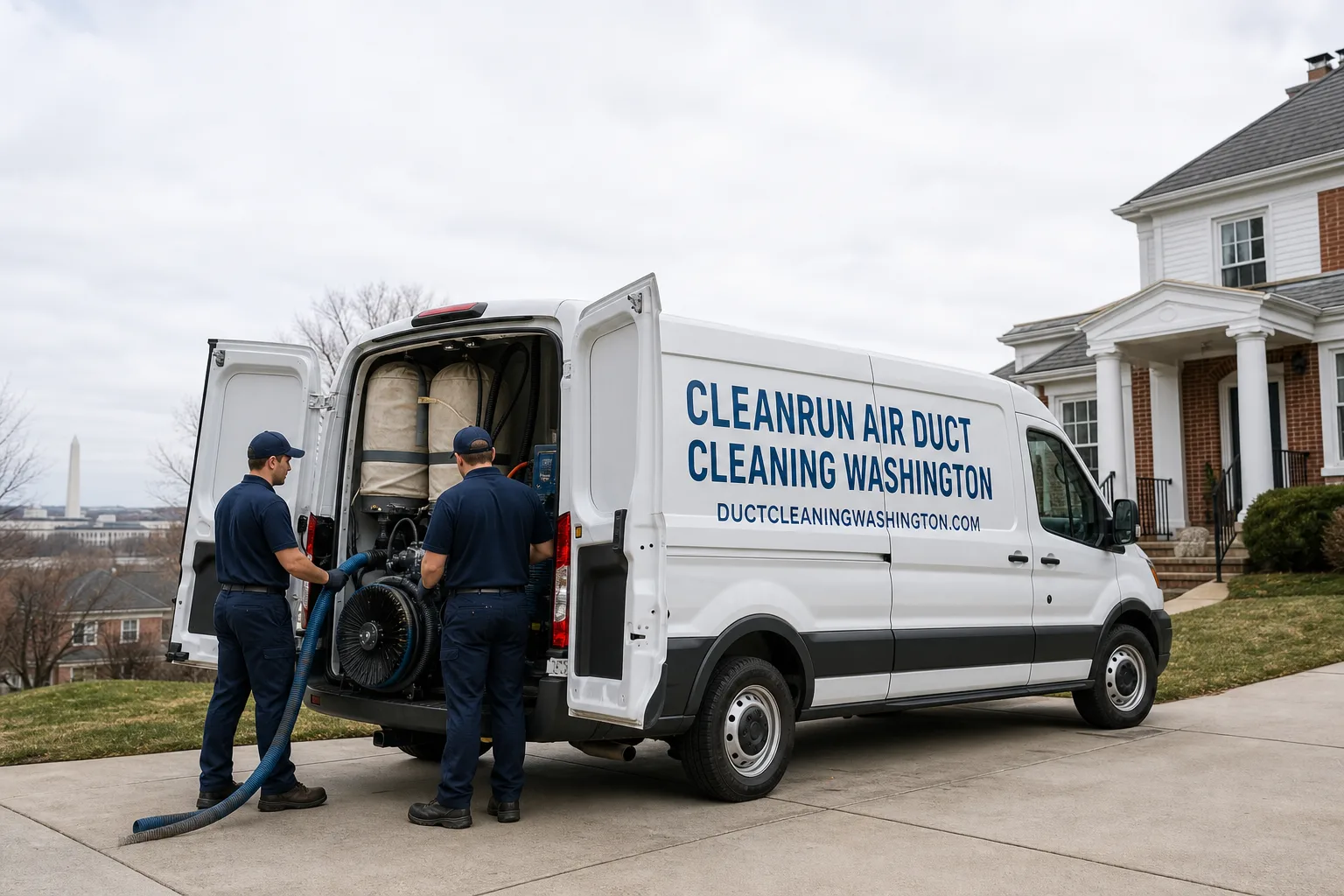
Whole-system duct and dryer vent check with before-and-after photos - you see exactly what came out of your vents
That "$99 whole-house special" is a bait ad - the real number appears once they are in your hallway, or the "clean" is a shop-vac at the register. We photograph the inside of your ducts before and after instead.
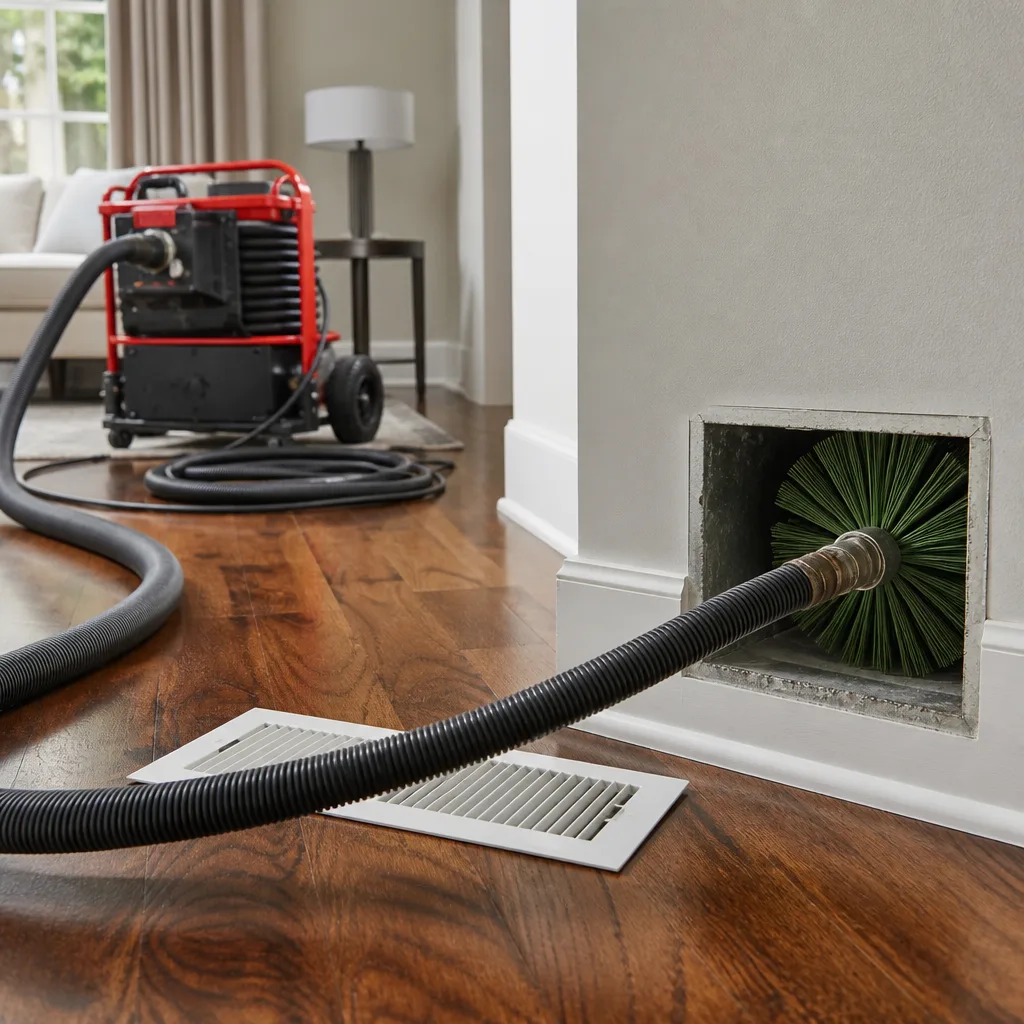
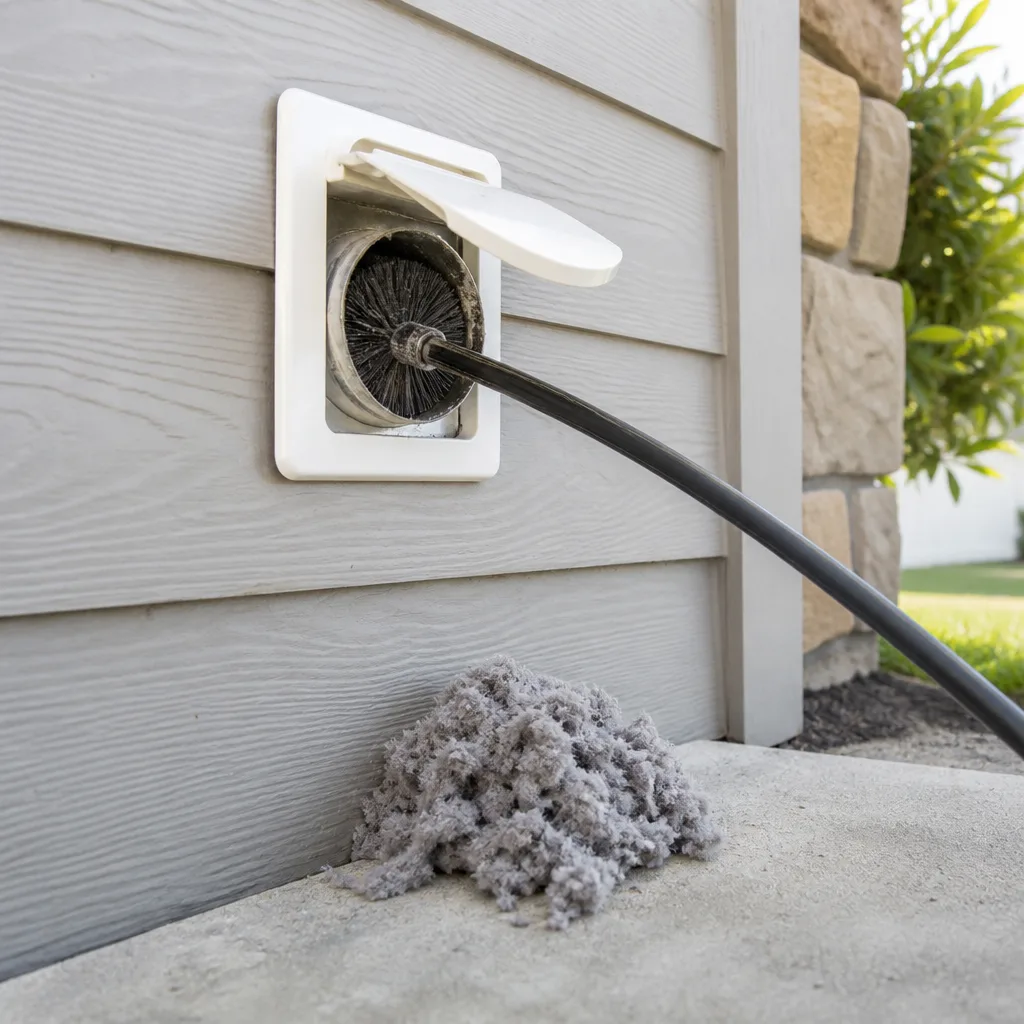
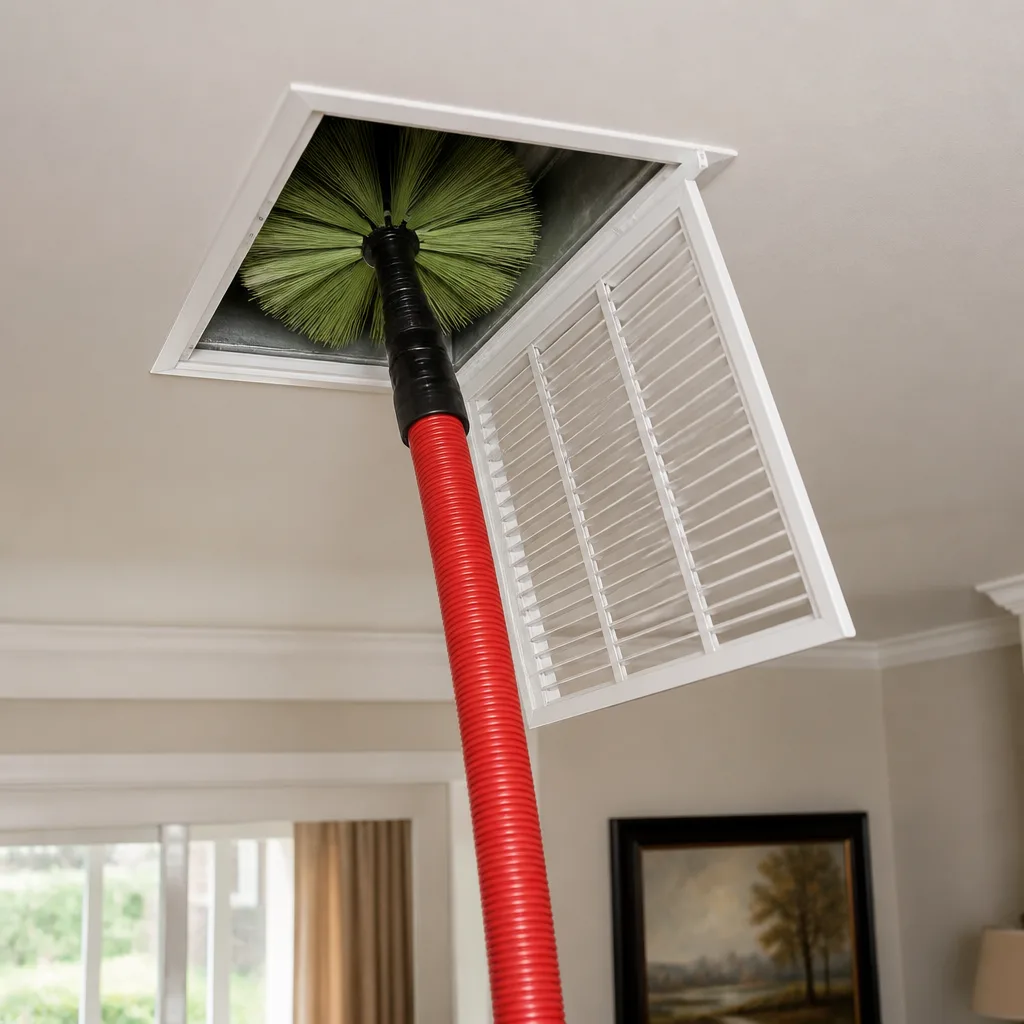
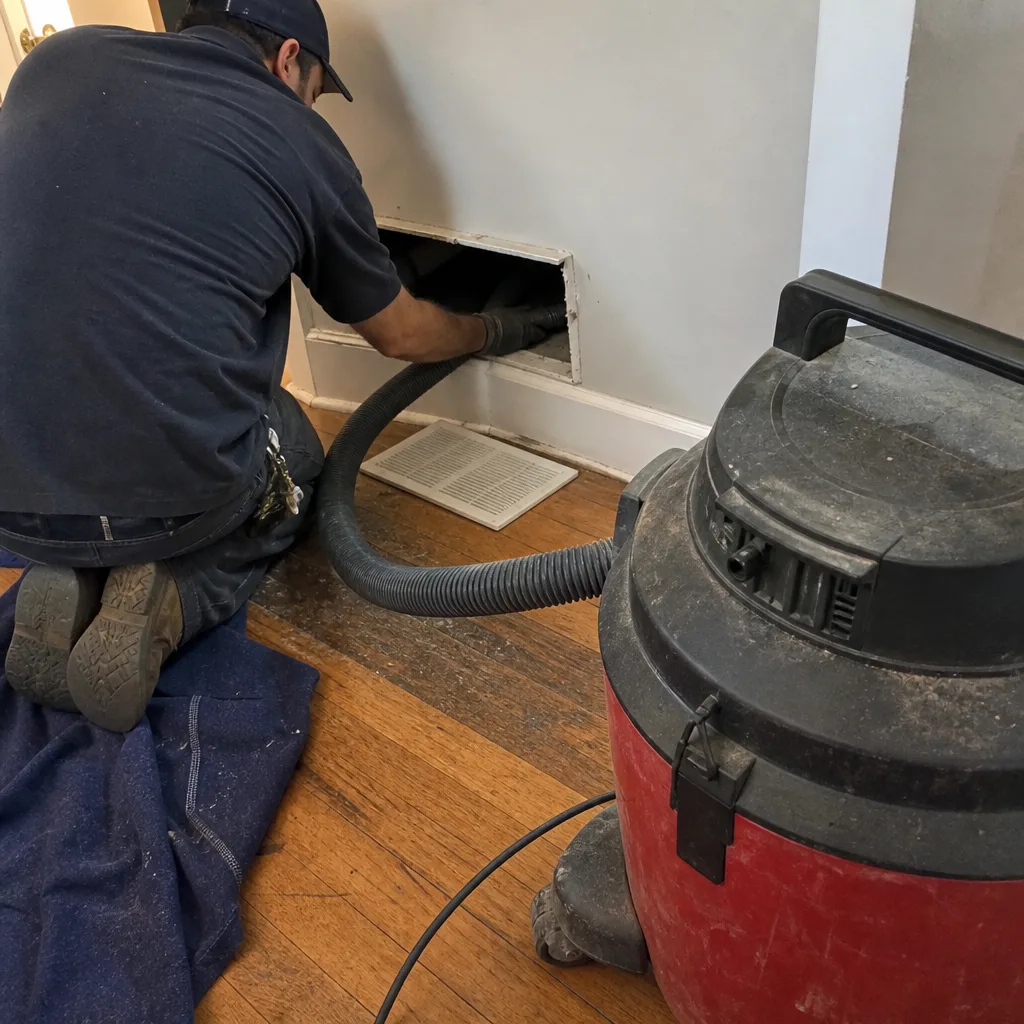 Before
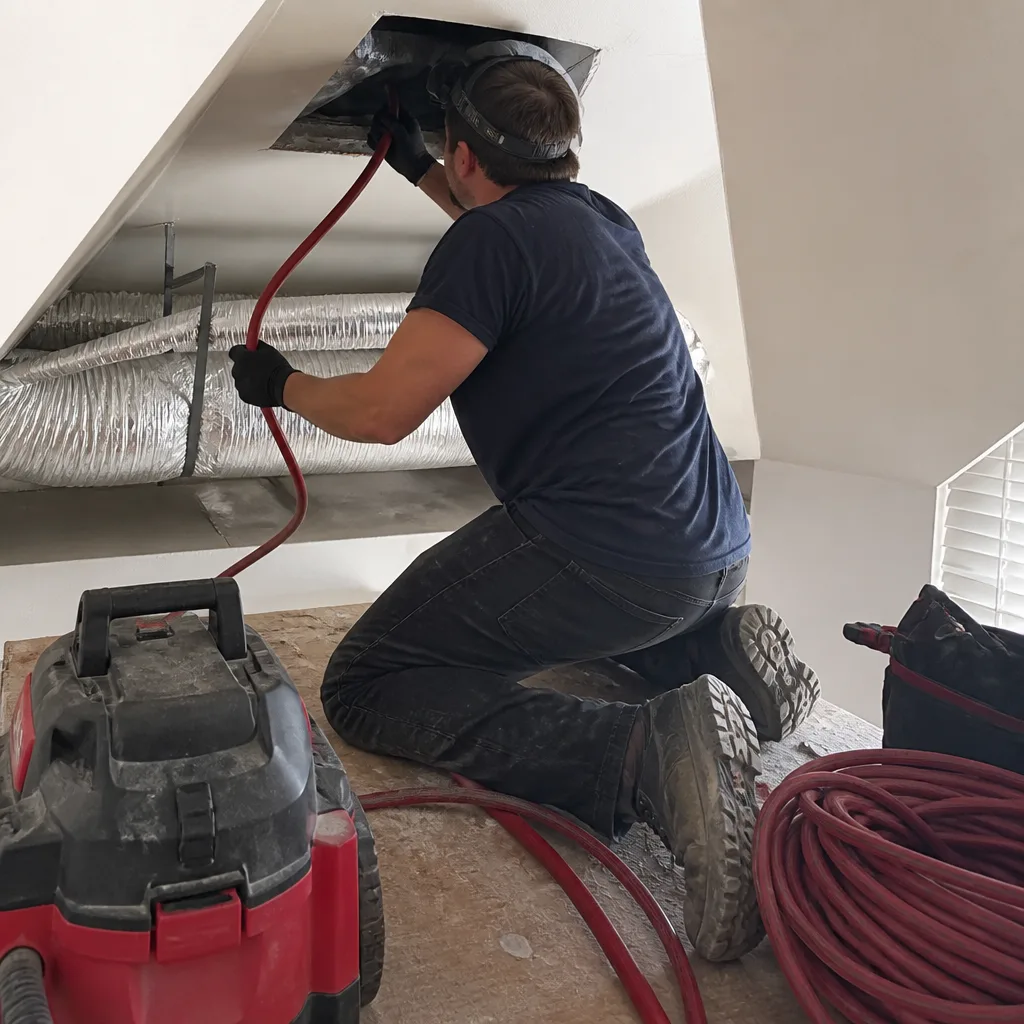 After
After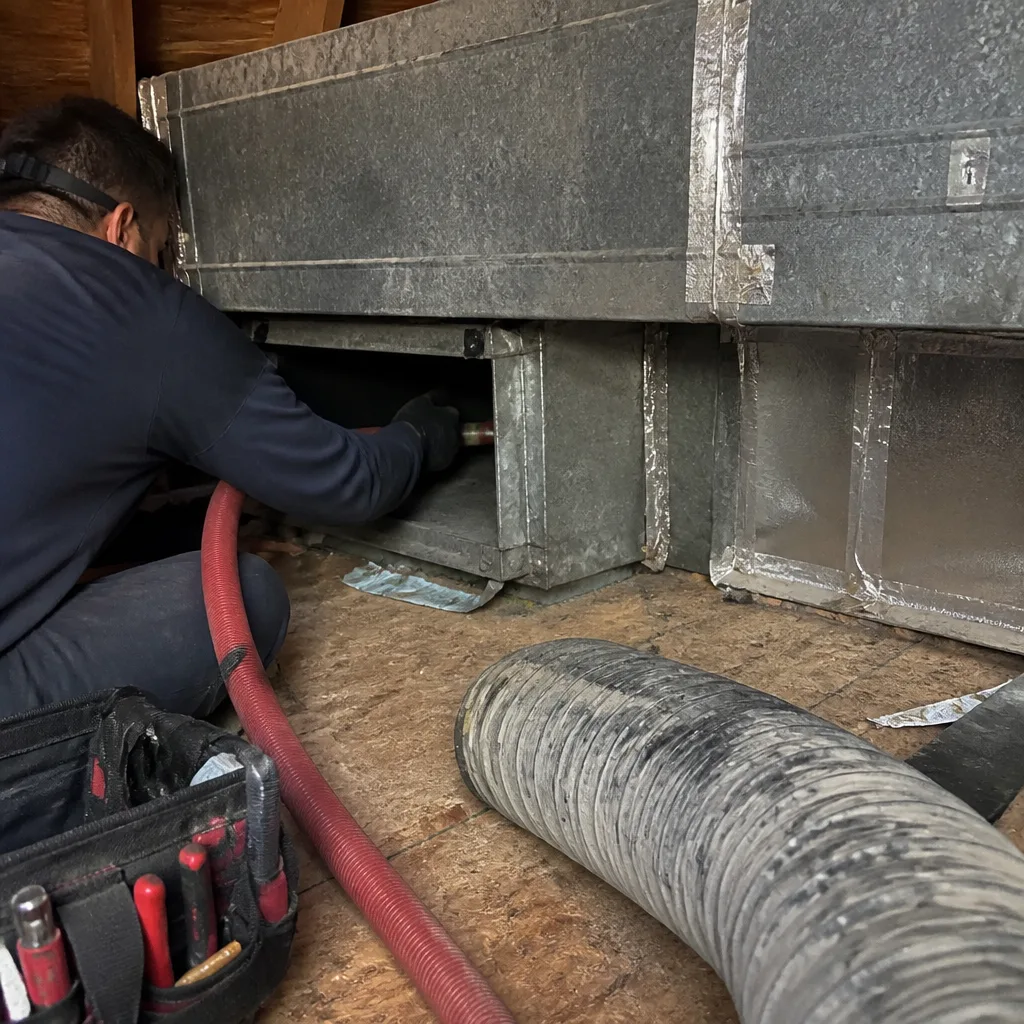 Before
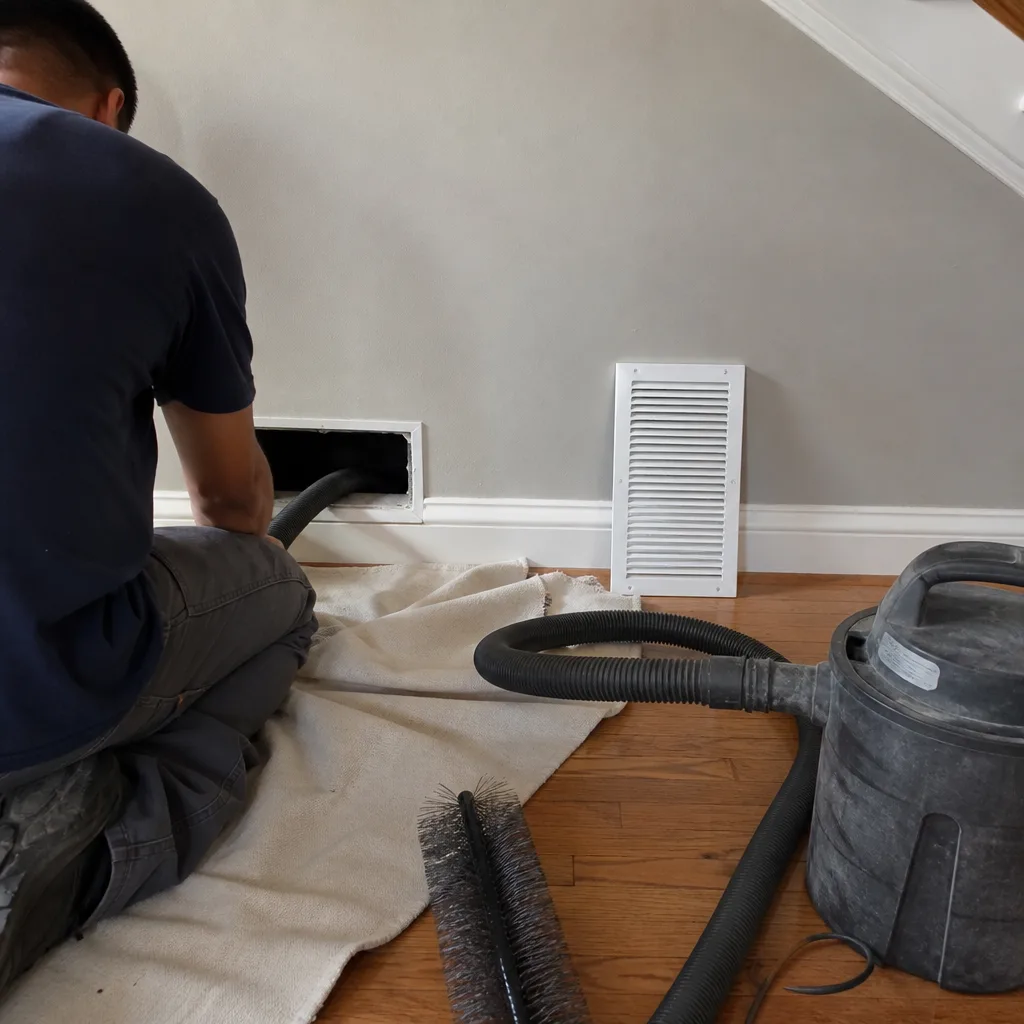 After
After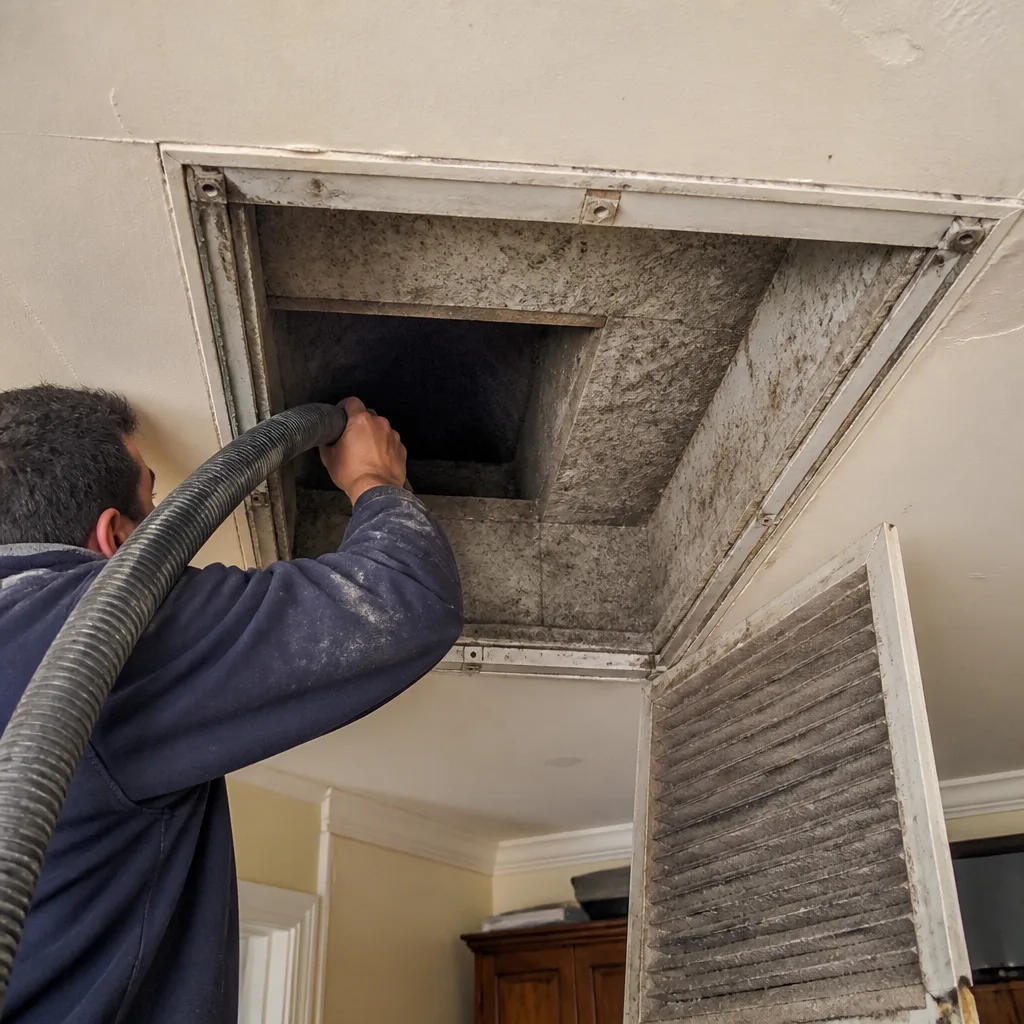 Before
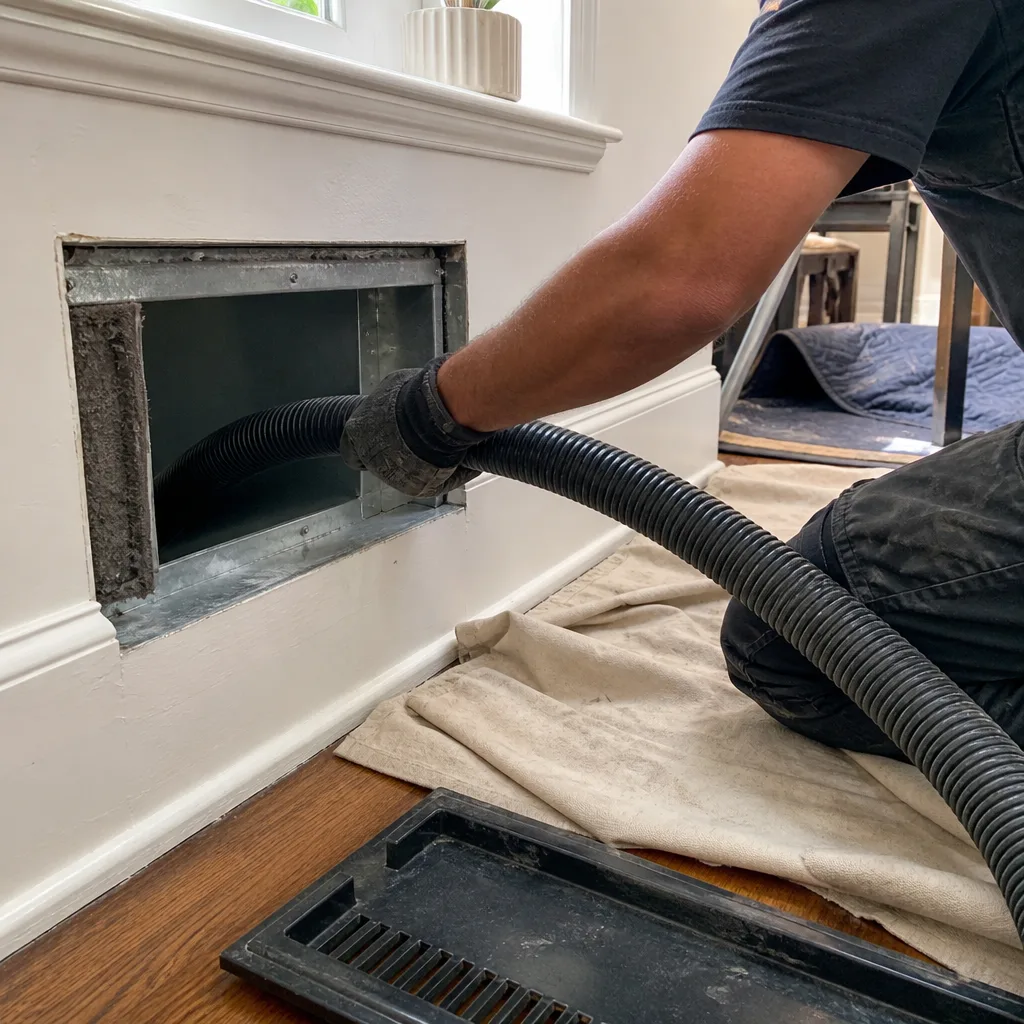 After
AfterHow Much Does Dryer Vent Cleaning Cost in Washington?
Dryer vent cleaning in Washington, DC typically costs between $99 and $249 for a standard single-vent job in 2026, with most homeowners in neighborhoods like Capitol Hill, Petworth, and Chevy Chase paying around $149 for a straightforward run. If your vent has never been cleaned, runs more than 15 feet, or has multiple elbows bending through a rowhouse wall, expect the price to land closer to the upper end of that range. At CleanRun, every price is written down before a single panel comes off the dryer – no surprises, no callbacks asking for more.
Dryer Vent Cleaning Cost Breakdown (2026)
The table below reflects actual pricing in the Washington, DC market as of 2026, not national averages pulled from a survey. Prices vary by vent configuration, access difficulty, and whether the job turns up something that needs repair. CleanRun publishes these ranges under Haven Standard Clause 1: the written price is delivered before work starts, every time.
| Service | Typical Price Range (Washington, DC) |
|---|---|
| Standard dryer vent cleaning (up to 15 ft, 1-2 elbows) | $99 – $149 |
| Extended vent run (15-25 ft, 3+ elbows) | $149 – $199 |
| Long or complex run (25+ ft, rooftop or wall-penetration exit) | $199 – $249 |
| Vent cleaning + bird or pest nest removal | $179 – $299 |
| Vent cleaning + cap/cover replacement | $149 – $219 |
| Vent cleaning + duct repair or reattachment | $199 – $349 |
| Multi-unit or condo building (per unit, 4+ units) | $79 – $119 per unit |
| Documented photo record (before and after every run) | Included on every CleanRun job |
What Pushes the Price Up
Washington’s housing stock is the single biggest driver of cost variation here. A rowhouse in Bloomingdale built in 1920 is a fundamentally different job than a townhome in Navy Yard built in 2019. The older home may have an original vent path that runs horizontally through two walls and exits through an aging metal cap at ground level, collecting lint at every horizontal bend along the way. The newer building might vent straight up through a shared shaft to a rooftop cap 40 feet overhead.
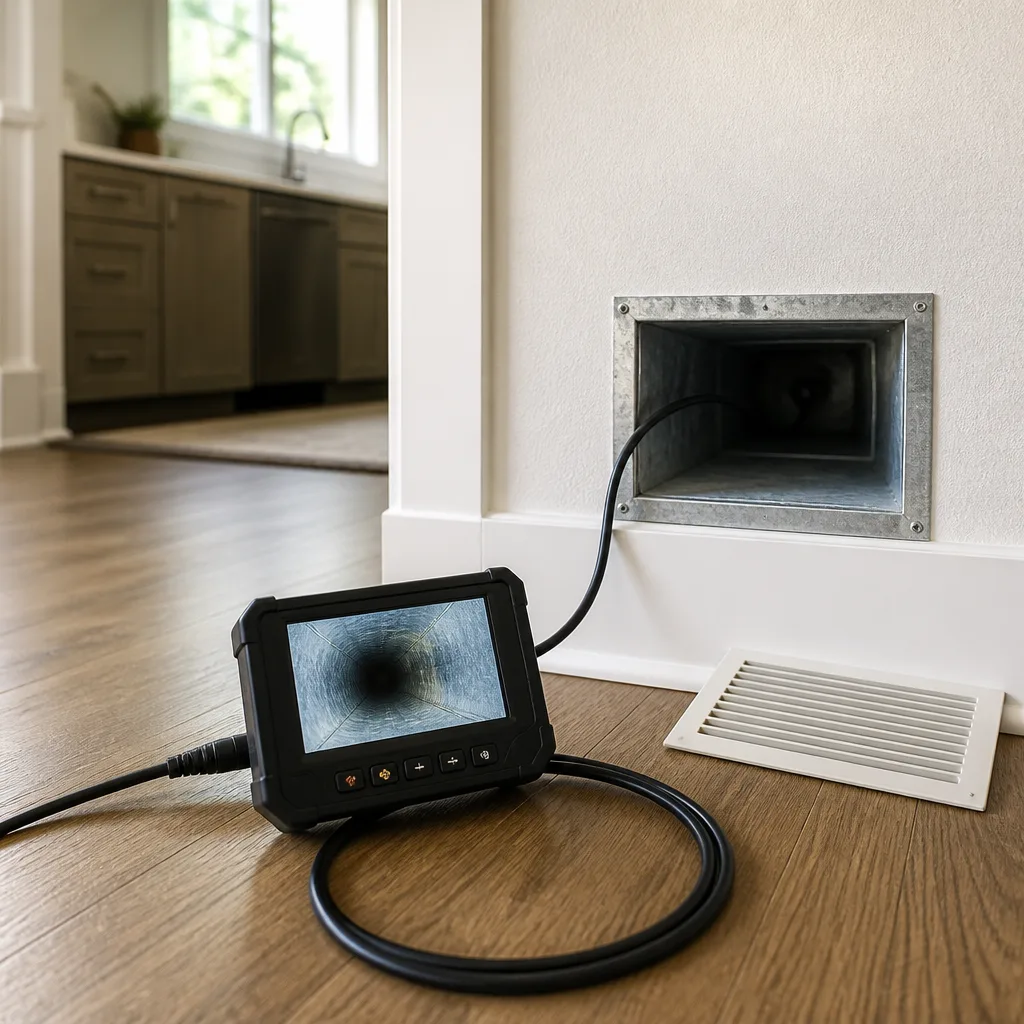
Both are real Washington scenarios. Both cost more than a short, straight run through an exterior wall because the technician needs more time, more rod extensions, and sometimes a ladder or a confined-space approach to reach the termination point. When the camera inside the duct (a Nikro inspection setup, in our case) shows a debris plug at the second elbow, that’s a fact the written price has to reflect – and it does, before the work starts.
What Keeps the Price at the Lower End
A newer construction condo in Columbia Heights or a single-story home in Brookland with a dryer venting directly through the exterior wall – 8 feet of run, one 90-degree elbow, a hood termination that’s easy to reach – is the simplest job in this category. Standard cleaning on a run like that takes 30 to 45 minutes with professional rotary brush equipment (Rotobrush is what we use on most residential jobs), and the price reflects the actual labor involved. Lint build-up that comes out in one pass keeps the job at the lower end of the range.
What Affects Dryer Vent Cleaning Pricing in Washington
- Vent run length and number of elbows: This is the primary cost driver. The International Residential Code caps dryer vent runs at 35 feet equivalent length, with each 90-degree elbow counting as 5 feet. In practice, many DC rowhouses and older apartment conversions have runs that push or exceed that limit because the original builders didn’t design for modern high-efficiency dryers. Every additional elbow means more time with the rotary brush system and a higher likelihood of a partial blockage that needs to be worked loose before extraction.
- Termination point location: A vent that exits through a basement wall two feet above grade is fast to inspect and clean. A vent that terminates on a rooftop in Georgetown or a high-rise in Dupont Circle requires ladder work or rooftop access, which adds time and a modest access charge to the written price. Rooftop terminations are common in DC’s denser neighborhoods, and the price difference is real – typically $30 to $60 more than a ground-level exit.
- Time since last cleaning: In Washington, DC, the DC Fire and Emergency Medical Services Department recommends annual dryer vent cleaning for residential properties. A vent that hasn’t been cleaned in three or four years – which is common in rentals along the U Street corridor and in owner-occupied rowhouses where the dryer “seems fine” – typically has compacted lint that takes longer to break up and extract. That extra time shows up in the written price.
- Material condition of the ductwork: Older foil accordion-style flexible duct is still common in basement laundry rooms in DC. It collapses and sags over time, creating low spots where lint accumulates. If the camera shows sections that are crushed or disconnected, the cleaning price and a repair price are written separately so the customer can see exactly what each part of the job costs before deciding.
- Bird nests and pest blockages: Washington, DC’s urban bird population – especially European starlings and house sparrows – finds dryer vent caps with missing or damaged screens to be practical nesting sites. We see this regularly in properties in Takoma, Petworth, and the 16th Street Heights corridor. Nest removal is a separate line item because it requires a different approach than standard lint extraction, and the price reflects the actual time involved.
- Whether a cap or cover needs replacement: A missing, damaged, or flap-stuck termination cap is a pest entry point and a backdraft risk. If the cap needs replacing, that’s priced as a separate line item – typically $30 to $60 for a standard louvered or magnetic cap – and it appears in the written quote before the technician does anything.
BeforeAfterWashington, DC-Specific Factors You Won’t Find in a National Guide
Most national pricing guides treat dryer vent cleaning like a commodity – same price, same job, any city. That’s not how it works in Washington, and it’s worth being specific about why.
Rowhouse Architecture Changes the Job
Washington’s rowhouses, which make up a significant share of the housing stock in neighborhoods like Shaw, Columbia Heights, Bloomingdale, and Eckington, were built before residential clothes dryers existed. When dryers arrived in these homes decades later, vent paths were improvised: through interior walls, around structural members, and sometimes through the floor to a basement exit. We regularly find runs in these homes with four or five elbows, some of them shop-fabricated with duct tape that has since failed. The duct tape failure creates a gap where lint is deposited inside the wall cavity instead of being carried outside. That’s not a cleaning problem – it’s a repair problem – and the camera record shows it clearly before anyone talks about price.
High-Rise and Condo Buildings Have Their Own Rules
DC’s growing stock of mid-rise and high-rise residential buildings in Navy Yard, NoMa, and the U Street corridor often route dryer vents through shared vertical shafts. Some buildings require coordination with building management for access to shaft cleanouts. Others have proprietary cap systems on the roof. These logistics add time. If you’re in a condo building and you’re not sure whether your dryer vent is your responsibility or the building’s, the answer is usually that the run from your dryer connection to the shaft is your responsibility, and the shared shaft is building management’s. We can help you document what you’ve done on your end so you have a record.
DC’s Humidity and Seasonal Lint Build-Up
Washington, DC’s hot, humid summers create a secondary lint problem that drier climates don’t face as severely. When humid air from inside the home enters the vent run during low-use periods, lint can bind together and compact at low points in the duct rather than remaining as loose, easily-extracted material. By late summer – after August laundry patterns in homes without central dehumidification – we often find semi-compacted lint plugs that take two passes with the rotary brush to clear fully. That doesn’t necessarily change the price (a standard cleaning is quoted to cover normal build-up), but it’s why the DC recommendation of annual cleaning is appropriate here rather than the every-two-or-three-years cadence you’ll read about in guides written for drier regions.
The $79 Coupon Problem in Washington
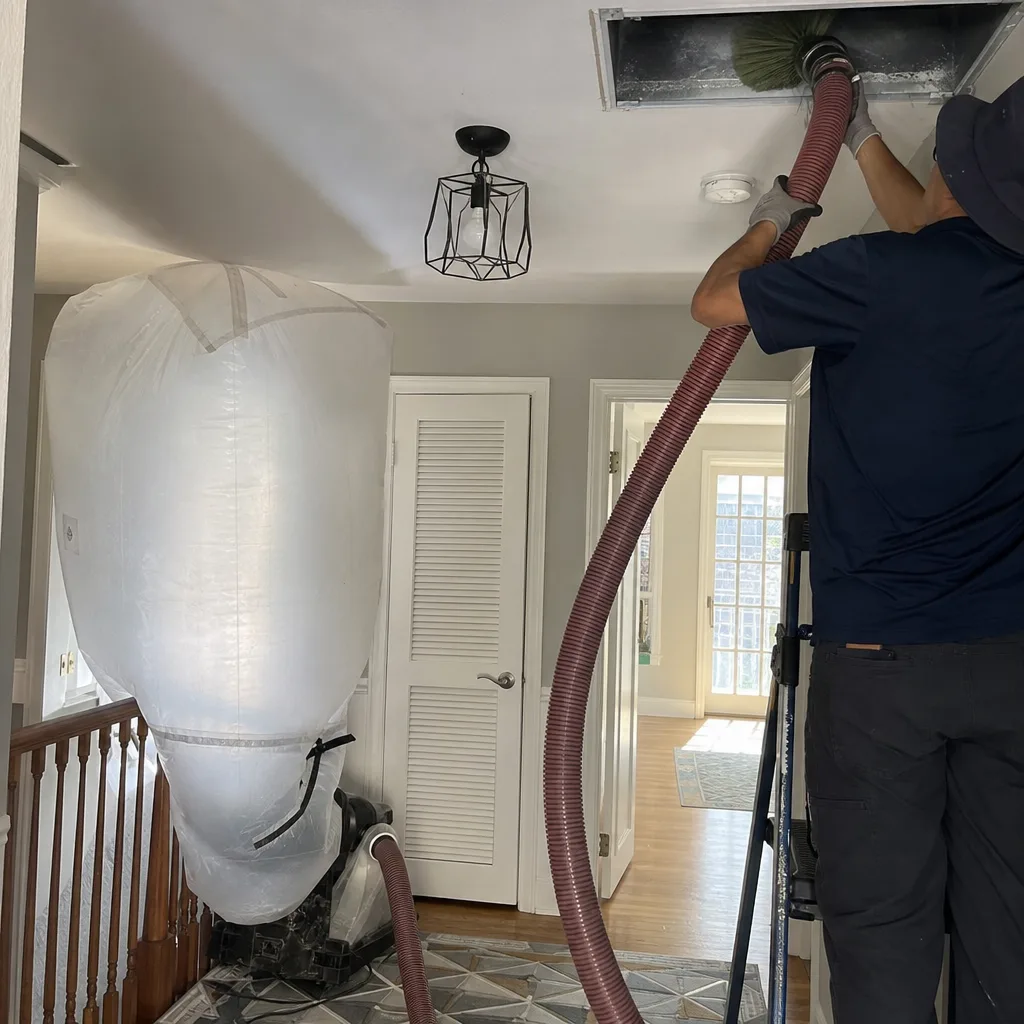
Washington, DC’s dryer vent cleaning market has a persistent advertising phenomenon: the $79 coupon. It appears in mailers in Bethesda-adjacent neighborhoods, in social ads targeting ZIP codes in Woodley Park and Cleveland Park, and in search results. The price is real in the sense that it’s what you pay to get the truck in the driveway. What it doesn’t cover – and what the technician will itemize once inside – is typically whatever the job actually requires: extended run fees, elbow charges, cap replacement, or an upgrade from the “basic service” to something described as “complete.”
The math usually resolves to somewhere between $200 and $350 by the time the invoice is written. That’s not necessarily more than a legitimate upfront price for the same job – but you didn’t know it going in, and you have no way to compare it against anything.
CleanRun’s position is simple: the written price before work starts is the price. Haven Standard Clause 1. If a competitor gives you a written estimate and you want CleanRun to put its own number next to it in writing, that’s our Free Second Opinion and it costs nothing. Bring the quote.
How to Save on Dryer Vent Cleaning in Washington
Know What You’re Actually Buying
The single most effective thing you can do is ask for a written price before you agree to anything. Not a verbal range, not a “starting at” figure – a written scope and a written price for that specific job. If a company won’t provide that, the price you were quoted in the ad is not the price you’ll pay. Getting a written price protects you regardless of which company you choose.
Bundle With Air Duct Cleaning
If your HVAC system is also due for cleaning, doing both on the same visit typically reduces the combined cost because the truck roll and technician time are shared. The saving varies by job, but it’s a real number that appears in the written quote when both services are scoped together. If you’re looking at our Dryer Vent Cleaning in Washington service and wondering whether to add air duct cleaning at the same time, call (240) 363-3380 and we’ll put both scopes in writing before you decide.
Multi-Unit Pricing
If you manage or own a building with multiple units in DC – which describes a large share of the rowhouse conversions in Capitol Hill, Petworth, and Brightwood – multi-unit pricing brings the per-unit cost down meaningfully. Four or more units on the same visit typically qualifies for the lower per-unit range shown in the cost table above.
Don’t Wait Until There’s a Problem
This sounds like generic advice but it has a specific dollar value in Washington. A dryer vent that’s 80% blocked is still cleaning. A dryer vent with a disconnected section inside the wall, discovered when a plug forces lint into the wall cavity, is now a repair job. Repair pricing – reattaching or replacing a section of ductwork inside a wall – runs $199 to $349 in this market, compared to $99 to $149 for a straightforward cleaning. Cleaning on schedule costs less than fixing what neglect created.
Get the Free Second Opinion
If you’ve already received a written estimate from another DC-area dryer vent cleaning company and the number surprised you, bring it. CleanRun puts its own number in writing next to theirs, at no cost. Call (240) 363-3380 and we’ll set it up.
What You Get on Every CleanRun Job
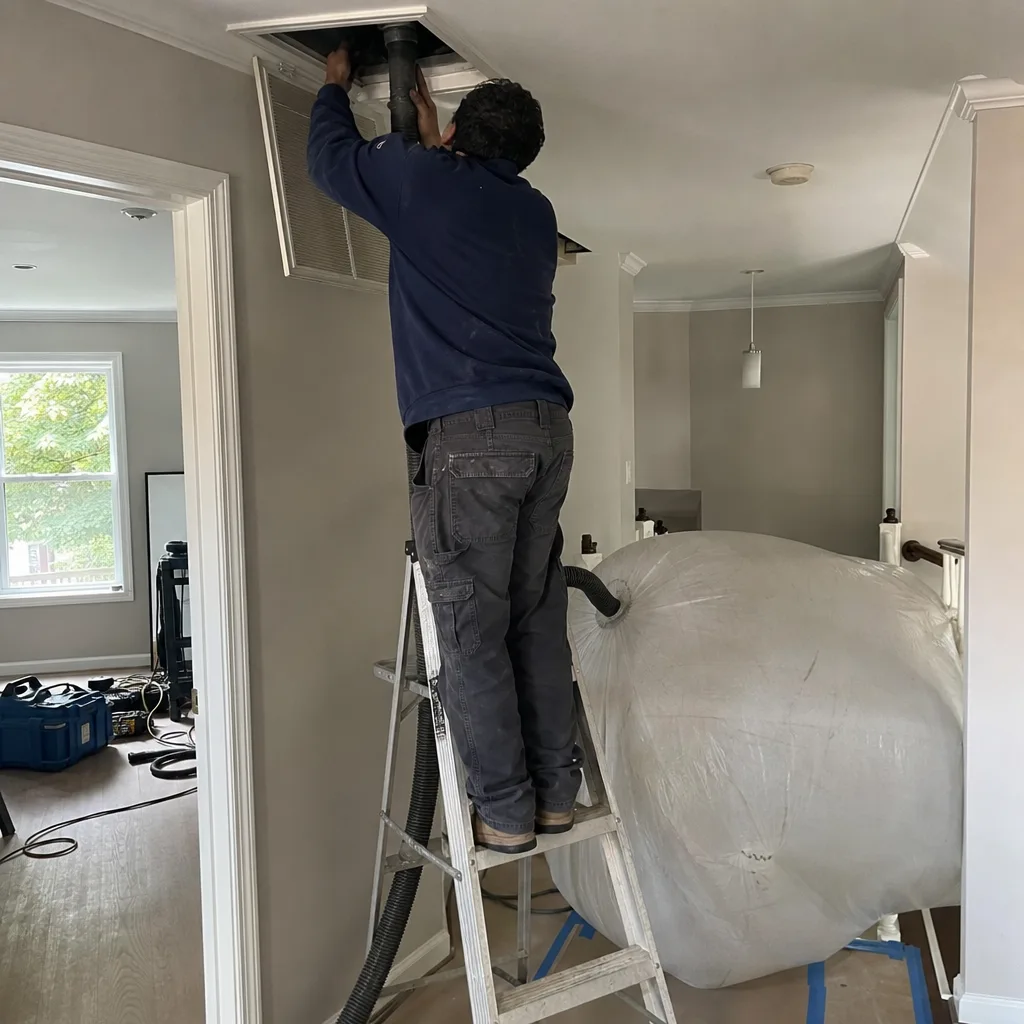
This section isn’t marketing language – it’s a description of what the job record looks like when we leave.
- Written price before work starts: Always. Haven Standard Clause 1 is not an exception for complicated jobs or new customers. If the scope changes because the camera found something unexpected, we show you what the camera found and write down the new price before touching anything additional.
- Documented photo record: The inside of every duct run is photographed before cleaning begins and after it’s finished. You receive these photos as part of the standard job record. This is a practice CleanRun has held since 2013 – not because a customer asked for it, but because the photo is the only honest answer to “was it actually clean before you started?”
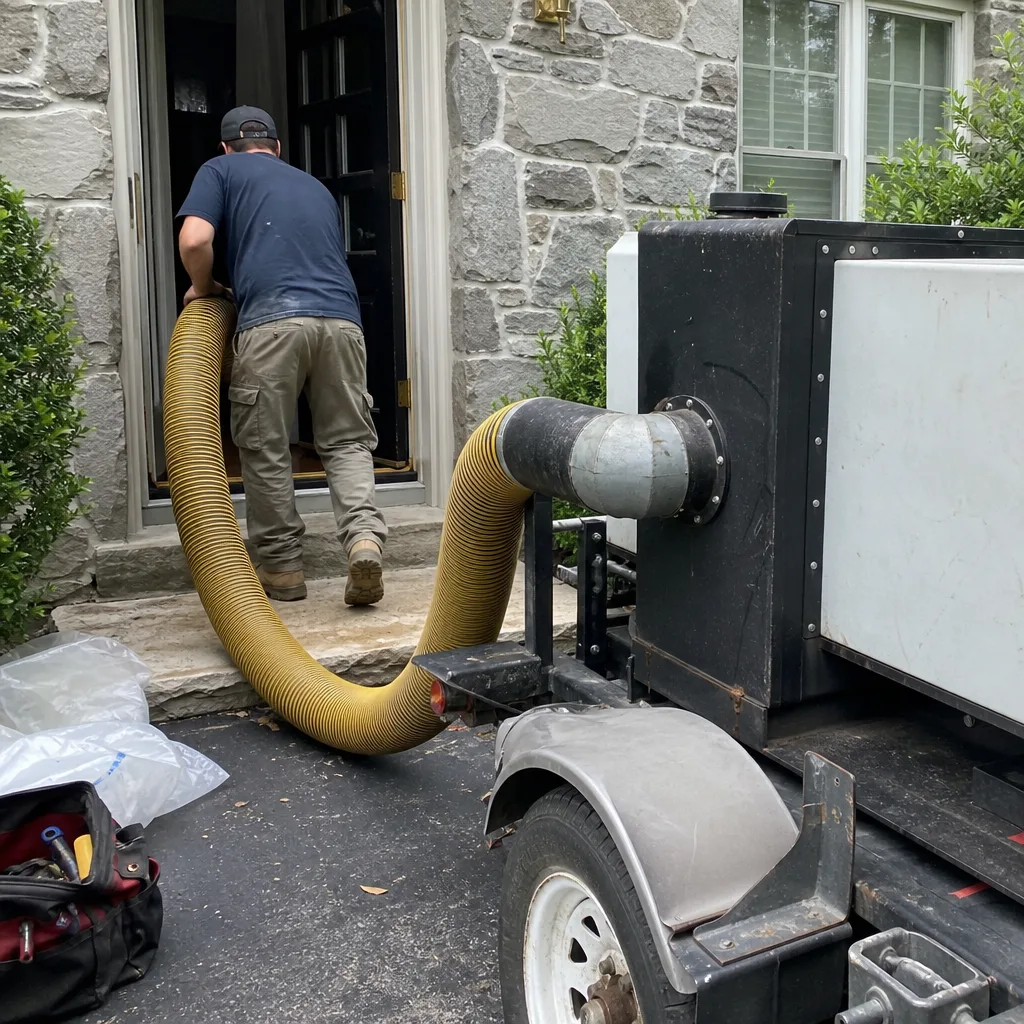
- Professional-grade equipment: Rotary brush cleaning on our jobs uses Rotobrush equipment. Extraction uses Nikro negative-pressure systems. Negative-pressure extraction means a vacuum-sealed environment at the work area so extracted lint goes into the machine, not back into your laundry room. Customers who want to look up the equipment before agreeing to a price can – these are trade-recognized brands with published specifications.
- Background-checked, uniformed technician: Haven Standard Clause 3: Verified Crews. The technician is identified by name before arriving. No unmarked trucks, no subcontracted crews on residential jobs.
- 365-Day Done Right Promise: If the work isn’t right, we make it right. This is in writing on every job, not subject to manager approval, not voided by normal use of the dryer.
When to Clean Your Dryer Vent in Washington
Annual cleaning is the standard recommendation for DC-area homes, aligned with DC Fire and Emergency Medical Services guidance. There are specific situations where earlier cleaning makes sense:
- Drying time has increased noticeably – a full load that used to take 45 minutes now takes 70 or more
- The dryer exterior or the laundry room feels warmer than it used to during a cycle
- You’ve moved into a home and don’t know when the vent was last cleaned
- The vent cap on the exterior is missing, bent, or the flap doesn’t open freely
- You’ve noticed a musty or burning smell during or after a dryer cycle
- The dryer has been shutting off mid-cycle (a thermal overload response to inadequate airflow)
In Washington’s rowhouse stock, we’d add one specific trigger: if your home was built before 1980 and you’ve never had the vent system inspected, scheduling a Dryer Vent Inspection with a camera look at the duct condition is worth doing regardless of performance symptoms. The foil flex duct installed in many of these homes has a service life, and deteriorated material can fail inside the wall without producing an obvious symptom until lint is accumulating somewhere it shouldn’t be.
Dryer Vent Cleaning vs. Air Duct Cleaning: Are They the Same Job?
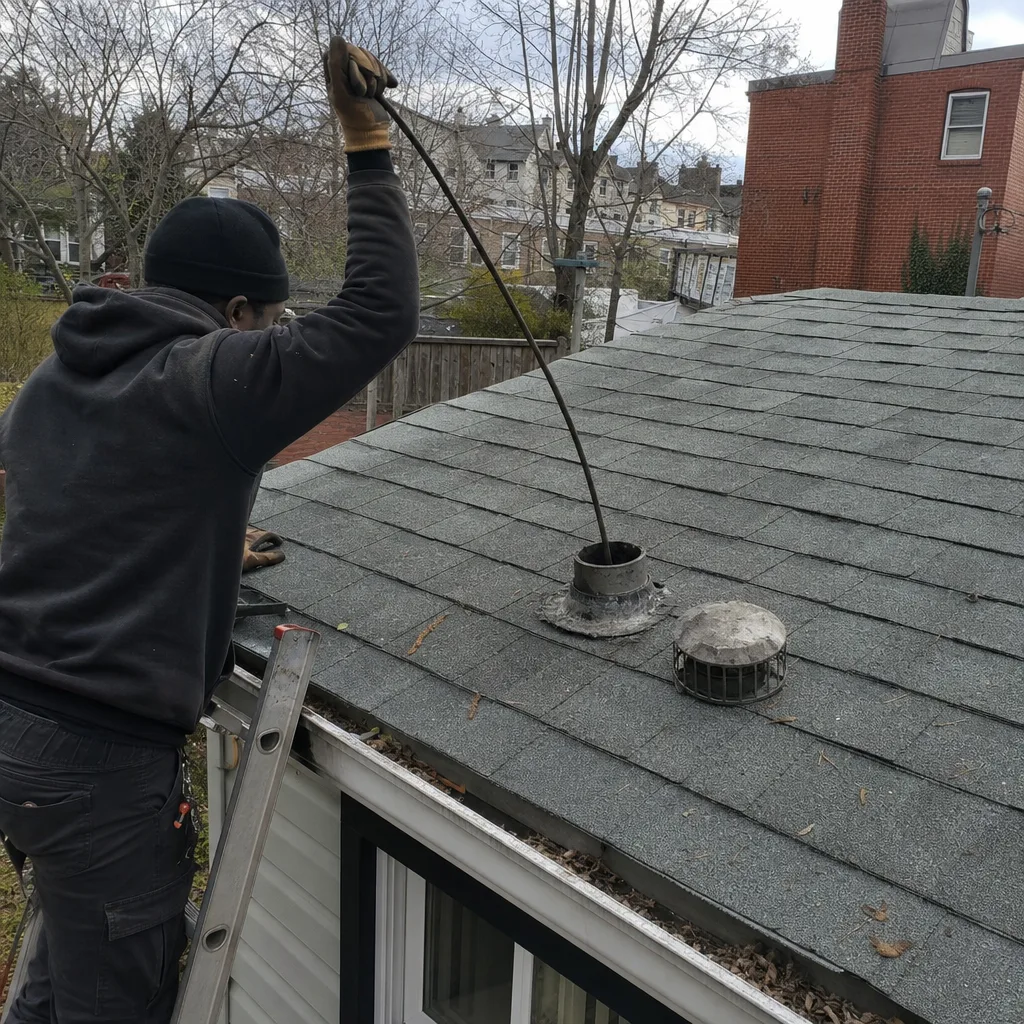
No. Dryer vent cleaning and Vent Cleaning (air duct cleaning) are separate jobs that use some overlapping equipment but address completely different systems. The dryer vent is a single exhaust path that carries hot, moist, lint-laden air from the dryer to the exterior of the building. Air duct cleaning addresses the HVAC supply and return network that circulates conditioned air throughout the home. A camera inside a dryer vent is looking for lint build-up and duct integrity. A camera inside an HVAC duct is looking for debris, biological growth, and system contamination.
Combining them on the same visit saves money on the truck roll. Treating them as the same job is a mistake – each needs its own scope, its own equipment setup, and its own documented result.
If you’re researching both and want to understand what the combined job looks like in a Washington, DC home, our home covers all the services we provide with the same written-price and photo-record standard.
FAQs – Dryer Vent Cleaning Cost in Washington, DC
How much does dryer vent cleaning cost in Washington, DC in 2026?
Dryer vent cleaning in Washington, DC costs between $99 and $249 for most residential jobs in 2026, with $149 being the most common price for a standard run in a rowhouse or townhome. Complex configurations – rooftop exits, runs over 25 feet, or vents with four or more elbows – tend toward the higher end. Multi-unit buildings with four or more units on the same visit typically qualify for per-unit pricing in the $79 to $119 range. Call (240) 363-3380 and we’ll give you a written price for your specific vent before any work starts.
How often should I have my dryer vent cleaned in Washington, DC?
Once per year is the appropriate frequency for most Washington, DC homes, consistent with DC Fire and Emergency Medical Services guidance. Homes with longer vent runs, large households doing more than five loads per week, or dryers venting through complex paths should consider cleaning every eight to ten months. The annual cycle also aligns with the DC spring cleaning window (March through May), when technicians can inspect the termination cap for winter bird nesting before peak summer use.
Is dryer vent cleaning worth the cost, or can I do it myself?
Professional Dryer Vent Cleaning services are worth the cost for most Washington homes for a specific reason that goes beyond equipment: the camera inspection that comes with a professional job shows what’s actually in the duct, not just what the brush pulls out. Consumer dryer vent cleaning kits – flexible rod sets with a brush attachment – can clear accessible lint but have no way to reach a compacted plug at a distant elbow or identify a disconnected section inside the wall. In DC’s rowhouses, where vent runs are often improvised and aging, the camera record is the job, not an add-on. Safety note: a partially cleaned vent with a plug pushed further into the run can restrict airflow more than it did before cleaning – which is why professional-grade negative-pressure extraction, not just brush-and-push, matters for complex DC vent configurations.
Can a dirty dryer vent cause a fire?
Yes. The U.S. Fire Administration reports that dryers and washing machines account for approximately 2,900 home fires annually, with failure to clean the dryer vent listed as the leading contributing factor. In Washington, DC’s rowhouse stock, where vent runs are longer and more complex than national averages, the risk is proportionally higher because lint has more horizontal distance to accumulate. This is also why DC Fire and Emergency Medical Services recommends annual cleaning specifically for residential properties. A documented cleaning record – which is what CleanRun’s photo record provides – gives you a verifiable maintenance history, which can matter for home insurance purposes.
What’s included in a CleanRun dryer vent cleaning job?
Every CleanRun dryer vent cleaning job in Washington includes: a written price delivered before work starts (Haven Standard Clause 1); rotary brush cleaning using Rotobrush equipment through the full vent run; negative-pressure extraction using Nikro equipment so lint is captured rather than redistributed; a documented photo record of the inside of the duct before and after cleaning; inspection of the termination cap and vent connection at the dryer; and the 365-Day Done Right Promise in writing. If the camera finds something outside the cleaning scope – a disconnected section, a missing cap, a nest – it’s photographed and quoted as a separate line item before anything is done. Call (240) 363-3380 for a written estimate specific to your home.
How long does dryer vent cleaning take?
Most standard dryer vent cleaning jobs in Washington, DC take between 45 minutes and 90 minutes from setup to cleanup. A short, straight run in a newer condo in NoMa or Capitol Riverfront can be closer to 45 minutes. A complex rowhouse run in Petworth or Columbia Heights with multiple elbows and a ground-level exit that requires clearing two access points typically runs 75 to 90 minutes. If the camera finds a disconnected section or a nest requiring removal, add 20 to 40 minutes for that portion of the work – and a separate line item in the written price before anything additional is started.
What’s the difference between a $79 coupon and a legitimate written price?
$79 is typically the price to get the technician in the door under a “basic service” category that excludes most of what a real job requires: extended runs, elbow counts above a minimum, cap replacement, nest removal, or anything the technician determines on arrival makes the job “non-standard.” By the time those line items are added, the invoice in Washington typically resolves to $200 or more – which may or may not be a fair price for the work done, but which you couldn’t compare to anything because the starting number wasn’t a real price for your job. A legitimate written price covers the actual scope of your specific job before the work starts. That’s Haven Standard Clause 1, and it’s the only pricing model CleanRun uses.
Written by Tomas Reyes, Owner at CleanRun Air Duct Cleaning Washington, serving Washington, DC since 2013. Pricing reflects the Washington, DC market as of 2026. CleanRun offers free estimates with a written price before any work starts – call (240) 363-3380.
What Our Customers Say
"Flat price agreed up front, no per-vent add-ons at the end. That was the whole reason I did not call the coupon company."
- Suzanne B."My allergies genuinely improved. They also told me the ducts did not need sealing, which I had been quoted for elsewhere."
- Petra K."The before and after photographs of each run are the reason I used them. You cannot argue with what came out of the return."
- Marguerite O.