
Whole-system duct and dryer vent check with before-and-after photos - you see exactly what came out of your vents
That "$99 whole-house special" is a bait ad - the real number appears once they are in your hallway, or the "clean" is a shop-vac at the register. We photograph the inside of your ducts before and after instead.
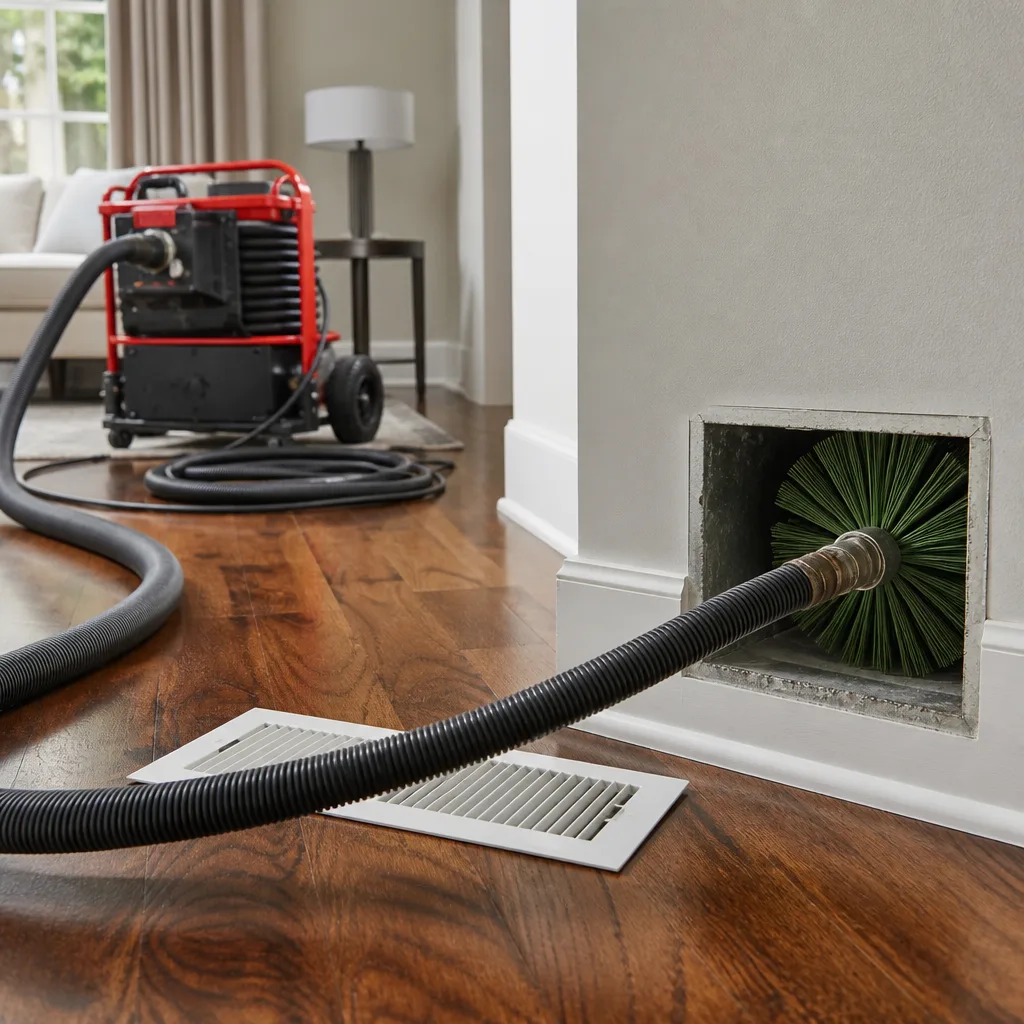
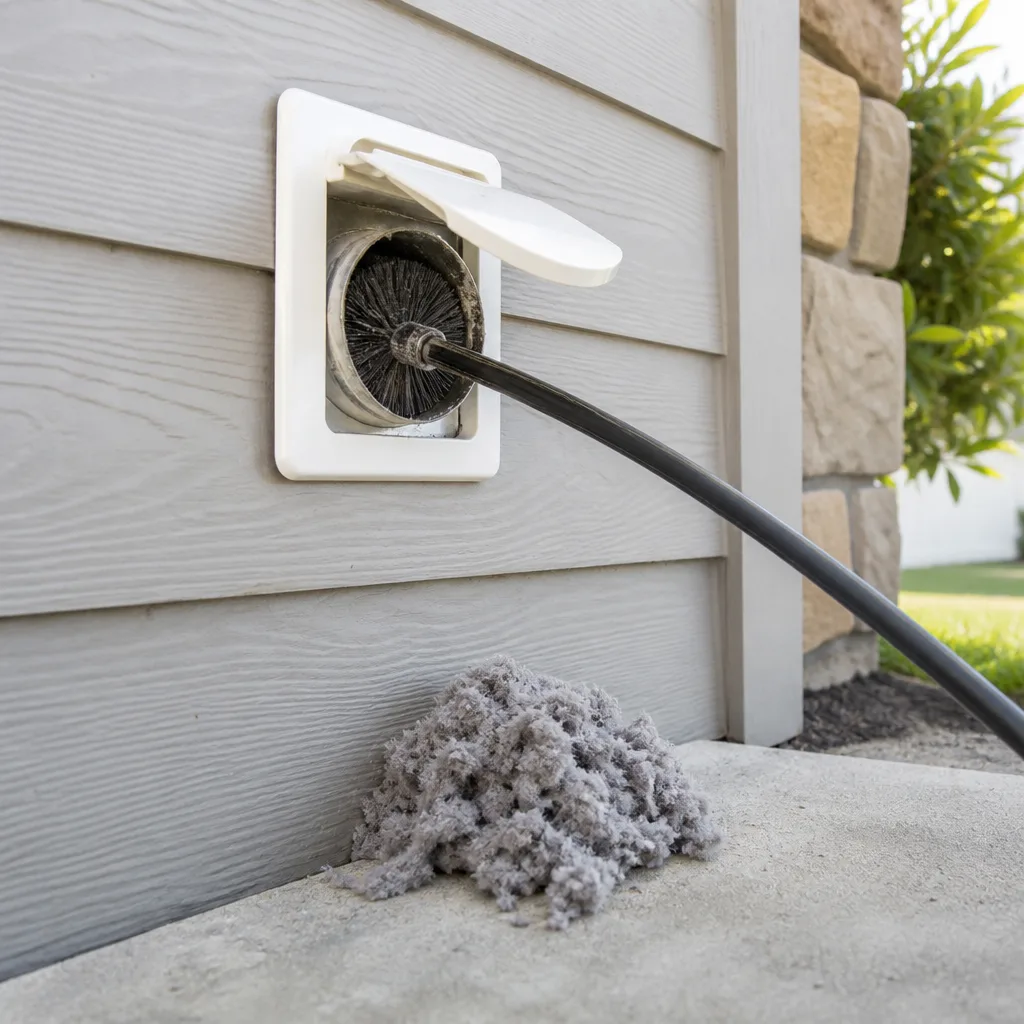
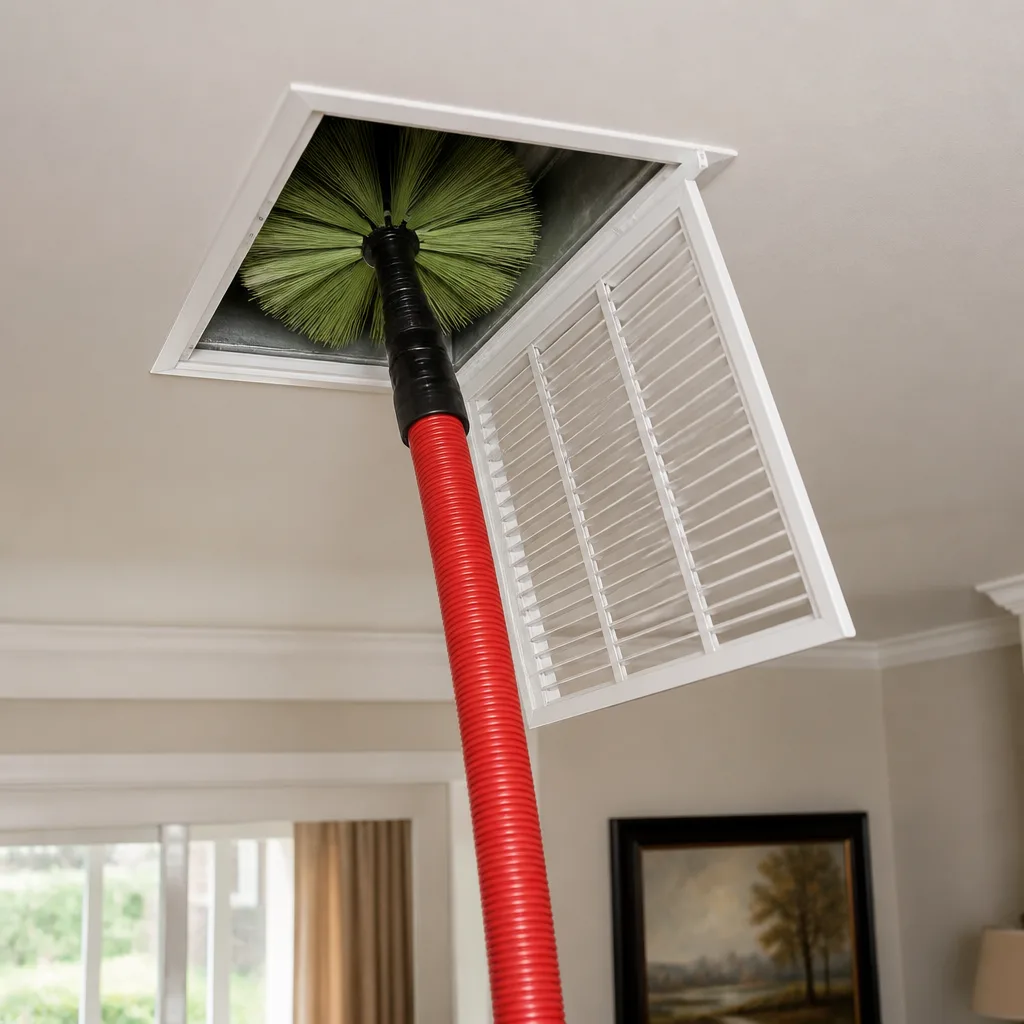
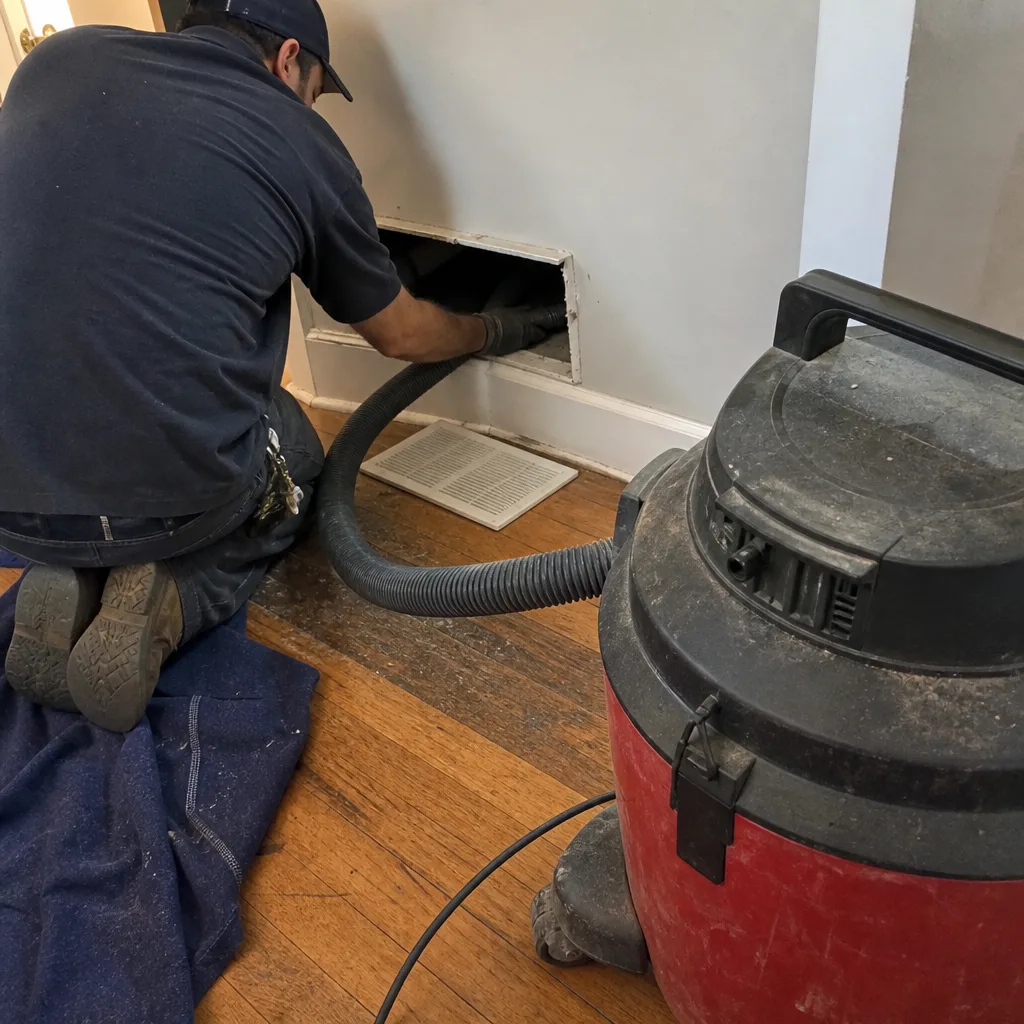 Before
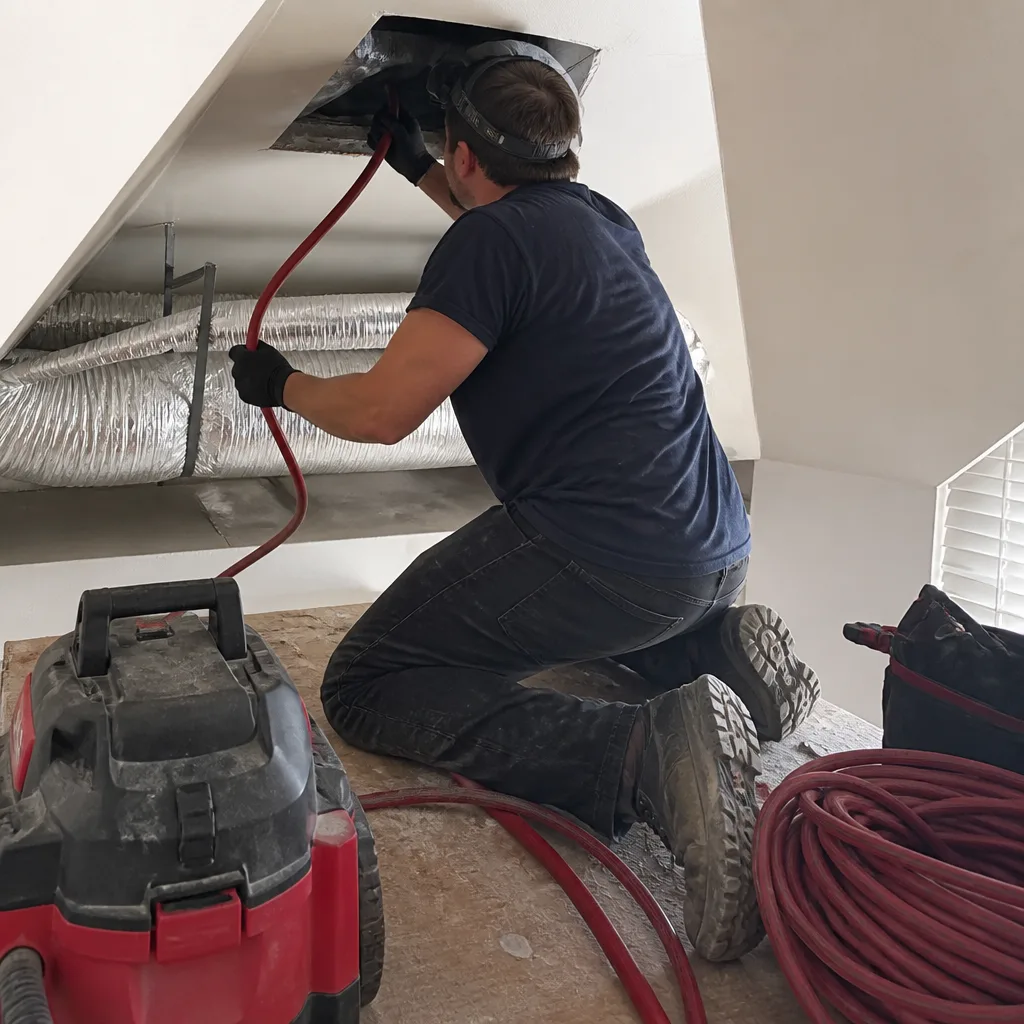 After
After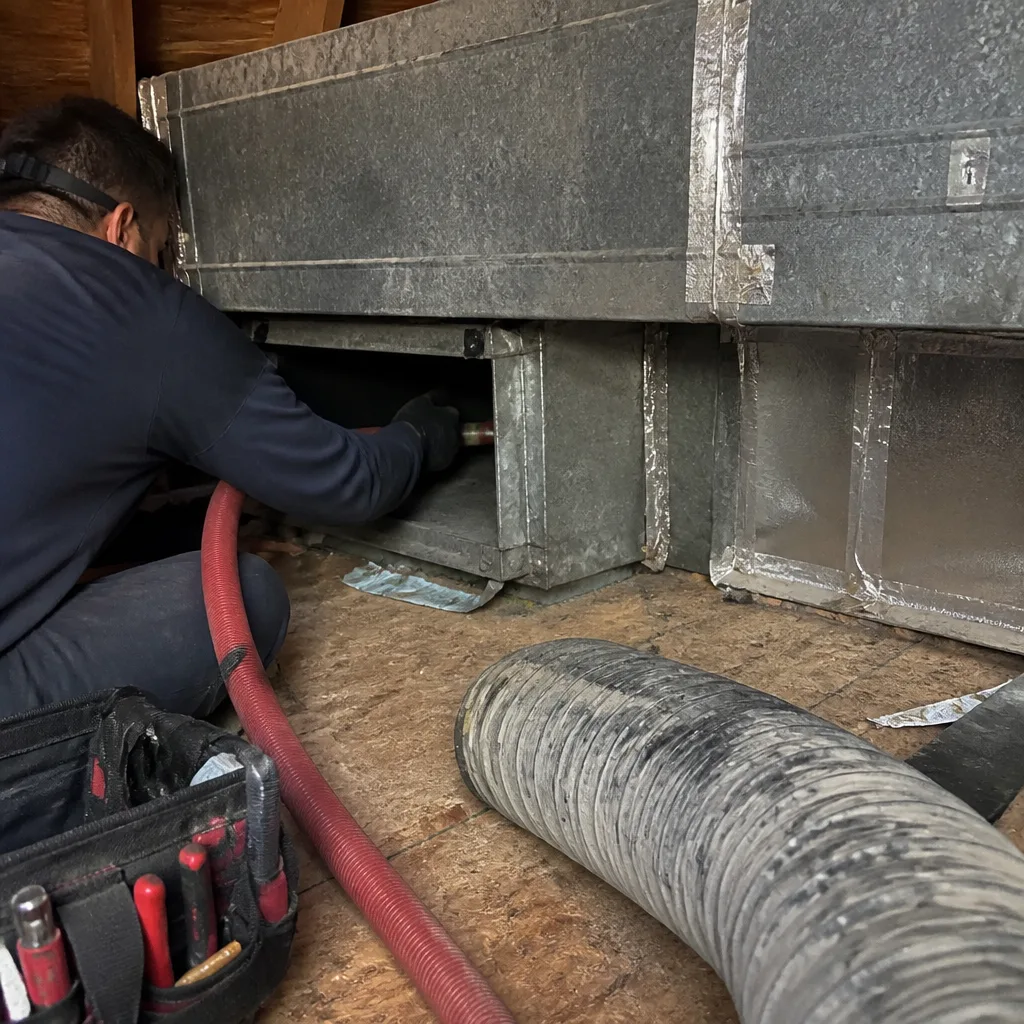 Before
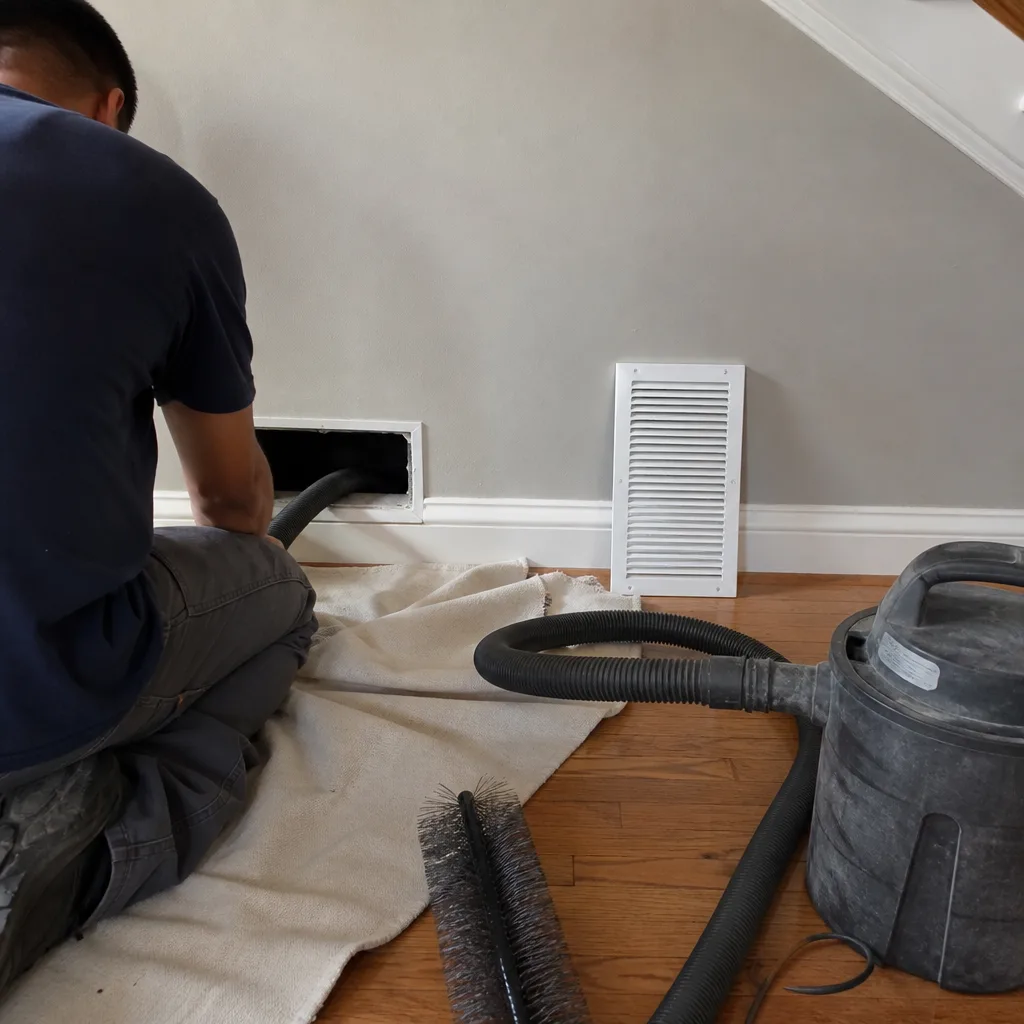 After
After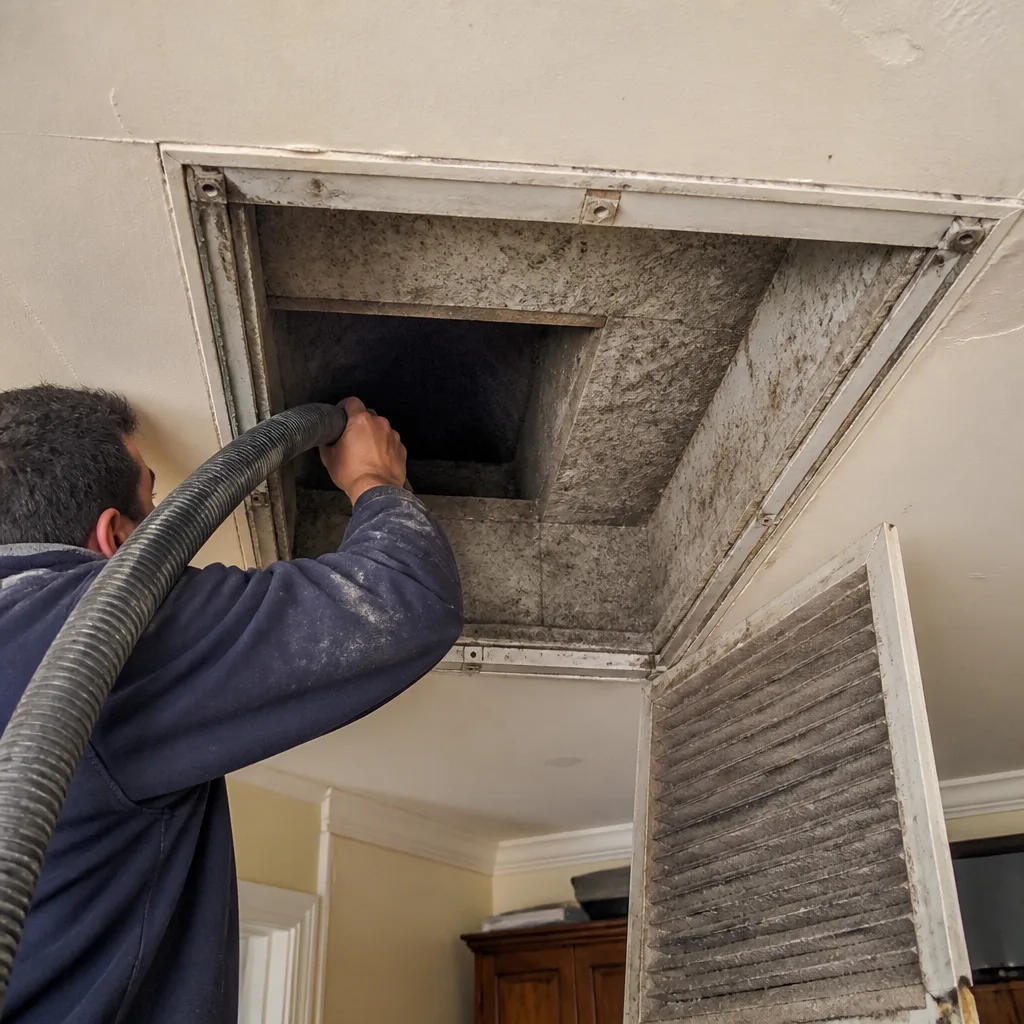 Before
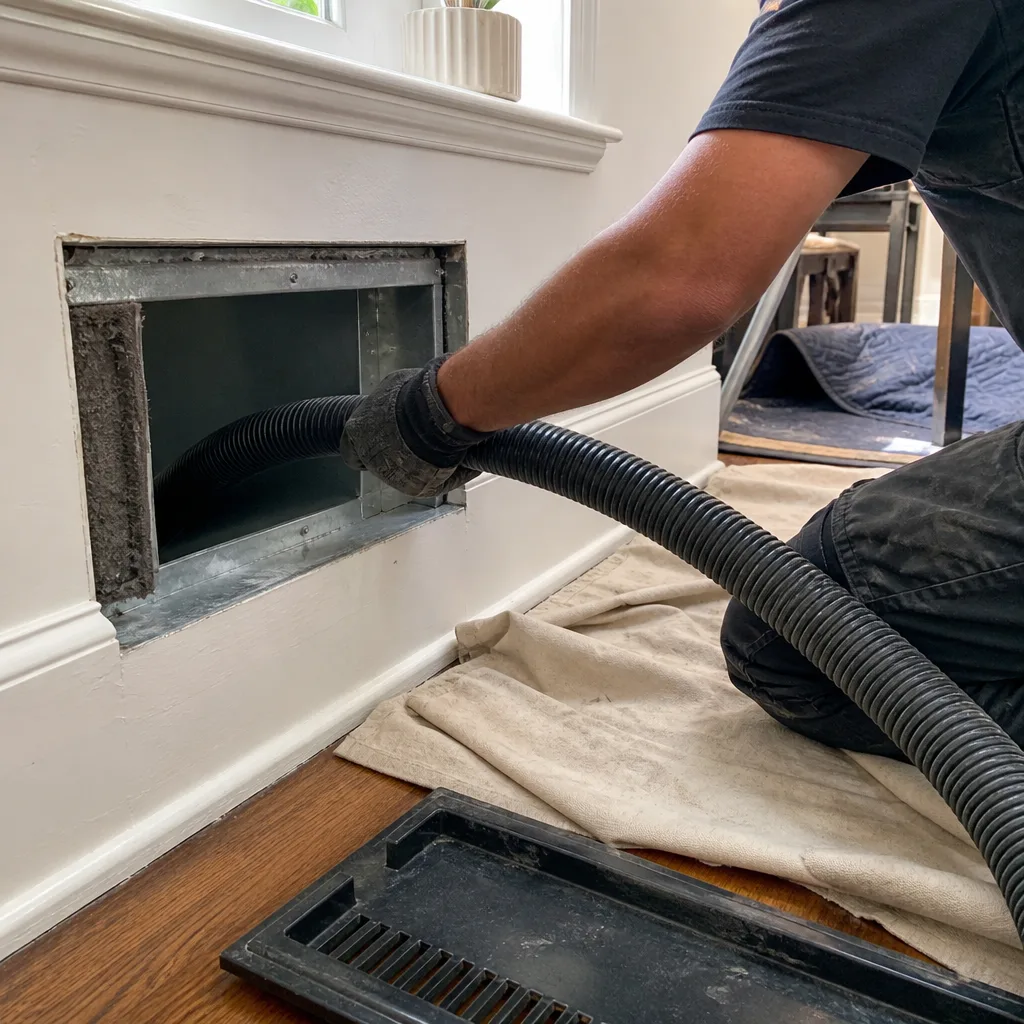 After
AfterDryer Vent Inspection in Washington, DC
A dryer vent inspection in Washington, DC typically runs $79-$149 as a standalone service and takes 45 to 75 minutes from first look to final photo. Our technician runs a camera through every inch of the duct run, documents what the lens finds, and hands you a written scope before a single cleaning tool comes out. If you already have a quote from someone else, bring it – we’ll put our number next to it in writing at no cost.
Most Washington homeowners book a dryer vent inspection because the dryer is taking two cycles to dry a load, or because a home inspector flagged the vent during a purchase and suggested Dryer Vent Cleaning services. Both are good reasons. But the more common trigger is quieter: a duct that hasn’t been looked at in years and sits behind a wall where nobody checks. In a city with the building density of Washington – row houses in Capitol Hill, high-rise condos in NoMa, mid-century colonials in Shepherd Park – vent paths are rarely straight, and lint accumulates faster in longer, bent runs than the appliance manual ever suggests.
Our Dryer Vent Cleaning in Washington page covers the full cleaning service. This page is specifically about the inspection side: what we look for, what we document, and how pricing works. If you’d like to schedule or get a written price today, call us at (240) 363-3380 – a live person answers every call.
When You Need a Dryer Vent Inspection
Not every situation calls for an immediate cleaning. Sometimes what’s needed first is an accurate picture of what’s actually inside the duct. Here are the situations we see most often in Washington:
- Your dryer takes longer than one cycle to dry a normal load. Extended dry times are the most consistent field signal of a restricted vent. In Petworth and Brightwood, where 1930s and 1940s row houses often have duct runs that exit through the floor rather than the wall, lint can pack into horizontal sections faster than in newer construction. An inspection finds exactly where the restriction starts.
- You’ve never had the vent inspected and the home is more than three years old. The U.S. Fire Administration’s data consistently points to failure to clean as the leading cause of dryer fires. In Washington, DC, where many homes change hands without duct documentation in the seller disclosure, “never inspected” is not unusual – it’s the norm.
- A home inspector flagged the vent during purchase. Home inspectors mark vents deficient when they can see a visible problem from outside, but they rarely run a camera. A CleanRun inspection gives you the interior photo record that turns a flagged line item into a documented condition you can negotiate with or simply correct.
- The exterior vent hood doesn’t open fully when the dryer runs. This is one of the cleaner field tests a homeowner can do themselves: hold your hand near the exterior flap while the dryer runs. Weak airflow or a flap that barely moves means something is blocking the duct. We see this frequently in Shaw and Columbia Heights, where aluminum foil flex duct – installed decades ago and still in place – has collapsed at a bend.
- You smell something musty or hot near the dryer. A burning smell near a dryer is not something to observe and wait on. A hot, scorched odor usually means lint has collected close enough to the heating element to be a fire risk. That situation calls for an inspection the same day, not next week. Call (240) 363-3380 and we’ll get a technician out.
- Your duct runs through an unconditioned space – attic, crawl space, or exterior wall cavity. Washington summers bring sustained humidity, and unconditioned duct runs collect condensation. In Chevy Chase DC and American University Park, we regularly find inspections revealing moisture damage and mold growth inside runs that exit through exterior walls facing north – a combination of long duct path and limited solar exposure that keeps the duct cool and damp.
Our Dryer Vent Inspection Process
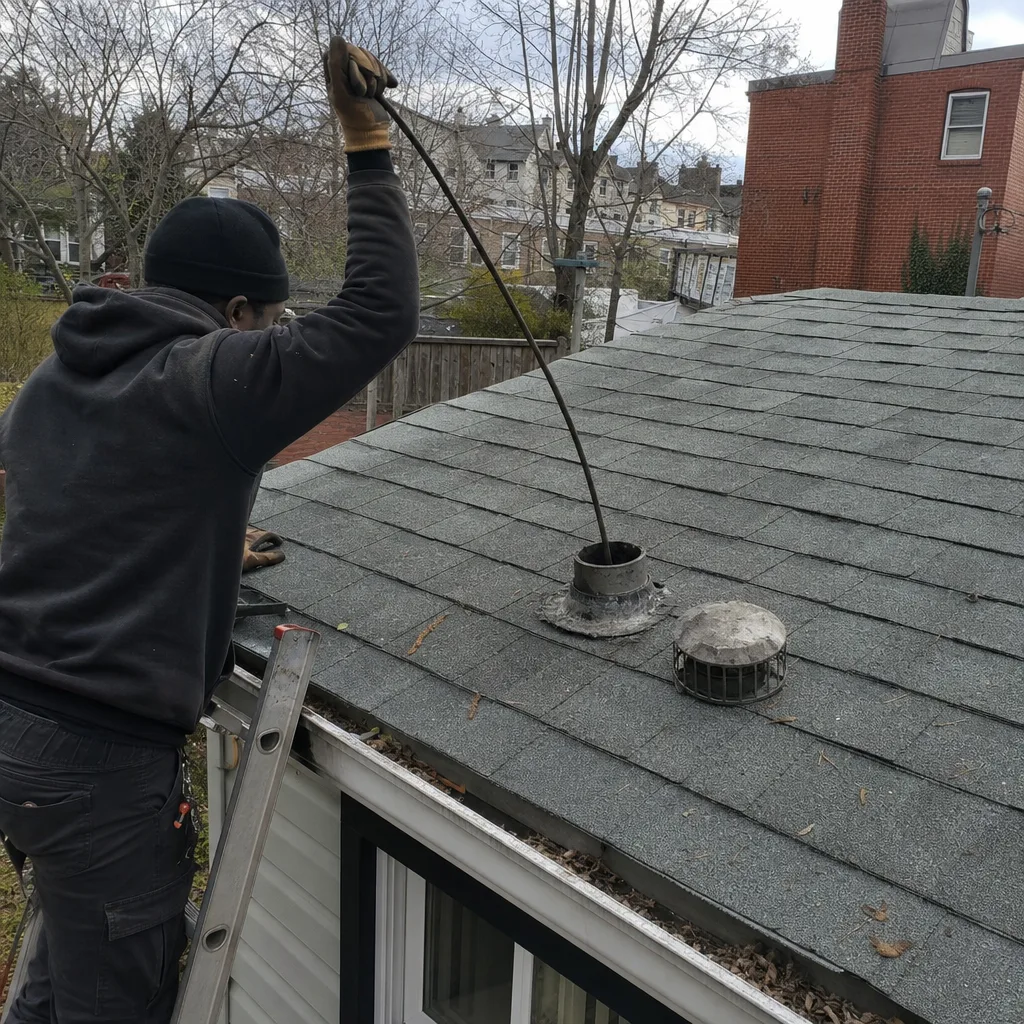
Every inspection follows the same documented sequence. Nothing is skipped based on how busy the day is or how simple the job looks from the outside. The H.A.V.E.N. Standard – the operational standard CleanRun runs every job under – requires a consistent process on every visit, which is why the photo record from a straightforward Brookland townhouse looks the same in format and detail as one from a ten-story Dupont Circle condo with a 35-foot duct run.
- Written price before any work starts. This is Haven Standard Clause 1, and it applies to inspections as much as it applies to cleaning jobs. Before the technician touches the duct, you have a written price in hand. The number on that page is what you pay. There are no add-ons discovered at the end.
- Exterior vent assessment. The technician photographs and measures the exterior termination point – the flap, hood, or louvered cover on the outside wall or roof. We check for pest screens (a code violation in DC for dryer vents, because they catch lint and create fire hazards), damaged flaps, and signs of backdraft. In Georgetown row houses, we frequently find hoods that have been painted over by previous owners, reducing the opening by 30 to 50 percent.
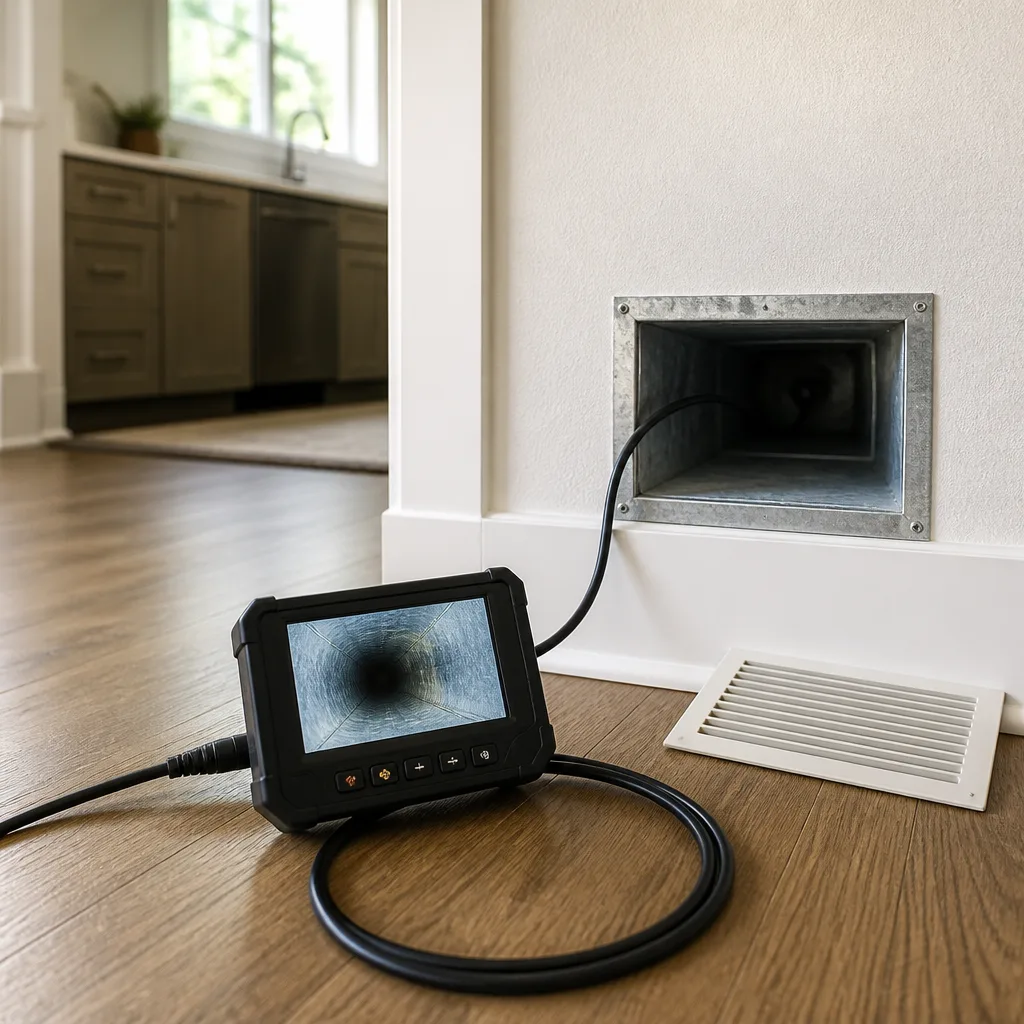
- Camera run through the full duct. Using a flexible inspection camera, the technician passes the lens through the entire duct run from the appliance connection to the exterior termination. Every foot is documented. The camera picks up lint accumulation depth, duct material condition, collapsed sections, disconnected joints, and any pest intrusion. In a typical 20-foot Capitol Hill row house run, this takes about 20 minutes. A high-rise run through a shared shaft takes longer and is priced accordingly – which you know before we start.
- Airflow measurement. We use a calibrated gauge to measure actual airflow velocity at the termination point and compare it against the dryer manufacturer’s minimum spec. A reading below spec with a visually clear duct points toward a crush, disconnect, or transition problem that the camera may have already flagged but the airflow number confirms independently.
- Written findings report with photos. The technician compiles the camera images, the exterior assessment, and the airflow reading into a written findings document you receive before leaving the driveway. This is the Documented Photo Record that CleanRun has included on every job since 2013. It is not a summary paragraph. It is the actual images with labeled timestamps and duct sections identified by location.
- Written recommendation with scope and price. If the inspection finds a condition that warrants cleaning, repair, or replacement, the technician writes the scope and the price on the same visit. You decide whether to proceed. There is no pressure, no return trip fee if you wait, and no expiration date attached to the estimate.
BeforeAfterDryer Vent Inspection Pricing in Washington, DC
A standalone dryer vent inspection in Washington, DC runs $79-$149 for a single-family home or ground-floor unit with a standard duct run under 25 feet. The written price is delivered before the inspection begins – Haven Standard Clause 1 applies to every job, including inspections.
Several factors move the number within that range:
- Duct length and configuration: A straight 12-foot run from a Capitol Hill basement dryer to an exterior wall is at the low end. A 35-foot run with three elbows in a Chevy Chase DC colonial that exits through the roof is at the high end. Every foot and every elbow is documented in the written scope.
- Access difficulty: High-rise buildings and condos – common in Dupont Circle, NoMa, and the Wharf – often have shared vertical duct shafts that require coordination with building management and longer inspection time. This is reflected in the written price upfront.
- Combined inspection and cleaning: If you book a dryer vent inspection and cleaning together, the inspection fee is typically rolled into the combined job price. The combined service in Washington generally runs $149-$299, depending on duct length, material type, and debris volume found on the camera pass.
| Service | Typical Range (Washington, DC) |
|---|---|
| Standalone dryer vent inspection | $79 – $149 |
| Inspection + cleaning (standard run, under 25 ft) | $149 – $229 |
| Inspection + cleaning (long run or high-rise) | $229 – $299 |
| Inspection only (high-rise / difficult access) | $119 – $149 |
If you have a written estimate from another company, the Free Second Opinion is straightforward: call (240) 363-3380, share the scope and number, and we put our written price next to it. No appointment required to get the comparison. You decide from there.
Every inspection is backed by the 365-Day Done Right Promise: if something in the inspection or subsequent work isn’t right, we return and correct it. That commitment is in writing on every job record, not stated verbally and forgotten when the truck leaves.
What We Actually Find During Washington, DC Dryer Vent Inspections
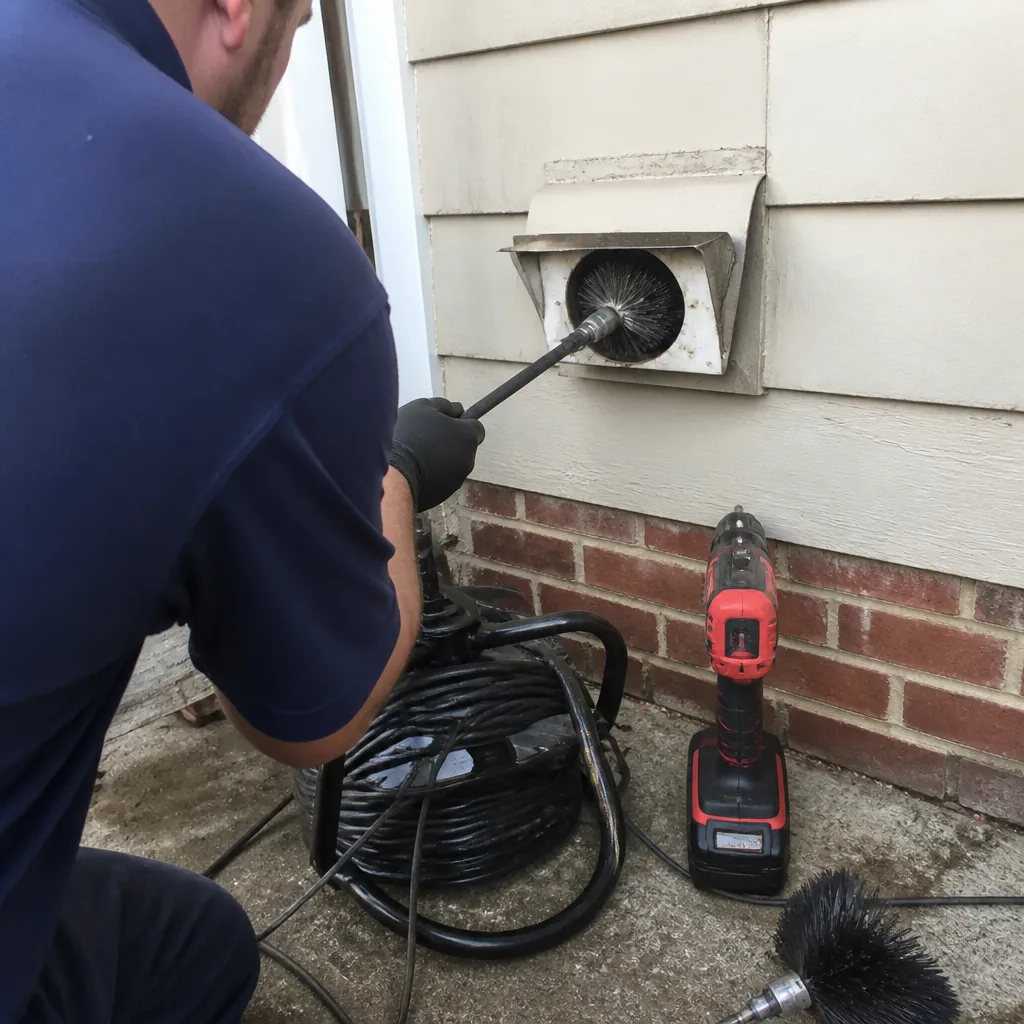
After inspecting dryer vents across Washington since 2013, and across more than 52,000 homes total, certain conditions show up on the camera more than others. These are not hypotheticals – they’re documented findings from jobs in specific Washington neighborhoods.
In Petworth and Columbia Heights, the most common finding is foil flex duct that has kinked or partially collapsed at a transition from the appliance connection to the wall cavity. The dryer still runs. Clothes still dry – eventually. But airflow is running at 40 to 60 percent of spec, and lint is packing into the kink. The camera finds it in the first 30 seconds. The fix is either a cleaning and a straightened transition or a short duct replacement, both of which are scoped and priced on the same visit.
In Capitol Hill and the H Street corridor, row houses from the 1890s through the 1920s frequently have dryer vents that were added after original construction and run through interior wall cavities that were never designed for it. We find disconnected joints – duct sections that have separated at a coupling and are venting lint directly into the wall cavity rather than to the exterior. This is a fire risk and a moisture risk simultaneously. Our technicians photograph the disconnection location with the camera, note the wall section in the written report, and scope the repair before leaving.
In Cleveland Park and Friendship Heights, the inspection frequently turns up pest intrusion – bird nests at the exterior termination or rodent entry through a damaged hood. A nest at the vent exit can create the same airflow restriction as a full lint blockage, and the camera makes it immediately apparent. The Rotobrush extraction equipment we bring on Vent Cleaning jobs handles debris removal efficiently, but the inspection camera is what identifies the condition so the right tool goes in.
FAQs – Dryer Vent Inspection in Washington, DC
How much does a dryer vent inspection cost in Washington, DC?
A standalone dryer vent inspection in Washington, DC runs $79-$149, written before any work begins. The range depends on duct length, access difficulty, and building type – a standard single-family home with a short run is at the low end; a high-rise with a long shared shaft is at the high end. If you combine the inspection with a cleaning on the same visit, the inspection fee is typically folded into the combined price of $149-$299. See How Much Does Dryer Vent Cleaning Cost? (2026 Price Guide) - Washington, DC for full pricing details. Call (240) 363-3380 for a written price specific to your address and setup.
Is a dryer vent inspection different from dryer vent cleaning?
Yes. An inspection uses a flexible camera to document the interior condition of the duct – what’s there, where it is, and how bad it is – without removing debris. Cleaning removes that debris using negative-pressure extraction and rotary brush tools. An inspection tells you what the duct needs. Cleaning does the work. We recommend running the inspection first so the cleaning scope is based on documented evidence rather than an assumption. Many customers book both on the same visit, which is the most efficient approach. More detail on the cleaning side is on our Dryer Vent Cleaning in Washington page.
How often should a dryer vent be inspected in Washington, DC?
Once a year is the standard recommendation for a household running four or more laundry loads per week. Washington’s row house stock and mid-century colonial neighborhoods – Shepherd Park, Brightwood, Takoma – have duct configurations that accumulate lint faster than newer single-story construction because of longer runs and more elbows. If you have a household with pets that shed, or if anyone uses heavy textiles like rugs or blankets regularly, the interval should be shorter. The written findings report from each inspection notes a recommended follow-up interval based on what the camera actually found – not a generic timeline.
Can a dryer vent inspection be done in a condo or apartment in Washington, DC?
Yes, and we do them regularly in buildings across NoMa, Navy Yard, and Dupont Circle. High-rise inspections require access to both the dryer connection inside the unit and the exterior or roof termination. In some buildings that means coordinating with building management – something we handle directly when given a contact. The duct shaft configuration in multi-unit buildings is more variable than in single-family homes, which is reflected in the written price. Call (240) 363-3380 with your building address and we’ll confirm access requirements and price before scheduling.
What happens if the inspection finds a problem?
The technician writes the finding in the report with the camera image and location identified by duct section. Then a separate written scope and price for the repair or cleaning is prepared on the same visit. You decide whether to proceed that day, schedule a return, or take time to compare options – including getting a second opinion on our written scope. The 365-Day Done Right Promise covers any work that follows the inspection: if the result isn’t right, we return and correct it, backed in writing.
Why Washington Homeowners Choose CleanRun for Dryer Vent Inspection
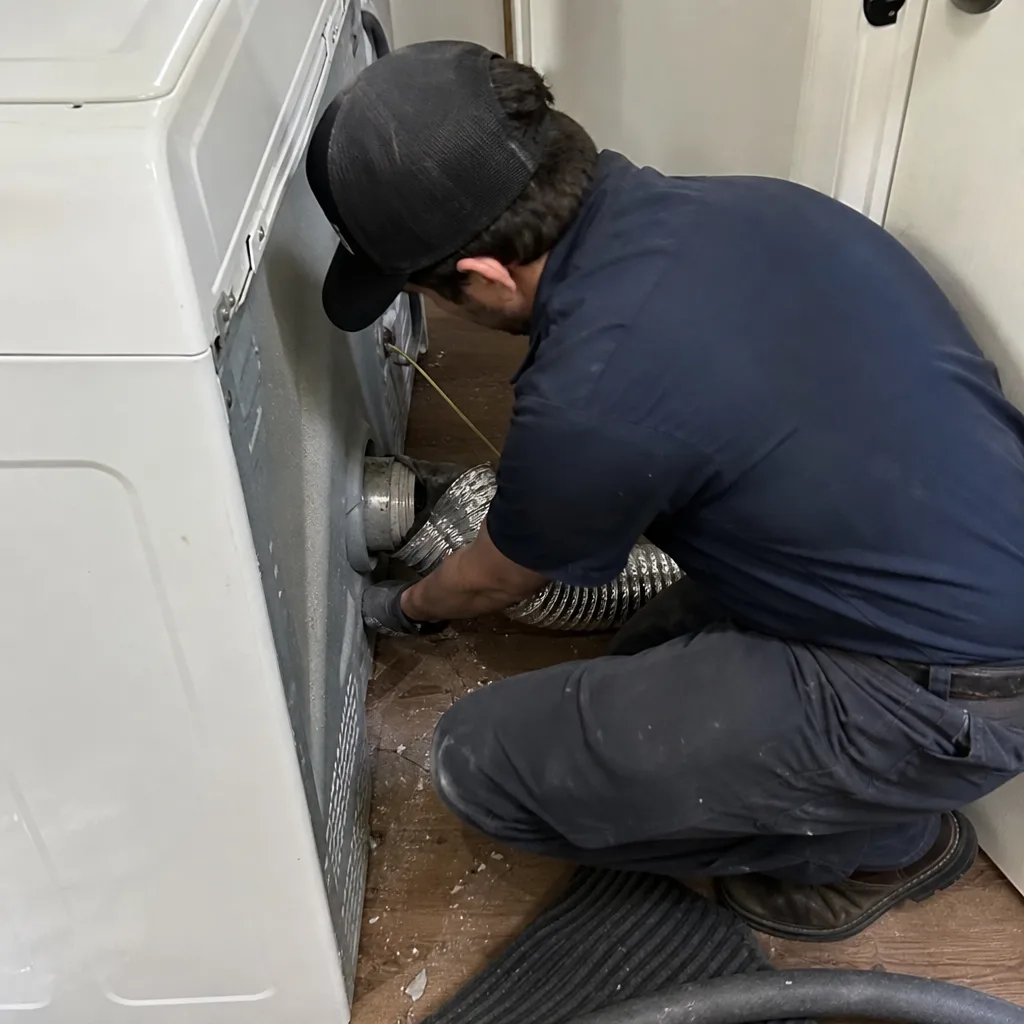
The dryer vent service category in Washington, DC runs heavily on $79 coupons that turn into a different number once a technician is inside the door. CleanRun operates on a different system: the number in the written scope is the number on the invoice, every time, on every job, including inspections. That’s Haven Standard Clause 1, and it has applied to every one of the more than 52,000 homes served since 2013.
The photo record is the other piece that separates an inspection from a visit. When our technician leaves your Brookland row house or your Tenleytown condo, you have the camera images – timestamped, labeled by duct section, showing the interior condition before and after any work. That record is yours. It goes in your home file. It’s useful if you sell the property, if you have a warranty question, or simply if you want to remember what was found and when.
Tomas Reyes built CleanRun on the idea that documentation is the service – not the paperwork around it. The camera, the written price, the photo record, and the 365-Day Done Right Promise aren’t marketing language. They’re operational requirements that apply to every technician on every job in Washington and across the metro. You can see what we do from our home page if you’d like the full picture of how CleanRun operates across all services.
Technicians are background-checked, uniformed, and identified by name before arrival, operating under Haven Standard Clause 3: Verified Crews. Equipment used on inspection and cleaning jobs includes professional-grade tools from Rotobrush and Nikro – brands you can look up independently before agreeing to a price.
Schedule a Dryer Vent Inspection in Washington, DC
If your dryer is running longer than it should, if a home inspector flagged the vent, or if you simply don’t know what’s inside the duct, the right next step is a camera inspection with a written report. Call (240) 363-3380 to get a written price for your specific address – a live person answers every call. There’s no fee to compare our written price against a competitor’s estimate, and the 365-Day Done Right Promise covers every job we do in Washington.
Written by Tomas Reyes, Owner at CleanRun Air Duct Cleaning Washington, serving Washington since 2013.