
Whole-system duct and dryer vent check with before-and-after photos - you see exactly what came out of your vents
That "$99 whole-house special" is a bait ad - the real number appears once they are in your hallway, or the "clean" is a shop-vac at the register. We photograph the inside of your ducts before and after instead.
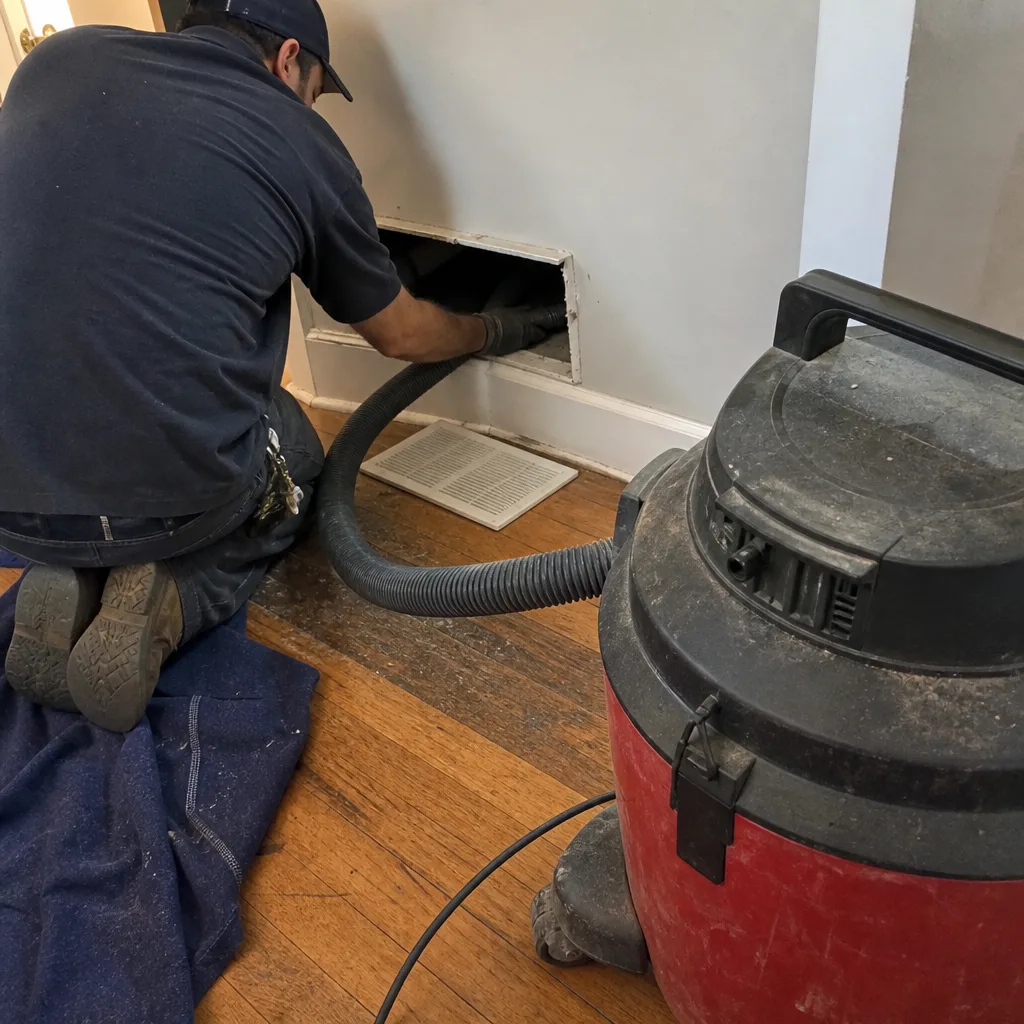 Before
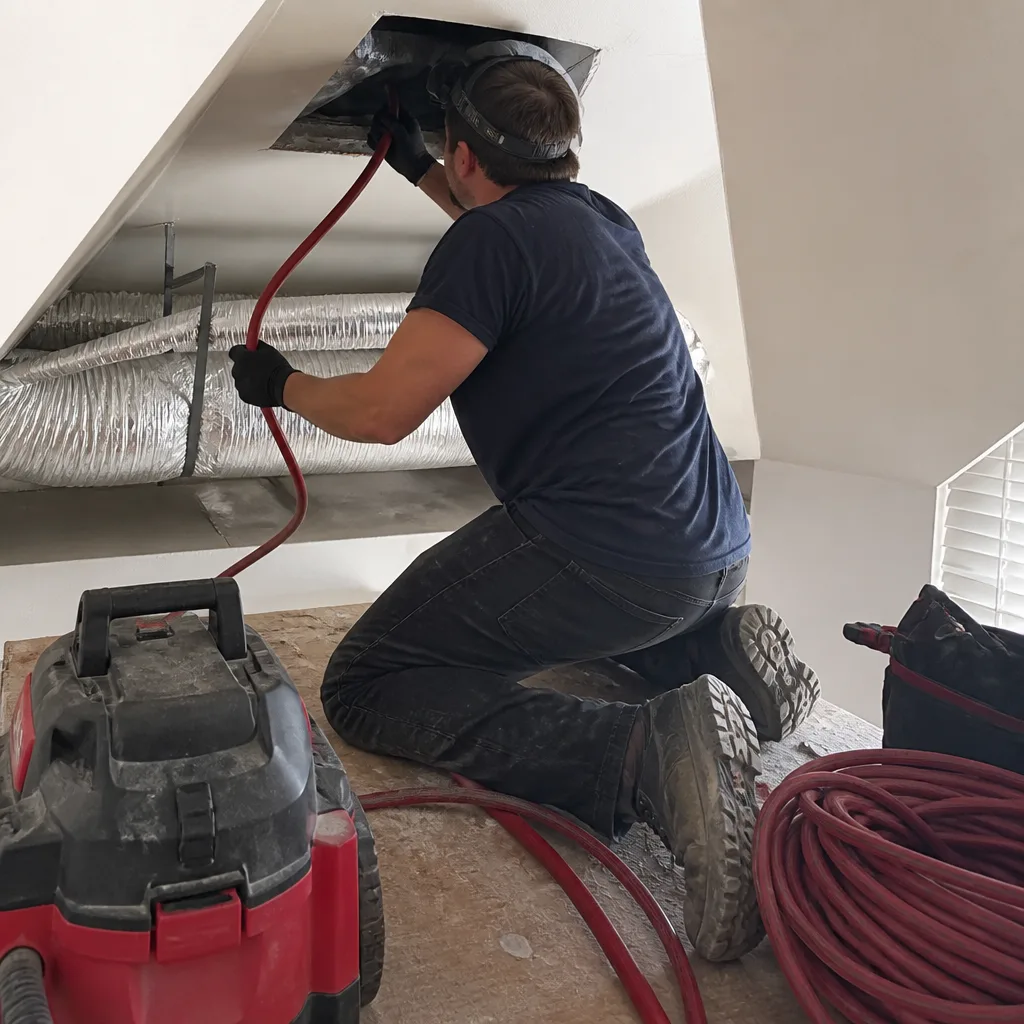 After
After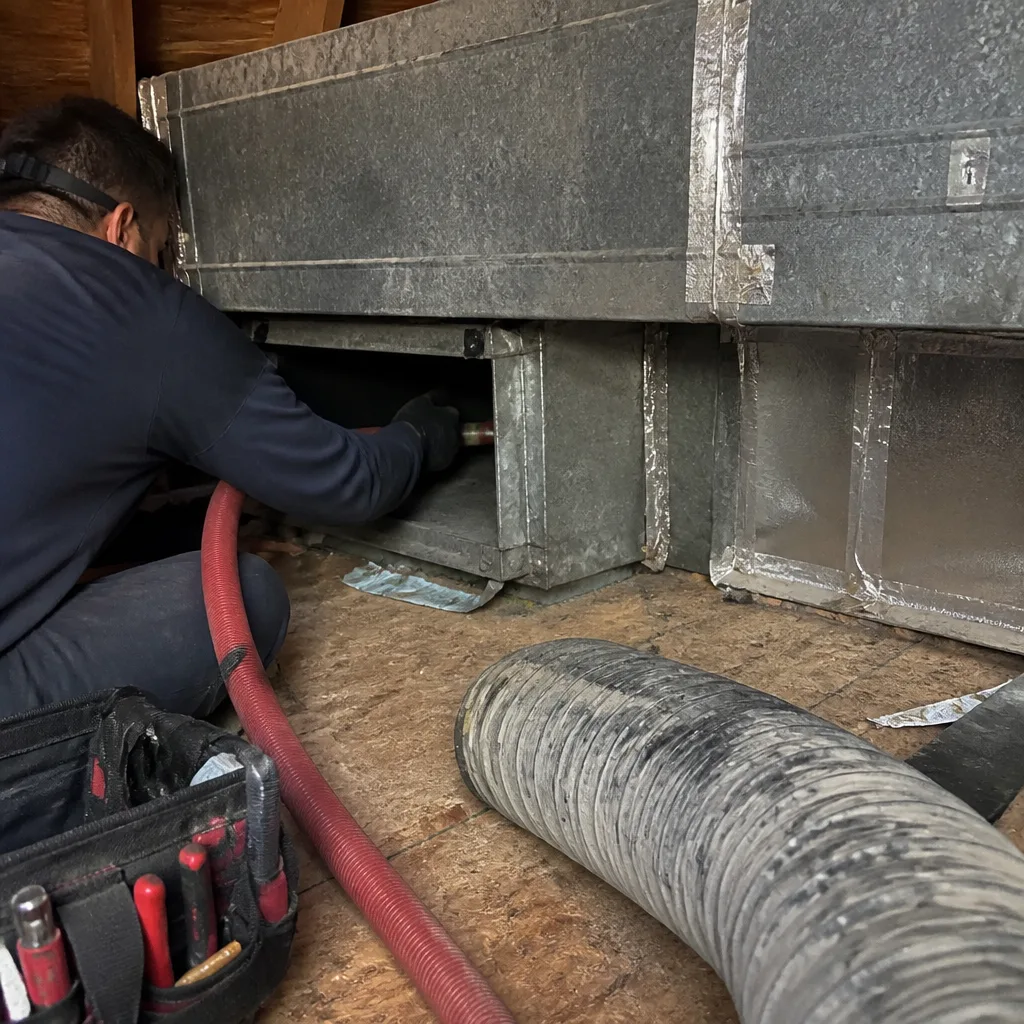 Before
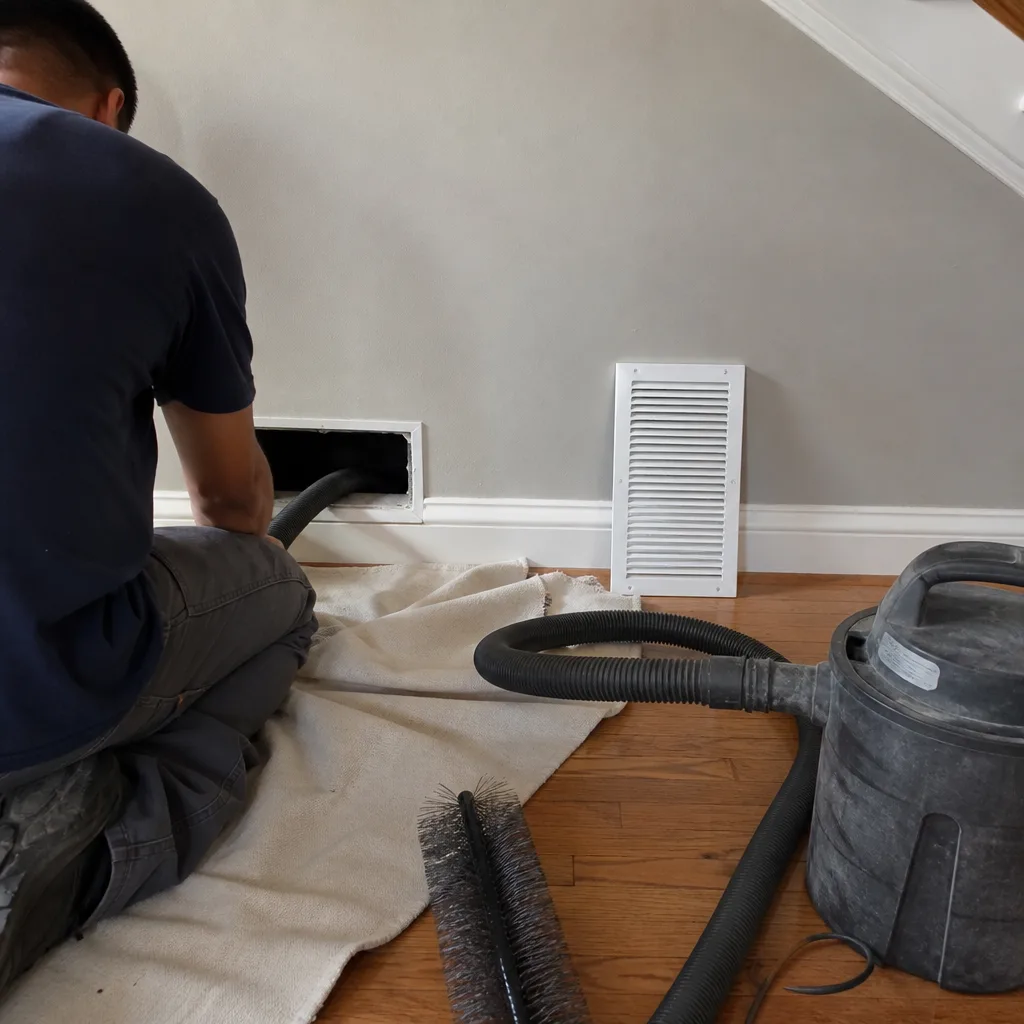 After
After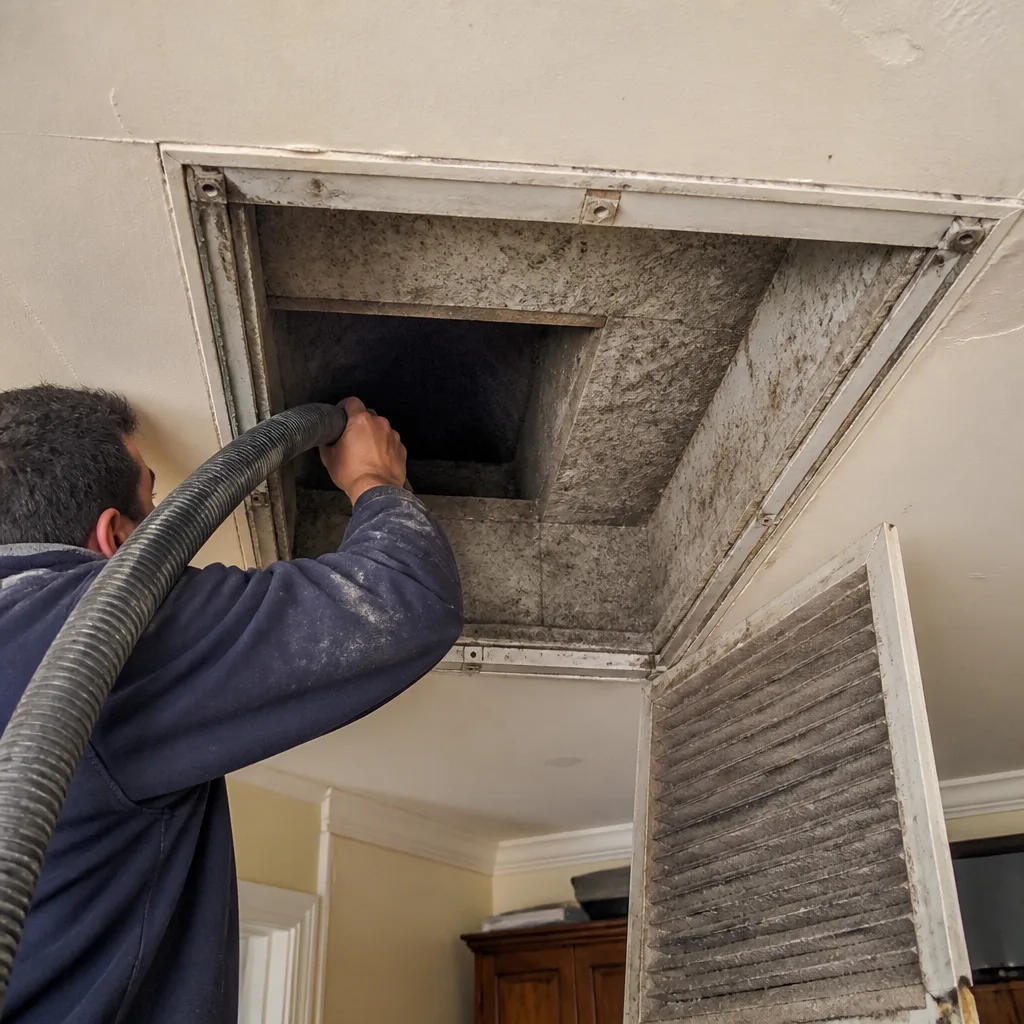 Before
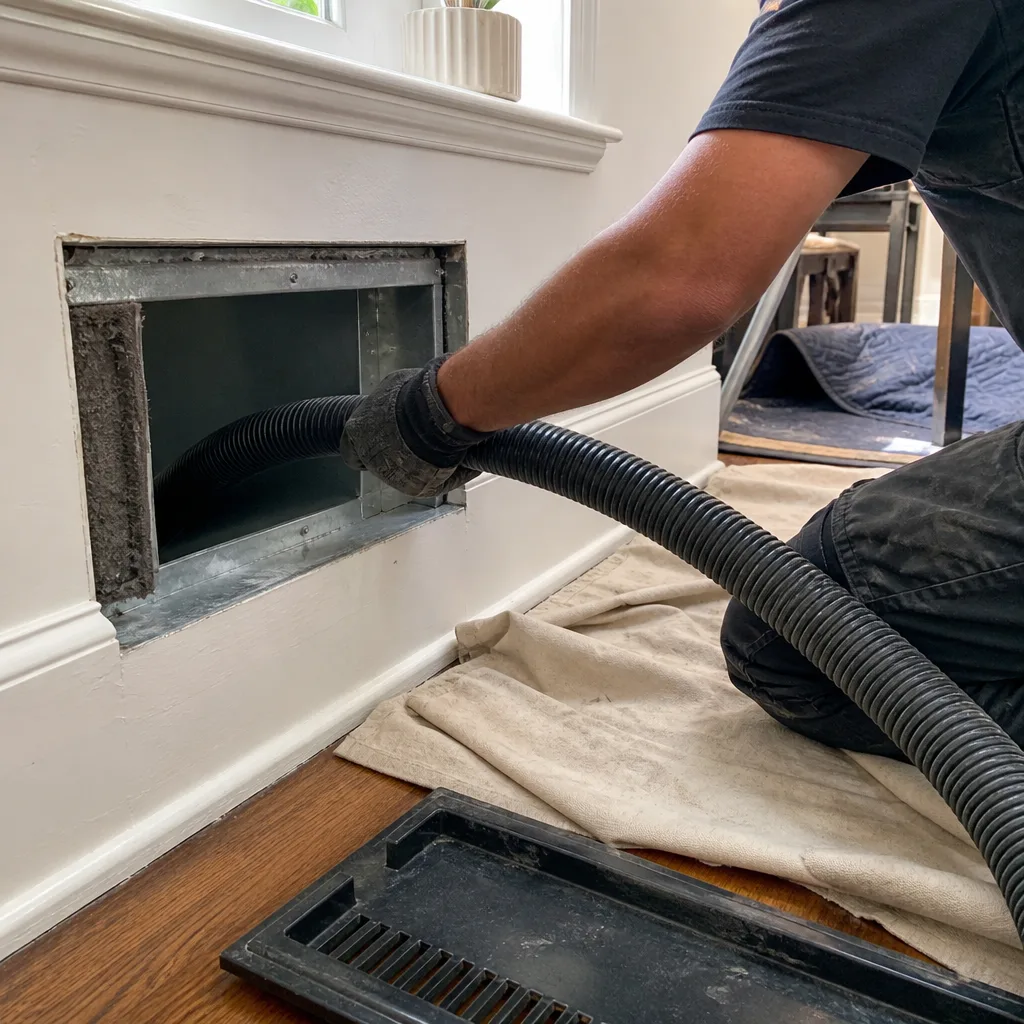 After
AfterSupply Duct Cleaning in Washington, DC
Supply duct cleaning in Washington, DC typically costs between $280 and $520 for a standard single-family home, takes three to five hours, and removes the debris load that drives most indoor air quality complaints – before conditioned air ever reaches your living space. Supply ducts carry treated air from your air handler to every room in the house, which means anything built up inside them – dust, biological growth, construction particulate – gets distributed across every register, every day your system runs.
At CleanRun Air Duct Cleaning Washington, Tomas Reyes built the company around a single operational rule: you get a written price before any panel comes off, a Video Inspection photograph inside every duct run before work begins, and a second photograph when the run is clear. That documented photo record is not optional and it is not an upgrade. It is the standard deliverable on every job, the same way it has been since CleanRun’s first call in 2013. If you want to talk through what we typically find inside supply runs in older Capitol Hill rowhouses or newer Northeast DC construction, call (240) 363-3380 – a live person answers.
This page covers supply duct cleaning specifically. For the full scope of what we do across your entire forced-air system, see our Air Duct Cleaning in Washington service page.
What Supply Ducts Actually Do (and Why They Get Dirty)
Your HVAC system has two duct networks. Return ducts pull room air back to the air handler. Supply ducts push conditioned air out. The supply side is pressurized – air is being forced through it constantly whenever your system runs – so anything that gets in at the plenum (the main distribution box off the air handler) or through a poorly sealed branch connection gets carried forward and deposited along the run.
In Washington, the problem compounds because of the climate. DC runs through genuine summer humidity – often above 70 percent for weeks at a stretch – and that moisture, combined with the fine particulate that infiltrates older housing stock in neighborhoods like Petworth, Columbia Heights, and Anacostia, creates conditions that accelerate biological growth inside supply runs. We use the term “biological growth” specifically because what the camera shows is usually a grey-green or black film coating the interior sheet metal, not a uniform dust layer. Those are two different problems that require different treatment.
Supply ducts in DC homes also carry a particular construction history. A large share of the housing between 16th Street NW and the Maryland line was built or renovated in waves – 1940s post-war expansion, 1970s and 1980s renovations, and the 2010s gut-rehab cycle that converted many Columbia Heights and Shaw rowhouses into condominiums. Each renovation generation left a debris signature: drywall dust from the 2010s work, fiberglass strands from 1970s insulation jobs, and the fine grit characteristic of older masonry construction. The camera tells the story more clearly than any general description.
When You Need Supply Duct Cleaning
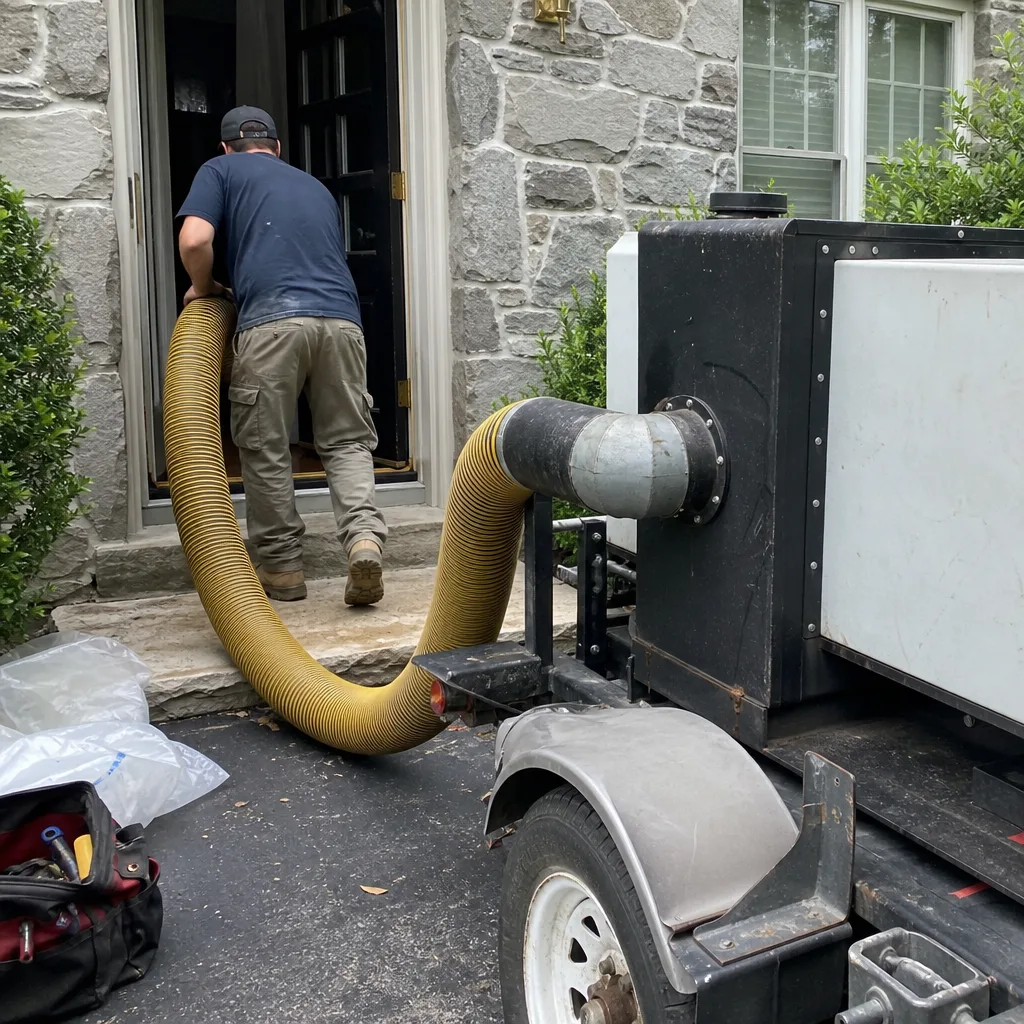
- Uneven airflow room to room. If a bedroom on the second floor of your Brookland or Brightwood home consistently runs warmer or cooler than the thermostat setting, a partial blockage in the supply run feeding that register is often the cause. Debris accumulates at elbows and transitions where the duct changes direction.
- Visible dust at supply registers shortly after cleaning. If you wipe a register grille and it is grey again within a few days, the supply run behind it is shedding material into the airstream. A clean register on a dirty duct run is a short-term result.
- The home was recently renovated. Construction work – even careful work – puts drywall dust, wood particles, and foam particulate into the air. That material settles in the supply plenum and the first few feet of each branch run. In DC, we find this consistently in homes that went through the 2018-2024 renovation cycle in neighborhoods like Eckington, Bloomingdale, and Truxton Circle.
- There is a musty or stale smell when the system runs. A smell that appears only when the HVAC is on and disappears when it shuts off almost always traces back to the duct interior. Supply runs that have accumulated biological growth carry the odor into each room on the schedule of your thermostat.
- You have not had supply ducts cleaned in more than five years. NADCA’s published guidance recommends inspection every three to five years for typical residential use. Washington’s humidity profile puts most DC homes at the shorter end of that range, not the longer end.
- You are moving into a home built before 2000. Pre-2000 Washington housing frequently has original sheet-metal supply runs with accumulated decades of particulate. A photo inspection before you run the system tells you exactly what is there.
BeforeAfterOur Supply Duct Cleaning Process
-
Written Price, Delivered Before Anything Opens
Before any panel comes off or any tool enters the ductwork, you receive a written price for the complete scope of work, so you know How Much Does Air Duct Cleaning Cost? (2026 Price Guide) - Washington, DC before we start. This is Haven Standard Clause 1 – no exceptions, no “we’ll see what we find and adjust.” We assess the number of supply runs, access points, and any visible conditions at the registers and plenum, then put a number in writing. If the camera reveals something that changes the scope, we stop, show you the image, and give you a new written number before continuing.
-
Camera Inspection of Each Supply Run
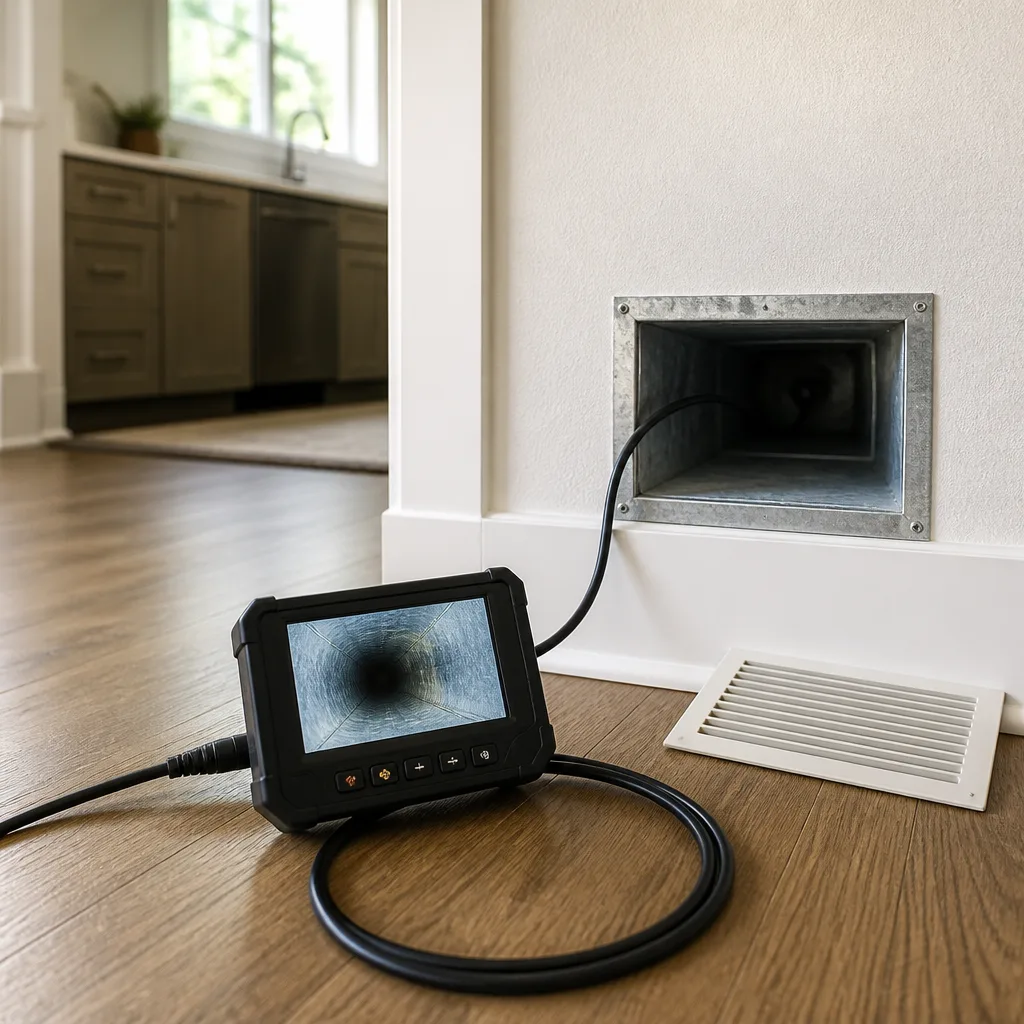
A flexible inspection camera goes into each supply run before any cleaning equipment does. This produces the “before” photograph in your documented job record – a clear image of what is actually present at the duct interior: debris depth, biological growth if present, physical damage, disconnected joints, or evidence of rodent activity. In supply runs that feed second-floor registers in DC rowhouses, we frequently find debris concentrated at the first elbow off the plenum, because that is where the airflow slows and particles drop.
-
Negative-Pressure Extraction Setup
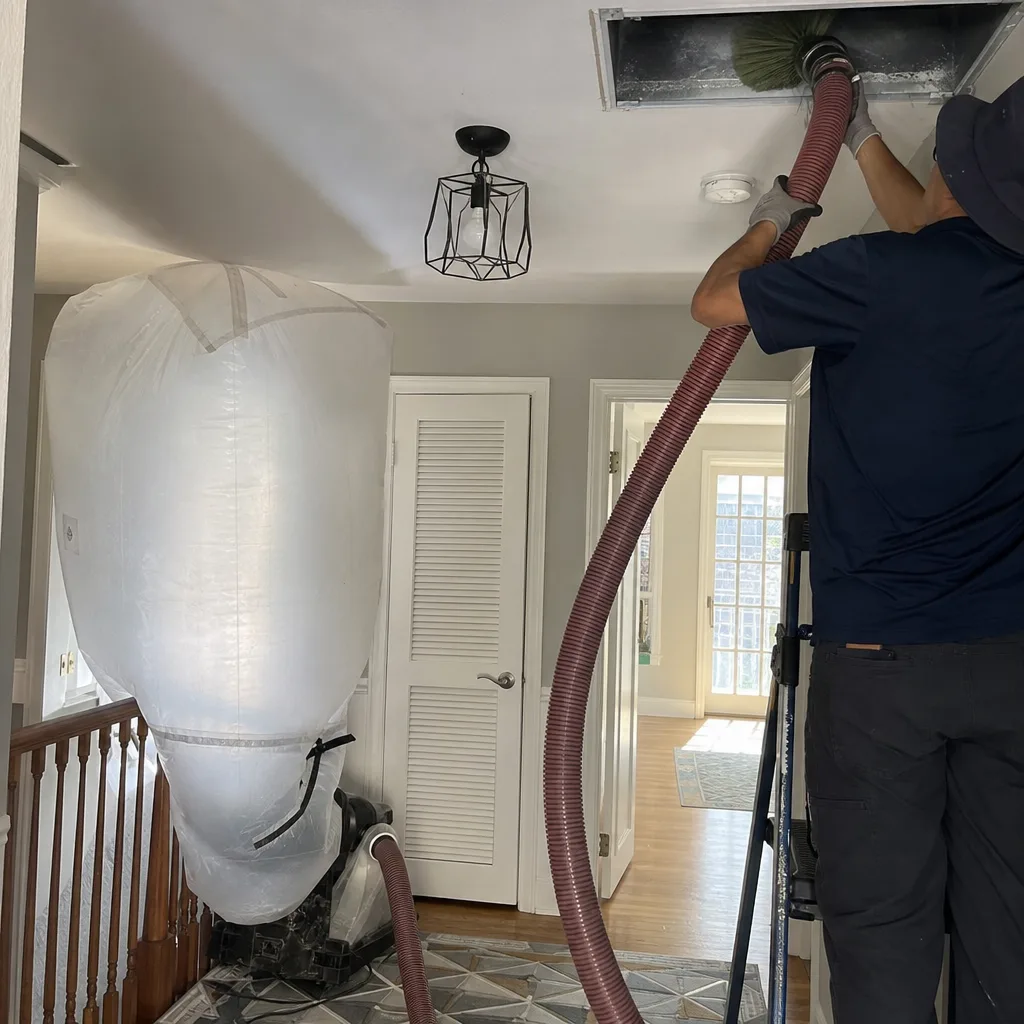
Negative-pressure extraction means we attach a collection unit to the supply plenum that places the entire supply-side duct network under a vacuum. This is done with Nikro or Abatement Technologies collection equipment rated for residential HVAC duct volumes. The vacuum contains debris during cleaning – nothing gets pushed back into the living space. Without negative pressure, agitating a supply run just redistributes material rather than removing it.
-
Mechanical Agitation of Each Run
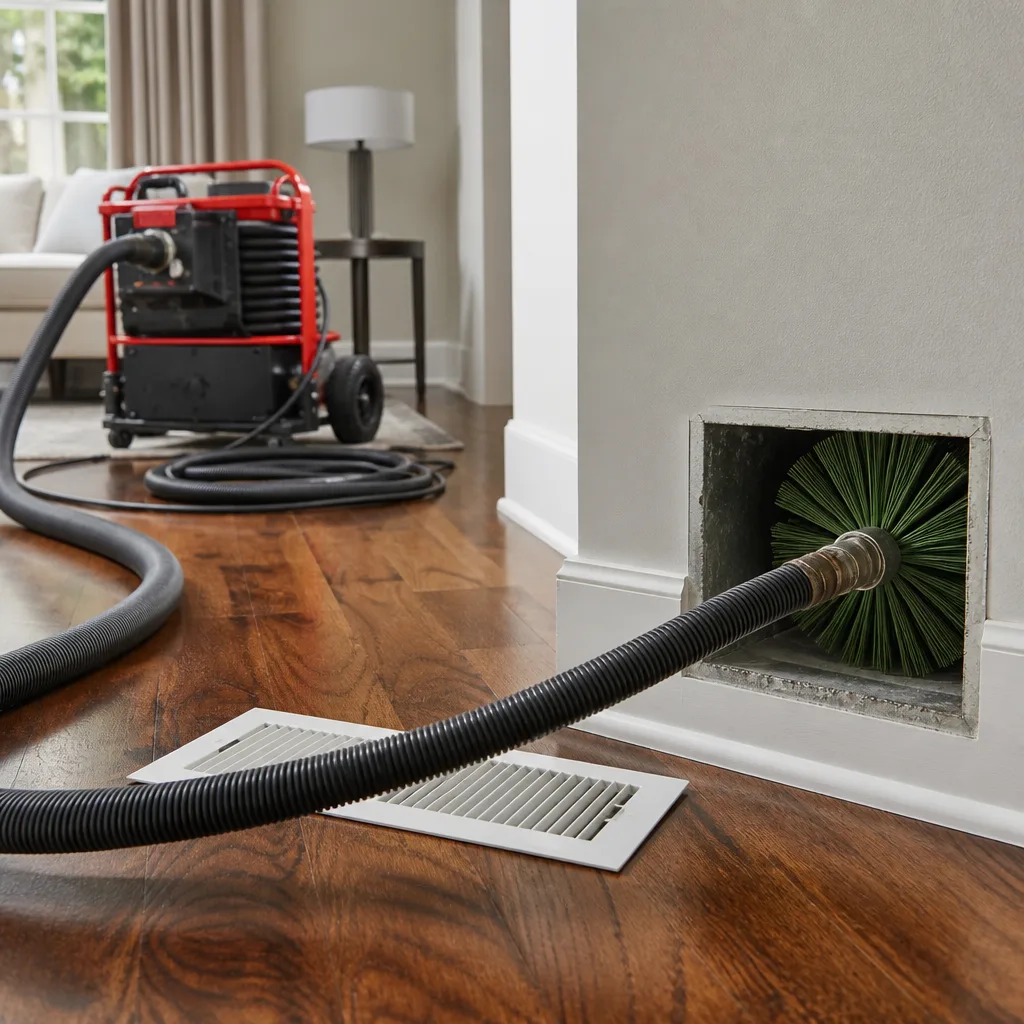
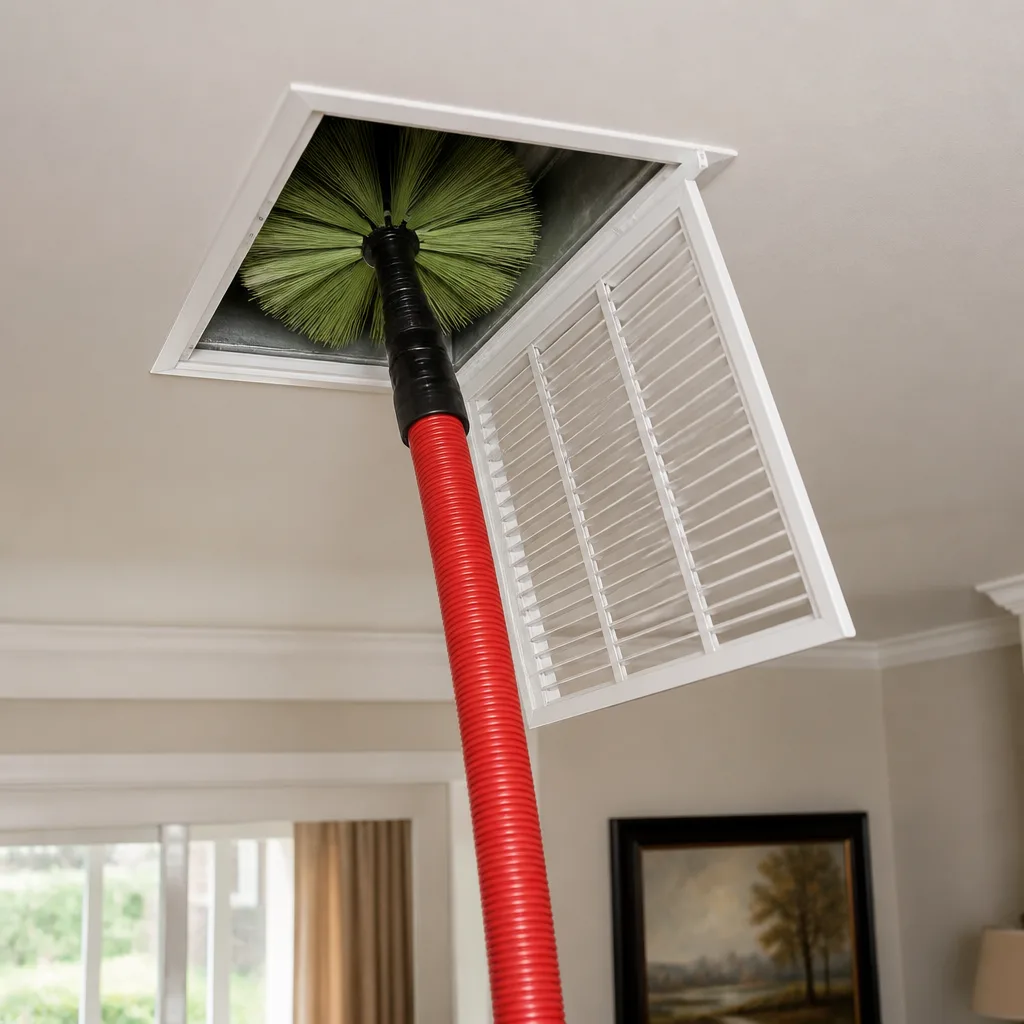
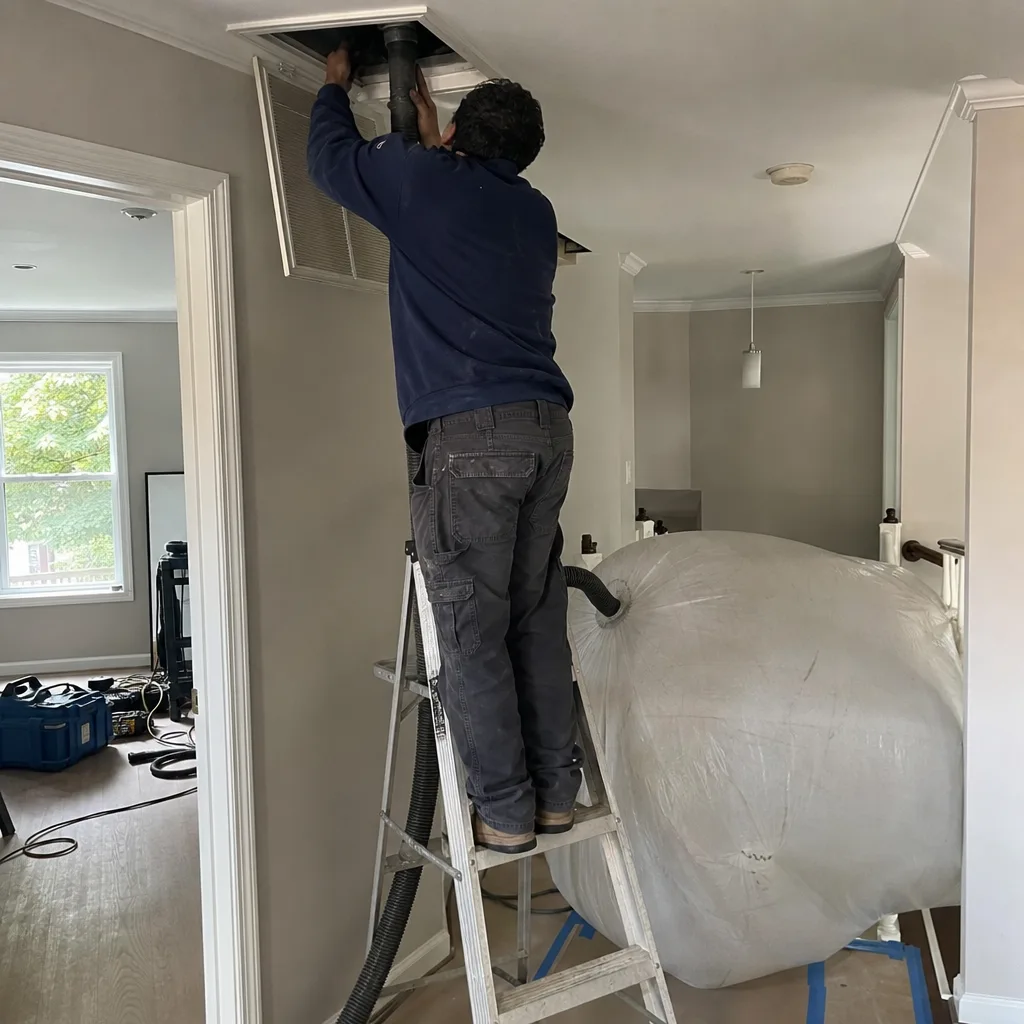
With the system under negative pressure, a Rotobrush rotary brush system works through each supply run from the register end. The brush breaks the debris from the duct wall; the vacuum pull carries it toward the collection unit at the plenum. For runs with heavier biological growth, we use an EPA-registered antimicrobial applied per manufacturer specifications before the brush pass – this step is quoted separately and only recommended when the camera shows it is warranted.
-
Post-Cleaning Camera Documentation
After each run is cleaned, the camera goes back in. The “after” photograph is taken from the same position as the “before” photograph. Both images are included in your documented photo record – a file you receive at job completion. If the after image does not show a clean duct interior, the run gets worked again. The 365-Day Done Right Promise backs this: if it is not right, we make it right, and that commitment is in writing on every job, not subject to manager review.
-
Plenum and Register Final Check
The supply plenum – the main distribution box – is brushed and vacuumed separately, because it is the largest single accumulation point in the supply side. Register grilles are removed, cleaned, and reinstalled. The system is run briefly to verify airflow at each supply register before the crew closes up. You get a final written summary of what was found, what was done, and what, if anything, warrants a follow-up.
Supply Duct Cleaning Pricing in Washington
How Much Does Air Duct Cleaning Cost in Washington, DC? (2026 Price Guide) depends on the number of supply runs in the home, the condition found at inspection, and access complexity. Every price is written before work starts – Haven Standard Clause 1 is the whole reason the pricing section on this page exists with real numbers rather than a prompt to call for a quote.
| Scope | Typical Washington, DC Price Range |
|---|---|
| Supply duct cleaning only, up to 8 runs (condominium or small rowhouse) | $280 – $360 |
| Supply duct cleaning, 9-15 runs (standard DC rowhouse or semi-detached) | $360 – $480 |
| Supply duct cleaning, 16+ runs (larger single-family or multi-zone system) | $480 – $620 |
| EPA-registered antimicrobial application (per system, when warranted) | $90 – $140 added to base price |
| Documented photo record (before and after, every run) | Included, no charge |
What moves a job toward the higher end of a range: ductwork that has not been serviced in ten or more years, post-renovation debris loads (common in the 2018-2024 renovation wave across Northeast DC and Ward 4), biological growth requiring antimicrobial treatment, or access points that require additional disassembly. We tell you which of those conditions apply, in writing, before work starts.
If you have a written estimate from another company, CleanRun will put its own written number next to it at no cost – that is the Free Second Opinion, available on any written estimate. Call (240) 363-3380 to schedule.
What the Camera Actually Finds in Washington, DC Supply Ducts
Because CleanRun photographs every supply run before and after every job, we have an accumulated record of what DC supply ducts actually contain across neighborhoods and building types. A few patterns that show up consistently:
In Capitol Hill and Dupont Circle Victorian and Edwardian rowhouses, the original supply ductwork is often oversized relative to modern HVAC equipment – a result of equipment swaps over the decades without duct redesign. Low velocity in oversized ducts means particulate drops out of suspension earlier in the run. The camera typically shows the first four to six feet of each branch run heavily loaded, with cleaner duct further on. This is a specific debris pattern that a shop-vac-and-blow approach misses entirely, because the debris is concentrated near the plenum, not at the register end.
In the condominium conversions in Shaw and U Street that went through gut rehabilitation between 2015 and 2022, we consistently find fine drywall dust compacted against the duct floor and, in some cases, spray-foam overspray that reduced the effective interior diameter of a supply run by as much as 20 percent. That is not a cleaning issue – it is a duct condition that needs to be photographed, documented, and addressed separately. We flag it in the written job summary and photograph the obstruction before recommending next steps.
In newer construction in Navy Yard and Capitol Riverfront from the 2010-2020 building cycle, the supply ducts themselves are often flexible duct (flexduct) rather than rigid sheet metal. Flexible duct cleans differently – rotary brush systems are not appropriate for all flexduct conditions – and we note this at inspection. Not every condition calls for the same tool, and the camera inspection is specifically why we can make that call before any equipment goes in.
FAQs – Supply Duct Cleaning in Washington, DC
How much does supply duct cleaning cost in Washington, DC?
Supply duct cleaning in Washington, DC costs between $280 and $620 for most residential jobs, depending on the number of supply runs and the condition found at camera inspection. A small condominium with eight or fewer supply runs typically falls between $280 and $360. A standard DC rowhouse with nine to fifteen runs typically runs $360 to $480. Every price is delivered in writing before any work starts – that is not a policy with exceptions at CleanRun, it is the operating standard. Call (240) 363-3380 for a written estimate specific to your home’s layout.
What is the difference between supply duct cleaning and return duct cleaning?
Supply duct cleaning addresses the network of ducts that carry conditioned air from the air handler to each room. Return duct cleaning addresses the ducts that pull room air back to the air handler. They are separate duct networks with separate access points, and they accumulate different debris types. Supply ducts tend to collect finer particulate that settles out of the pressurized airstream; return ducts collect heavier material pulled from room air at the return grilles. A full system cleaning covers both. Supply-only cleaning is appropriate when the return network has been recently serviced or is inspected clean – the camera tells us which is the case before we quote.
How long does supply duct cleaning take in a typical Washington, DC home?
Supply duct cleaning in a standard DC rowhouse with ten to fourteen supply runs typically takes three to four hours from setup to final camera documentation. Larger homes in neighborhoods like Spring Valley or Chevy Chase DC with more than sixteen supply runs can run four to six hours. We do not compress the timeline – each run gets a before photograph, a full brush pass under negative pressure, and an after photograph. If an appointment is scheduled and the job runs longer because of conditions found at inspection, we finish the job; we do not leave runs partially cleaned to stay on a schedule.
Can supply duct cleaning help with allergy or asthma symptoms?
Supply duct cleaning removes accumulated particulate – dust, biological matter, construction debris – from the ducts that distribute conditioned air to every room. Whether that produces measurable symptom improvement depends on the specific allergens involved and the individual. CleanRun does not make medical claims. What we can tell you specifically is what the camera found before cleaning and what the camera showed after – and a before-and-after photo of a 3-inch debris layer cleared from a primary supply run is a documented fact, not a marketing promise. If airborne particulate from duct interiors is a contributing factor, cleaning the source addresses that specific contribution. Your physician or an indoor air quality specialist can advise on medical implications.
Why the Documented Photo Record Changes the Conversation
The duct cleaning industry has a well-documented credibility problem. The $79 coupon model – a shop vac, a blower, and a fast departure – has made homeowners reasonably skeptical of any company claiming to clean ductwork. That skepticism is earned.
CleanRun’s response is not a longer list of claims. It is the photo record. Every supply run, photographed before and after, delivered to the customer as a standard job deliverable. Tomas Reyes started this practice in 2013 because it is the only way to show the difference between real work and vacuum noise – and because “it is documented” is a different category of statement than “trust us.”
The 365-Day Done Right Promise works the same way: it is a written commitment on every job, not a policy subject to manager review. If a supply run is not clean when we leave, we come back. That is what the promise says, and it is what it means.
For the full scope of what CleanRun covers across your HVAC system – supply ducts, return ducts, main trunk lines, and the air handler cabinet – visit the home page or go directly to our Air Duct Cleaning in Washington service overview.
Schedule Supply Duct Cleaning in Washington, DC
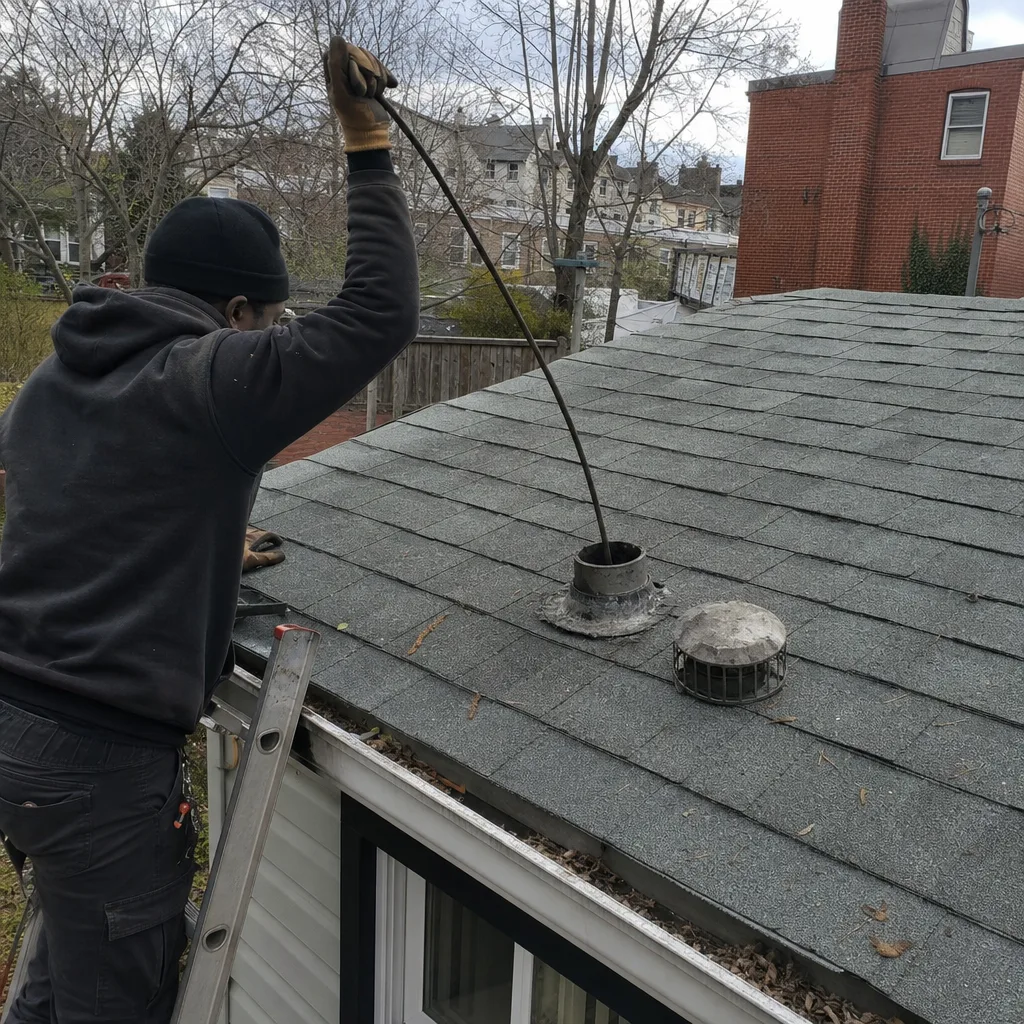
If our Air Duct Cleaning services are what your supply ducts need – or if you have a written estimate from another company and want a second number in writing – call CleanRun Air Duct Cleaning Washington at (240) 363-3380. A live person answers. You will get a written price before any work starts, a camera photograph inside every supply run before and after, and a documented job record when the crew leaves. That is the standard. It applies to every job, in every neighborhood, including yours.
Written by Tomas Reyes, Owner at CleanRun Air Duct Cleaning Washington, serving Washington.