
Last updated September 23, 2026
Whole-system duct and dryer vent check with before-and-after photos - you see exactly what came out of your vents
That "$99 whole-house special" is a bait ad - the real number appears once they are in your hallway, or the "clean" is a shop-vac at the register. We photograph the inside of your ducts before and after instead.
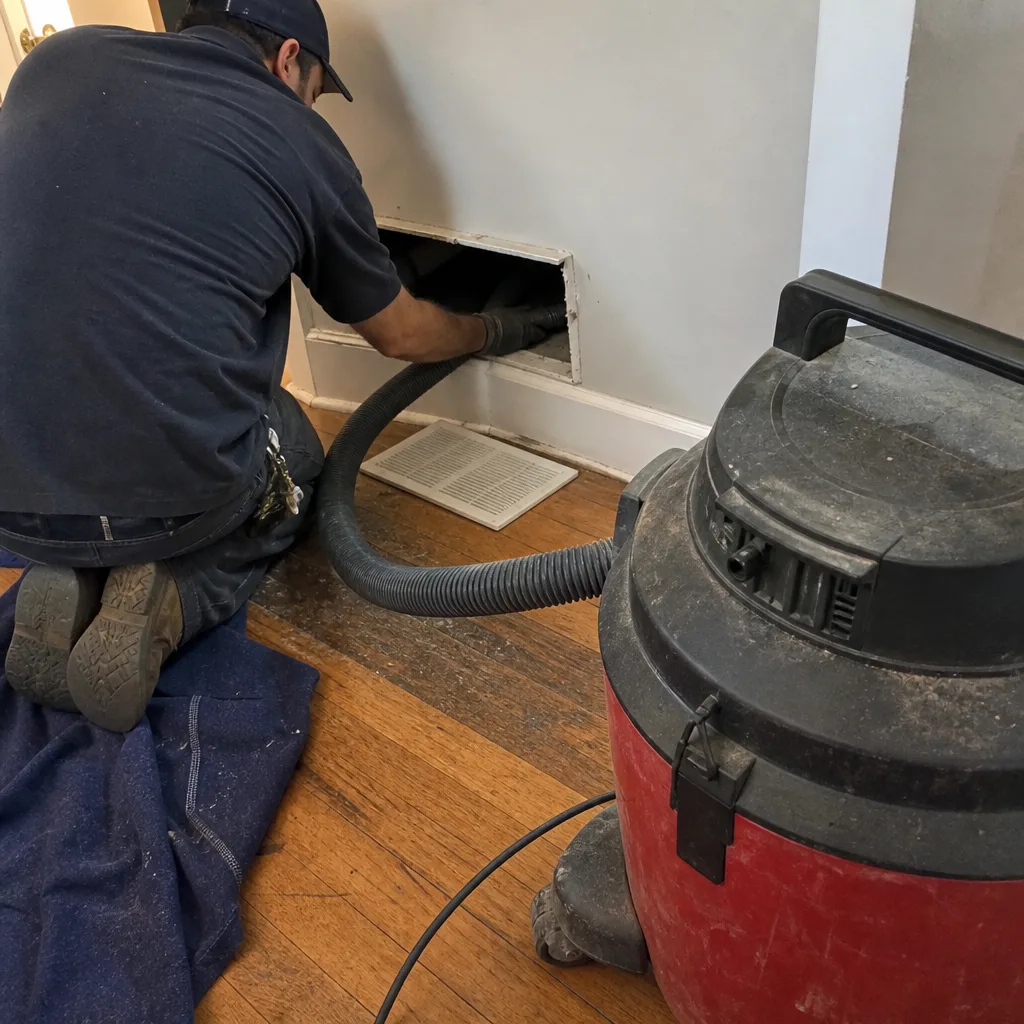 Before
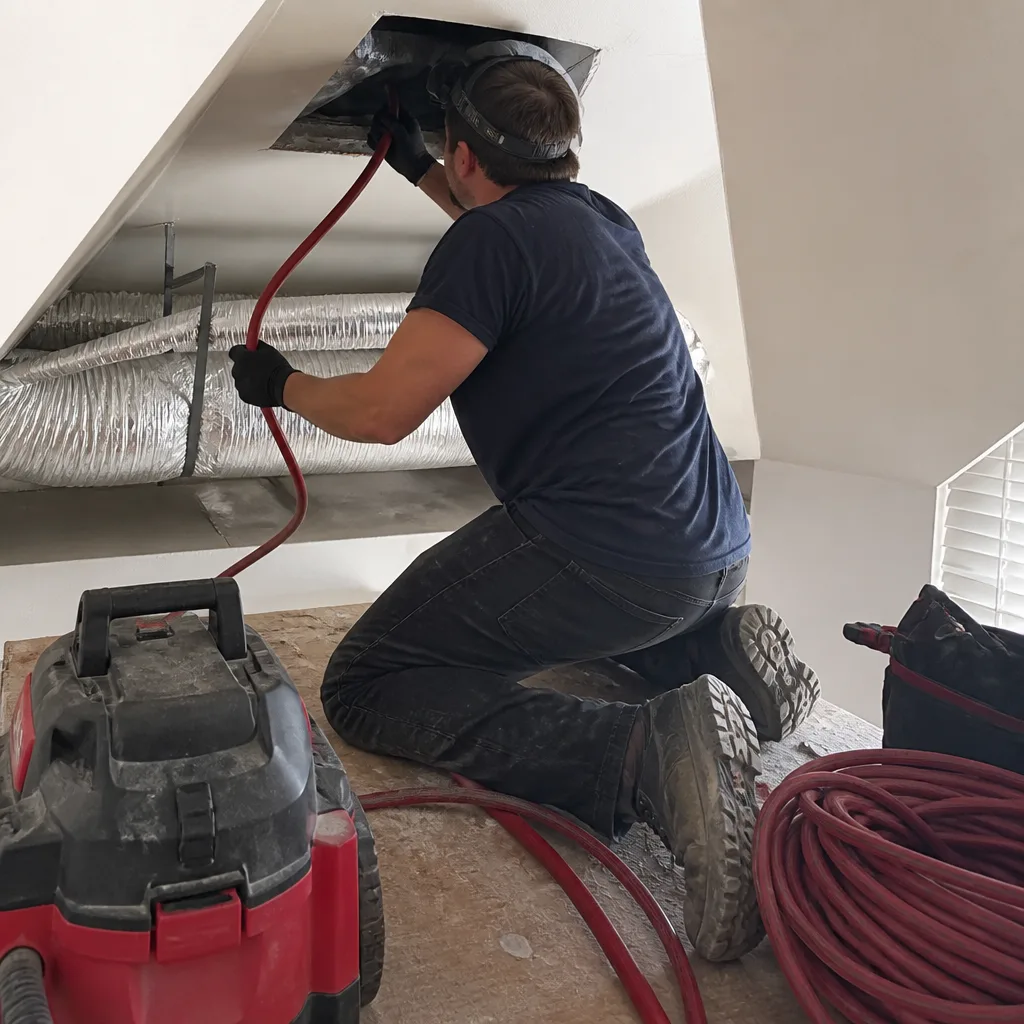 After
After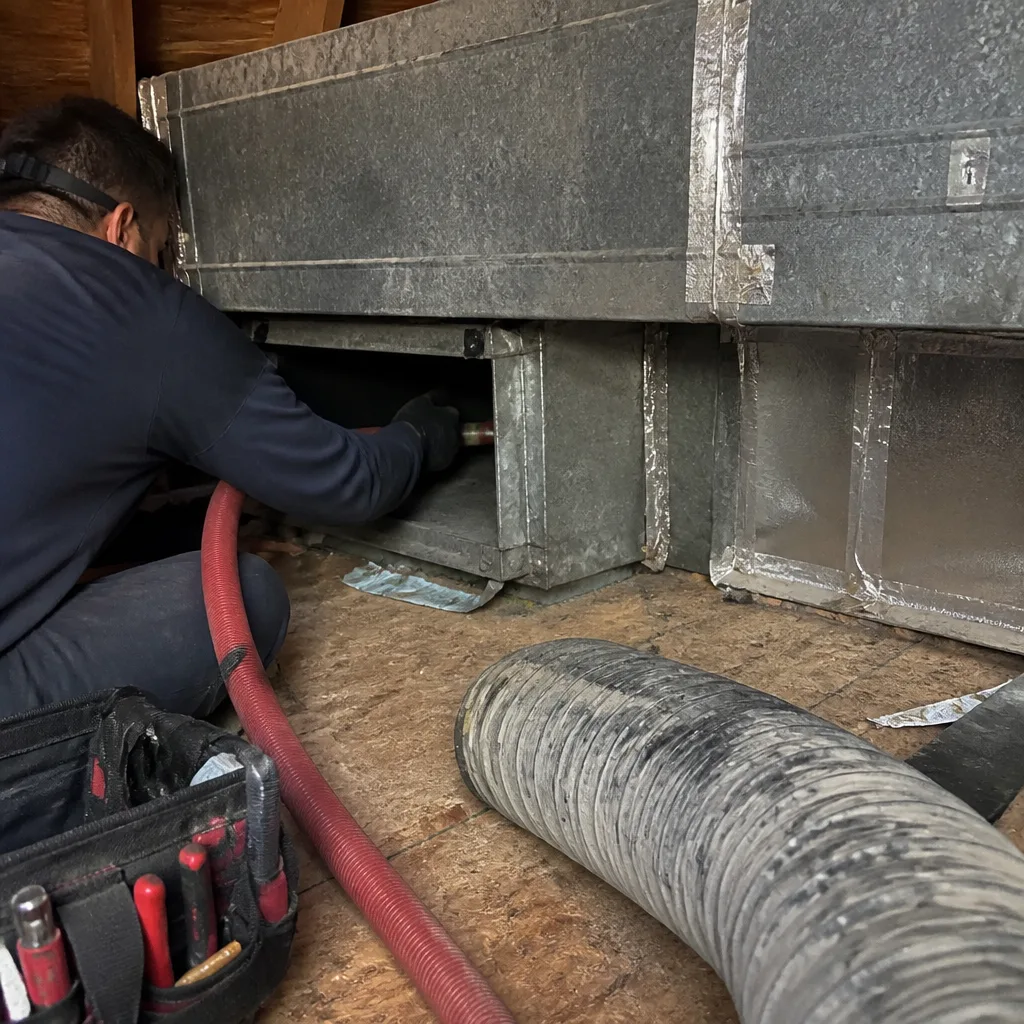 Before
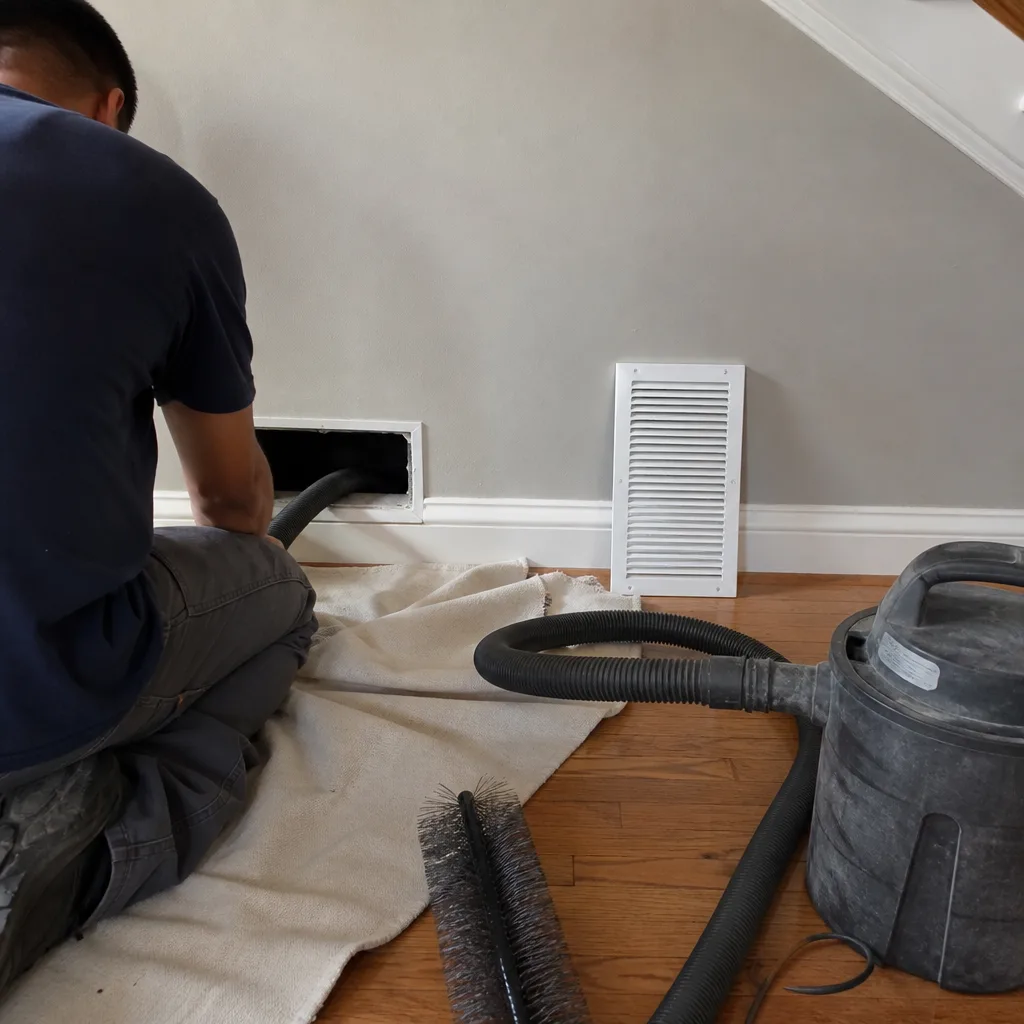 After
After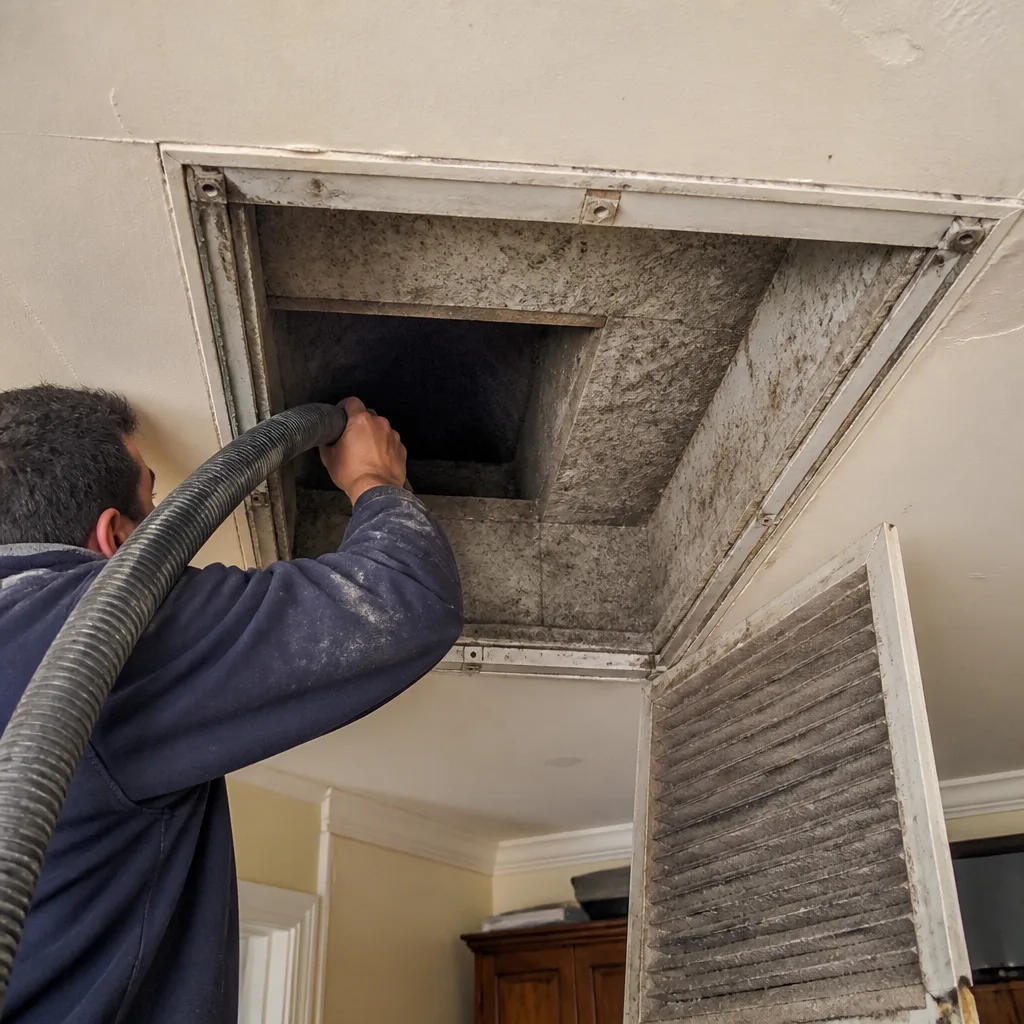 Before
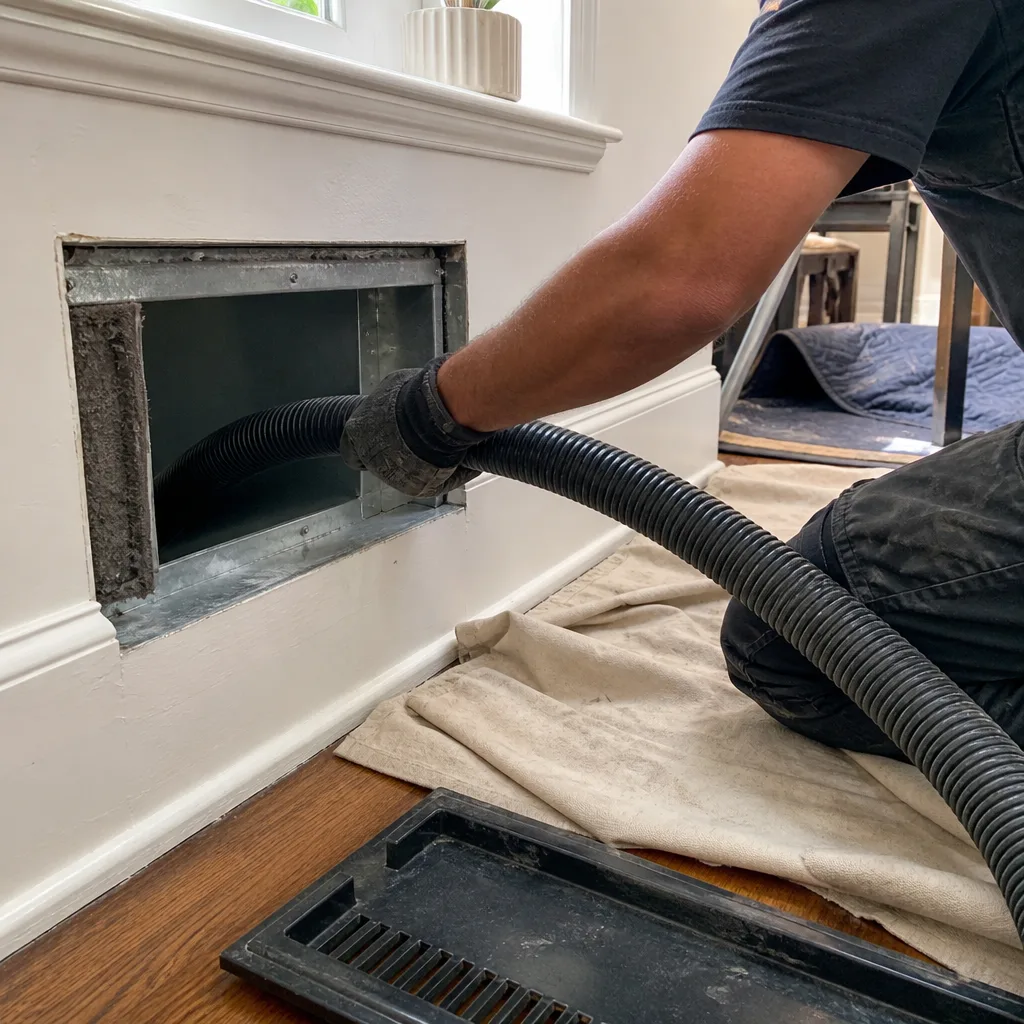 After
AfterThe Complete Guide to Air Duct Cleaning in Washington
A 2,000-square-foot DC rowhouse can have more than 18 individual duct runs, but most “$79 specials” quote a flat fee before anyone has counted a single one. In Washington, where brick rowhouses with retrofitted HVAC, pre-war apartments, and 1970s condos dominate the housing stock, duct configurations rarely match the suburban split-level assumptions that national cleaning guides are written for. This guide replaces coupon-price decision-making with documented inspection criteria, real cost ranges for DC’s actual housing types, and a plain-language explanation of what our Air Duct Cleaning services involve from access panel to final photo.
Quick Answer
Professional air duct cleaning in Washington, DC typically costs $450-$950 for a complete residential system, depending on square footage, duct configuration, and whether the home is a rowhouse, condo, or apartment. The work should take 3-5 hours, include negative-pressure extraction with HEPA filtration, and conclude with a documented photo record of every duct run. Anything priced under $300 for a whole system is not following NADCA’s ACR standard and likely involves a shop vac and compressed air, not professional equipment.
Table of Contents
- How DC’s Housing Stock Changes What’s in Your Ducts
- What Professional Air Duct Cleaning Actually Looks Like
- The NADCA ACR Standard: What It Requires in Plain Language
- Room-by-Room: What a Documented Job Should Photograph
- Real Air Duct Cleaning Costs in Washington, DC (2025-2026)
- How to Read an Inspection Report: Terms That Matter
- Common Mistakes to Avoid
- When to Call a Professional
- Frequently Asked Questions
BeforeAfterHow DC’s Housing Stock Changes What’s in Your Ducts
Washington’s built environment is not suburban. That matters for duct cleaning because the physical constraints of your home determine how many access points a technician needs, what equipment fits, and where debris accumulates.
Brick rowhouses (Capitol Hill, Shaw, Petworth, Columbia Heights): These homes were built between 1880 and 1920 with no ductwork at all. Heating came from radiators; cooling was a window unit. The forced-air systems installed since the 1980s run through chases, closets, and dropped ceilings. Duct runs are often short, tight, and elbow-heavy. In our work in Capitol Hill, we’ve found that retrofit flex duct crushed behind original plaster lath is common. The debris profile here is typically plaster dust, old insulation fragments, and whatever accumulated during decades of wall openings.
Pre-war apartments (Adams Morgan, Dupont Circle, Woodley Park): These buildings have central systems or individual through-wall units. Where individual HVAC was retrofitted, duct runs may be surface-mounted or boxed in with soffits. Access is limited; a technician needs to know which panels are decorative and which are structural before cutting. We’ve documented cases in Adams Morgan where “duct cleaning” by previous companies never reached the actual duct because the crew didn’t know how to access the chase behind a 1920s plaster arch.
1970s-1980s condos (Southwest Waterfront, Foggy Bottom, upper Georgetown): These buildings have dedicated mechanical rooms and more standardized duct layouts. The issue here is age: fiberglass duct liner from this era degrades, and the adhesive that once held it fails. We’ve photographed delaminated liner in Southwest Waterfront units where the “dirt” a customer smelled was actually decomposing fiberglass, not household dust.
Post-2000 construction (Navy Yard, NoMa, the Wharf): These systems are cleaner by age but often poorly sealed. New construction duct tape (the cloth kind, not mastic) fails within 5-7 years in Washington’s humidity. We regularly find that “clean” ducts in Navy Yard townhomes are leaking conditioned air into wall cavities, which shows up as temperature differential in our thermal imaging, not as visible debris.
Washington’s climate adds another variable. Summers here are hot and humid; winters are cold enough to run heat consistently. That seasonal swing means ducts expand and contract, loosening connections over time. The pollen load from Rock Creek Park and the National Arboretum is significant; we see heavy accumulation in homes within a half-mile of either. And the city’s combined sewer system means basement humidity is a real issue in older neighborhoods, creating conditions for microbial growth on duct surfaces that don’t dry completely between cycles.
What Professional Air Duct Cleaning Actually Looks Like
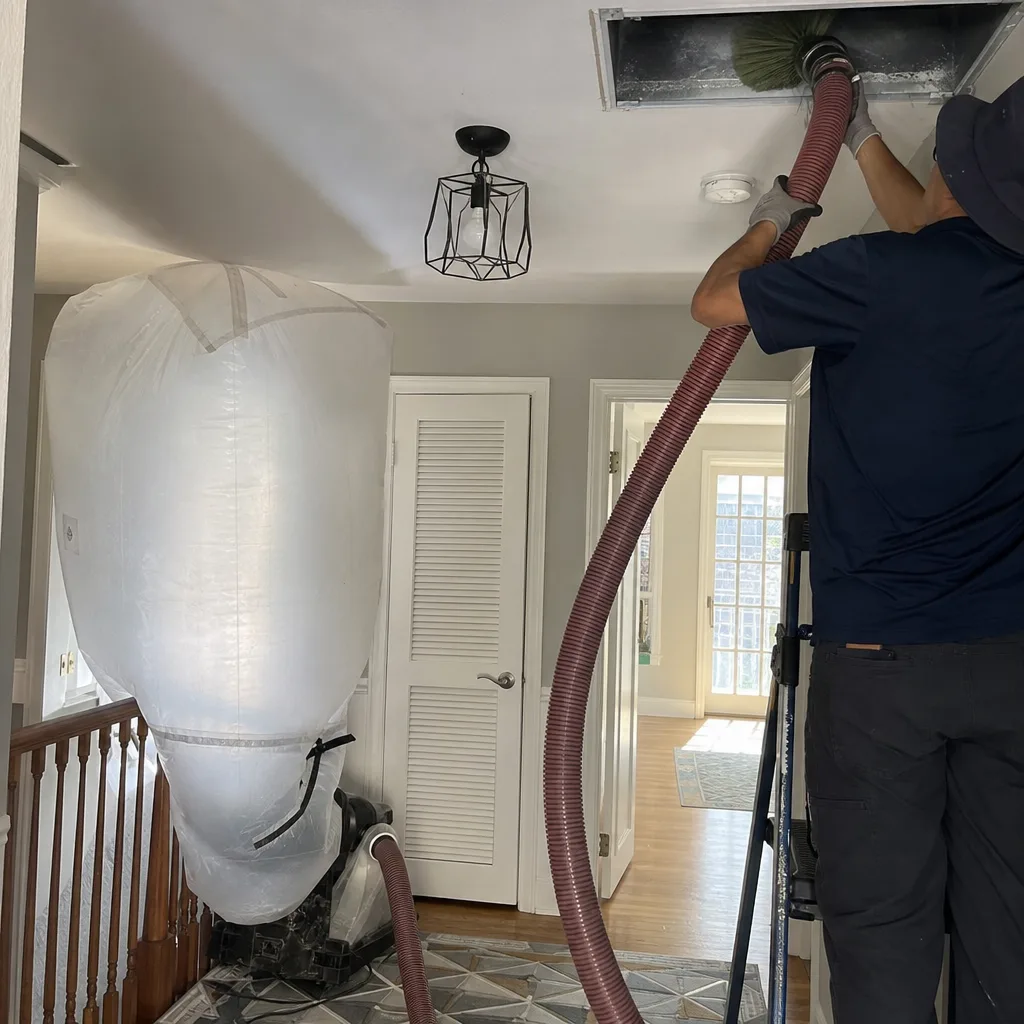
Most homeowners have never watched a duct cleaning. Here’s what happens, step by step, when the work is done to professional standard.
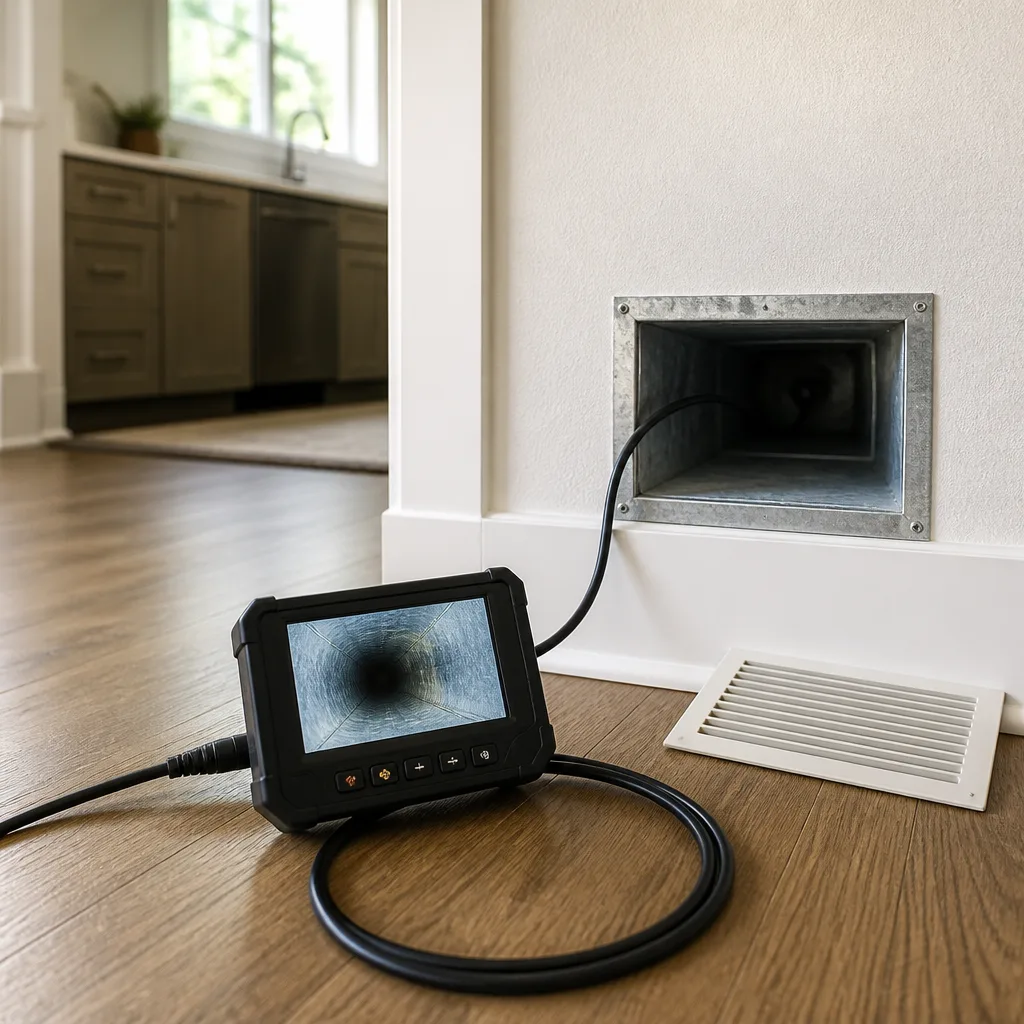
- Pre-inspection and access planning. The technician walks the full system with a camera, identifies every register and return, locates the plenum (the central distribution box where the main trunk meets the furnace or air handler), and determines where access panels must be cut. In Washington rowhouses, this step often reveals that the “standard” access points assumed by national franchises don’t exist because the duct was retrofit around existing structure.
- Protection of the work area. Floors, furnishings, and finished surfaces are covered. The HVAC system is powered down and isolated. If the home has radiant heat with a separate AC air handler, the technician confirms which system is being cleaned; we’ve encountered confusion in Georgetown condos where the owner didn’t realize the heating and cooling used entirely separate duct networks.
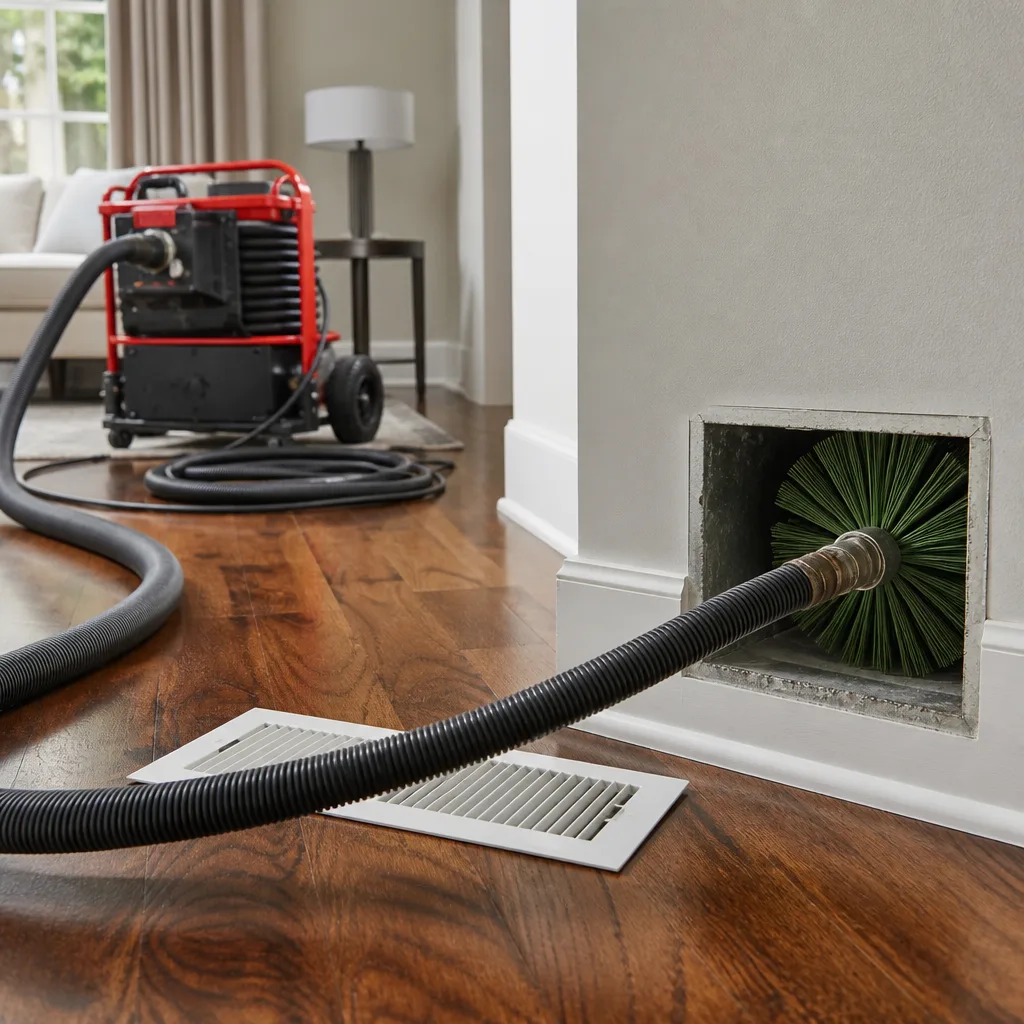
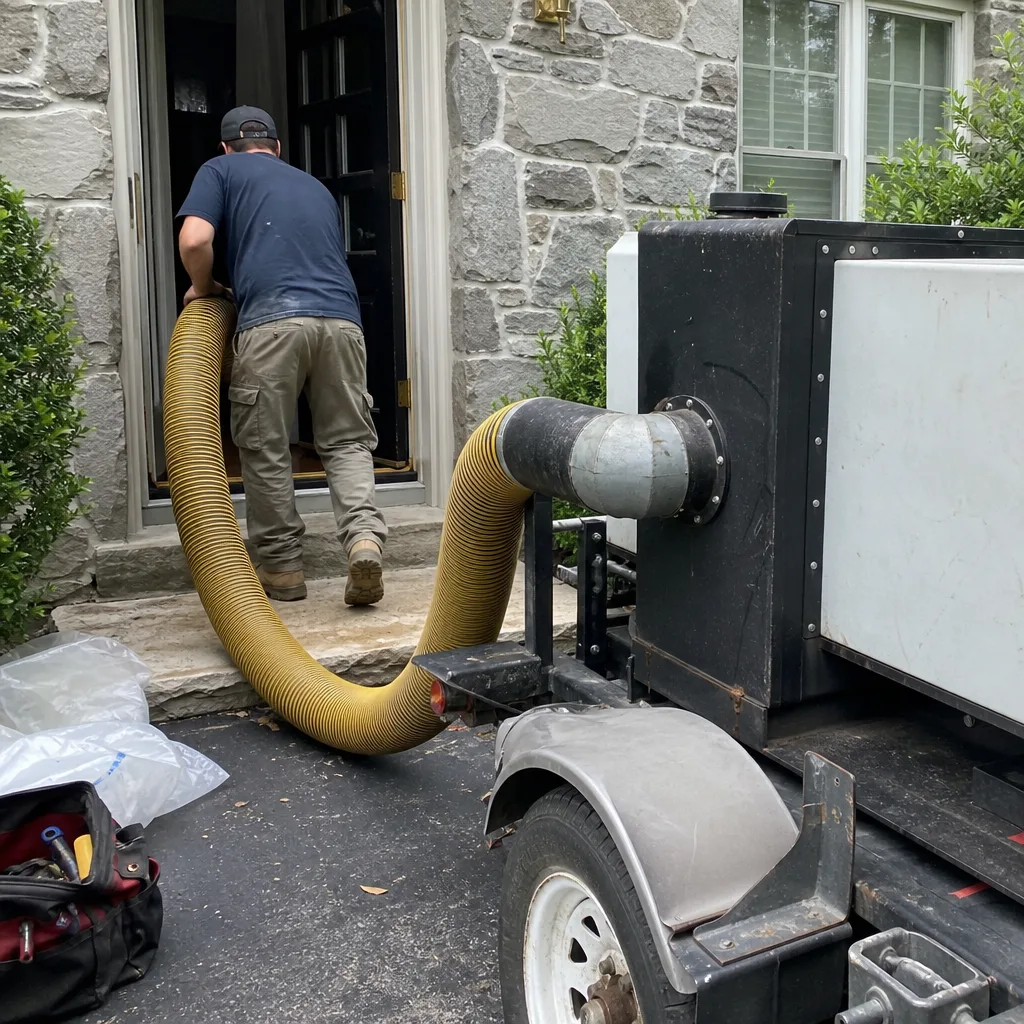
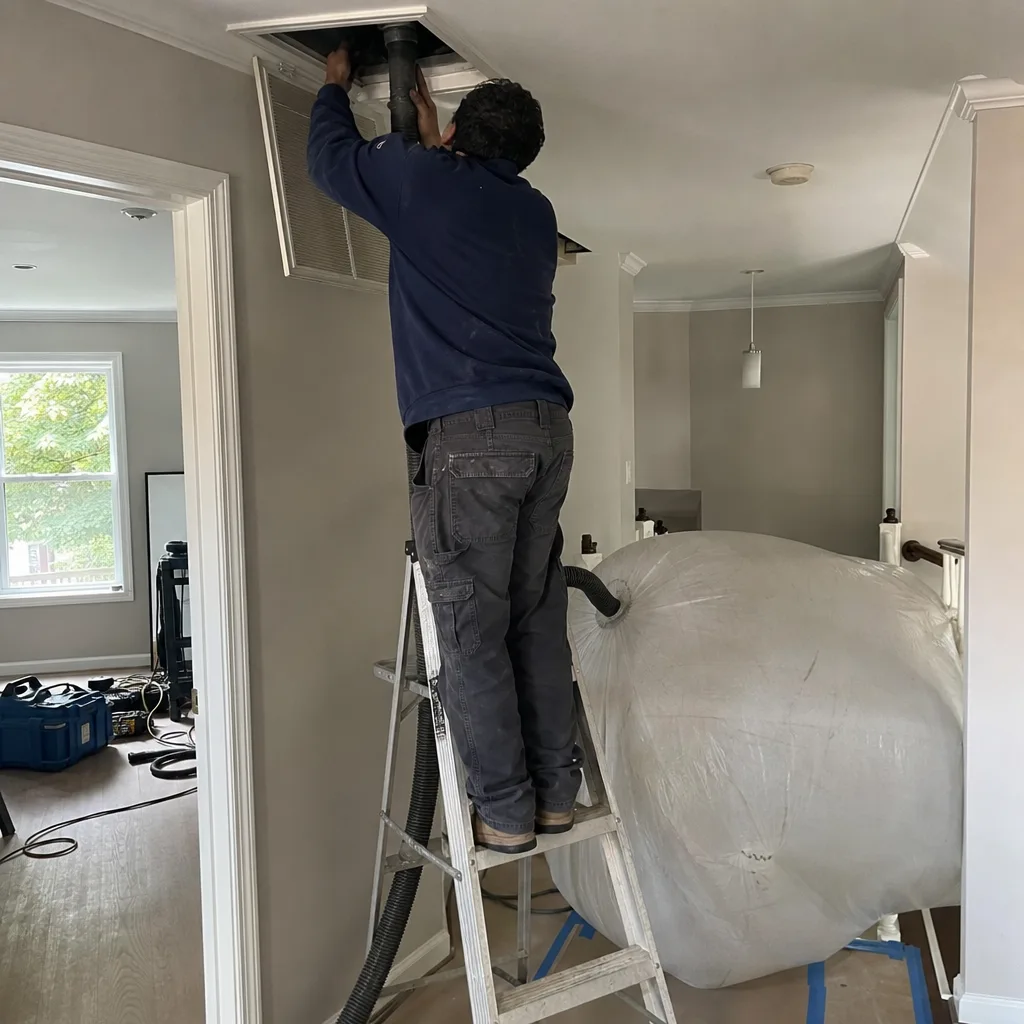
- Negative-pressure extraction setup. A large vacuum collection unit, typically truck-mounted or a portable HEPA-filtered unit from Abatement Technologies or Nikro, is connected to the duct system near the air handler. This creates suction throughout the entire network. The plenum is opened and the interior is inspected and photographed.
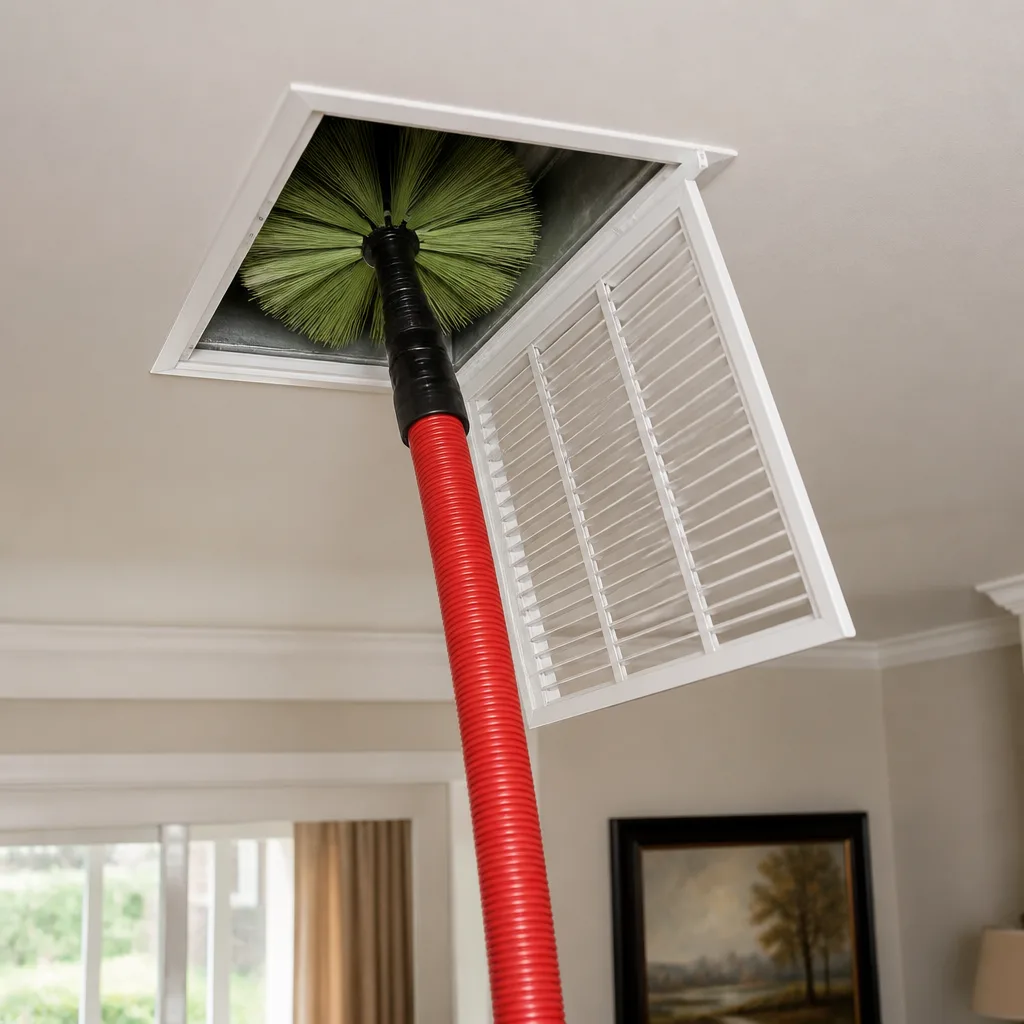
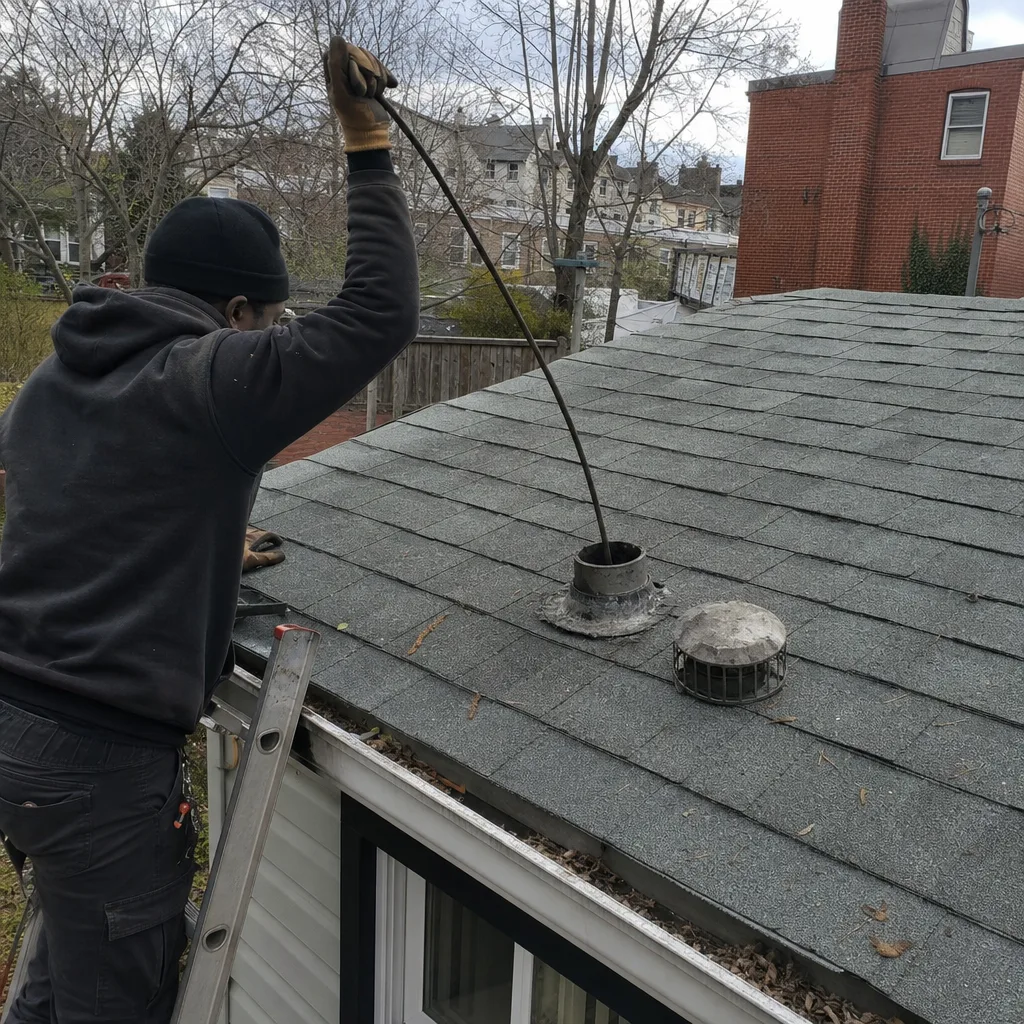
- Agitation and debris removal. Mechanical brushes, compressed air whips, or robotic devices are fed through each duct run to dislodge debris. The negative-pressure vacuum pulls dislodged material out continuously. In Washington’s older homes, this is where we find the gap between real work and a “$79 special”: a shop vac with a 10-foot hose cannot reach a duct run that traverses three stories of rowhouse from basement to attic.
- Component cleaning. The blower wheel, evaporator coil (if accessible), and filter housing are cleaned. In humid Washington summers, the evaporator coil is often where microbial growth begins; cleaning it without cleaning the ducts that feed it is incomplete work.
- Post-cleaning inspection and photo documentation. Every duct run is re-inspected with a camera. Before-and-after images are captured and saved to the job record. The access panels are resealed with metal tape or mastic, not cloth duct tape. The system is powered on and verified for normal operation.
- Deliverables to the customer. A written scope of work, the photo record, and any recommendations for repairs or sealing. This is the standard at CleanRun Air Duct Cleaning Washington home and should be the standard everywhere.
The equipment matters. Professional-grade systems from Rotobrush, Abatement Technologies, and Nikro are designed for negative-pressure containment, meaning debris is captured at the source rather than blown through the system. These are not consumer brands; they are trade equipment that a homeowner can verify independently by searching the manufacturer specifications.
The NADCA ACR Standard: What It Requires in Plain Language
NADCA, the National Air Duct Cleaners Association, publishes the ACR standard that defines what “clean” means and how to achieve it. Most competitors mention “NADCA-certified” in their marketing without explaining what the standard actually requires. Here’s what matters.
The standard requires source removal, not surface treatment. This means debris must be physically removed from the duct, not loosened and left behind, not sprayed with a chemical that claims to encapsulate it. The vacuum must maintain sufficient airflow to capture dislodged material at the point of agitation.
The standard defines clean as a specific condition, not a relative one. After cleaning, the interior duct surface should be free of visible particulate and non-adherent substances. “Better than it was” is not the standard. Photographable debris remaining after the work is a deviation from ACR.
The standard mandates protection of the building and its occupants. This includes HEPA filtration on vacuum exhaust, containment of work areas, and proper handling of any microbial contamination. In Washington’s older housing, where lead paint and asbestos may be present in building materials adjacent to ductwork, this protection requirement has real implications for how access panels are cut and how debris is contained.
The standard requires documentation. The scope of work, methods used, and system condition should be recorded. At CleanRun, we exceed this by delivering a photo record of every duct run as a standard deliverable, not as an optional add-on.
What the ACR standard does not require: chemical biocides applied to duct interiors (NADCA specifically notes these are not part of routine cleaning), ozone generators, or scented treatments that mask odors without removing source material. Any contractor pitching these as “part of the standard” is misrepresenting the document.
The gap between ACR-compliant work and a “$79 special” is measurable. ACR cleaning for a typical DC rowhouse takes 4-5 hours with two technicians. A shop-vac visit takes 45 minutes with one person. The price difference reflects labor time, equipment capability, and whether the work can be documented to standard.
Room-by-Room: What a Documented Job Should Photograph
Homeowners should know what documentation looks like before hiring anyone. Here’s what we photograph on every job, and what you should expect from any contractor claiming to deliver a record.
Basement or mechanical room:
- The plenum interior before and after cleaning - this is where the main trunk connects to the air handler, and where debris often accumulates most heavily
- The blower wheel condition - a clean duct with a dirty blower recirculates contamination immediately
- The filter housing and any gaps in the return path that bypass filtration
- Access panel locations, showing proper resealing after work
First floor:
- Every supply register and return grille, removed, with the duct opening visible
- The interior of each duct run for at least 3-4 feet from the opening, or to the first elbow
- Any visible duct damage, disconnected joints, or collapsed flex sections
- In rowhouses, the transition from main trunk to branch duct, which is often where retrofit work is sloppiest
Upper floors:
- Attic duct runs, where present - these are often flex duct laid directly on insulation, collecting material from above and below
- Second and third floor registers, which in Washington rowhouses may be fed by long vertical runs with multiple elbows
- Any evidence of moisture staining or microbial growth on duct surfaces
Specific to Washington housing: In Capitol Hill and Petworth rowhouses, we always photograph the “chase condition” - the space between the original structure and the retrofit duct. Homeowners are often unaware that their duct runs through an unsealed wall cavity that communicates with the basement, the attic, and sometimes the exterior. The photo record shows whether the duct itself is intact or whether the real problem is air leakage around it.
A complete photo record for a typical DC home contains 40-60 images. It is delivered as part of the standard job record, not held for an upsell. If a contractor cannot show you a sample record from a similar Washington home, that is information worth weighing in your decision; see our How to Hire a Air Duct Cleaning Contractor in Washington: A Step-by-Step Guide for additional hiring criteria.
Real Air Duct Cleaning Costs in Washington, DC (2025-2026)
Price is where the duct cleaning industry’s reputation problems are concentrated. The “$79 whole house special” is not a price for professional work; it is a lead-generation tactic that converts to a much larger invoice once the technician is in the home. Here are the actual ranges we quote and honor in writing before any work begins, segmented by the housing types that actually exist in Washington.
| Home Type & Size | Typical Duct Run Count | Professional Cleaning Range | Time Required |
|---|---|---|---|
| Studio / 1BR condo (500-800 sq ft) | 6-10 runs | $350-$550 | 2.5-3.5 hours |
| 2BR apartment or small condo (800-1,200 sq ft) | 10-14 runs | $450-$650 | 3-4 hours |
| DC rowhouse, 2-3 story (1,500-2,500 sq ft) | 16-24 runs | $650-$950 | 4-6 hours |
| Large rowhouse or detached home (2,500-4,000 sq ft) | 22-32 runs | $850-$1,400 | 5-7 hours |
| Pre-war apartment building, per unit | Varies widely by retrofit | $400-$750 | 3-5 hours |
These ranges assume standard residential duct construction: metal trunk with metal or flex branches. Homes with extensive duct lining degradation, collapsed sections requiring repair, or significant microbial contamination requiring remediation are quoted separately after inspection. The written price covers the full scope; there is no per-vent upcharge, no “surprise” contamination fee, no equipment surcharge added after arrival.
What drives variation within these ranges:
- Access difficulty. A rowhouse with a finished basement ceiling and no existing access panels requires more labor than one with an unfinished utility space.
- System age and condition. Ducts that have never been cleaned, or that were “cleaned” by inadequate methods that pushed debris deeper, require more agitation time and may need additional access points.
- Presence of duct liner. Lined ducts cannot be brushed aggressively without damaging the liner; they require lower-pressure methods that take longer.
- Additional components. Dryer vent cleaning, Dryer Vent Cleaning in Washington, or evaporator coil cleaning are separate scopes with their own pricing.
Haven Standard Clause 1 requires that every customer receive a written price before any work starts. Not an estimate range. Not a “starting at” figure. The actual price for the actual scope, in writing, with no obligation to proceed. This is not standard industry practice. It is standard at CleanRun.
How to Read an Inspection Report: Terms That Matter
After inspection, a professional should deliver a report with specific observations, not vague categories. Here’s what common terms mean and what actions they imply.
“Microbial growth” or “biological growth”:
This means the inspector observed mold, mildew, or other biological contamination on duct surfaces. It does not automatically mean the entire system is compromised. The key variables are extent, location, and type. Growth limited to a small area near a moisture source (a leaking condensate line, for example) may be addressed by cleaning plus repair of the moisture source. Widespread growth throughout the system suggests a larger humidity control problem. In Washington’s climate, we see this most often in basement-return systems where summer humidity is drawn directly into the duct. The report should specify where growth was found, not just that it exists.
“Debris accumulation at plenum”:
The plenum is the central distribution box; debris here affects air distribution to every branch. Heavy accumulation suggests inadequate filtration, a missing filter, or that the return path is pulling in construction dust or other particulate from unconditioned spaces. In retrofit DC systems, we’ve found plenums packed with plaster debris from decades-old renovation work. This is cleanable, but the report should note whether the debris is loose particulate or adhered to surfaces, as the removal method differs.
“Collapsed flex duct”:
Flexible duct with a spiral wire frame can be crushed by improper support, by being stepped on in attic spaces, or by degradation of the wire over time. A collapsed section blocks airflow to downstream registers and creates back-pressure that strains the blower. The report should identify which register(s) are affected and whether the collapse is accessible for repair or replacement. In Washington rowhouse attics, where flex duct is often routed through tight spaces with original framing members, replacement may require more access work than repair.
“Disconnected duct” or “separation at joint”:
Air is leaking into wall cavities, attics, or between floors instead of reaching the intended room. This shows up as temperature imbalance, high utility bills, or dust accumulation in unexpected places. The thermal imaging we use often finds these before visual inspection does. Repair requires reconnection and proper sealing with mastic or metal tape; cloth duct tape is not an acceptable repair material.
“Duct liner degradation”:
The fiberglass insulation inside the duct is breaking down, releasing fibers into the airstream. This is common in 1970s-1980s systems and in some lined metal duct. Cleaning cannot restore degraded liner; the report should specify whether the degradation is localized (repairable with liner replacement) or extensive (requiring duct replacement). In Washington condos of that era, we’ve advised full replacement where liner degradation was combined with moisture damage.
“Negative pressure imbalance”:
The return airflow is insufficient for the supply volume, causing the house to pull make-up air from outside through cracks and gaps. In older Washington homes with original windows and minimal air sealing, this means outdoor humidity, pollen, and urban particulate are drawn in continuously. The solution is usually return duct modification or addition, not cleaning alone.
A useful report pairs each finding with a recommended action, prioritized by impact on air quality and system performance. It does not present every observation as an urgent upsell. At CleanRun, we separate “cleaning scope” from “recommended repairs” in our written proposals, so the customer can make informed decisions about what to address and when.
Common Mistakes to Avoid
- Hiring based on a coupon price without a written scope. The $79 special becomes $600 once the technician “discovers” contamination that was visible on arrival. A written price for a defined scope, delivered before work starts, is the only protection. Haven Standard Clause 1 exists because this practice is still common in the Washington market.
- Assuming all duct cleaning is the same. A shop vac and compressed air visit does not meet NADCA ACR standards and cannot document results. Ask specifically what equipment will be used, whether negative-pressure containment is employed, and whether photo documentation is included as standard.
- Ignoring the housing type. A national franchise quoting over the phone for a “2,000 square foot home” has not accounted for whether that home is a Fairfax County split-level with accessible basement trunk or a Capitol Hill rowhouse with retrofit flex duct hidden behind original plaster. The price and approach should differ.
- Cleaning without inspecting first. In Washington’s older housing, ducts may contain asbestos-containing material, lead-contaminated dust, or degraded fiberglass liner that requires special handling. A camera inspection before work protects both the technician and the occupant.
- Paying for “sanitizing” or “disinfecting” as a routine add-on. EPA-registered disinfectants for HVAC systems are approved for specific uses and require specific application conditions. Routine spraying of antimicrobial chemicals into ductwork is not recommended by NADCA and is not a substitute for physical debris removal. We offer air quality and sanitizing services where conditions warrant, but we do not present them as standard requirements.
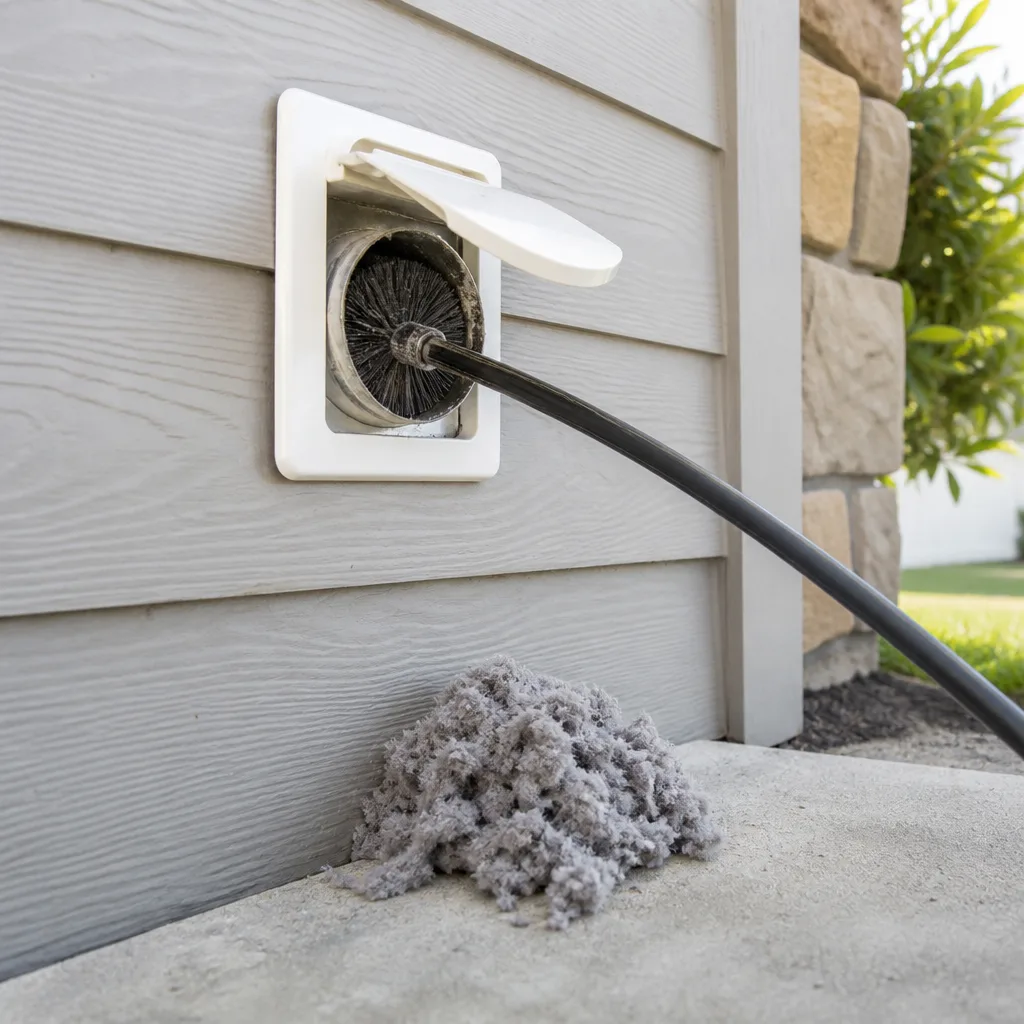
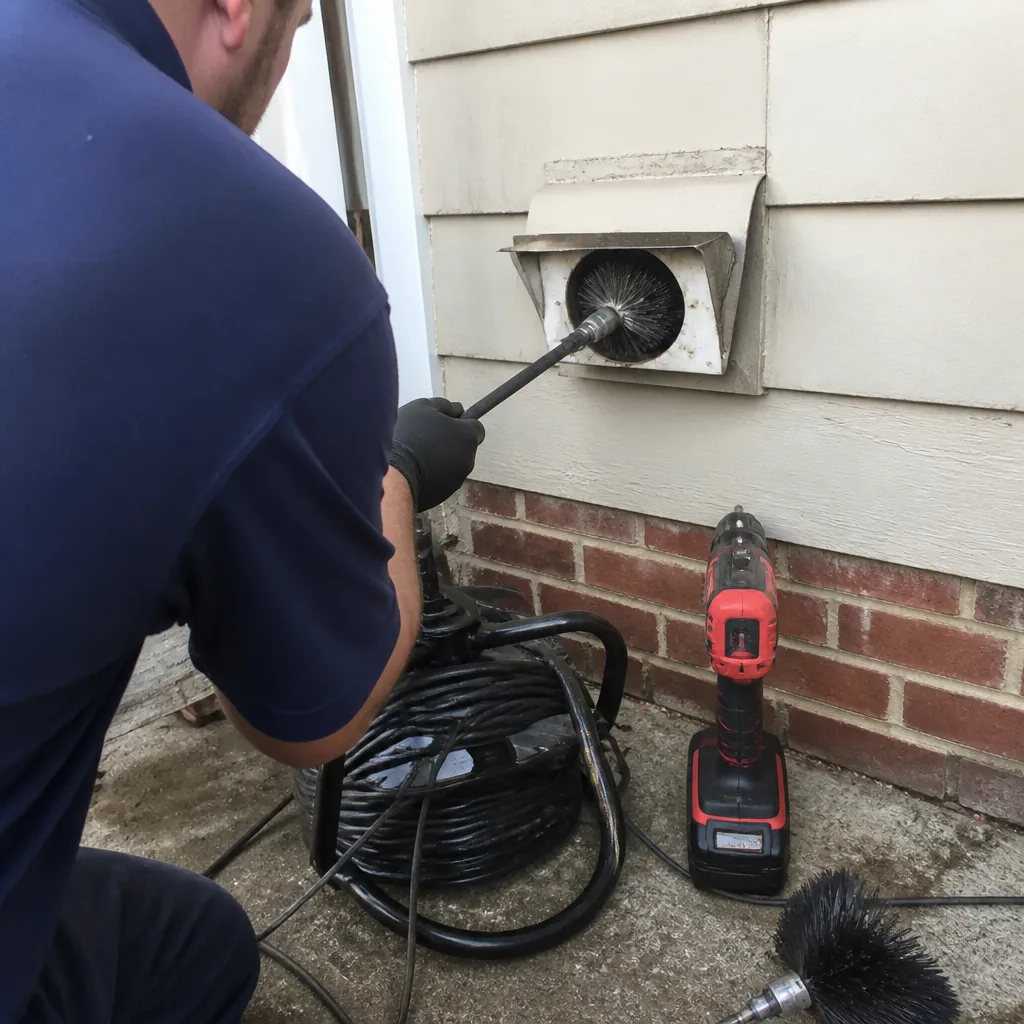
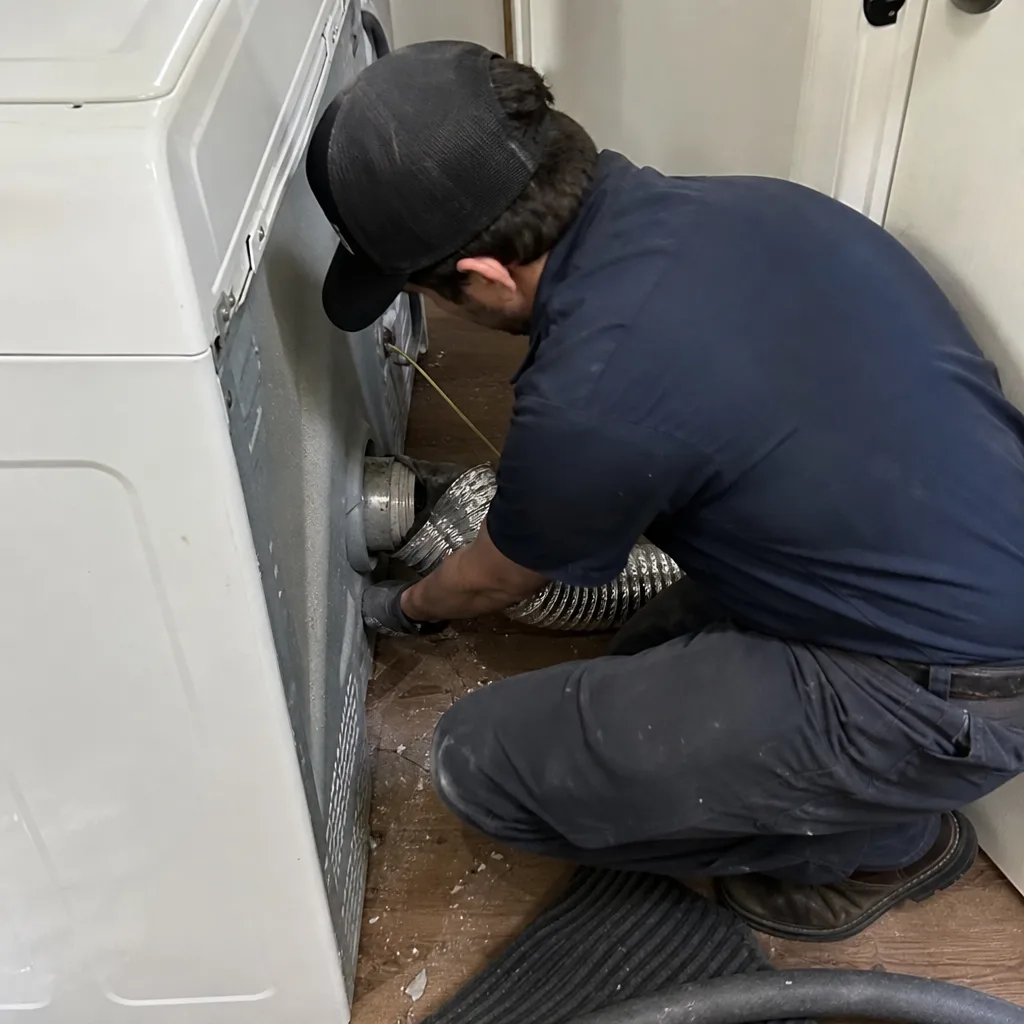
- Neglecting the dryer vent. A clogged dryer vent is a fire hazard and reduces the effectiveness of any duct cleaning by increasing lint load in the laundry area. Dryer Vent Cleaning in Washington should be part of a complete home air system maintenance plan, particularly in multi-unit buildings where vent runs are long and may be shared.
- Accepting verbal promises about guarantees. The “365-Day Done Right Promise” or any equivalent should be in writing, with specific terms, not mentioned casually by a phone representative. A guarantee that requires manager approval for every claim is not a guarantee; it’s a policy.
When to Call a Professional
Call for inspection and cleaning when you observe visible dust emission from registers, persistent musty odors when the system runs, uneven heating or cooling between rooms, or after any renovation work that generated construction dust. In Washington’s pollen seasons, homes near Rock Creek Park or the National Arboretum may need more frequent filter changes and occasional duct inspection even without obvious symptoms.
Call promptly if you suspect moisture intrusion in the duct system, if you observe visible mold on registers or in the mechanical room, or if your home was built before 1980 and has never had a professional duct inspection. The combination of aging building materials and decades of accumulated debris creates conditions that require informed handling.
CleanRun Air Duct Cleaning Washington offers free estimates in Washington. Explore more guides & resources on our blog. Every estimate includes a written price before any work starts, and every job concludes with a documented photo record. Call (240) 363-3380 to schedule.
Frequently Asked Questions
For a complete residential system, professional air duct cleaning in Washington typically ranges from $450 for a small condo to $950 for a large rowhouse, with larger or more complex systems extending to $1,400. Prices below $300 for a whole system indicate that the work is not following NADCA’s ACR standard and likely involves inadequate equipment. Call (240) 363-3380 for a written quote on your specific home - estimates are free and include no obligation.
Low quotes typically reflect one of three things: a lead-generation tactic where the price increases dramatically once work begins, the use of consumer-grade equipment that cannot reach or properly clean full duct runs, or a scope that excludes components that should be standard (the plenum, blower wheel, or photo documentation). A written price for a defined scope, delivered before work starts, is the only way to compare quotes accurately. CleanRun’s Haven Standard Clause 1 requires this on every job.
Demand a photo record of every duct run, before and after. A professional using proper equipment can access and photograph the interior of each duct; if a contractor cannot or will not provide this, the work is not verifiable. At CleanRun, the Documented Photo Record is included as a standard deliverable on every visit, not as an optional add-on. We’ve held this practice since our first job in 2013.
NADCA recommends cleaning every 3-5 years for typical residential systems, with shorter intervals for homes with pets, smokers, recent renovation, or occupants with respiratory conditions. In Washington, homes near major pollen sources or with basement humidity issues may benefit from more frequent inspection, even if full cleaning is not always required. The camera inspection itself is informative; we’ve recommended cleaning at 2 years for some homes and deferred it to 7 for others based on what the inspection showed.
Air duct cleaning addresses the distribution network: the ducts, registers, returns, and plenum. HVAC Cleaning in Washington includes the ductwork plus the mechanical components: the air handler, evaporator coil, condensate drain, and sometimes the outdoor condenser. For homes with integrated heating and cooling systems, HVAC cleaning is the more complete scope. For homes with separate systems (radiant heat with ducted AC, common in Washington rowhouses), the appropriate scope depends on which system is being addressed.
Moderately, and primarily when the system was significantly obstructed. A clean blower wheel and unobstructed duct run reduce the workload on the fan motor, which can lower electrical consumption. The larger efficiency gains typically come from sealing duct leaks, which is a separate service. We document pressure differentials during inspection and can recommend whether cleaning alone, sealing, or both will address your system’s performance. In Washington’s older housing, leaky retrofit ducts are often a bigger efficiency issue than dirty ones.
Duct cleaning itself does not require a permit, but work that modifies duct structure or accesses asbestos-containing material may trigger regulatory requirements. Washington’s Department of Energy and Environment (DOEE) oversees asbestos handling in buildings constructed before 1980. A professional contractor should assess for asbestos-containing materials before cutting access panels in older homes. CleanRun technicians are trained to identify potential asbestos situations and halt work pending proper abatement protocol when indicated. Our license number is published on every proposal for verification.
The Bottom Line
Air duct cleaning in Washington requires understanding the housing stock you’re working with: brick rowhouses with retrofit duct, pre-war apartments with hidden chases, and aging condos with degrading materials. The work should follow a documented standard, produce verifiable photo evidence, and be priced in writing before any equipment is activated. The difference between professional cleaning and a discounted visit is measurable in hours of labor, equipment capability, and whether you can see what was actually done. For homeowners who research before they hire, the criteria are straightforward: written price, documented result, accountable guarantee.
Written by Tomas Reyes, Owner at CleanRun Air Duct Cleaning Washington, serving Washington since 2013.