
Last updated September 23, 2026
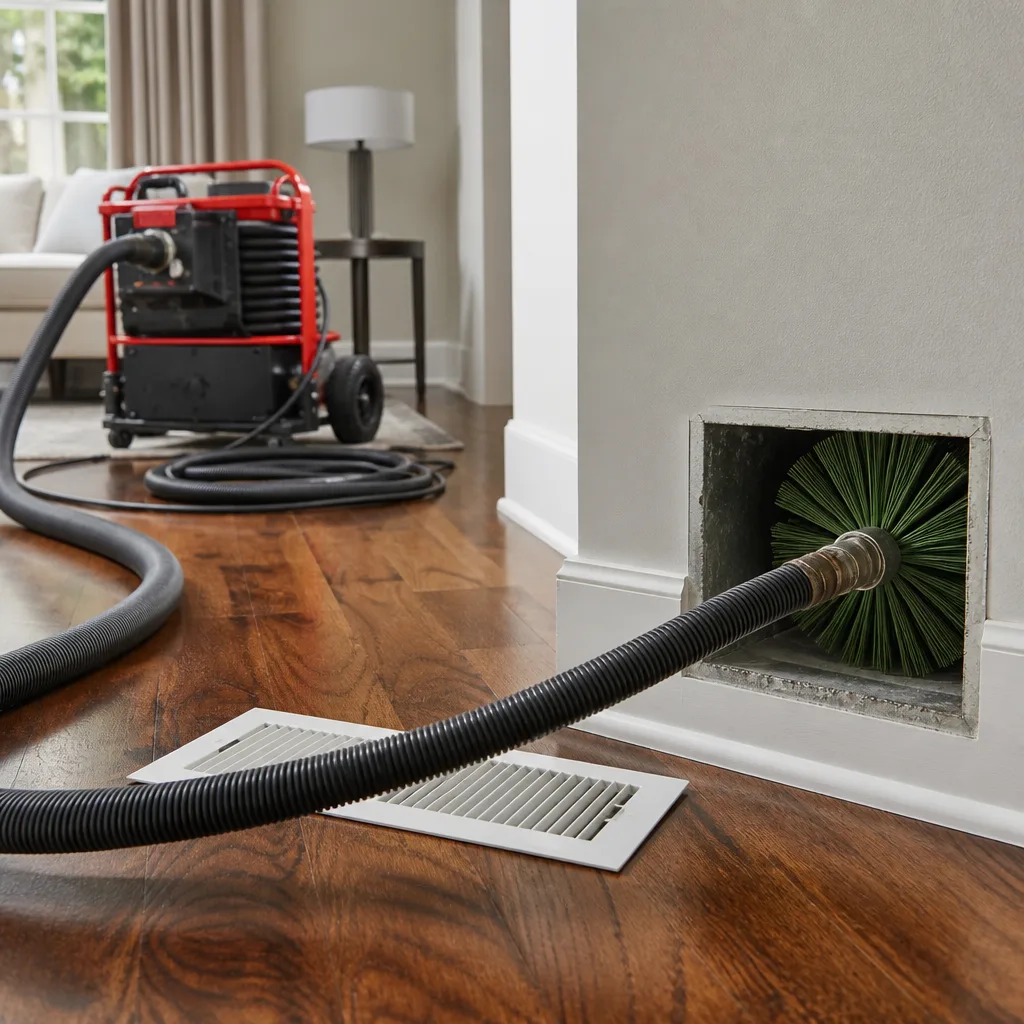
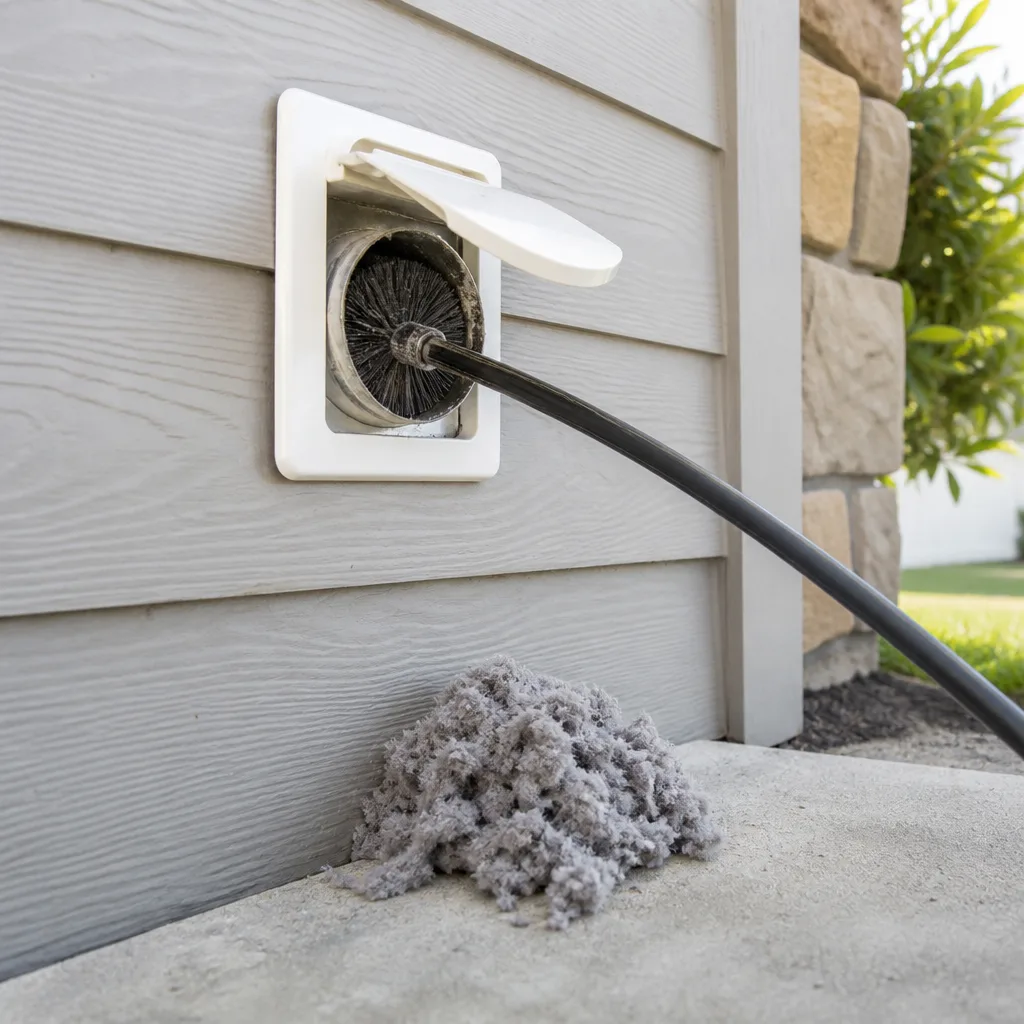
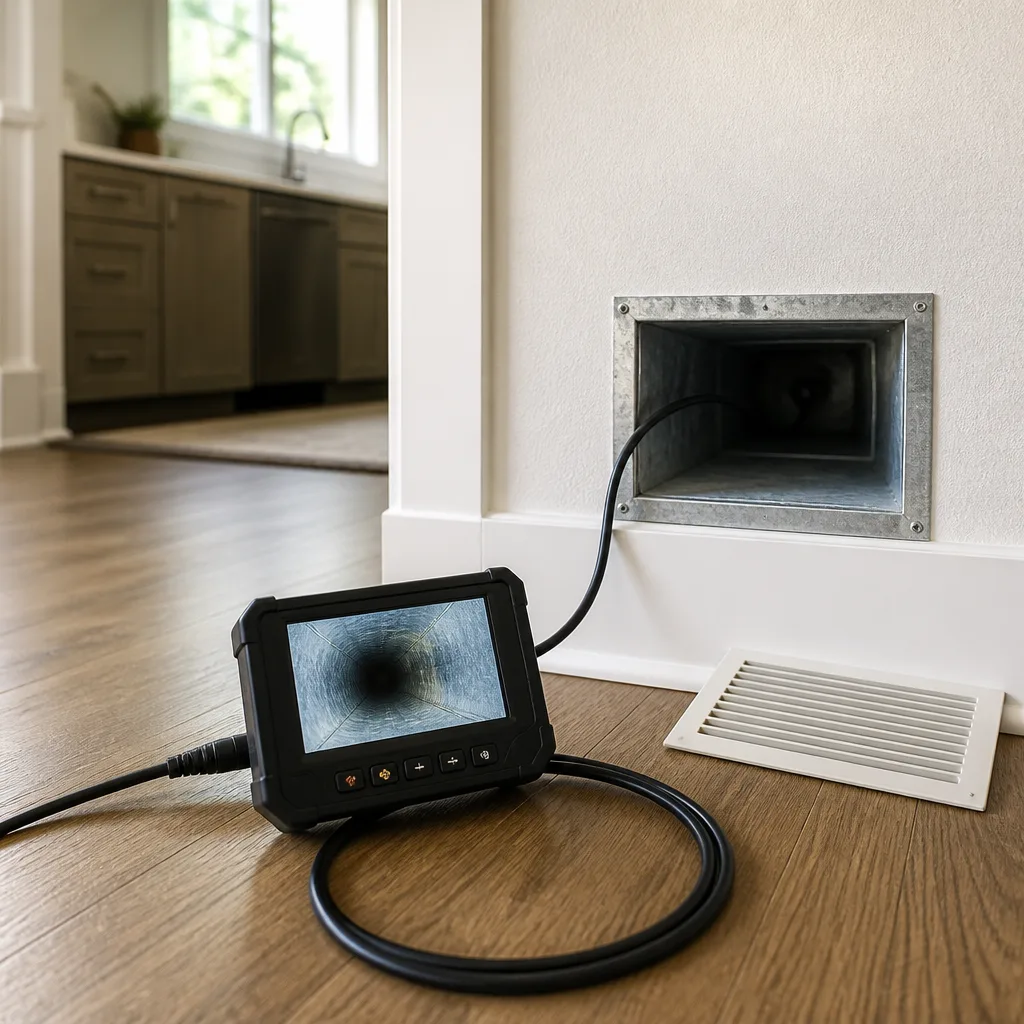
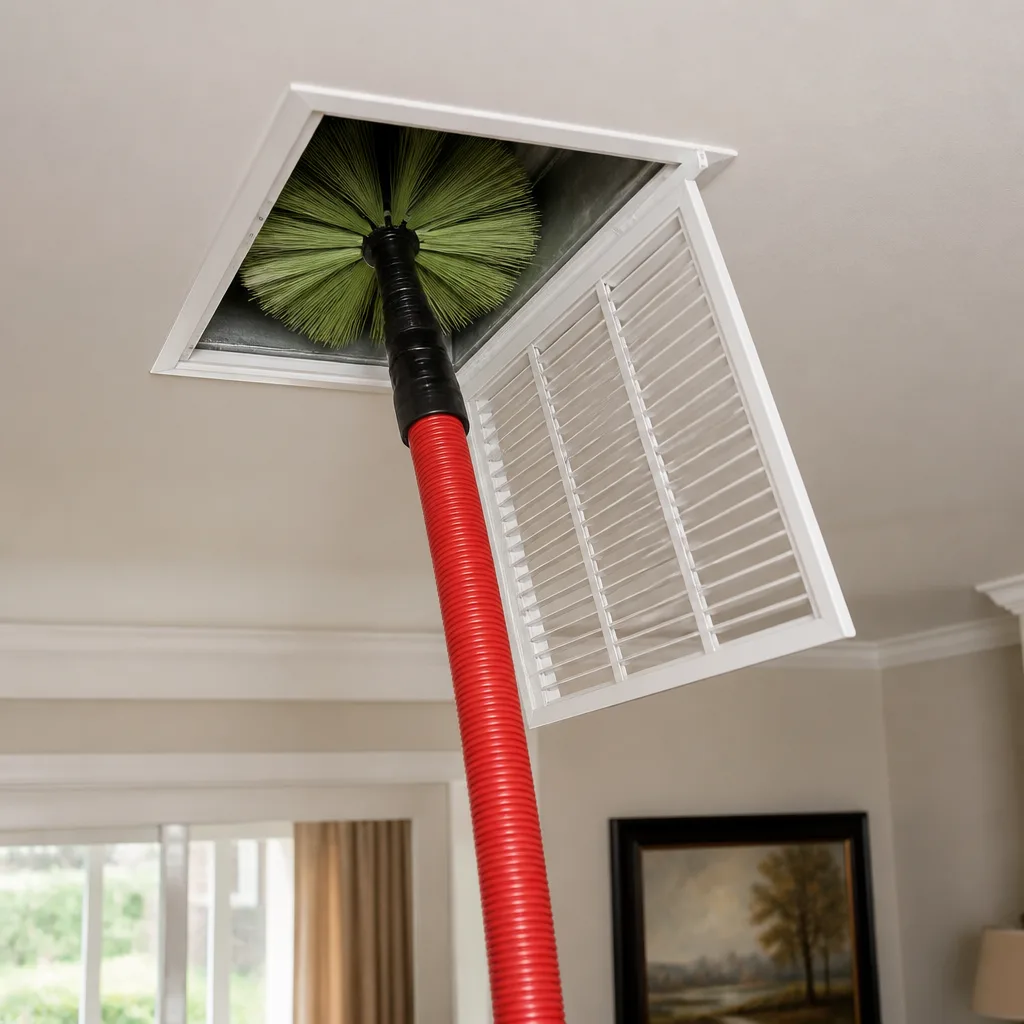
Whole-system duct and dryer vent check with before-and-after photos - you see exactly what came out of your vents
That "$99 whole-house special" is a bait ad - the real number appears once they are in your hallway, or the "clean" is a shop-vac at the register. We photograph the inside of your ducts before and after instead.
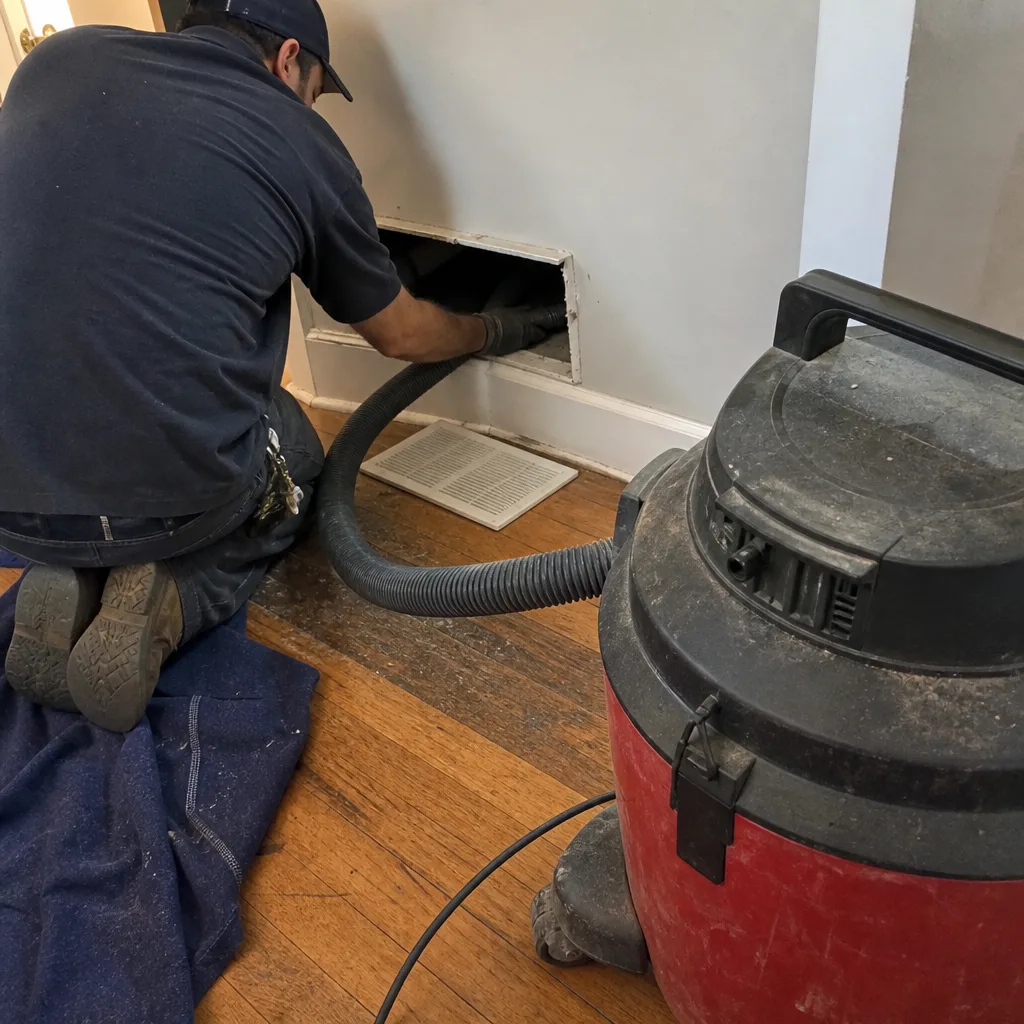 Before
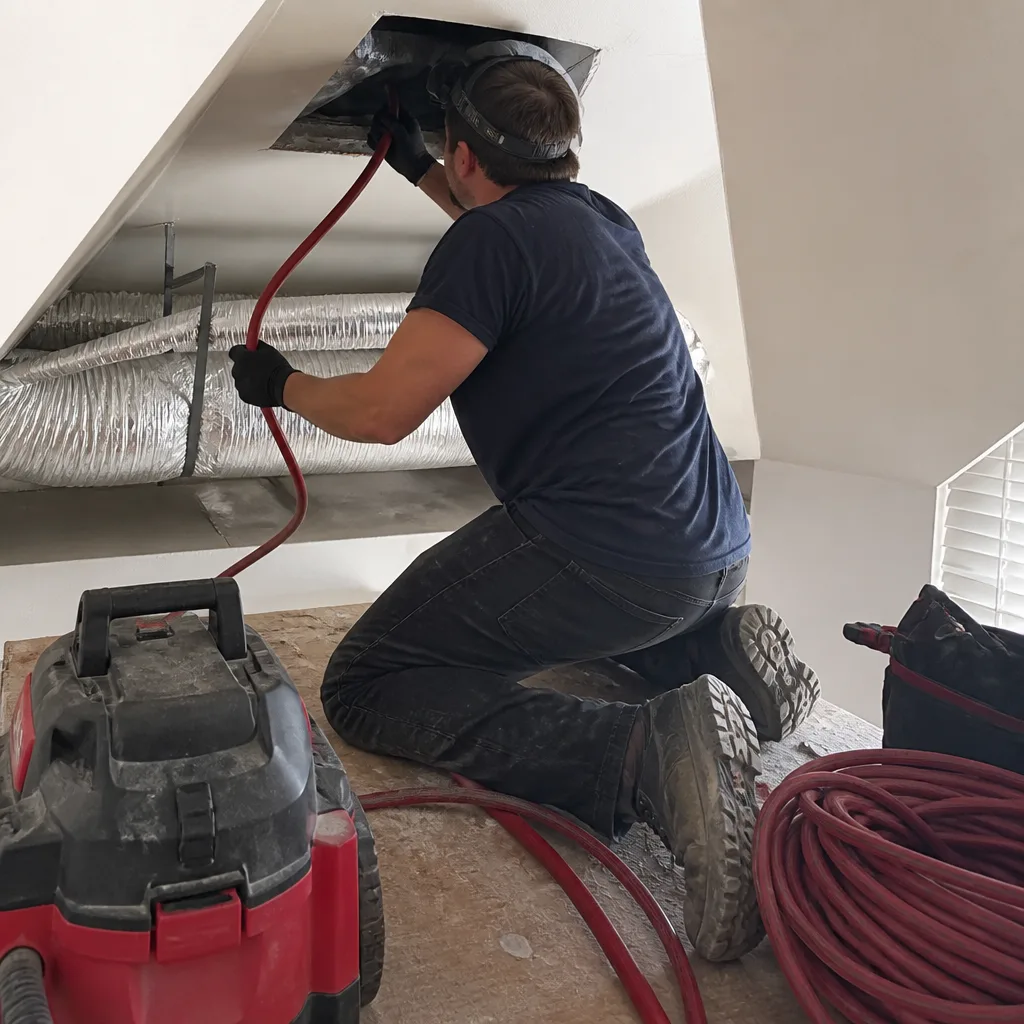 After
After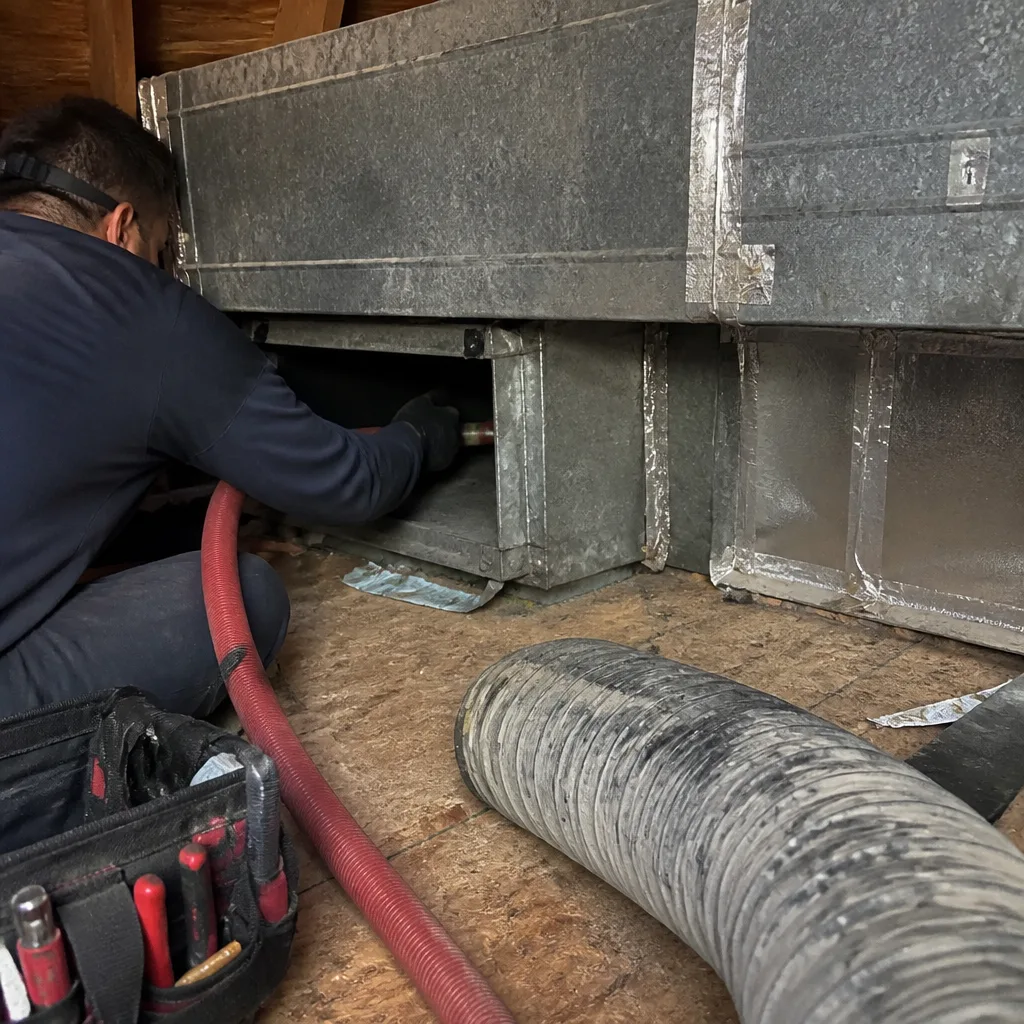 Before
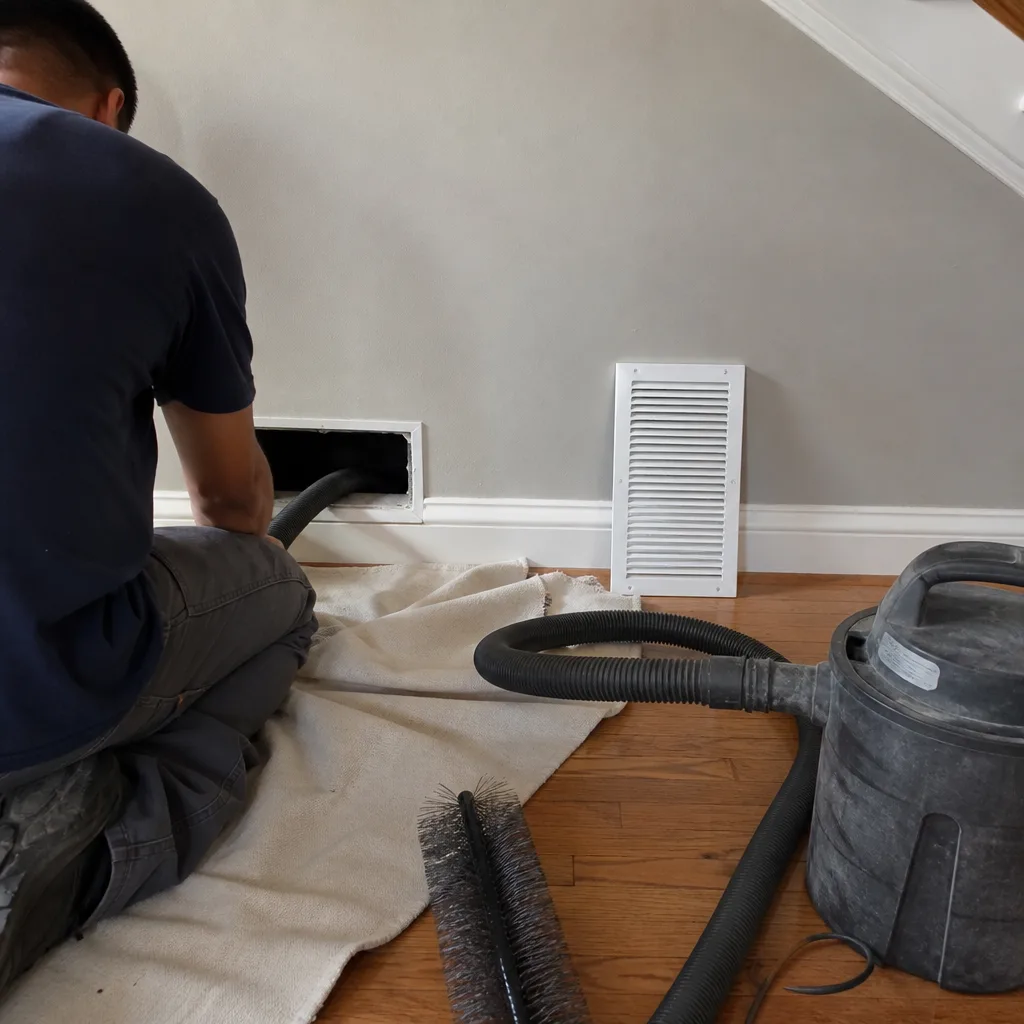 After
After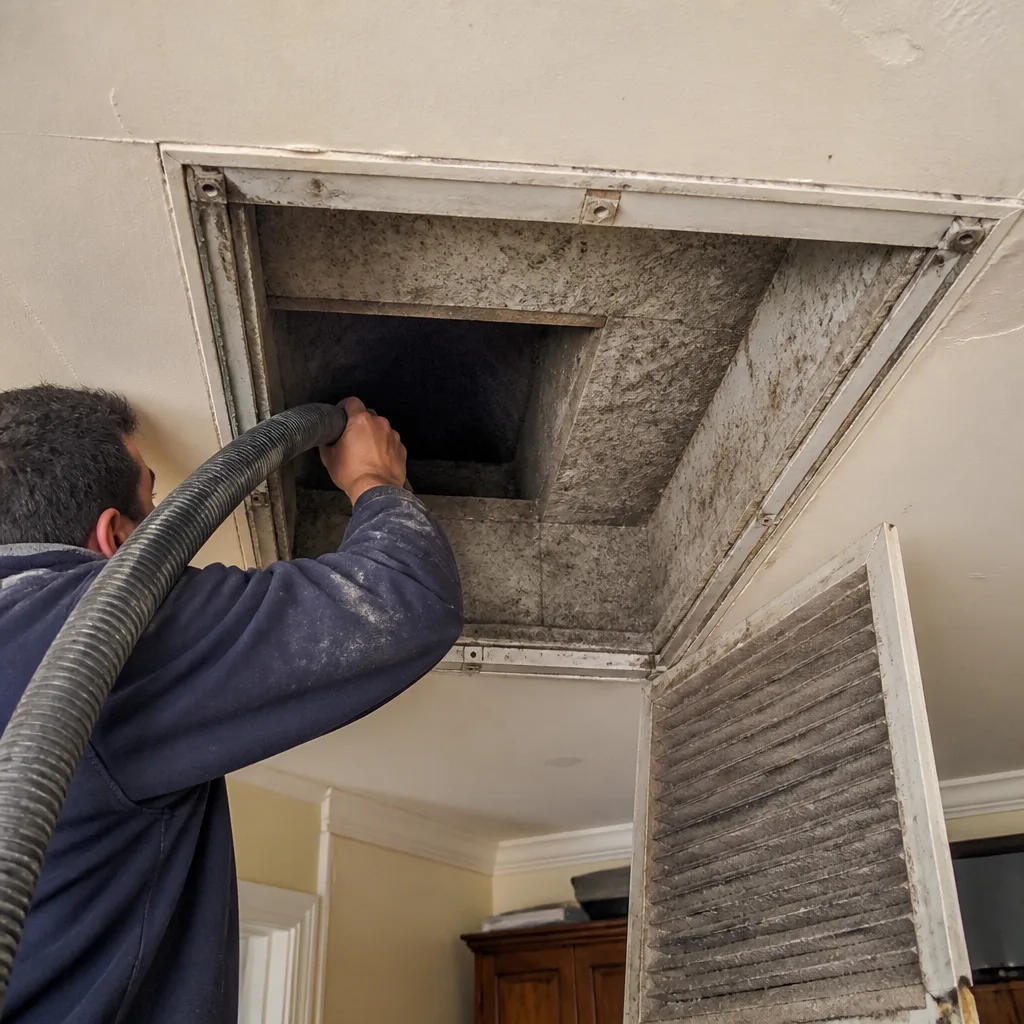 Before
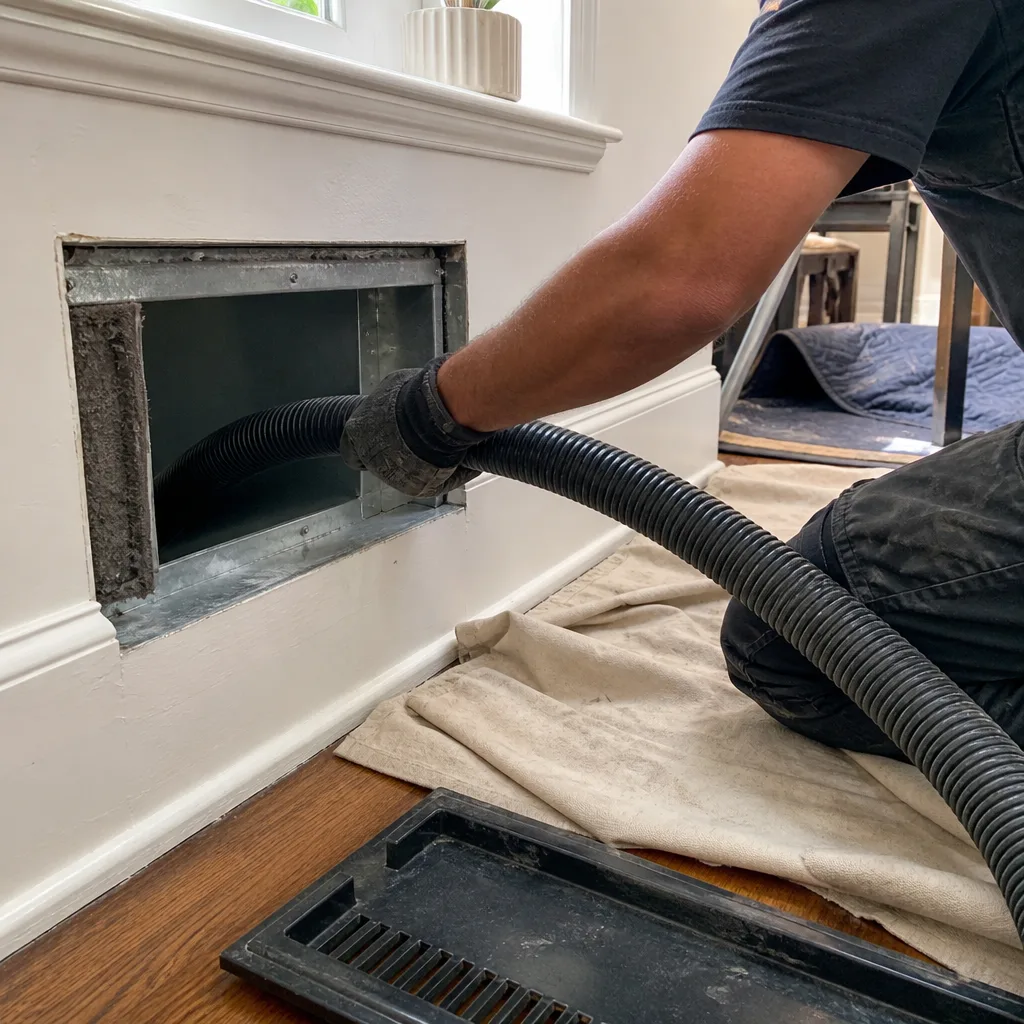 After
AfterSeasonal Air Duct Cleaning Care for Washington: Year-Round Homeowner’s Guide
Washington’s average July humidity sits above 70%, which is enough moisture to support mold colonization inside ductwork that was perfectly clean in April. The timing of when you clean matters as much as whether you clean. Most homeowners in Washington treat duct maintenance as a calendar item - “every three years” or “when we remember” - but the city’s four distinct climate stress periods create specific windows when inspection prevents damage and specific windows when it merely documents it. This guide breaks down what actually happens inside DC duct systems month by month, how to coordinate our Air Duct Cleaning services with HVAC service so neither wastes the other, and why the construction season running March through October should change how often you check your filters if you live in an active-renovation neighborhood like Columbia Heights or Petworth.
Quick Answer
Washington homeowners should schedule duct inspection and cleaning around four climate-driven stress periods rather than arbitrary calendar dates: post-pollen in late May, post-humidity in early September before heating season, post-fall debris in November, and mid-winter when dry air recirculates settled particulate. Cleaning before an HVAC tune-up captures debris that would otherwise foul the inspection; cleaning after wastes the technician’s diagnostic effort. For most DC homes, this means a full cleaning every 2-3 years with seasonal inspections in between, more frequently if you live near active construction or have mature deciduous tree coverage.
Table of Contents
- Why Timing Matters More Than Frequency in Washington
- Spring: Pollen Load and Return Vent Blockage (March-May)
- Summer: Humidity, Mold Risk, and Cooling Coil Stress (June-August)
- Fall: Debris Drop and the Pre-Heating Inspection Window (September-November)
- Winter: Dry Air, Static, and Particulate Recirculation (December-February)
- How to Coordinate Duct Cleaning with HVAC Tune-Ups
- Washington’s Construction Season and Your Filter Schedule
- Seasonal Warning Signs That Demand Immediate Attention
BeforeAfterWhy Timing Matters More Than Frequency in Washington
The standard advice - “clean your ducts every three to five years” - treats all homes and all climates as identical. In Washington, this misses the point entirely. The city sits in a humid subtropical zone with four distinct seasons, each depositing different contaminants into the same duct runs at different rates.
We’ve documented this since 2013 across 52,000+ homes. A duct system cleaned in March will look different by August than one cleaned in October looks by the following March. The difference is not gradual wear; it’s specific, seasonal loading.
Here’s what the photo records show:
- Spring loading: Pollen and fine particulate accumulate at return vents and the first elbow of the return trunk, often forming a visible mat by late May. In neighborhoods with heavy tree cover like Chevy Chase or Cleveland Park, this layer can reach half an inch.
- Summer loading: Humidity above 70% at the cooling coil creates a wet surface where spores colonize. The debris isn’t just dust anymore; it’s organic growth that changes the material properties of what needs to be removed.
- Fall loading: Deciduous debris - leaf fragments, bark, seed pods - enters through outdoor intakes and gaps in exterior ductwork. This material is coarser than spring pollen and traps more moisture against duct walls.
- Winter loading: Dry heated air increases static electricity, which resuspends particulate that had settled during humid summer months. The system isn’t getting dirtier; it’s moving existing dirt faster.
Each loading type requires different equipment and different attention. A Rotobrush system with a soft-bristle head handles spring pollen mats without damaging flex duct. Abatement Technologies’ negative-pressure extraction units are specified when summer moisture has created adhered biofilm. The point is not brand preference; it’s that timing determines what you’re actually cleaning, which determines what method actually works.
Haven Standard Clause 1 requires a written price before any work starts, and part of that written scope - detailed in our Air Duct Cleaning Cost Breakdown: The Washington Homeowner’s Reference for 2026 - is identifying what seasonal loading we’re addressing. A customer who calls in September because “it’s been three years” gets a different scope - and a different price - than one who calls because the cooling coil inspection showed visible growth. Both get the written price first. Neither gets a generic treatment.
Spring: Pollen Load and Return Vent Blockage (March-May)
Washington’s tree pollen season typically peaks in late April, with grass pollen extending into June. For duct systems, the critical period isn’t the peak itself but the three to four weeks after, when accumulated pollen at returns begins to compress into mats that restrict airflow.
We’ve photographed this pattern repeatedly in homes near Rock Creek Park and the National Arboretum, where oak, birch, and maple density is highest. The return grille shows a yellow-green film by mid-April. By late May, the first elbow of the return duct - the bend where air changes direction toward the air handler - often holds a compressed layer 1-3 inches thick. This isn’t surface dust; it’s a structured mat that reduces cross-sectional area and forces the blower motor to work harder.
What to check in spring:
- Remove a return vent cover and photograph the visible duct length with your phone’s flash. A uniform coating is normal; a ridged or layered mat is not.
- Check the filter monthly during April and May, not quarterly. Pollen loads can saturate a standard 1-inch pleated filter in four to six weeks.
- Note any increase in blower noise or longer cooling cycles. Both suggest airflow restriction at the return.
- Schedule inspection for late May, after the peak has passed but before summer humidity changes the material properties of the accumulated debris.
The Aprilaire filter line includes MERV 13 options that capture pollen at 0.3-1.0 micron efficiency, but no filter protects against what already passed through. Spring inspection is about assessing what got past the barrier, not congratulating yourself on the barrier itself.
For Air Duct Cleaning in Washington during this window, we specify soft-bristle agitation and HEPA-filtration negative-pressure extraction. The goal is removing the mat without driving pollen deeper into the duct run or, worse, through the air handler and into supply ducts.
Summer: Humidity, Mold Risk, and Cooling Coil Stress (June-August)
Washington’s July humidity average of 70%+ creates conditions inside ductwork that don’t exist in drier climates. The cooling coil - the finned heat exchanger where refrigerant absorbs heat from passing air - operates at temperatures below the dew point. Water condenses on those fins continuously during cooling cycles. This is normal. What isn’t normal is when that moisture, combined with dust that escaped filtration, creates a growth medium on the coil surface, the drain pan, and the downstream ductwork.
We’ve inspected systems in August where the coil inspection camera showed black or green staining on the fins, and the downstream plenum - the central distribution box where conditioned air splits to individual duct runs - showed visible spotting on fiberglass liner. This isn’t “a little dust.” It’s colonization that produces spores circulated through the home every time the system cycles.
Critical summer facts for Washington homeowners:
- The cooling coil and drain pan should be inspected annually, not every three years. This is HVAC maintenance, not duct cleaning, but the two are connected: a dirty coil contaminates clean ducts, and dirty ducts load a clean coil faster.
- If you smell a musty or “locker room” odor when the AC first cycles on, that’s likely microbial growth on the coil or in the condensate drain. The smell is a diagnostic, not an aesthetic issue.
- Homes in Washington’s low-lying areas - parts of Foggy Bottom, the Navy Yard corridor, areas near the Anacostia - experience higher ambient humidity and may need more frequent coil inspection.
- Negative-pressure extraction with antimicrobial treatment (we use Guardsman-formulated products where indicated) addresses the duct side; coil cleaning requires a separate scope and is typically performed by an HVAC technician, not a duct cleaner. We coordinate with your HVAC provider or refer to licensed partners.
The photo record is especially important here. A customer who sees the coil image from August and the same coil image from the following spring after proper treatment understands why “duct cleaning” without coil attention is incomplete. Our Documented Photo Record on Every Visit includes both when we have access; when we don’t, we note the limitation in writing.
HVAC Cleaning in Washington addresses the full system, including coils and air handlers, as a separate scope from duct cleaning. The sequence matters: coils last, or you’re cleaning what will be recontaminated.
Fall: Debris Drop and the Pre-Heating Inspection Window (September-November)
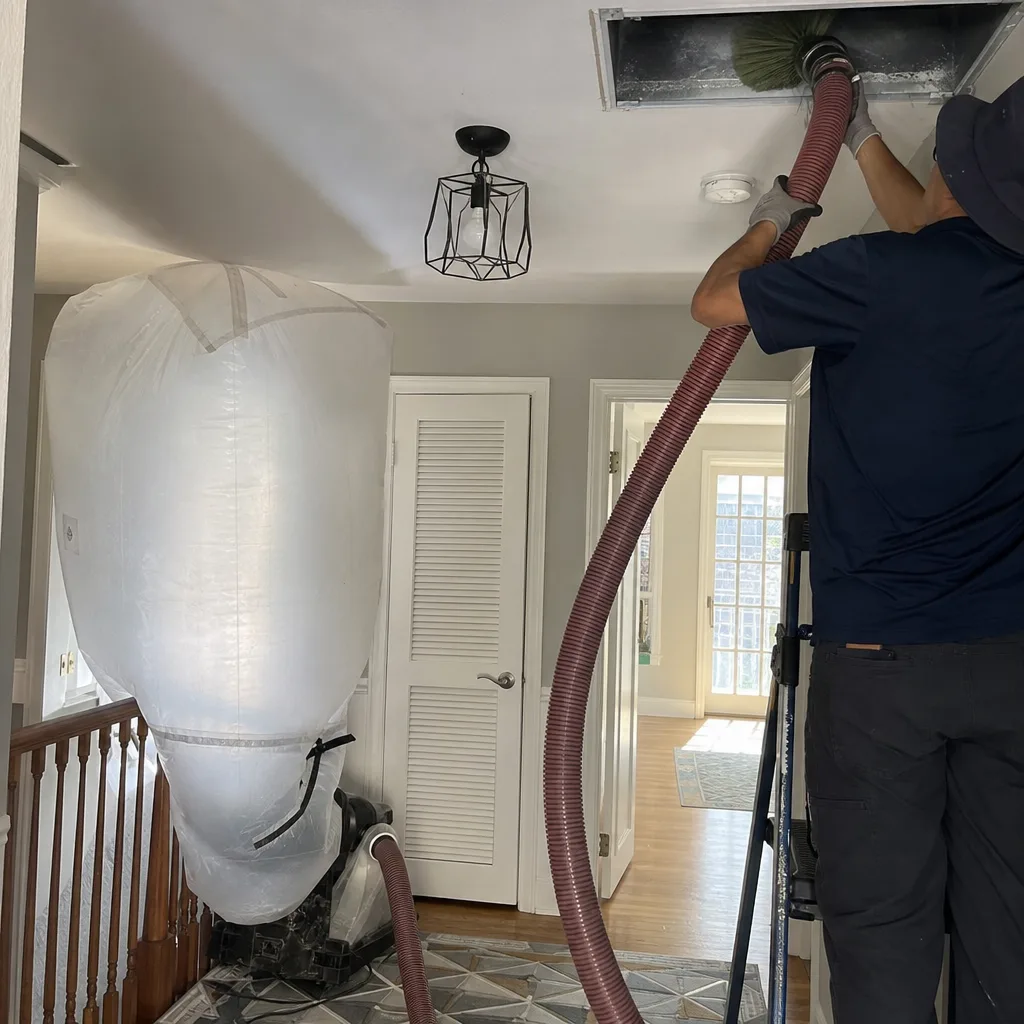
September is the most underutilized maintenance window in Washington. The cooling season is ending. The heating season hasn’t started. And the debris load from deciduous trees - oak, maple, sycamore, tulip poplar - is just beginning to peak.
Neighborhoods with mature canopy cover see significant debris entry through outdoor air intakes, gaps in exterior ductwork, and even through return vents when windows are left open during mild weeks. In Cleveland Park, Chevy Chase, and parts of Takoma, we’ve found leaf fragments and seed pods in rooftop-mounted equipment and in basement return trunks alike. The material is coarse, often damp from fall rains, and slower to dry than spring pollen.
Why September inspection matters:
- The cooling coil has been wet all summer. Any growth that started in July is established by September. Inspecting now means addressing it before the heating season dries the system and circulates spores through a now-closed building envelope.
- Heating mode changes airflow patterns. Hot air rises faster, moves at different velocity, and may resuspend debris that settled during summer’s slower circulation. Cleaning in September means the system enters heating season with empty ducts, not loaded ones.
- HVAC technicians are less booked in September than in October or November. You can coordinate duct cleaning and furnace tune-up without the scheduling compression that hits after the first cold snap.
- Washington’s fall construction push is still active. If you live near active renovation, September debris loads include construction dust plus organic material - a combination that compacts and adheres more than either alone.
The ideal sequence: duct cleaning first, then HVAC tune-up. The tune-up technician can inspect a clean system and won’t waste diagnostic effort on airflow issues caused by blockage that cleaning would have removed. Reverse the order and you pay for a tune-up, then pay again when cleaning reveals the “problem” was debris all along.
Our written scope for fall work specifies whether outdoor intakes and exterior ductwork are included. Not every company checks these; we do, and we photograph them.
Winter: Dry Air, Static, and Particulate Recirculation (December-February)
Washington winters are milder than Boston’s or Chicago’s, but they’re heating-dominant and dry. Indoor relative humidity in January often drops below 30%, especially in older homes with envelope leakage common in Capitol Hill rowhouses or pre-war buildings in Dupont Circle.
Dry air increases static electricity, which increases particulate resuspension. Dust that settled in humid summer conditions, adhered to duct walls, or simply moved slowly through the system gets picked up by faster-moving heated air and delivered to occupied spaces. The system isn’t producing new contamination; it’s redistributing old contamination more aggressively.
Winter-specific considerations:
- Filter loading changes character: Summer filters capture moisture-laden particles that cling; winter filters capture dry, charged particles that may pass through or bypass if the filter frame doesn’t seal tightly. Check for gaps around the filter perimeter monthly.
- Humidifier integration: Whole-house humidifiers mounted on supply plenums can become growth sites if not maintained. The pad or drum should be replaced per manufacturer schedule, typically annually. A contaminated humidifier negates clean ducts.
- Construction dust from winter interior projects: Washington’s construction season peaks March-October, but interior renovation continues year-round. Winter projects produce fine dust that loads the system faster because the building envelope is closed - no open windows for dilution.
- The “February funk”: We see a spike in calls in late February from homeowners who’ve been closed up for three months and notice persistent dust, stale odors, or increased allergy symptoms. Often the issue isn’t new contamination; it’s accumulated contamination finally reaching perceptible thresholds.
Winter is not ideal for full duct cleaning in Washington - outdoor equipment performs poorly in near-freezing conditions, and access to rooftop units is hazardous when iced. But winter is the right time for inspection, filter upgrade, and planning spring work. See our Air Duct Cleaning Maintenance Checklist for Washington Homeowners for the full seasonal schedule. We provide written scopes and pricing in February for March scheduling, which locks capacity before the spring rush.
Dryer Vent Cleaning in Washington is especially critical in winter. Longer drying cycles mean more lint production, and heavier clothing loads increase fire risk. We bundle dryer vent inspection with winter duct assessments when both are due.
How to Coordinate Duct Cleaning with HVAC Tune-Ups
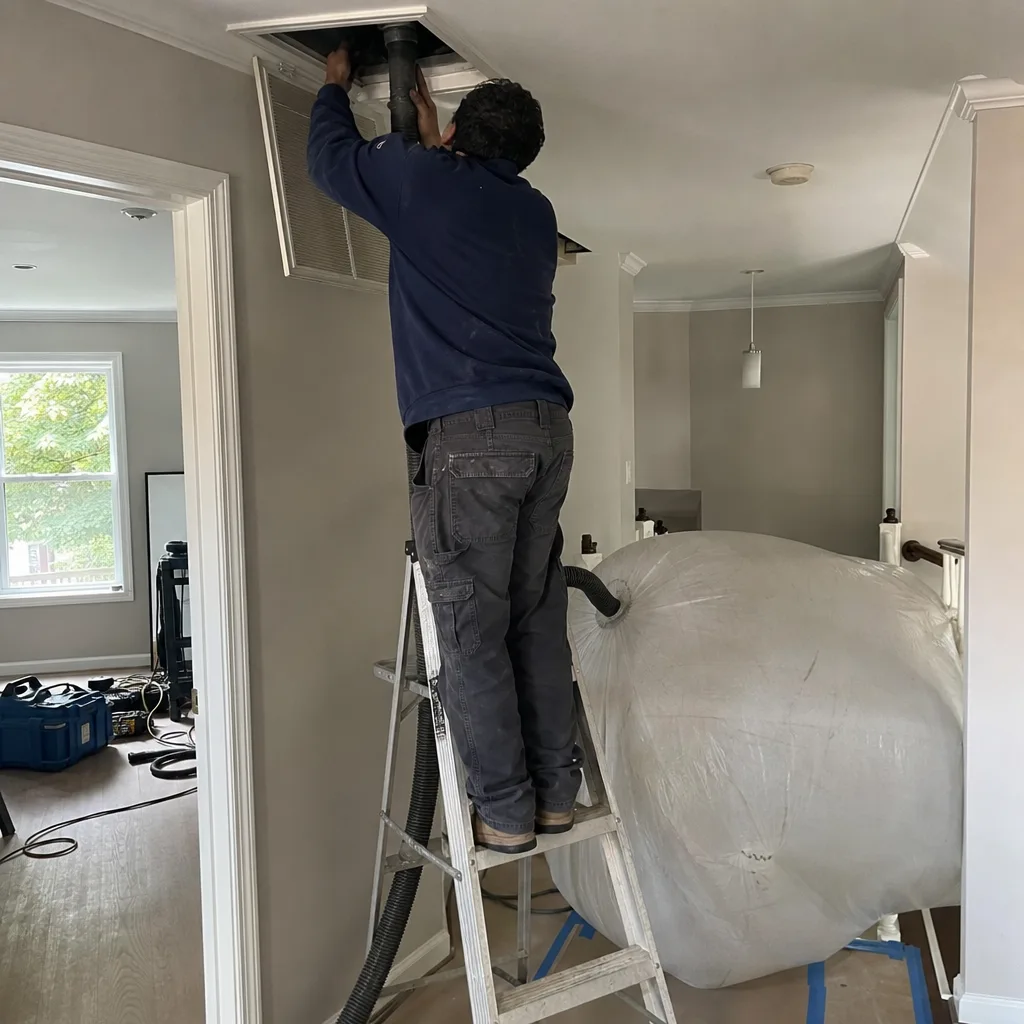
The sequence of maintenance matters more than most homeowners realize. Clean ducts before the HVAC tune-up, or you waste the tune-up. Tune up before cleaning, and the technician can’t accurately assess system performance.
The correct sequence:
- Duct cleaning first. Remove all accumulated debris from return and supply runs, registers, grilles, and accessible plenum areas. This establishes a clean baseline.
- Replace or upgrade filter. Install new filtration before the tune-up so the technician assesses the system as it will actually operate.
- HVAC tune-up second. The technician now inspects coils, blower, heat exchanger, and controls in a system where airflow restriction from duct debris isn’t masking other issues.
- Document and compare. Keep the duct cleaning photo record and the HVAC inspection report together. Next year, compare to track degradation rates.
Common coordination failures we see:
- The homeowner schedules both for the same day, different companies. The duct crew finishes at 2 PM, the HVAC tech arrives at 3 PM, but the system needs hours to settle before accurate pressure readings. Result: inconclusive tune-up, possible callback.
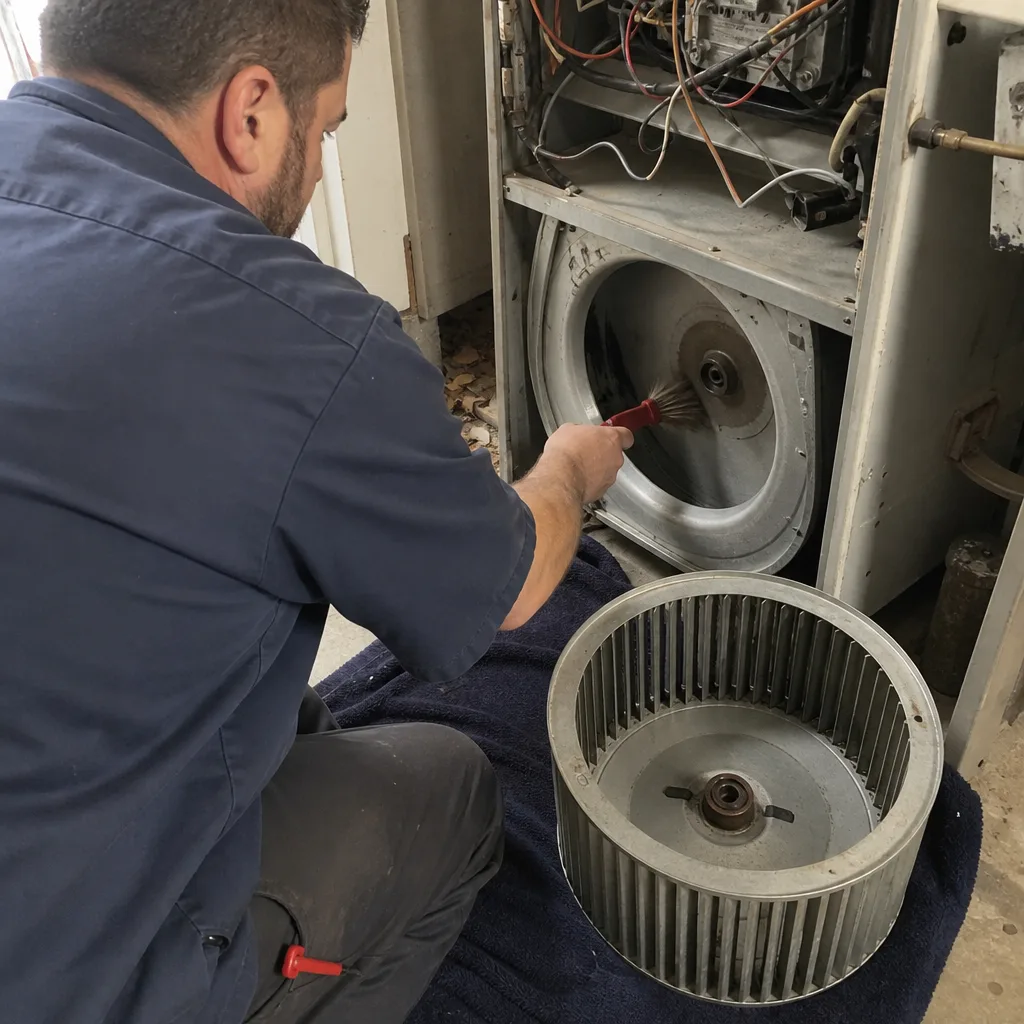
- The HVAC tune-up identifies “low airflow,” recommending duct cleaning. The homeowner schedules cleaning, but the original tune-up didn’t distinguish between duct blockage and blower wheel fouling. Cleaning fixes the wrong problem, or only part of it.
- Neither provider documents what they found. A year later, no one can determine whether degradation is normal or accelerated.
We coordinate directly with HVAC providers when customers request it, sharing our photo record and written scope so the tune-up technician knows what was addressed and what wasn’t. Haven Standard Clause 4 requires this documentation; it’s not a favor, it’s the standard.
The CleanRun Air Duct Cleaning Washington home page lists our full service scope and coordination protocols.
Washington’s Construction Season and Your Filter Schedule
Washington’s construction permit activity peaks March through October, with the heaviest concentration April through September. For homeowners in active-renovation neighborhoods - currently Columbia Heights, Petworth, H Street corridor, parts of Navy Yard and the Wharf - this external loading source changes everything about maintenance timing.
Construction dust is not household dust. It’s silica from concrete cutting, gypsum from drywall work, fiberglass from insulation, and volatile organic compounds from adhesives and sealants. These materials are finer, more abrasive, and more chemically active than typical residential particulate. When they enter your duct system through envelope leakage or open windows during mild weather, they behave differently than organic debris.
Adjustments for construction-adjacent homes:
- Filter replacement: Every 30-45 days during active construction within 200 feet, not quarterly. Use MERV 11 minimum; MERV 13 if your system can handle the static pressure.
- Return vent inspection: Monthly visual check. Construction dust shows as a gray, uniform film distinct from the yellow-green of pollen or the dark, fibrous mat of organic debris.
- Seal gaps: Window and door weatherstripping, outlet gaskets, and any visible ductwork penetrations to exterior walls. Construction vibration loosens existing seals.
- Post-construction cleaning: Schedule full duct cleaning 2-4 weeks after nearby construction completes, not immediately. The initial dust load settles; cleaning too early captures only the airborne fraction and misses what will resuspend.
We’ve documented post-construction duct conditions in Washington since 2013. The photo records from homes near major projects - the 14th Street corridor development, the Wharf phases, various Metro corridor improvements - show consistent patterns: heavy loading at returns facing the construction, lighter but detectable loading throughout the system, and accelerated filter degradation that homeowners often attribute to “the system” rather than the external source.
The written scope for construction-adjacent homes specifies whether negative-pressure extraction with HEPA filtration is indicated (it usually is) and whether antimicrobial treatment is warranted (depends on whether moisture was present). Both affect price; both are disclosed in writing before work starts.
Seasonal Warning Signs That Demand Immediate Attention
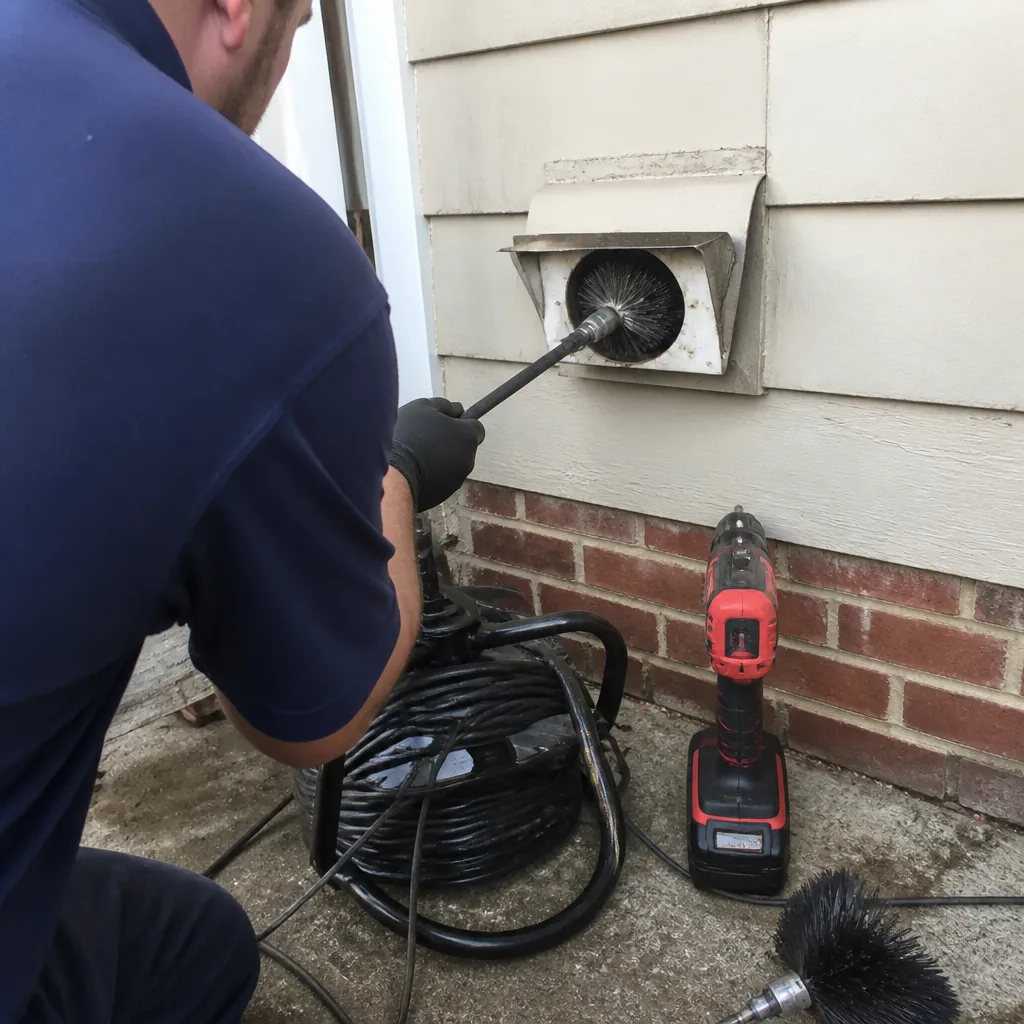
Some indicators shouldn’t wait for the next scheduled maintenance. These are season-specific red flags we’ve learned to recognize across Washington homes.
Spring:
- Visible pollen mat at return vents by mid-April that restricts airflow enough to whistle or hum.
- Allergy symptoms that spike indoors despite windows remaining closed during peak pollen.
- New or worsening odors when the system cycles on - pollen decomposition produces a sweet, hay-like smell distinct from must.
Summer:
- Musty or “wet sock” odor at system startup that dissipates after several minutes - this is coil or drain pan growth, not duct debris.
- Water stains on ceiling tiles or drywall near air handler locations - condensate drainage failure, often related to blockage from biological growth.
- Unexplained humidity indoors despite AC running - coil fouling reduces dehumidification capacity.
Fall:
- Visible leaf debris or seed pods at outdoor intakes or in rooftop equipment.
- Rodent or insect activity in exterior ductwork - cooler weather drives pests toward conditioned spaces.
- Sudden airflow reduction after first heating cycle - summer debris dried and shifted, blocking a junction or damper.
Winter:
- Static shocks that increase in frequency - indicates very low humidity and high particulate load, both of which stress the system.
- Dust accumulation on supply registers within days of cleaning - the system is recirculating, not filtering effectively.
- Carbon monoxide detector activation - rare but critical; can indicate heat exchanger crack or backdraft related to pressure imbalances from duct blockage. This is an emergency, not a maintenance item.
Any of these signs trigger our expedited inspection protocol. We don’t charge for the urgency; we charge for the scope, disclosed in writing. But we do prioritize these calls because delayed response often means more extensive remediation.
Common Mistakes to Avoid
- Cleaning before knowing what’s in the ducts. Camera inspection first, always. We’ve found collapsed flex duct, disconnected runs, and pest infestations that cleaning would have worsened or concealed. The photo record starts with the “before” image, not the marketing photo.
- Treating all seasons identically. A March cleaning addresses different material than a September cleaning. The method, equipment, and pricing should reflect this. Generic “duct cleaning” scopes miss the distinction.
- Scheduling HVAC tune-up before duct cleaning. The technician measures airflow, pressures, and temperatures in a system that will change significantly once debris is removed. Results are inconclusive at best, misleading at worst.
- Ignoring outdoor intakes and exterior ductwork. In Washington’s tree-heavy neighborhoods, these are primary entry points for seasonal debris. Interior-only cleaning leaves the loading source unaddressed.
- Using per-vent pricing as a comparison tool. This structure incentivizes minimal work per vent and obscures total scope. We quote one flat price per system, agreed in writing before work starts, based on what the camera shows.
- Skipping documentation. Without before-and-after photos and a written scope, you have no basis to evaluate whether work was performed, whether it was effective, or whether the next interval should be shorter or longer.
- Waiting for “every three years” regardless of conditions. Homes near construction, with mature trees, with pets, or with occupants who have respiratory conditions may need different intervals. The calendar is a starting point, not a rule.
When to Call a Professional
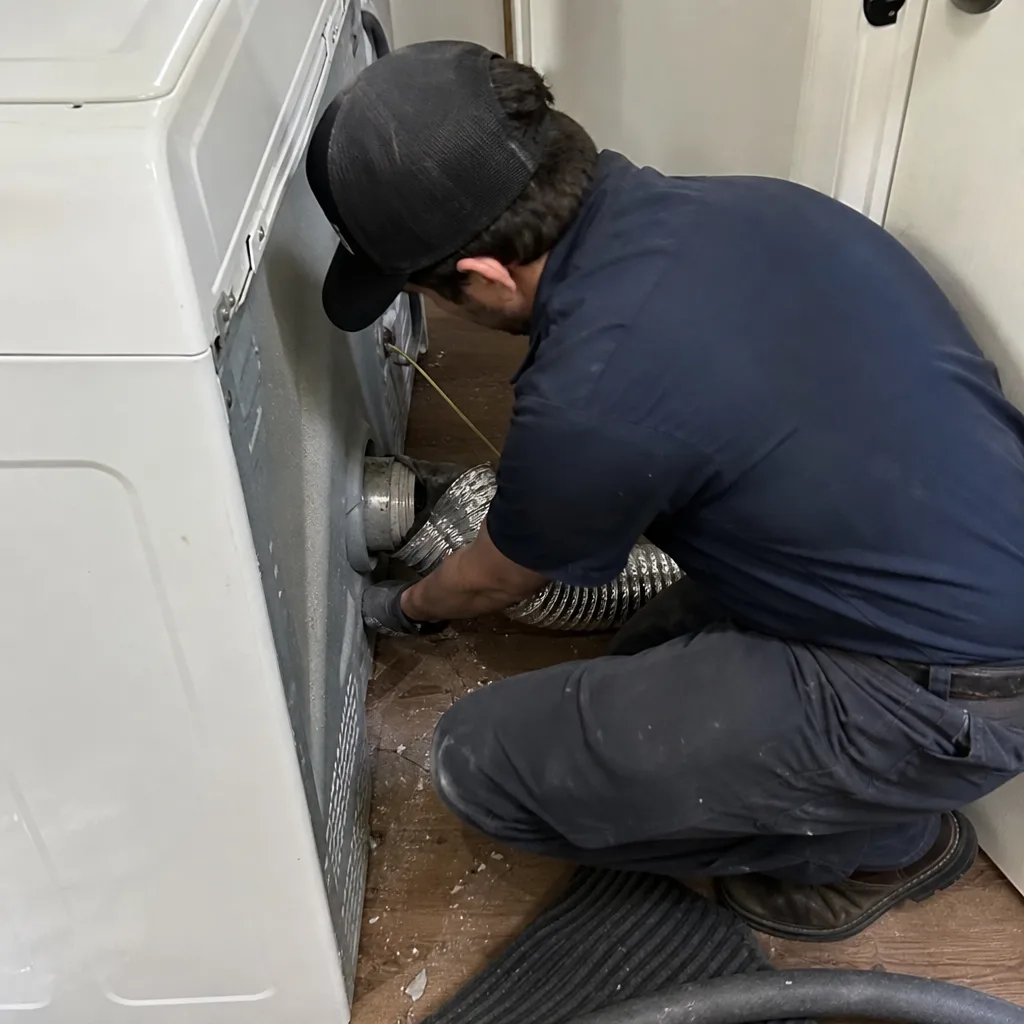
Call for inspection when seasonal warning signs appear, when you’re coordinating with an HVAC tune-up and need the sequence right, or when you’ve never had documented photo evidence of your duct condition. Browse more guides & resources to learn what to watch for each season. In Washington’s climate, “I don’t know what’s in there” is a reasonable basis for scheduling; “it hasn’t been three years yet” is not.
CleanRun Air Duct Cleaning Washington offers free estimates in Washington - call (240) 363-3380. Every estimate includes camera inspection of accessible ductwork, a written scope with flat pricing, and no obligation. The 365-Day Done Right Promise applies to every job we perform, backed in writing, not as a verbal assurance.
Frequently Asked Questions
Whole-system duct cleaning for a typical Washington single-family home ranges from $450 to $850, depending on system size, accessibility, and what the camera inspection reveals. We deliver one flat price per system in writing before any work starts, under Haven Standard Clause 1. Per-vent pricing doesn’t exist in our estimates. Call (240) 363-3380 for an exact quote - estimates are free.
$79-$149 quotes typically cover vacuuming visible register areas only, not full duct runs, and often convert to higher invoices once on site. The equipment used may be consumer-grade shop vacuums rather than negative-pressure extraction systems. We document what we find and what we do with before-and-after photos of every duct run, included standard. If a quote seems too low to include that documentation, it probably is.
You receive a Documented Photo Record showing the inside of every duct run before and after cleaning, delivered as part of the standard job record. This practice has been in place since our first job in 2013. No photos, no verification; we don’t consider the job complete without them.
Most Washington homes benefit from full cleaning every 2-3 years, with seasonal inspections in between. Homes near active construction, with heavy tree cover, or with allergy-sensitive occupants may need annual inspection and more frequent cleaning. The specific interval should be based on what the photo record shows, not the calendar alone.
Always before. Cleaning establishes a clean baseline so the HVAC technician can accurately assess system performance. Tune-up first, and airflow measurements may reflect duct blockage rather than equipment condition. We coordinate timing with your HVAC provider when requested.
Yes. July humidity above 70% creates conditions for mold colonization on cooling coils and in downstream ductwork that don’t occur in drier climates. We’ve photographed active growth in systems that were clean in April. Summer inspection of the coil and plenum is essential; duct cleaning alone won’t address growth at the source.
The Bottom Line
Washington’s four distinct climate periods create four distinct duct stress profiles. Spring loads pollen at returns. Summer grows mold at coils. Fall deposits organic debris through outdoor intakes. Winter resuspends everything with dry, static-charged air. Maintenance timed to these periods - late May, early September, late November, and mid-winter inspection - prevents the compounding that turns seasonal loading into chronic system degradation. The sequence matters: duct cleaning before HVAC tune-up, camera inspection before any commitment, and written pricing before any work. Documentation isn’t extra; it’s the minimum standard for knowing whether maintenance is actually maintaining.
Written by Tomas Reyes, Owner at CleanRun Air Duct Cleaning Washington, serving Washington since 2013.