
Last updated September 23, 2026
Whole-system duct and dryer vent check with before-and-after photos - you see exactly what came out of your vents
That "$99 whole-house special" is a bait ad - the real number appears once they are in your hallway, or the "clean" is a shop-vac at the register. We photograph the inside of your ducts before and after instead.
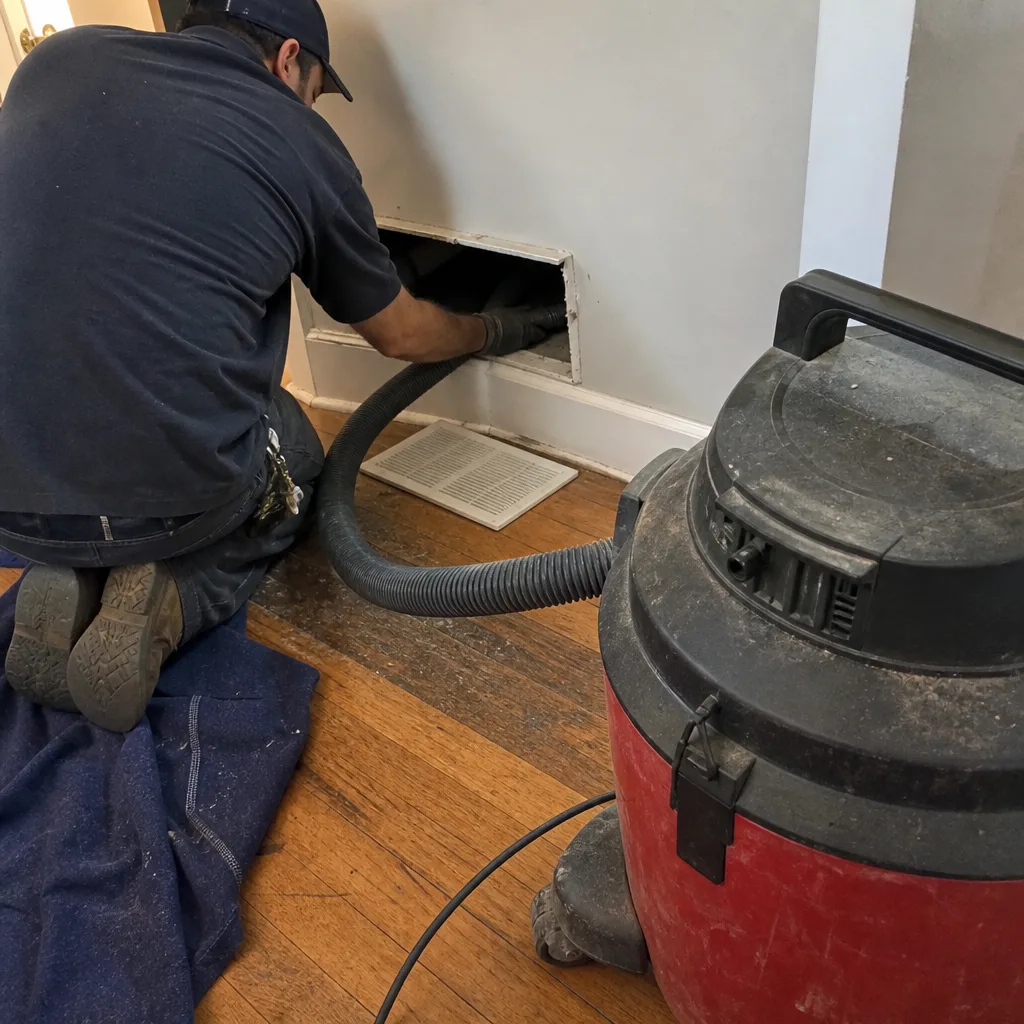 Before
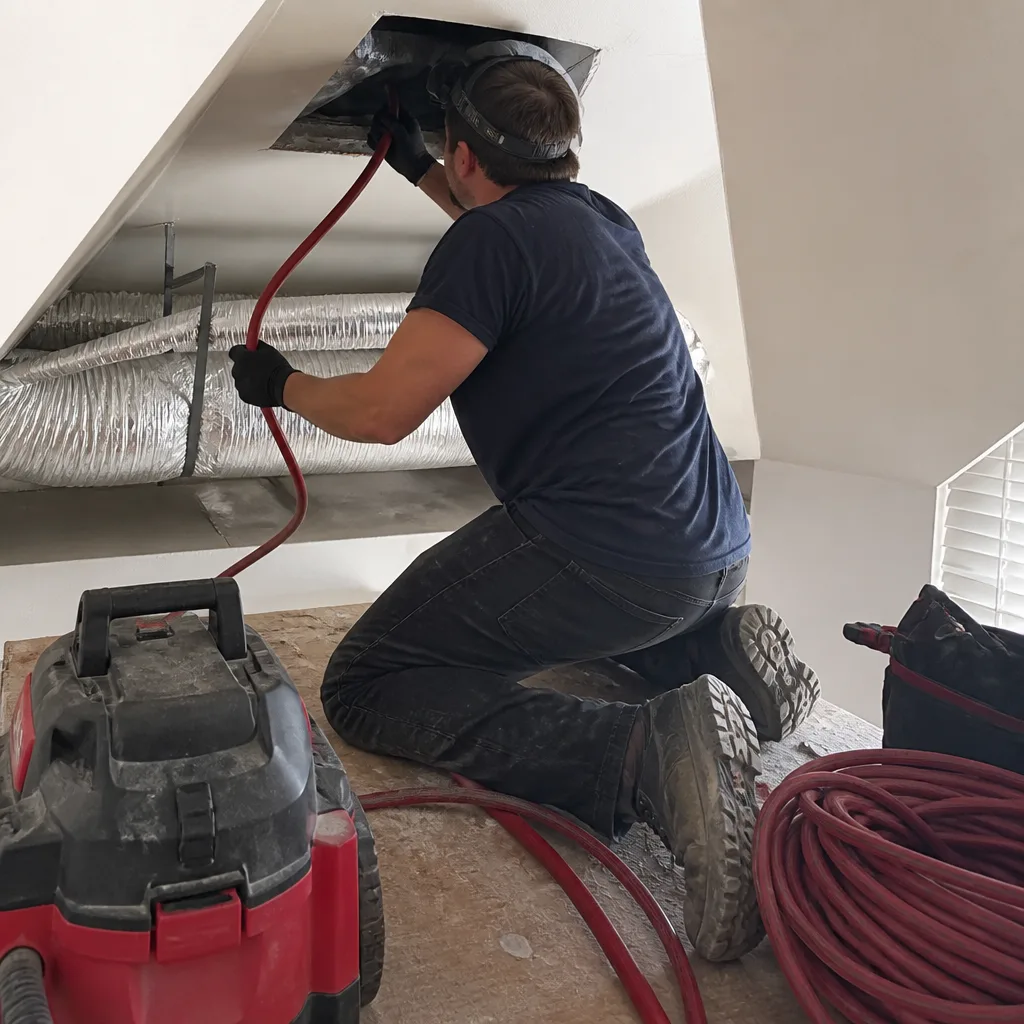 After
After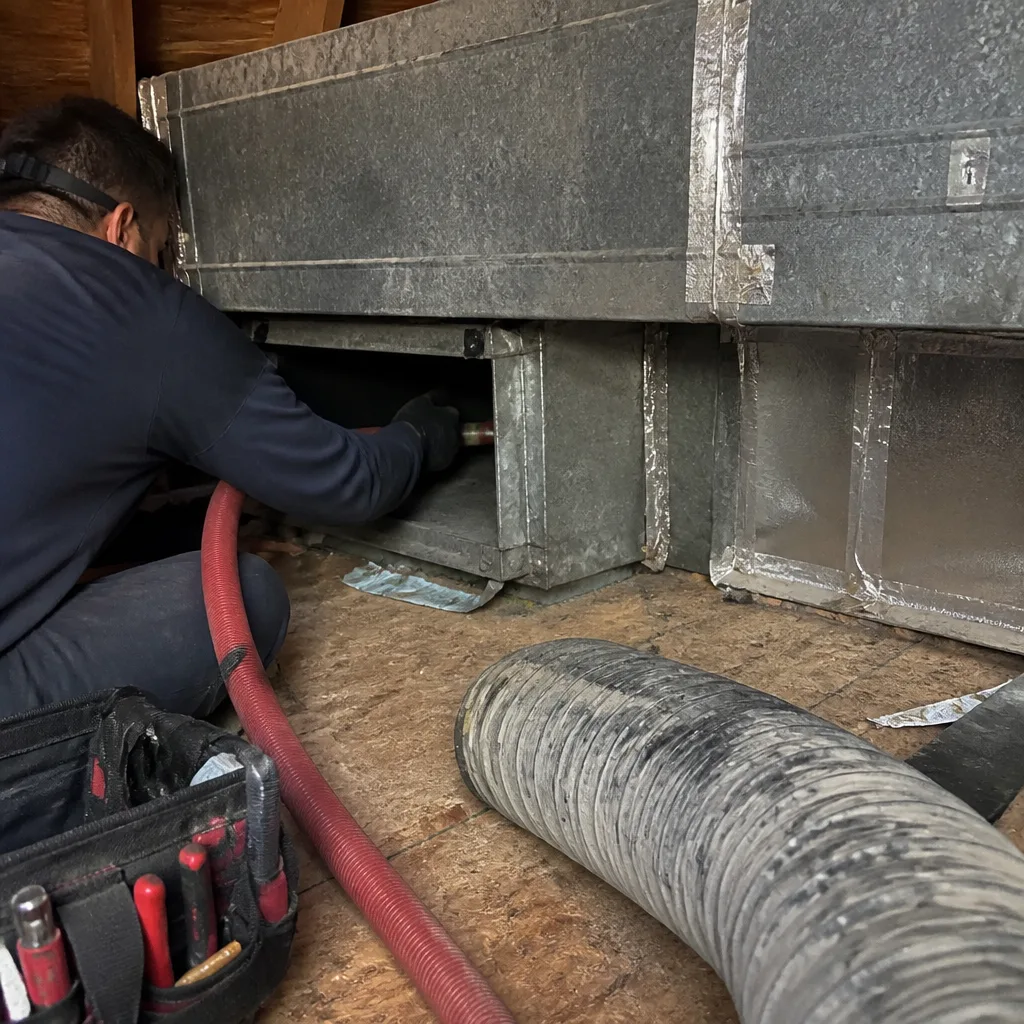 Before
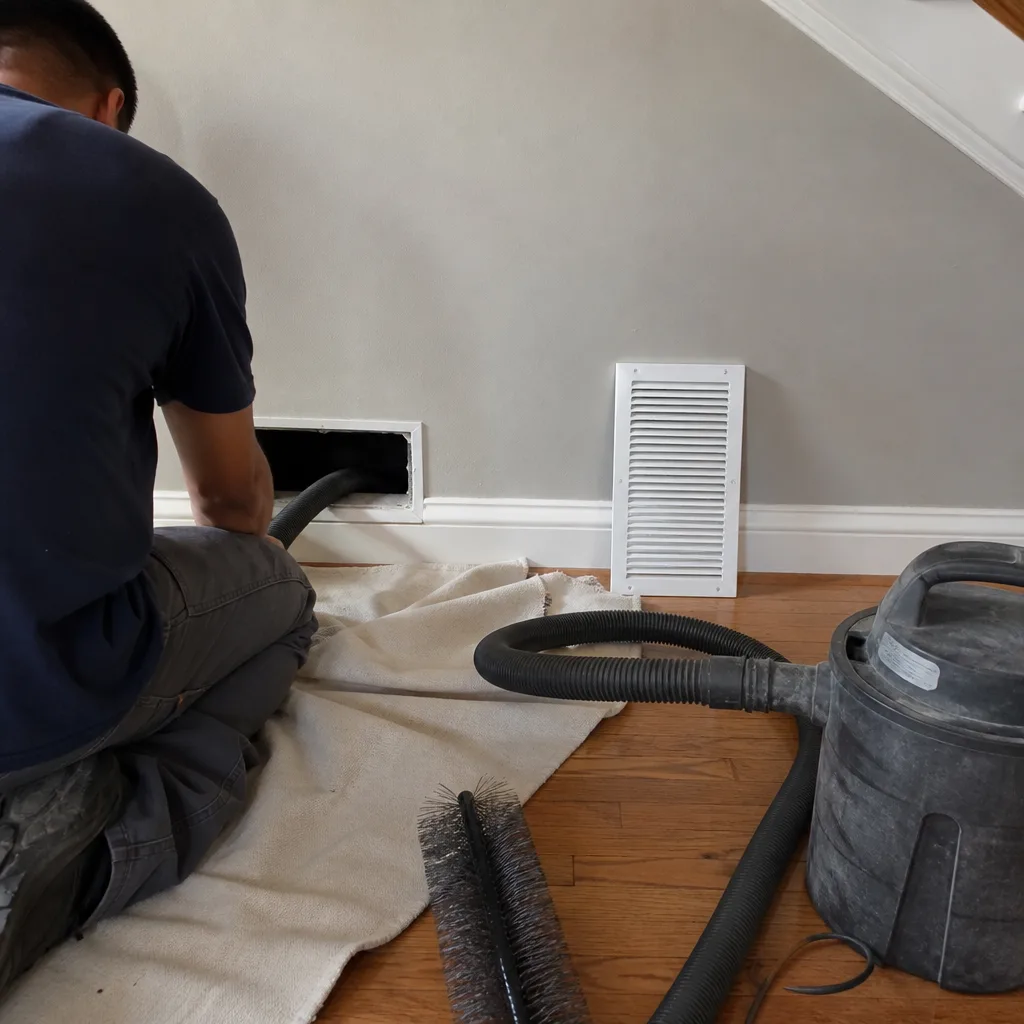 After
After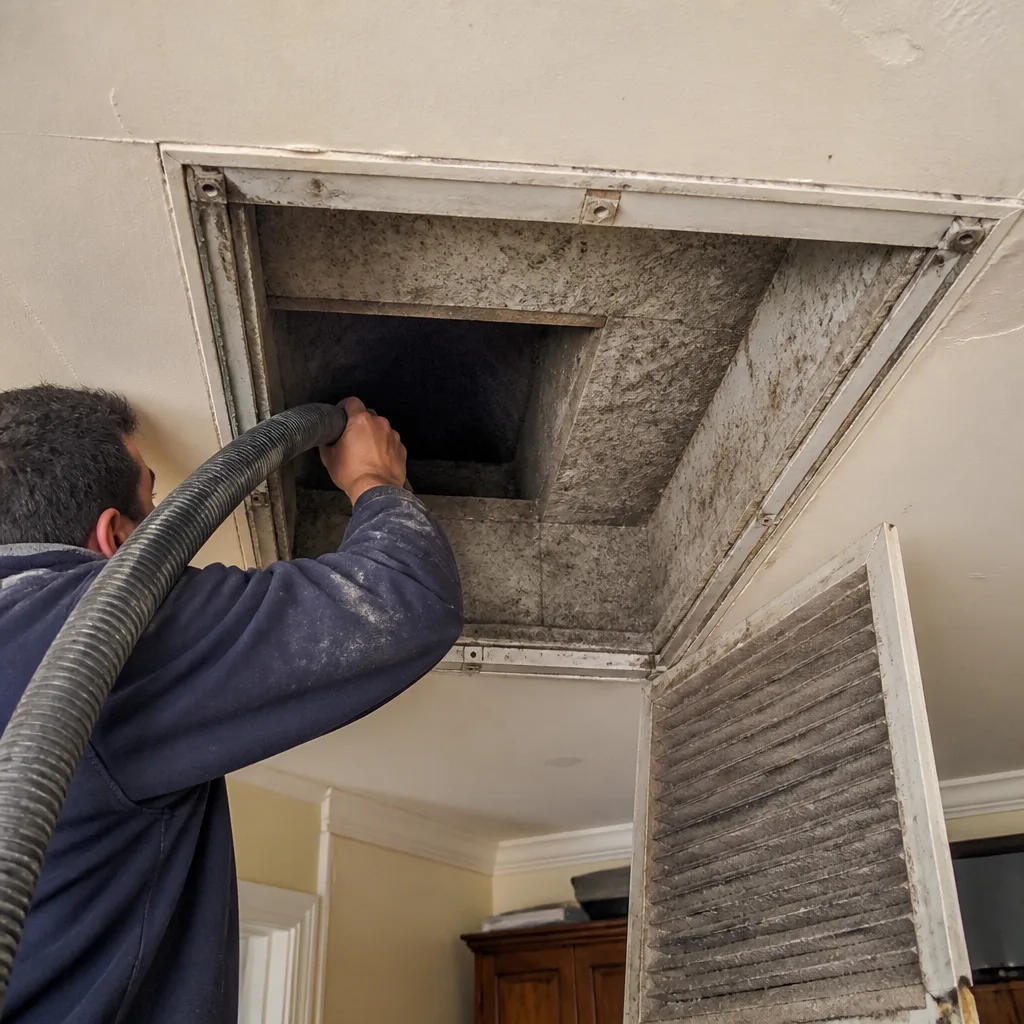 Before
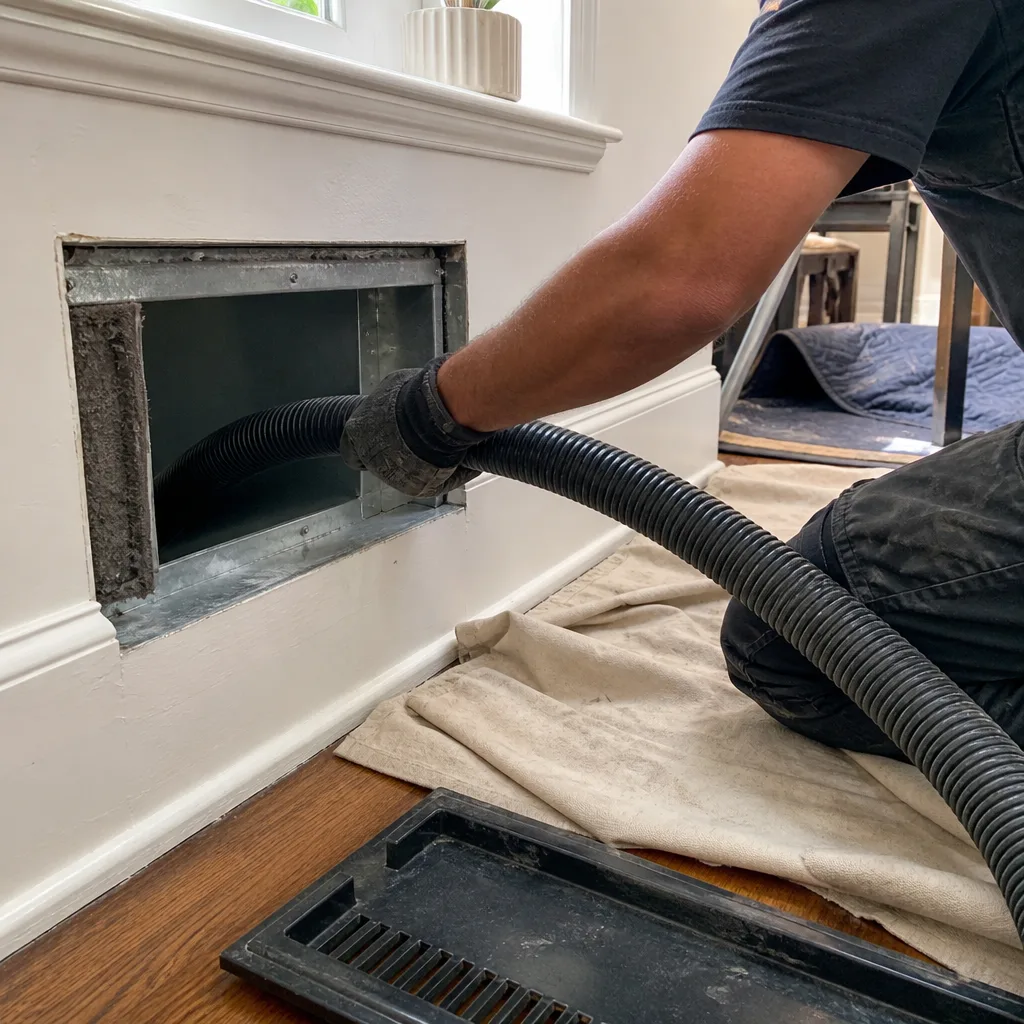 After
AfterHow to Hire a Air Duct Cleaning Contractor in Washington: A Step-by-Step Guide
The DC Better Business Bureau logged more than 40 complaints against duct cleaning companies in a recent 36-month window. Nearly every one followed the same script: $79 quoted, $600+ demanded on-site. Washington’s market is saturated with bait-and-switch operators who use coupon prices to get inside your door, then manufacture urgency until you pay. This guide gives you a documented vetting process that exposes that pattern before anyone enters your home, and you can explore more guides & resources once you’ve mastered these steps. You’ll learn the exact questions to ask, where to verify credentials independently, what a legitimate written estimate must contain, and how to structure the job so you keep control.
Quick Answer
Hiring an air duct cleaning contractor in Washington requires verifying NADCA membership independently, demanding a written price before any work starts, and requiring before-and-after photos of every duct run as standard documentation. The legitimate price range for a complete residential system in Washington is typically $400-$900 depending on system size and accessibility. Any quote significantly below this range, or any contractor who will not commit to a written price before arrival, is a red flag.
Table of Contents
- Why Washington Is a High-Risk Market for Duct Cleaning Scams
- Seven Questions to Ask Before Scheduling
- How to Verify Credentials Independently
- What a Legitimate Written Estimate Must Contain
- Red Flags in Online Reviews: Language Patterns That Expose Bait-and-Switch Operators
- How to Structure the Job So You Keep Control
- What Actually Happens During Professional Duct Cleaning
- Common Mistakes to Avoid
- When to Call a Professional
- Frequently Asked Questions
- The Bottom Line
BeforeAfterWhy Washington Is a High-Risk Market for Duct Cleaning Scams
Washington’s housing stock creates perfect conditions for duct cleaning fraud. The city’s row houses, Capitol Hill Victorians, and 1960s-era apartment conversions share cramped mechanical spaces, aging galvanized ductwork, and homeowners who paid premium prices and expect premium service. Scammers know this. They also know that Washington residents are busy, that many work in government or consulting and value efficiency, and that a $79 coupon feels like a reasonable gamble.
The geography compounds the problem. Washington’s humidity swings, from summer highs near 90% to winter indoor heating that drops relative humidity below 30%, accelerate dust accumulation and microbial growth in duct systems. Legitimate operators explain this. Bait-and-switch operators use it to manufacture fear once they’re inside your home.
We’ve documented three recurring scam patterns in Washington specifically:
- The “mold inspection” pivot: crew arrives, removes one register, claims to see dangerous mold, and refuses to continue without a $400-$800 sanitizing upsell
- The “additional returns” charge: estimate covers five supply runs, crew claims your system has eight, demands $120 per “extra” run
- The “HVAC cleaning” confusion: crew cleans only the easily accessible ductwork, leaves the air handler and coils untouched, then claims those were separate services
The Metropolitan Police Department and DC Department of Consumer and Regulatory Affairs have both issued warnings, but enforcement is reactive. Your protection is preventive: a vetting process that filters out operators before they reach your threshold.
Washington’s regulatory environment also creates confusion that scammers exploit. DC requires a Basic Business License for home improvement contractors, but duct cleaning sits in a gray area between HVAC work and general cleaning. Some operators claim no license is needed. Others display expired or borrowed credentials. The verification steps below show you how to check independently.
Seven Questions to Ask Before Scheduling
These questions filter out bait-and-switch operators before they know your address. Ask them in this order. Record the answers.
- Will you provide a written price before arriving at my home? A legitimate contractor says yes and explains how: by phone after you describe your system, or by email after you send photos of your registers and air handler location. An evasive answer sounds like: “We need to see it first,” or “Our technician will assess on-site.” This is Haven Standard Clause 1 territory: written price before any work starts, every time, no exceptions. If they won’t commit, end the call.
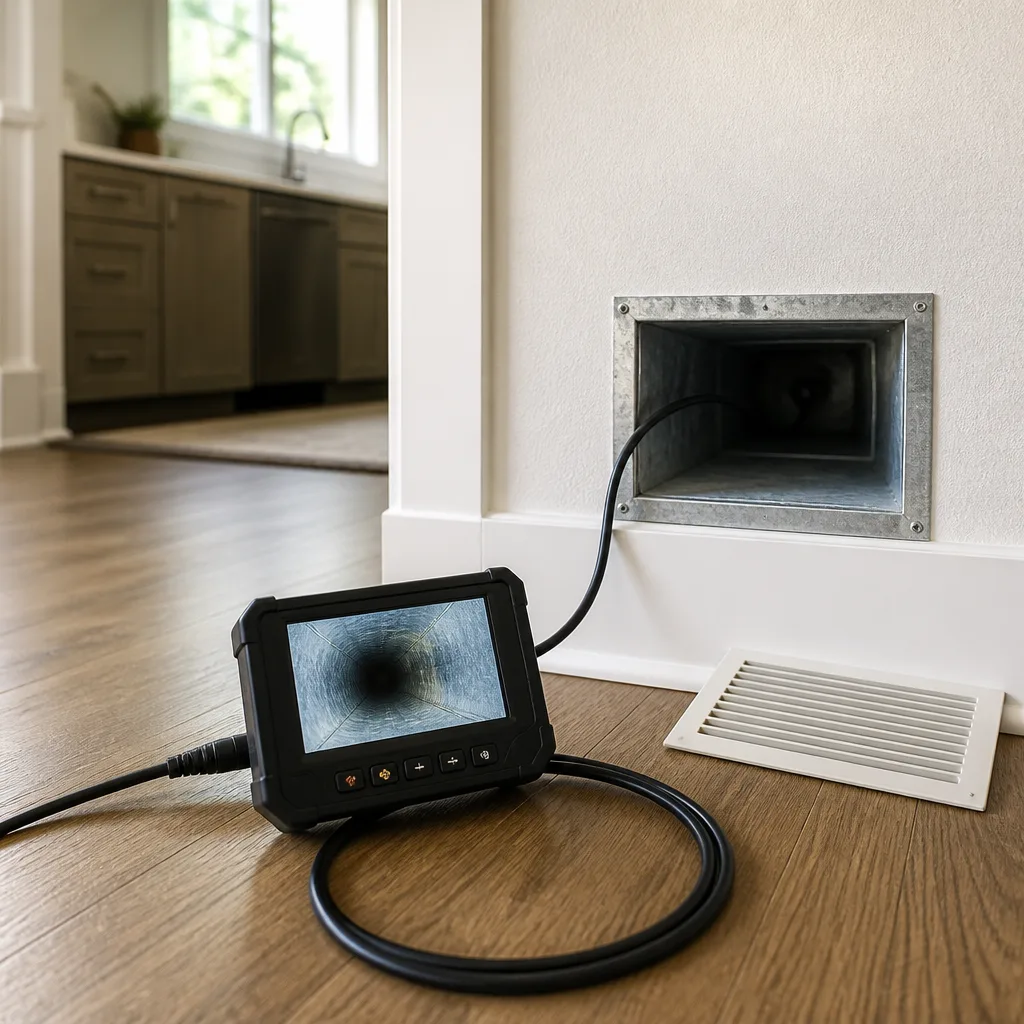
- Do you photograph each duct run before and after cleaning, and do I receive those photos as part of the standard job record? A legitimate contractor has a process: camera on a flexible borescope, photos timestamped, delivered via email or customer portal. An evasive answer: “We can note condition in our report,” or “Photos are available for an additional fee.” At CleanRun Air Duct Cleaning Washington home, the Documented Photo Record is standard on every visit, included in the base price, because a report without images is unverifiable.
- What is your NADCA membership number, and under what company name are you listed? Legitimate contractors provide this immediately. Evasive answers: “We’re NADCA-certified,” (individuals get certified; companies get membership), “Our technician is certified,” (irrelevant; you need company membership for accountability), or “We follow NADCA standards” (meaningless without membership verification).
- What equipment will you use, and can I verify the manufacturer specifications independently? Professional-grade equipment comes from recognized manufacturers: Rotobrush for rotary brush systems, Nikro for HEPA-filtered negative-pressure extractors, Abatement Technologies for containment and air scrubbing, Honeywell and Aprilaire for whole-home air quality integration. A legitimate contractor names brands and models. An evasive answer: “Commercial-grade equipment,” “truck-mounted system,” or “proprietary technology.” Vague equipment claims often mask shop vacuums with extra hoses.
- What is explicitly excluded from your quoted price? This question exposes the “additional returns” scam. A legitimate estimate lists: number of supply runs included, number of return runs included, whether the plenum (the central distribution box where ducts connect to your air handler) is included, whether register covers are removed and cleaned by hand, and whether the air handler cabinet and coils are included. An evasive answer: “Full system cleaning,” or “Everything visible.” Demand specificity.
- What is your DC Basic Business License number, and what is your liability insurance carrier and policy limit? Legitimate contractors provide both. Evasive answers: “We’re fully licensed and insured,” (unverifiable claim), “Our corporate office handles that,” (no corporate office exists; you’re speaking to a dispatcher in a call center), or “We can show you documentation when we arrive” (too late; you need verification before scheduling).
- What happens if I am not satisfied with the work? A legitimate contractor has a written policy. At CleanRun, it’s the 365-Day Done Right Promise: if the work is not right, we make it right, backed in writing on every job, not subject to manager approval. An evasive answer: “We stand behind our work,” or “Call the office and we’ll send someone back.” Vague satisfaction language without written terms is not a guarantee.
Score the answers. Any evasion on questions 1, 2, or 3 is disqualifying. These are foundational; everything else builds on them.
How to Verify Credentials Independently
Never take a contractor’s word for licensing or membership. Verify through the original source. Here’s how for Washington specifically.
NADCA Membership: Visit nadca.com and use the “Find a Professional” tool. Enter the company name exactly as given. Verify that membership is current, not lapsed. NADCA membership requires adherence to ACR, the Assessment, Cleaning and Restoration standard, and carries ethical obligations that non-members do not face. Note: NADCA certifies individuals as Air Systems Cleaning Specialists (ASCS); membership is a company-level credential. Both matter, but membership is the harder barrier.
DC Basic Business License: Use the DC Business Center portal at dcbusiness.dc.gov. Search by company name or license number. Verify the license category includes “Home Improvement Contractor” or equivalent. Check the expiration date. Cross-reference the business address with the address given to you; a mismatch suggests borrowed or rented credentials.
Liability Insurance: Request a Certificate of Insurance (COI) directly from the contractor’s insurance broker, not from the contractor. The COI should name you as certificate holder for the date of service, show general liability coverage of at least $1 million per occurrence, and list the policy effective and expiration dates. Call the insurance carrier to verify the policy is active if you have any doubt.
Additional Washington-Specific Checks:
- Search the DC Office of the Attorney General’s consumer protection complaints at oag.dc.gov
- Check the Better Business Bureau for the DC metro area; pay attention to complaint patterns, not just the letter grade
- For properties in historic districts (Georgetown, Capitol Hill, Logan Circle), verify the contractor understands DC Historic Preservation Office requirements if ductwork modifications are needed
The time invested here, typically 15-20 minutes, prevents the far greater cost of a botched job or fraudulent charge.
What a Legitimate Written Estimate Must Contain
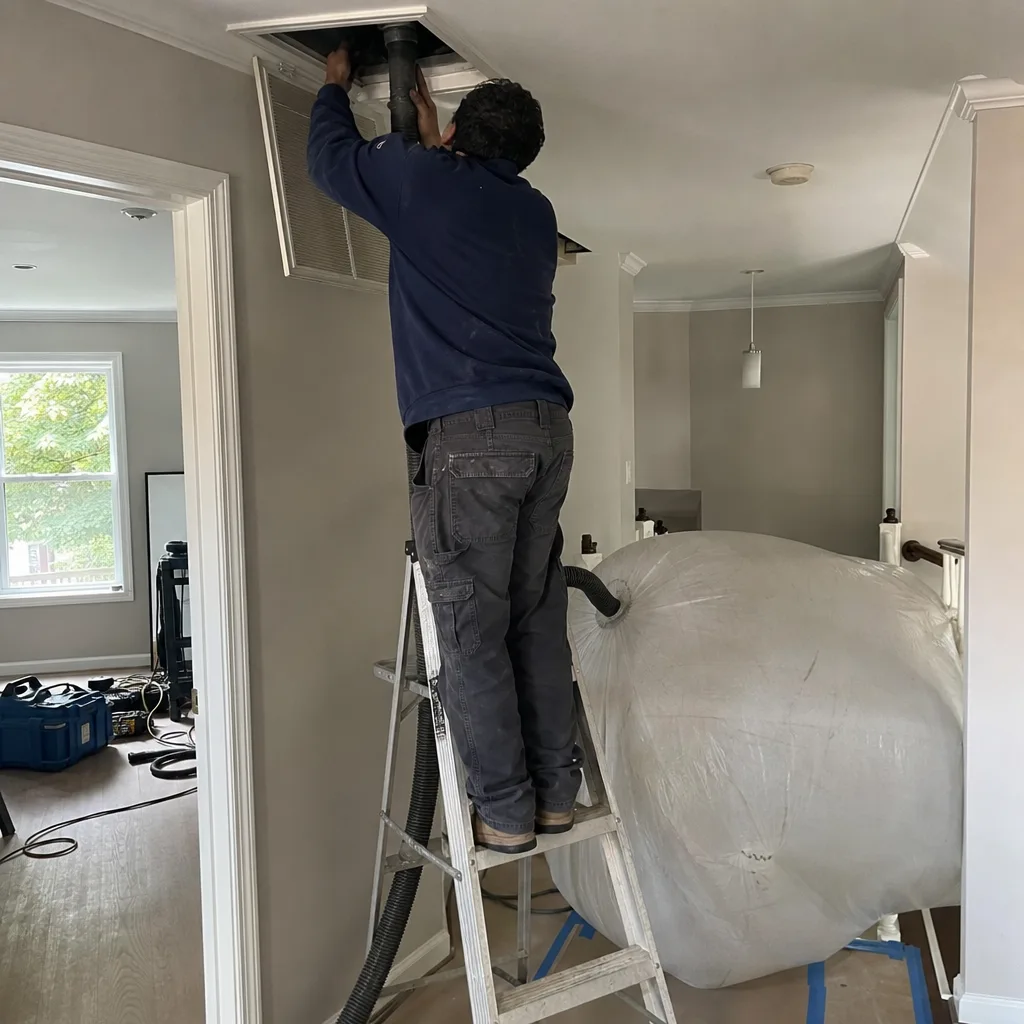
A written estimate is not a marketing flyer. It is a binding document that defines the scope, the price, and the deliverables. In Washington’s high-cost market, where bait-and-switch operators rely on verbal ambiguity, the written estimate is your primary protection.
Every legitimate estimate must contain these elements:
| Element | What It Means | Red Flag If Missing |
|---|---|---|
| System size and type | Square footage served, single or multi-zone, heat pump or gas furnace | “Standard home” or no mention |
| Count of supply runs | Number of ducts delivering conditioned air to rooms | “All supply ducts” without number |
| Count of return runs | Number of ducts drawing air back to the air handler | Return runs treated as “one system” regardless of count |
| Plenum access and cleaning | Whether the central distribution box is opened and cleaned | No mention of plenum |
| Register handling | Covers removed, cleaned by hand, reinstalled | “Registers vacuumed in place” |
| Air handler inclusion | Whether blower, coils, and cabinet are cleaned | “Ducts only” with air handler extra |
| Access method | Register removal, cut-in ports, or existing access panels | No description of how ducts are accessed |
| Equipment specified | Brand and type of agitation and extraction equipment | “Professional equipment” only |
| Photo documentation | Before and after photos of each run, delivered how | “Inspection available” or no mention |
| Total price and payment terms | One flat price, deposit if any, balance due when | Per-vent pricing, “starting at” language, full payment before work |
| Exclusions stated | What is explicitly not included | No exclusions; “full system” claim |
The estimate should arrive by email, with a company header, date, and signature line. Verbal estimates, text messages, or website “price calculators” are not binding. In Washington, where many homeowners in neighborhoods like Chevy Chase, Takoma Park, and Brookland have invested significantly in their properties, the written estimate is also a signal of professionalism that correlates with quality workmanship.
At CleanRun, every estimate follows Haven Standard Clause 1: written price before any work starts, every time. No exceptions. The price is flat per system, not per vent, because per-vent pricing invites the “additional returns” upsell.
Red Flags in Online Reviews: Language Patterns That Expose Bait-and-Switch Operators
Online reviews are unreliable but not useless. The key is reading for patterns in language, not just star counts. Bait-and-switch operators often flood review platforms with fake positive reviews, but their real customers leave telltale complaints.
Review language that signals bait-and-switch:
- “Quoted $79, ended up paying $650” - the exact pattern the DC BBB documented
- “Technician said they found mold and I needed sanitizing” - especially when multiple reviews mention this same pivot
- “They said my system was bigger than standard” - the “additional returns” charge
- “High-pressure sales tactics” or “wouldn’t leave until I signed” - common in scams targeting elderly homeowners in upper Northwest
- “Different company name than I called” - operators run multiple shell companies with rotating phone numbers
Review language that signals legitimate workmanship issues (not bait-and-switch):
- “Missed one register, had to call them back” - human error, company responded
- “Took longer than estimated but stayed until done” - scheduling issue, not fraud
- “Dusty after they left, needed to vacuum” - cleanup shortfall, resolvable
- “Technician explained everything but I didn’t understand until later” - communication gap, not deception
Check multiple platforms: Google, Yelp, BBB, and Angi. Look for the company’s response to negative reviews. Legitimate operators address specifics; scammers post generic apologies or attack the reviewer.
Washington’s neighborhood groups on Facebook and Nextdoor are also valuable. Search the company name in local groups for Capitol Hill, Petworth, Adams Morgan, and similar. Real neighbors describe real experiences, often with photos of the work or documentation received.
How to Structure the Job So You Keep Control
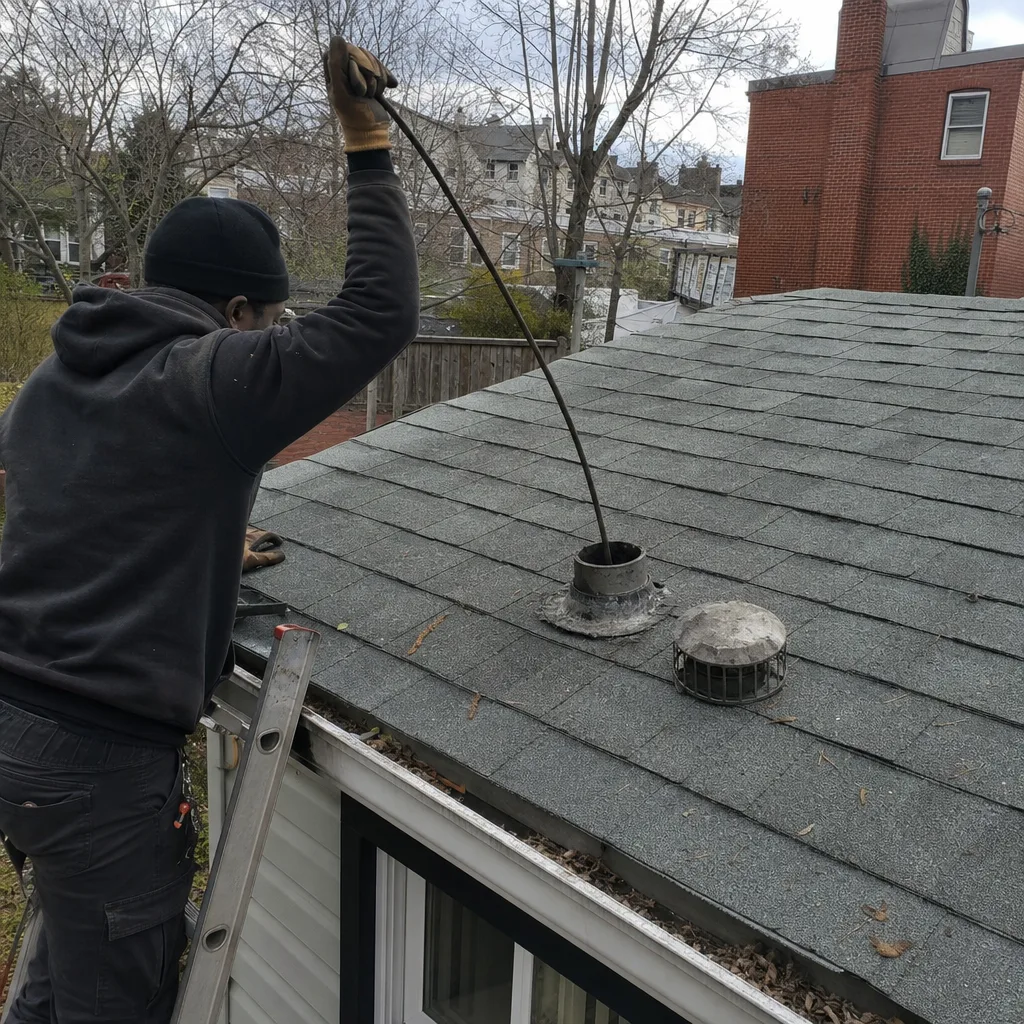
Even with a vetted contractor, structure the job to protect yourself. These steps apply specifically to Washington’s urban housing conditions.
- Pre-arrival documentation: Photograph your own registers, air handler location, and any visible ductwork before the crew arrives. In Washington’s older homes, especially in Shaw, LeDroit Park, and Columbia Heights, original ductwork may be asbestos-wrapped or fragile. Document its condition so you can distinguish pre-existing damage from crew-caused damage.
- Verify crew identity: Under Haven Standard Clause 3: Verified Crews, technicians should be background-checked, uniformed, and identified by name before arrival. CleanRun provides technician names and photos in the scheduling confirmation. If the person at your door does not match, do not admit them.
- Written scope confirmation: Before any panel is removed, the lead technician should review the written estimate with you, confirm the duct count by walking the home with you, and note any access challenges. This prevents the “your system is bigger than we thought” pivot.
- Observe the photo process: Ask to see the borescope camera display as the technician works. A legitimate operator shows you the inside of your ducts in real time. The camera should show a 3-inch debris build-up at the first elbow, or a relatively clean run, or whatever is actually there. This is evidence, not theater.
- Payment structure: Never pay in full before work is documented. A reasonable structure: no deposit for standard residential work, or a small deposit (under 25%) for large or complex systems. Balance due only after you receive and review the photo record and written completion summary. This is standard at CleanRun: the Documented Photo Record is delivered before payment is processed.
- Post-work verification: Walk the home with the technician. Verify all registers are reinstalled and secure. Check that the air handler is running normally. Review the photo record on the technician’s tablet or your own device before signing completion.
In Washington’s competitive market, contractors who resist these steps are revealing something. A legitimate operator has nothing to hide and everything to document.
What Actually Happens During Professional Duct Cleaning
Understanding the actual process helps you distinguish real work from vacuum noise. Professional duct cleaning in Washington follows a sequence that you can observe and verify.
Step 1: System assessment and access. The technician locates all supply and return registers, identifies the air handler and plenum, and determines access points. In Washington’s row houses, this often means working around basement mechanical rooms with low ceilings, or accessing attic ducts through narrow hatches in neighborhoods like Mount Pleasant and Cleveland Park.
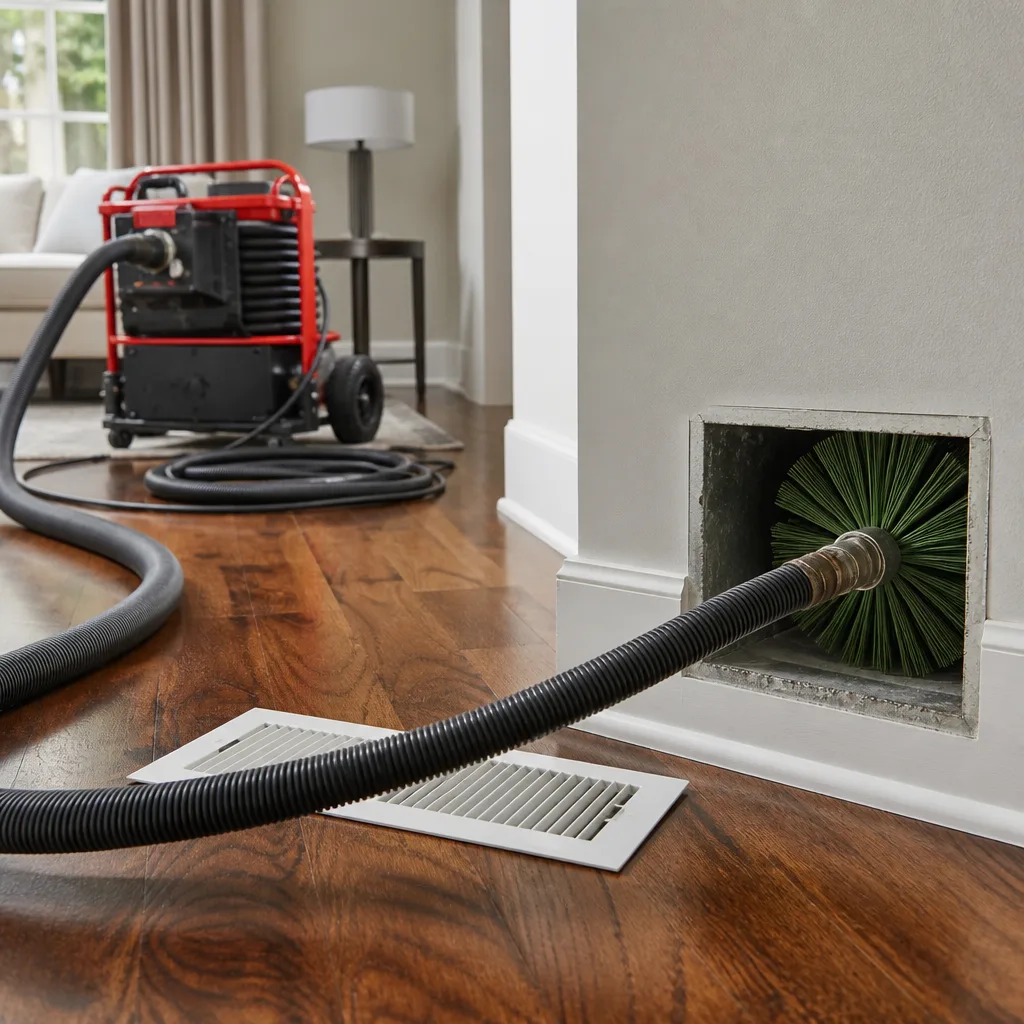
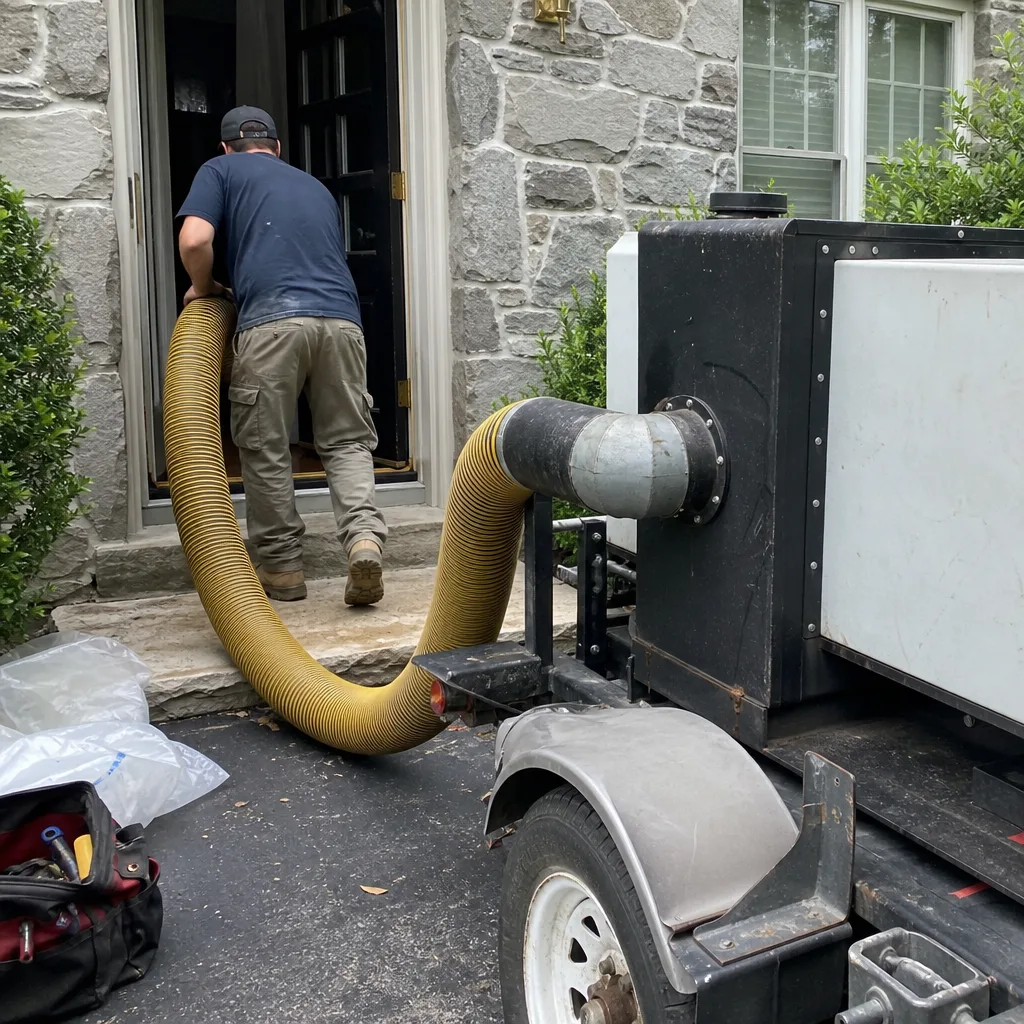
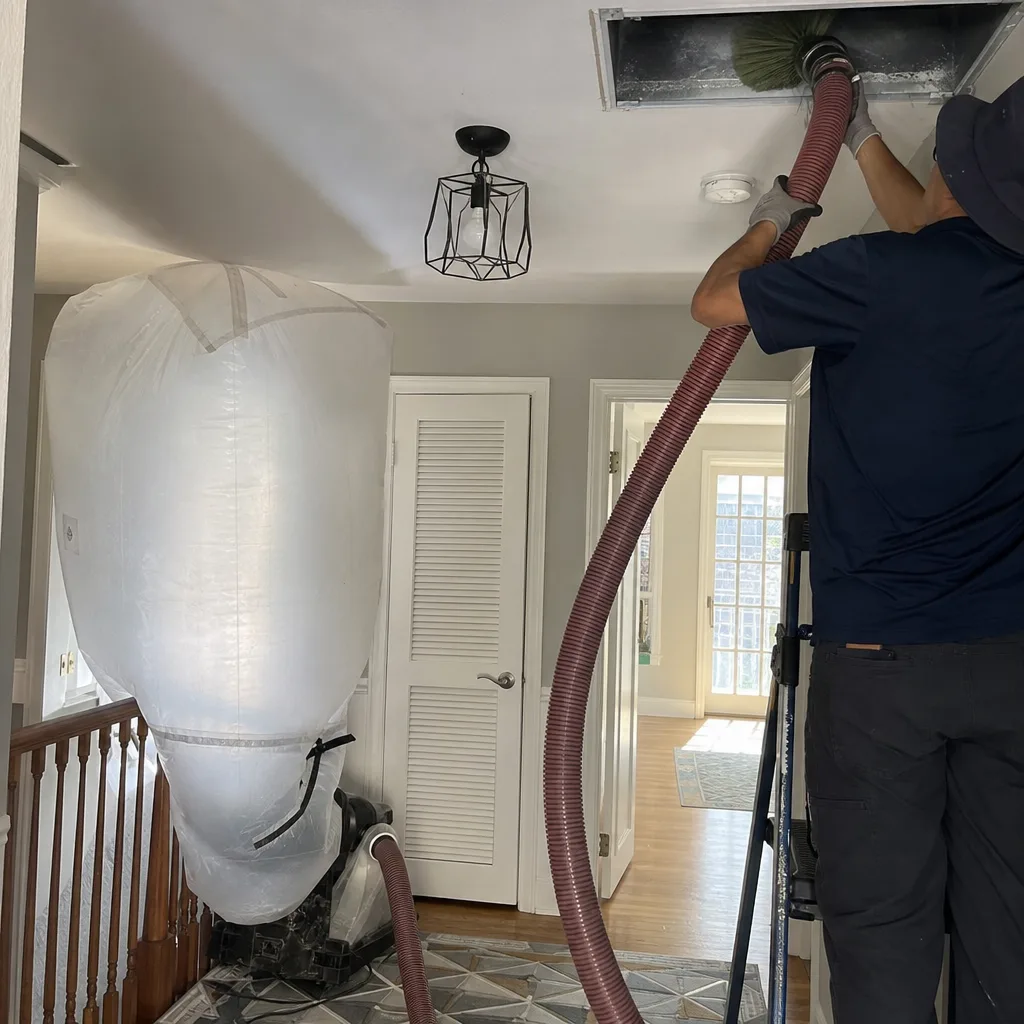
Step 2: Negative-pressure extraction setup. A HEPA-filtered vacuum collector, typically from Nikro or Abatement Technologies, connects to the duct system near the air handler. This creates suction throughout the ductwork. The plenum is opened to access the main trunk lines.
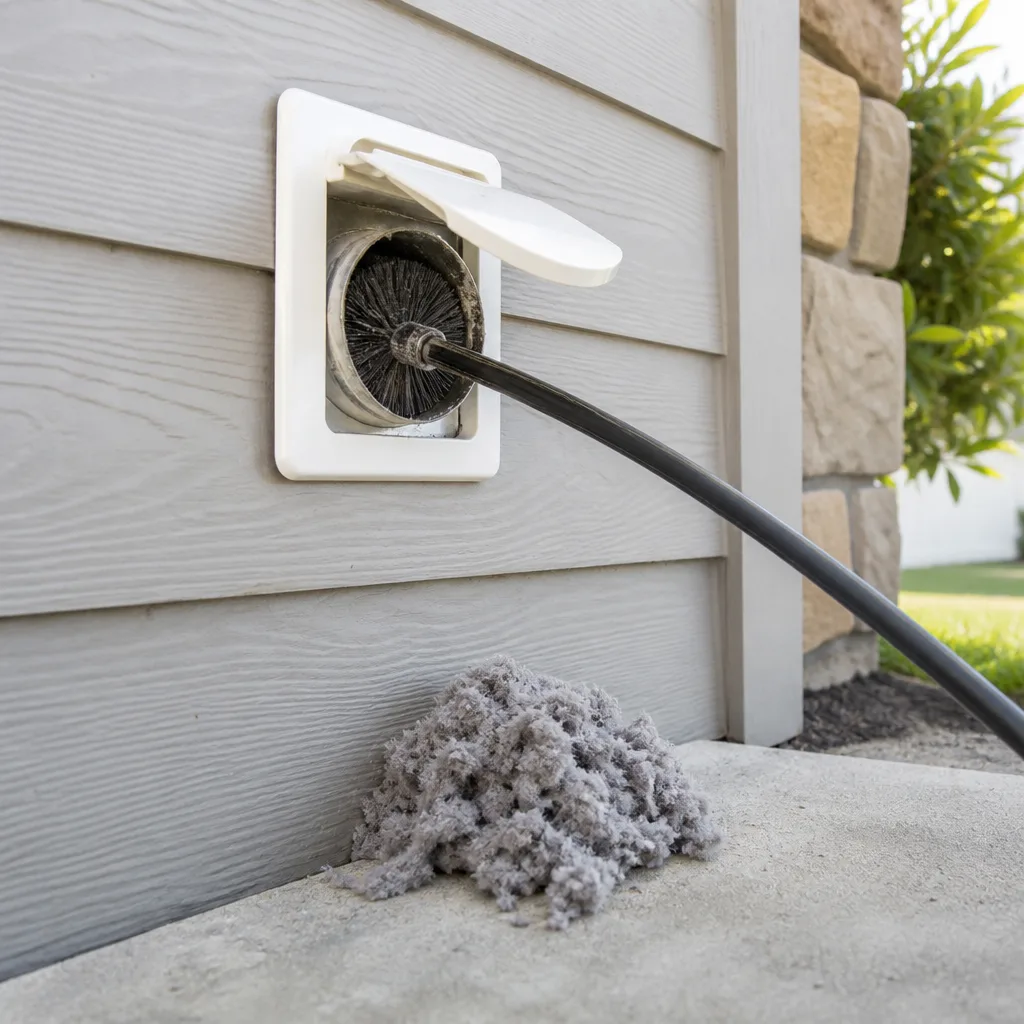
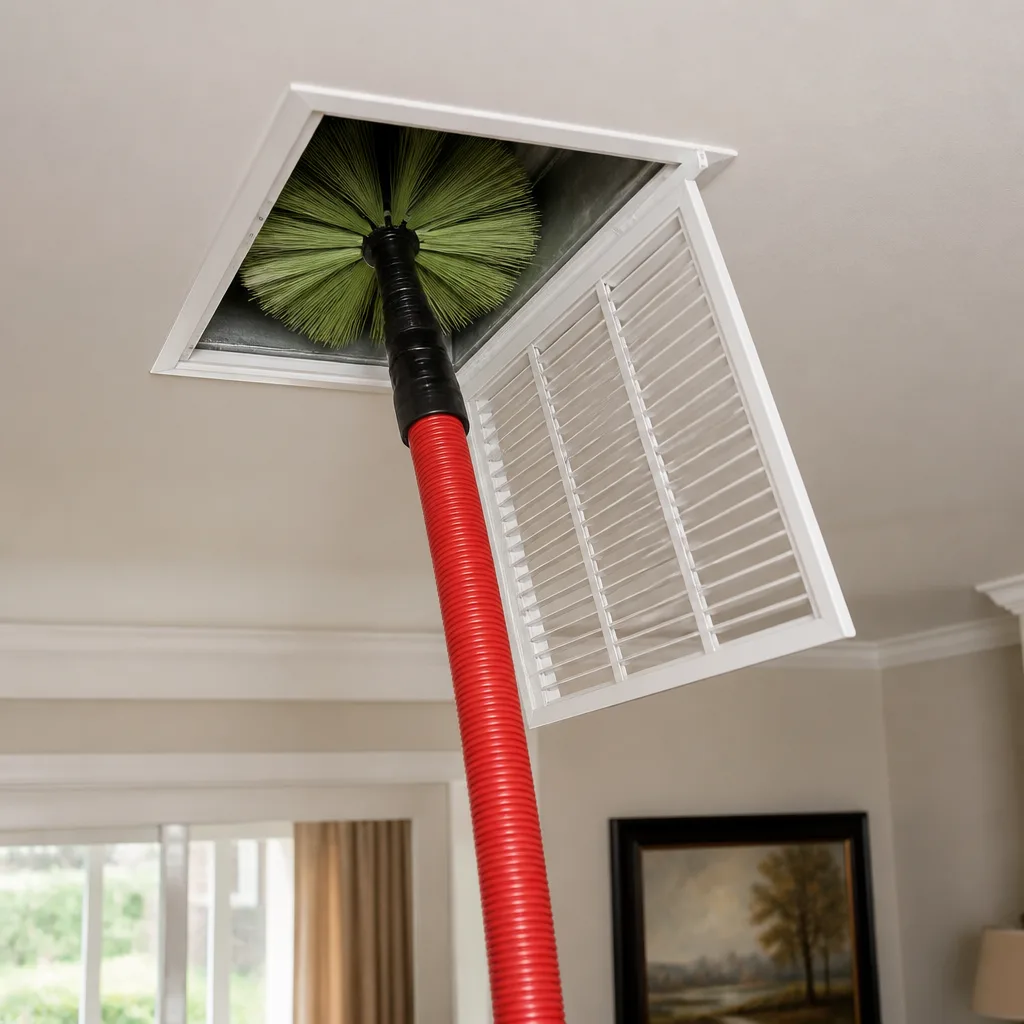
Step 3: Agitation and debris removal. Mechanical brushes, compressed air whips, or rotary cable systems dislodge debris from duct walls. The debris is immediately carried to the vacuum collector by the negative pressure. Each duct run is cleaned individually, with registers sealed during the process to maintain pressure.
Step 4: Component cleaning. The blower assembly, evaporator coils, and condensate pan are cleaned if included in the scope. This requires opening the air handler cabinet. In Washington’s humid summers, condensate pans often show microbial growth that affects indoor air quality.
Step 5: Photo documentation. Before and after images of each duct run are captured with a borescope camera. The camera shows the interior surface of the duct, not just the register opening. This is the evidence that distinguishes real work from superficial vacuuming.
Step 6: System restoration and testing. All access panels are sealed, registers are reinstalled, and the system is powered on to verify normal operation. The technician should show you the photo record and explain what was found.
The entire process for a typical Washington home of 1,500-2,500 square feet takes 3-5 hours. A “cleaning” completed in 45 minutes is not this process.
Common Mistakes to Avoid
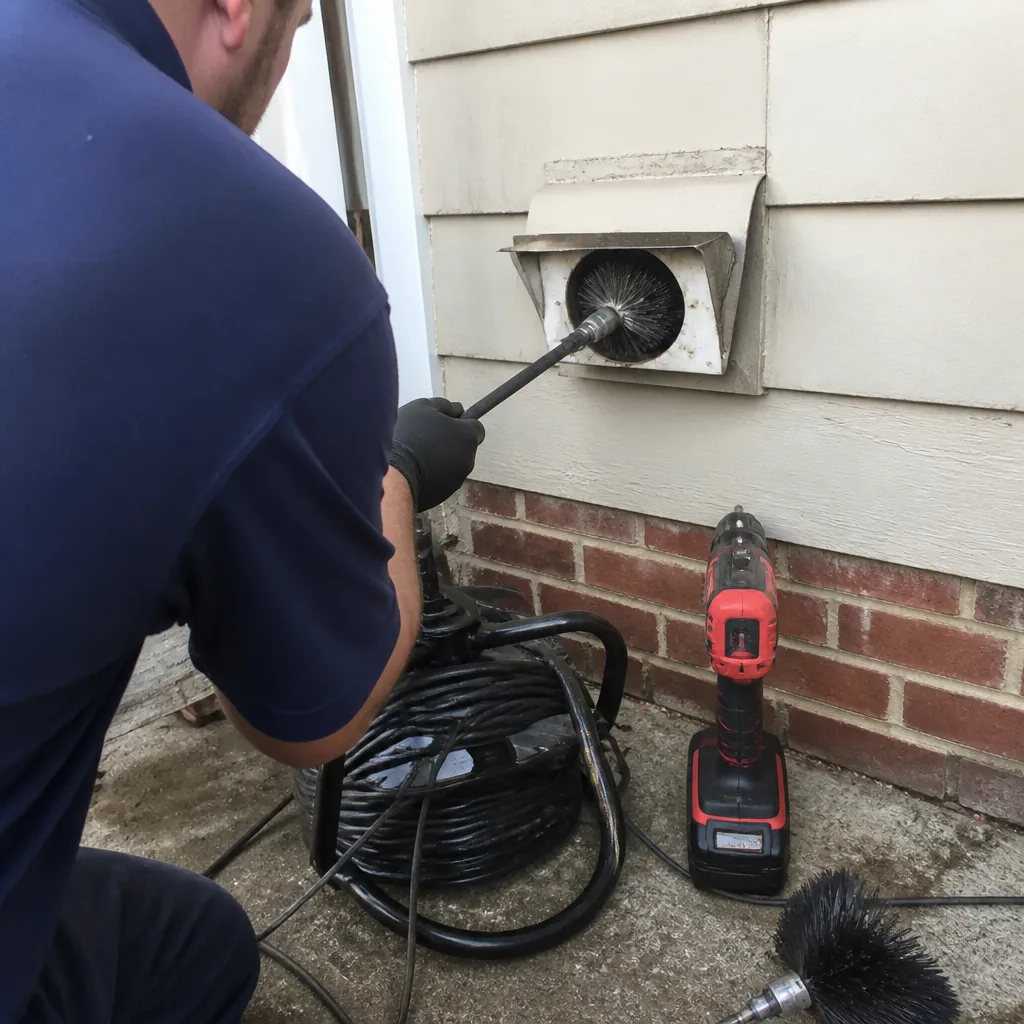
- Booking based on coupon price alone. The $79 special is the entry point to a sales script, not a service. In Washington, legitimate whole-system cleaning costs $400-$900. The gap between coupon and reality is where the scam lives.
- Accepting “we’ll assess on-site” for pricing. This eliminates your ability to compare quotes and creates pressure to commit while a stranger is in your home. Written price before arrival is non-negotiable.
- Ignoring the photo record requirement. Without images, you have no evidence that work was performed. In Washington’s legal environment, a written invoice without documentation is difficult to dispute if service was substandard.
- Scheduling during peak HVAC season without verifying equipment. Washington’s July humidity and January cold snaps create demand spikes. Some operators rent inadequate equipment to handle volume. Ask what equipment will be used and verify the manufacturer.
- Failing to verify DC licensing independently. A contractor who claims “DC licensed” may mean a business registration, not a home improvement contractor license. The DC Business Center portal takes two minutes to check.
- Paying in full before reviewing documentation. The photo record and written completion summary are your verification. Payment should follow receipt and review, not precede it.
- Neglecting to check neighborhood-specific experience. Washington’s housing varies dramatically: post-war brick ranches in Shepherd Park, converted carriage houses in Georgetown, high-rise condos in the West End. A contractor experienced with one type may be unprepared for another.
When to Call a Professional
Call a professional when you notice visible dust emission from registers, persistent odors that source to the duct system, uneven airflow between rooms, or after any renovation that generated significant dust. In Washington’s older housing stock, also call after purchasing a home where maintenance history is unknown.
CleanRun Air Duct Cleaning in Washington offers free estimates throughout the District. Every estimate is written, every job includes a Documented Photo Record, and every technician works under the H.A.V.E.N. Standard with background verification and uniform identification. Call (240) 363-3380 to schedule.
Frequently Asked Questions
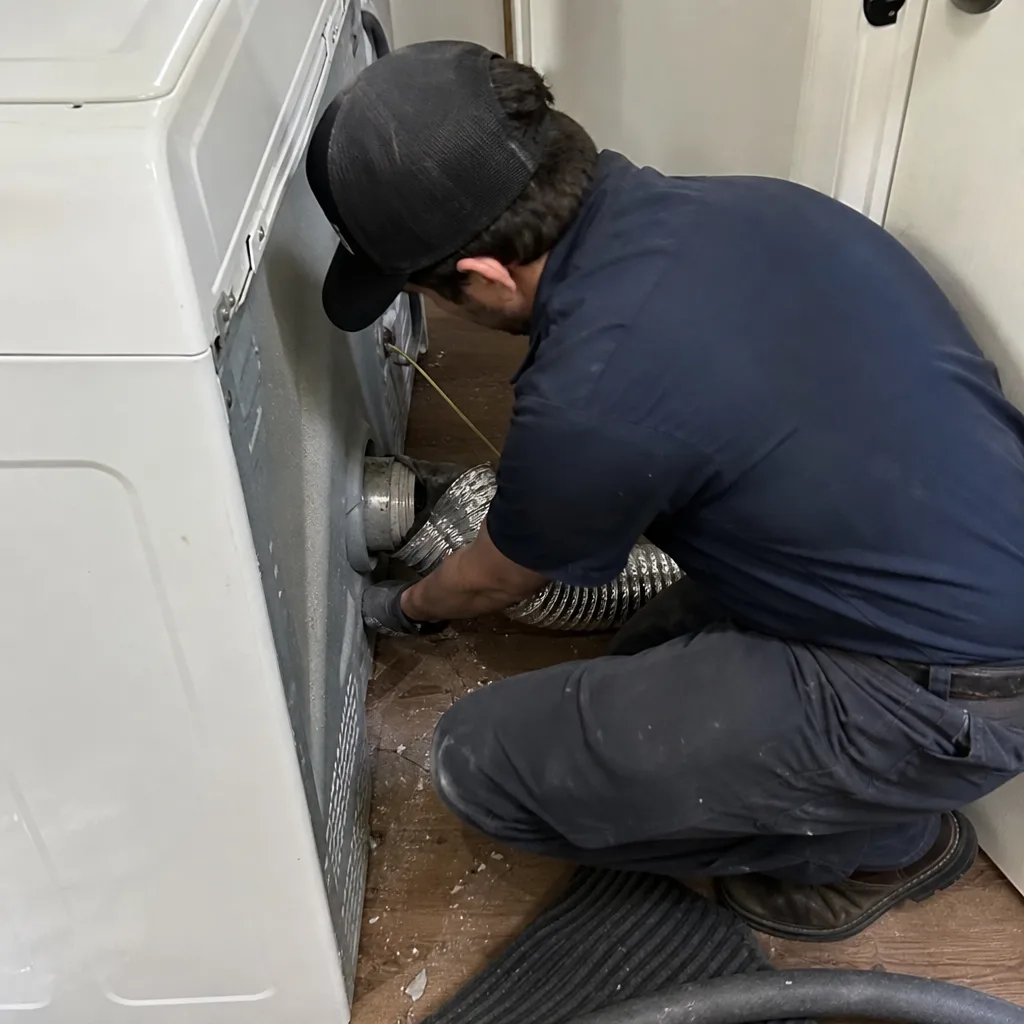
A complete residential system cleaning in Washington typically ranges from $400 to $900, depending on system size, number of duct runs, and accessibility-see our Air Duct Cleaning Cost Breakdown: The Washington Homeowner’s Reference for 2026 for full details. Per-vent pricing is a common bait-and-switch structure; flat system pricing is the legitimate model. Call (240) 363-3380 for a written estimate with no on-site pressure.
Low quotes typically exclude necessary components: the plenum, the air handler, register removal, or sufficient duct runs. The operator then upsells these on-site. A legitimate quote specifies everything included and everything excluded. The $400-$900 range covers complete service; quotes below $300 should be examined with extreme skepticism.
Require before-and-after photos of every duct run, delivered as part of the standard job record. The photos should show the interior duct surface, not just the register opening. At CleanRun, the Documented Photo Record is included on every visit, delivered to the customer before payment is processed, because unverifiable work is not completed work.
Every 3-5 years for typical residential systems, or after significant renovations, pest infestations, or water damage. Washington’s pollen seasons and urban particulate matter may accelerate accumulation in homes near major thoroughfares like Connecticut Avenue or 16th Street. The camera shows when it’s needed; calendar recommendations are secondary.
Both matter, but company-level NADCA membership is the stronger accountability mechanism. Membership binds the company to ACR standards and provides a complaint pathway. Individual certification alone does not prevent a company from operating outside standard practice. Verify company membership at nadca.com independently.
Stop the work. Request the written estimate and compare it to what is being proposed. If the upsell was not in the written scope, you are not obligated. In Washington, you may also file a complaint with the DC Office of the Attorney General’s consumer protection division. Document everything: names, times, what was said.
The Bottom Line
Hiring our Air Duct Cleaning services or any contractor in Washington is a credentialing exercise, not a price hunt. The market rewards operators who verify themselves: NADCA membership checked independently, written estimates with explicit scope, photo documentation as standard, and payment structured around verification. The $79 coupon is not a deal; it is a recruitment tool for a sales script. Protect yourself with questions that expose evasion, verification steps that don’t rely on trust, and a job structure that keeps you in control until work is proven complete.
Written by Tomas Reyes, Owner at CleanRun Air Duct Cleaning Washington, serving Washington since 2013.