
Last updated September 23, 2026
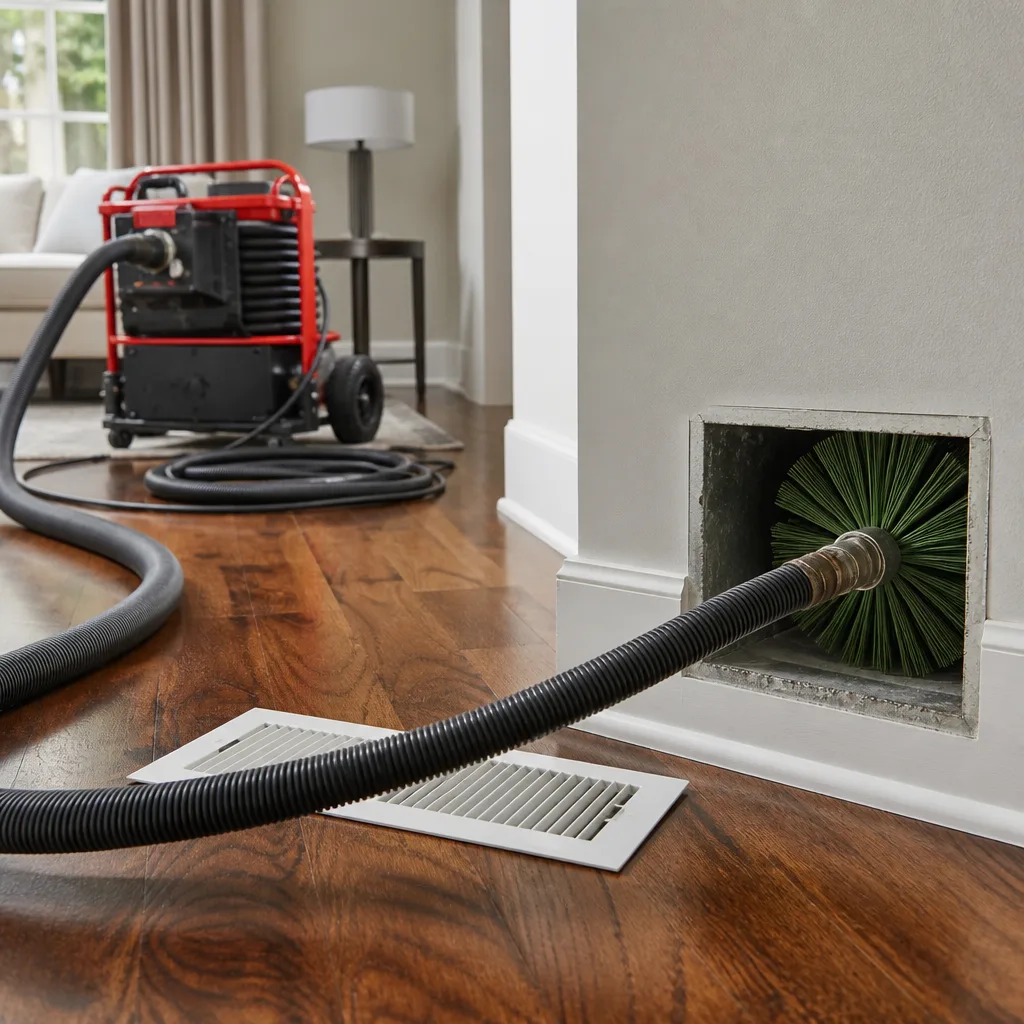
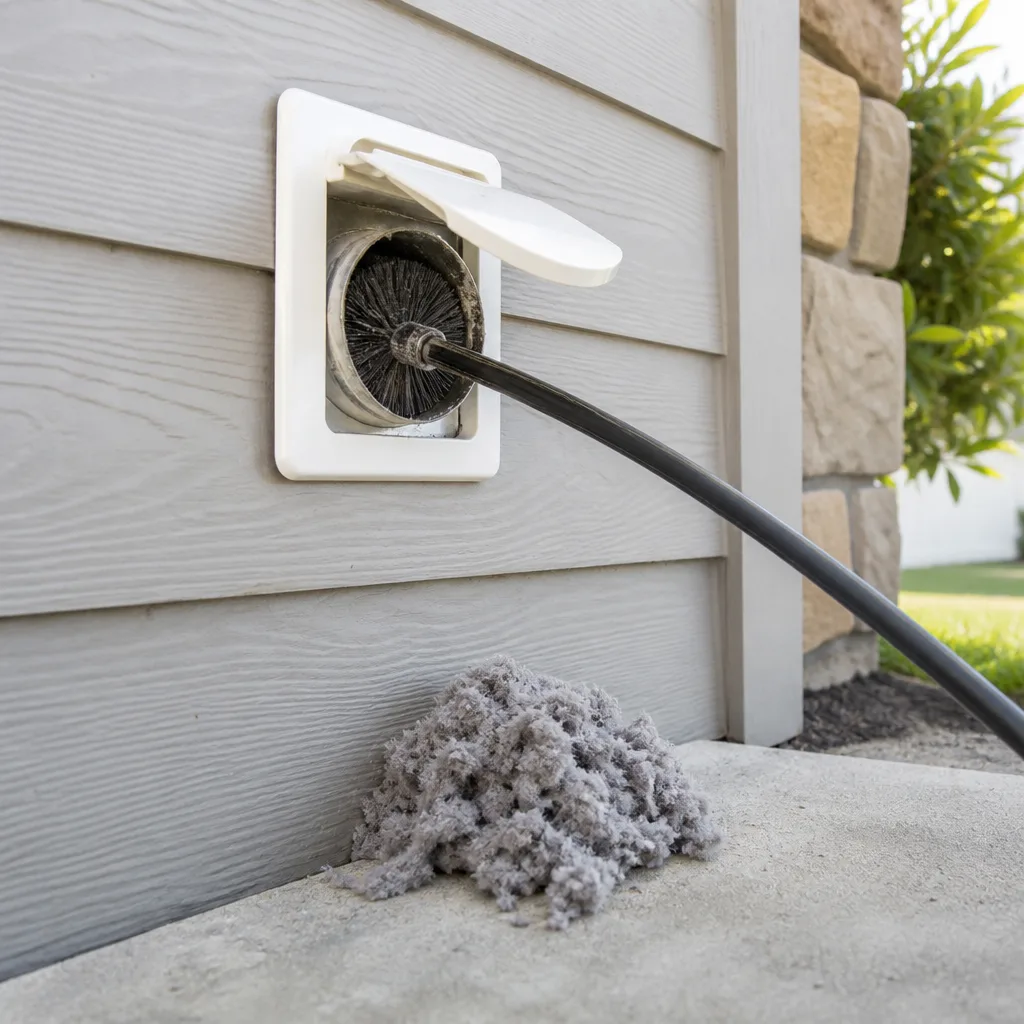
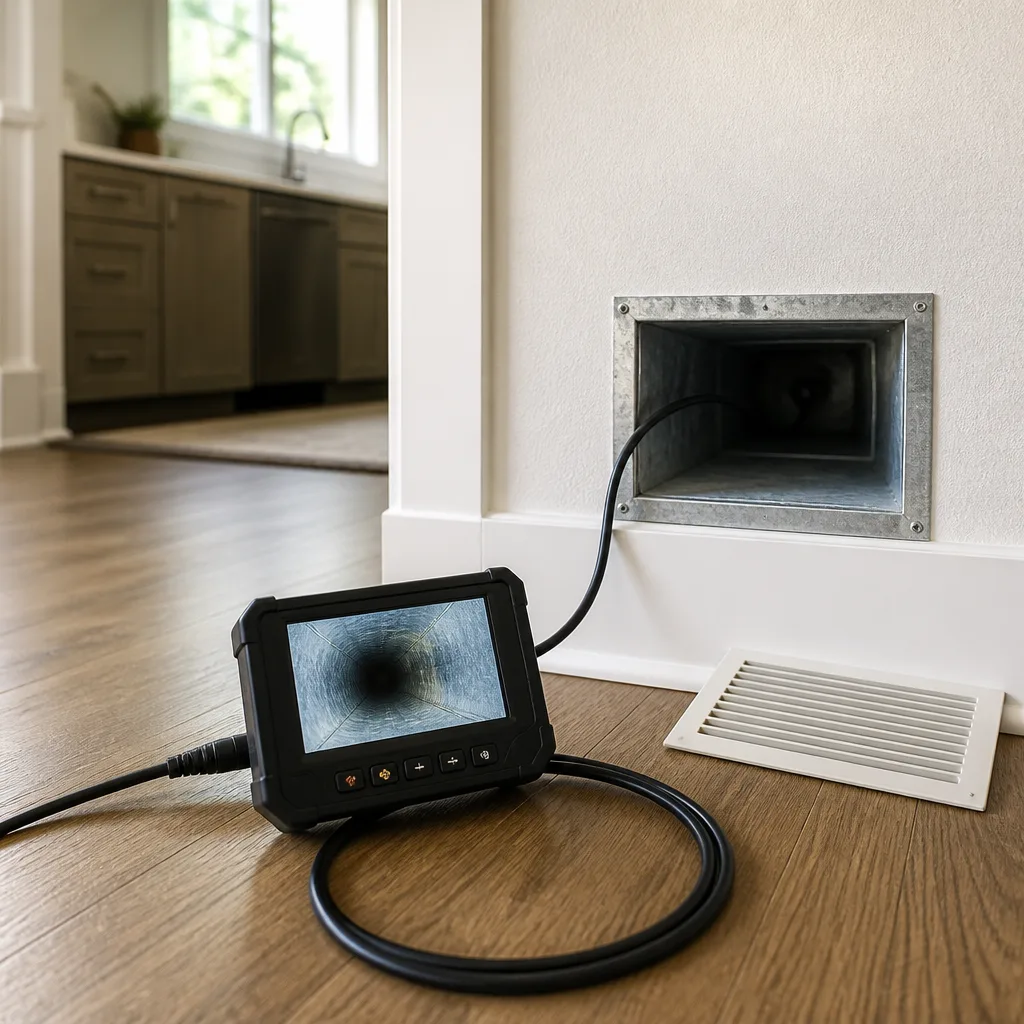
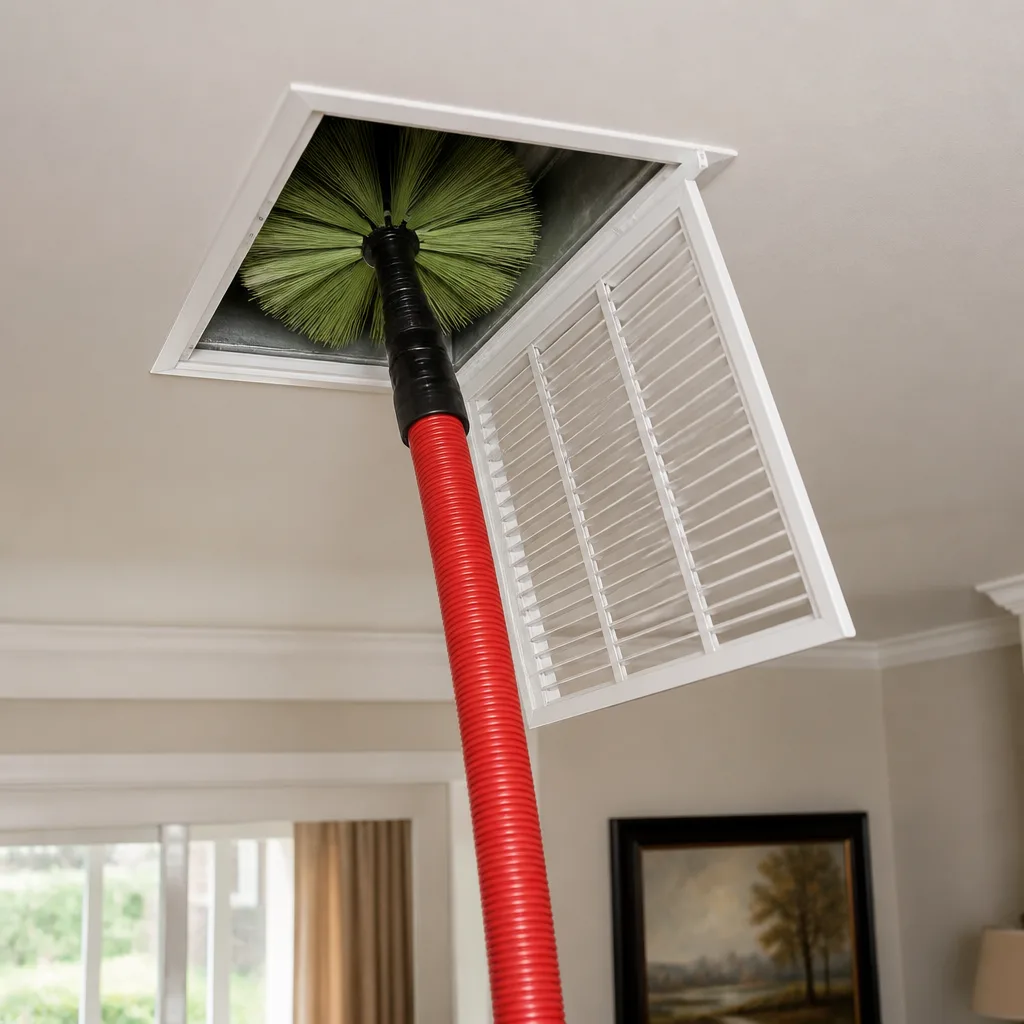
Whole-system duct and dryer vent check with before-and-after photos - you see exactly what came out of your vents
That "$99 whole-house special" is a bait ad - the real number appears once they are in your hallway, or the "clean" is a shop-vac at the register. We photograph the inside of your ducts before and after instead.
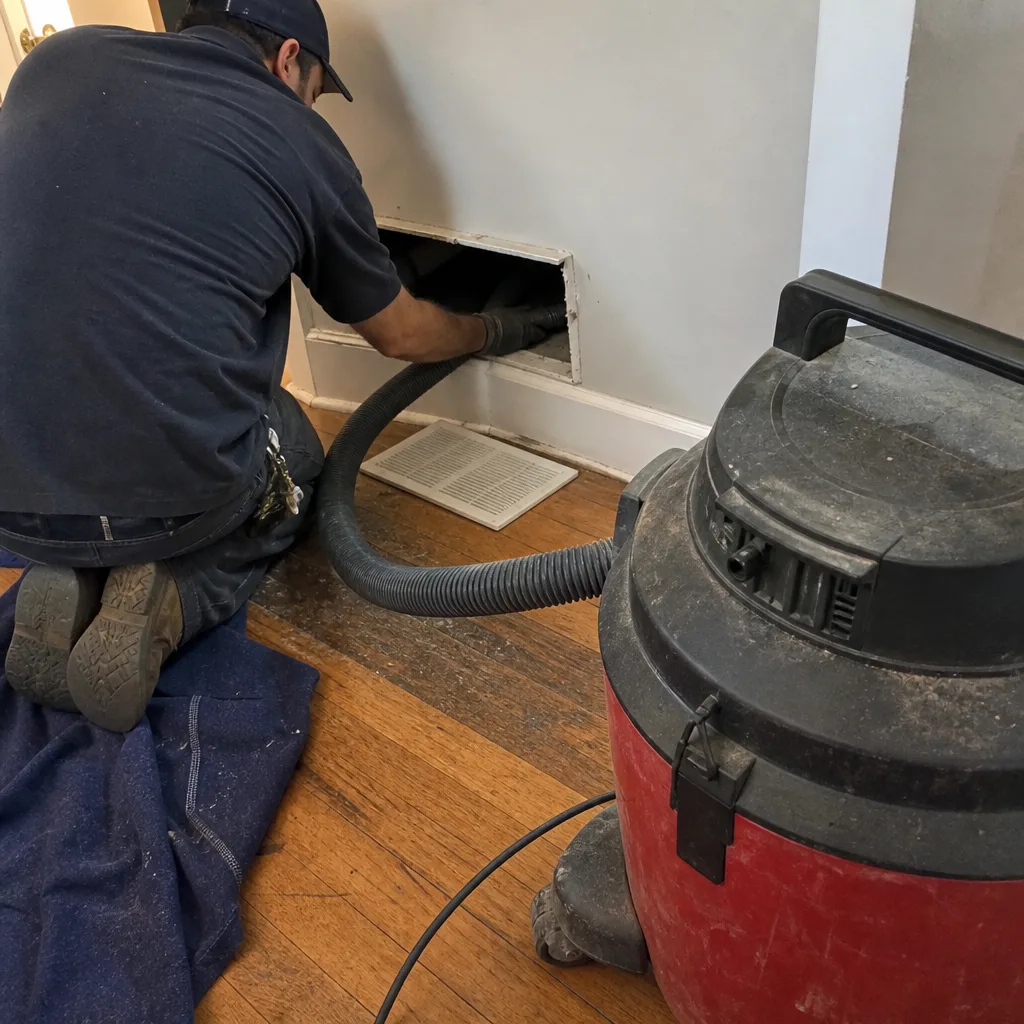 Before
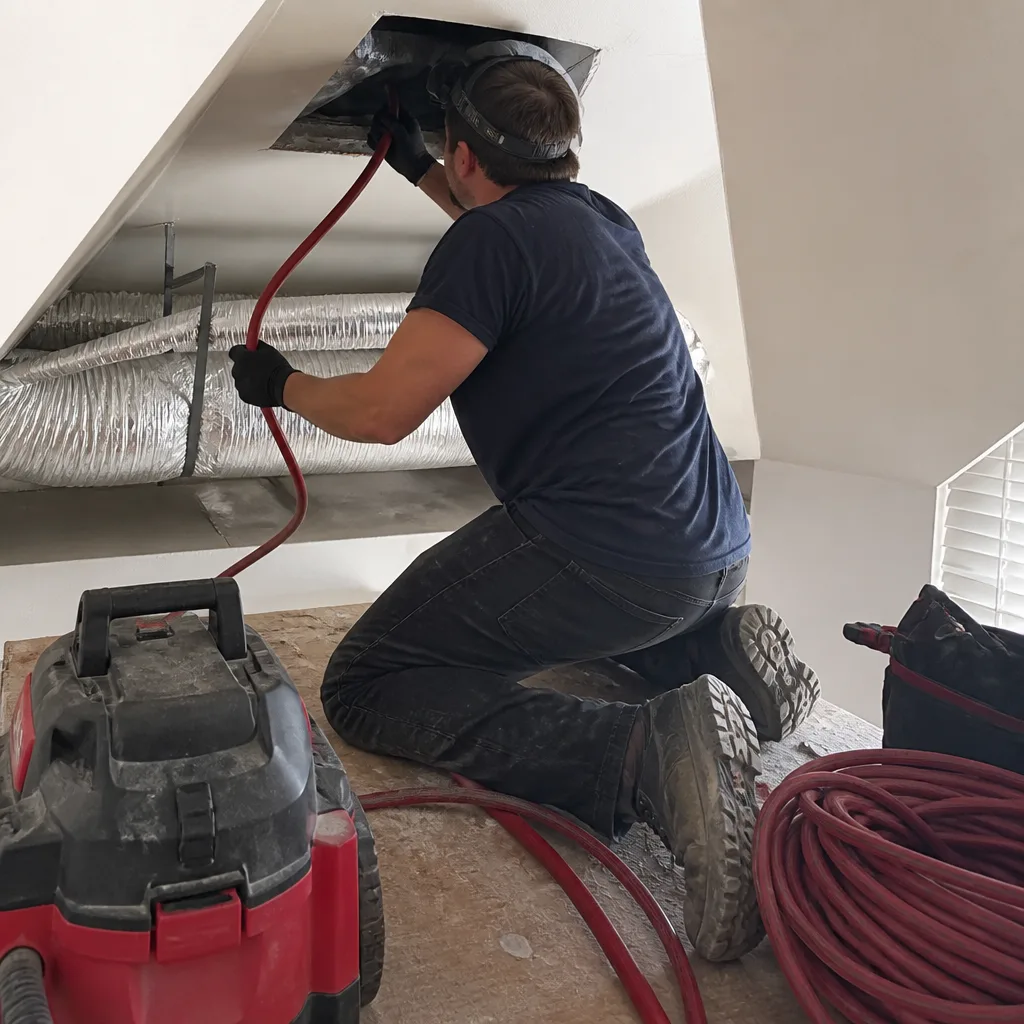 After
After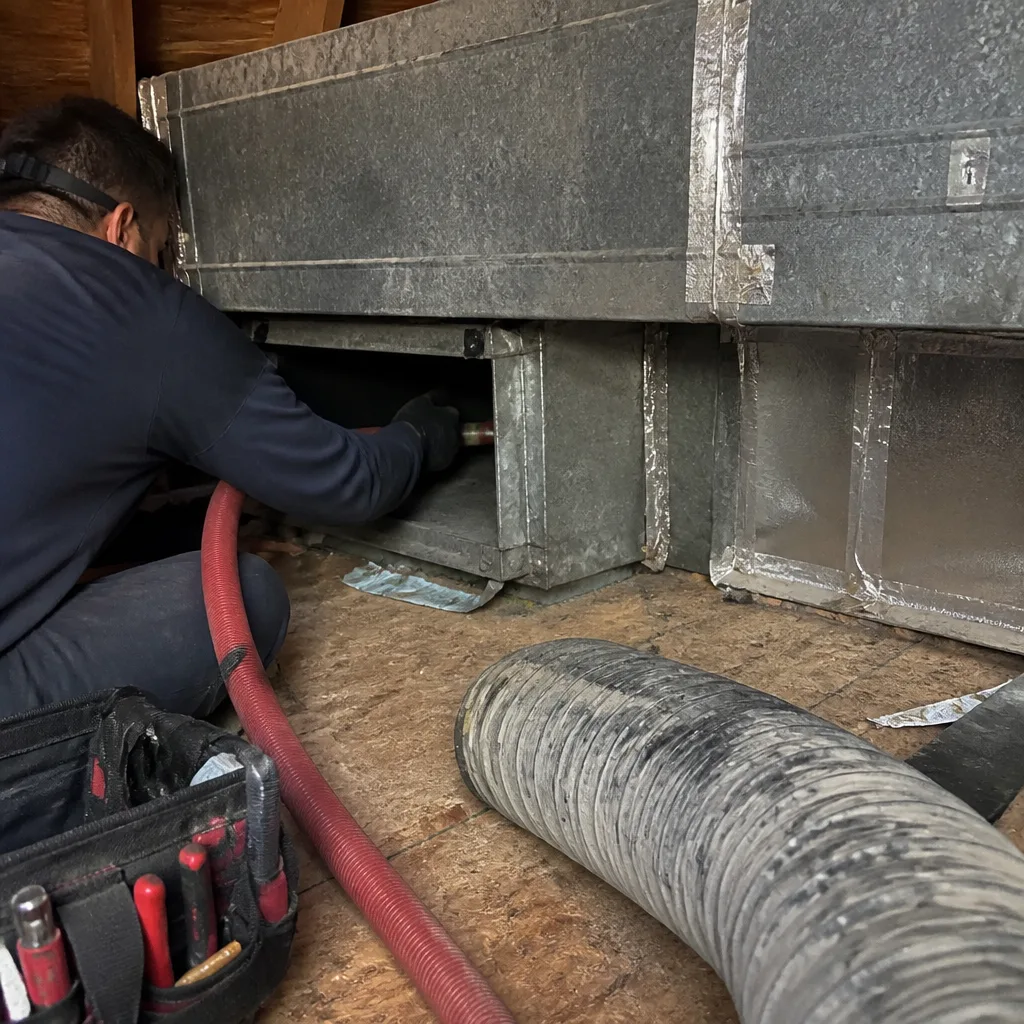 Before
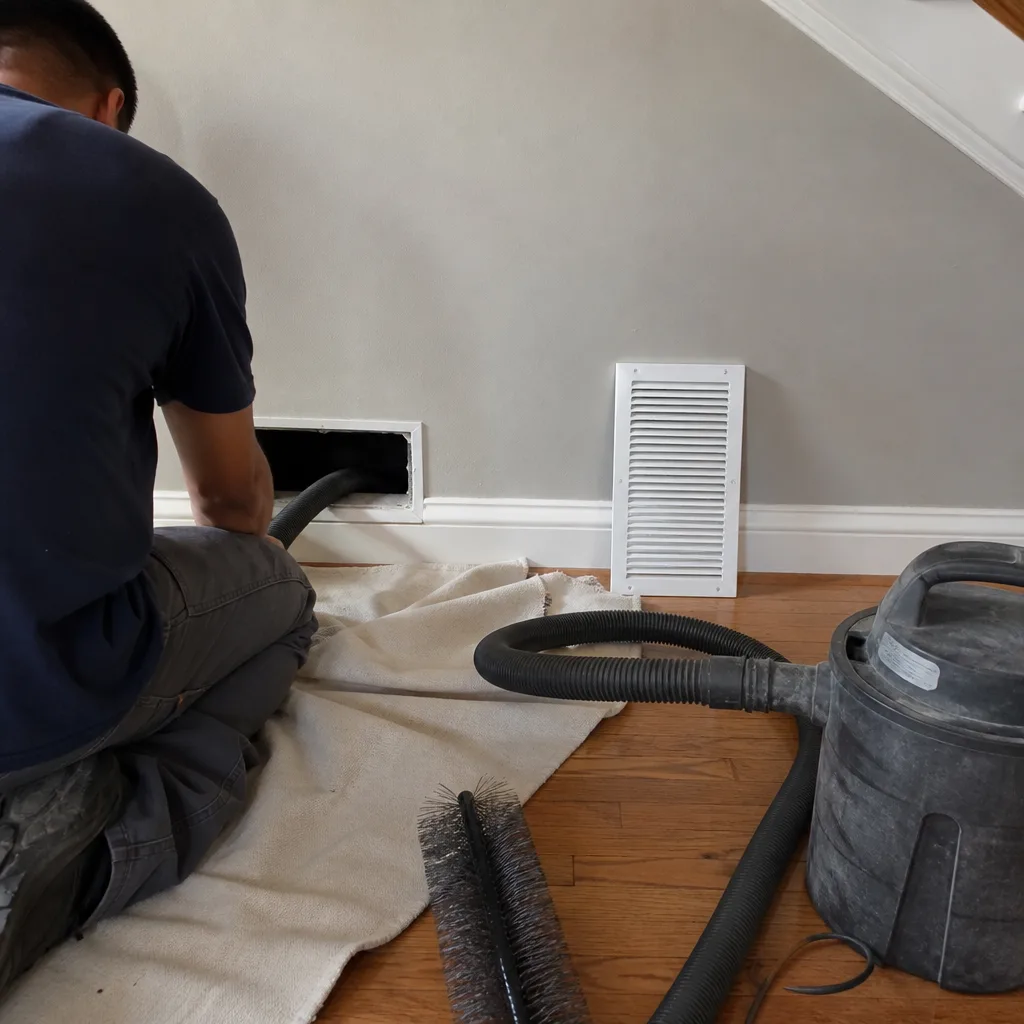 After
After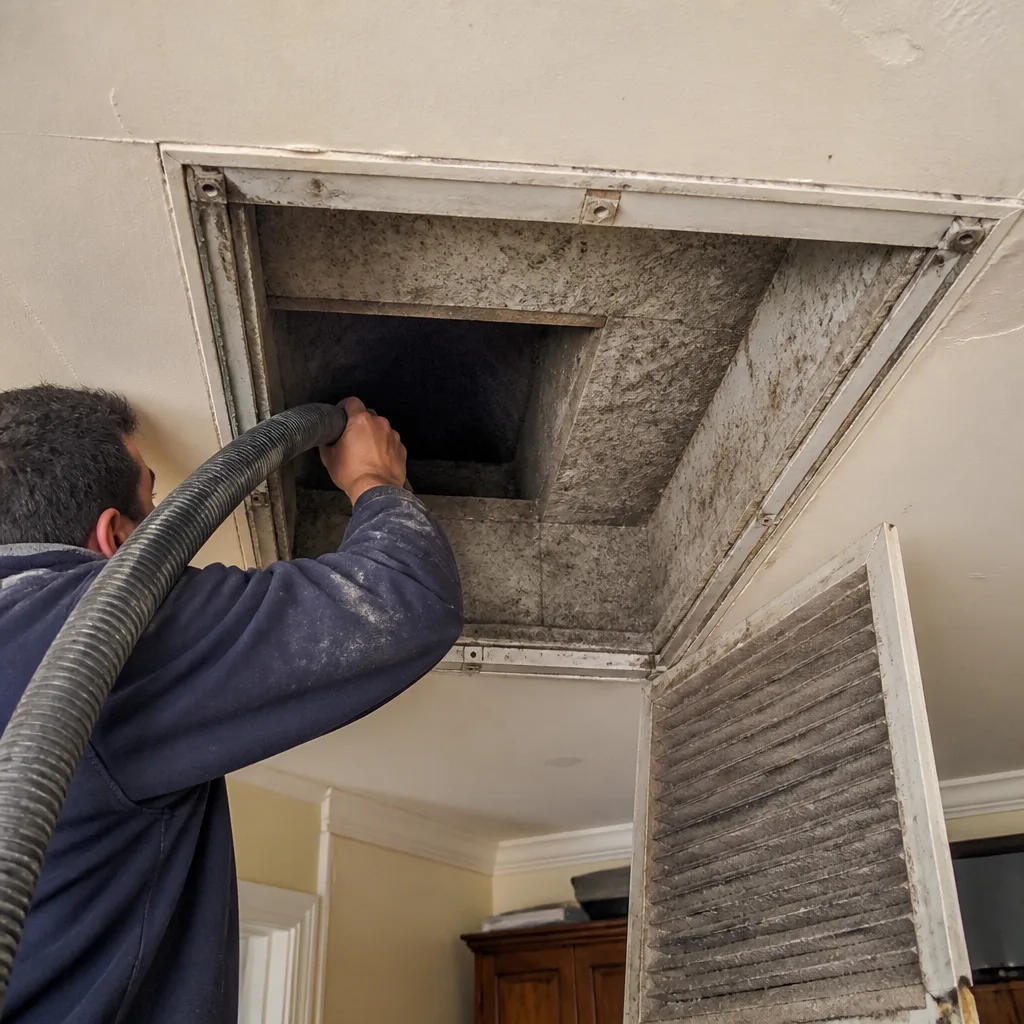 Before
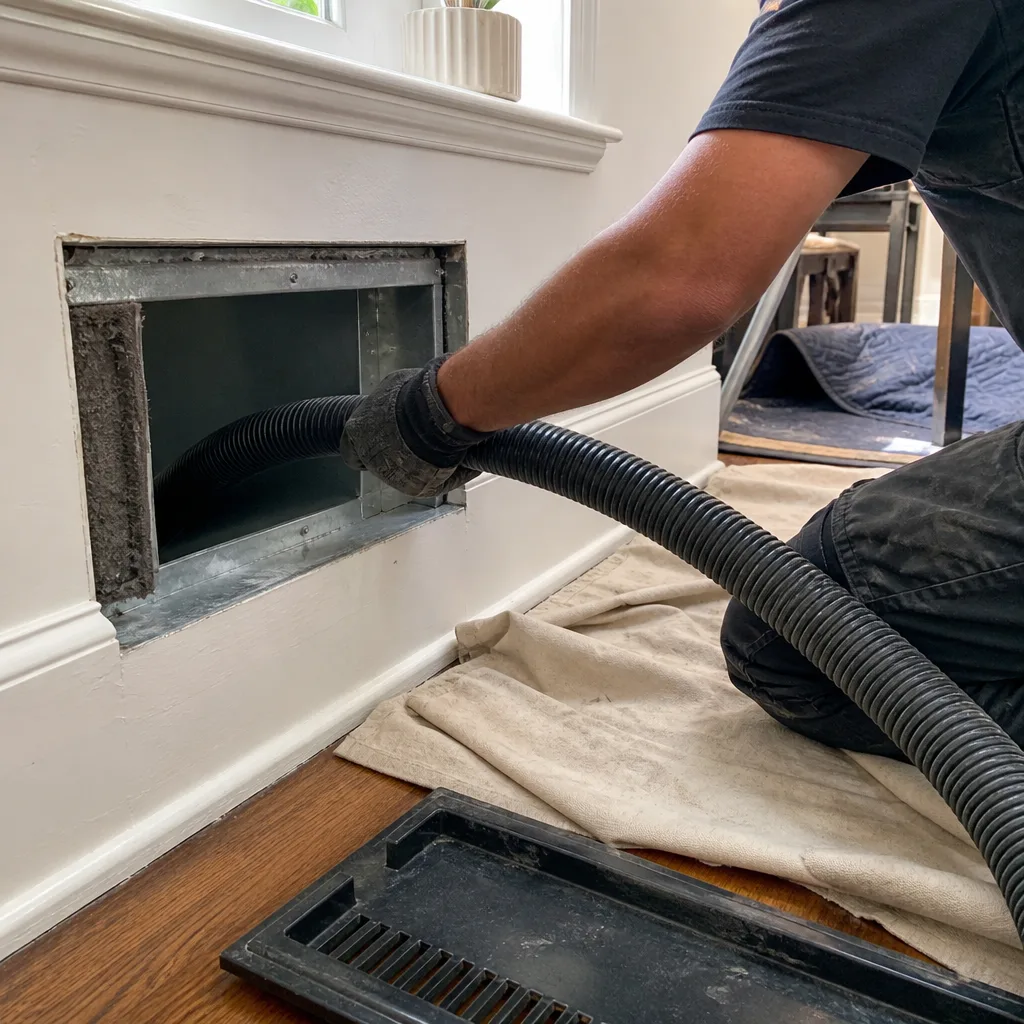 After
AfterAir Duct Cleaning Cost Breakdown: The Washington Homeowner’s Reference for 2026
A $79 duct cleaning quote in Washington covers approximately nothing that appears in an NADCA-compliant job scope. In 2026, the actual cost of cleaning a 2,000-square-foot rowhouse by documented standards runs between $450 and $850, and the gap between that figure and a coupon price is not markup - it is the difference between a complete job and a partial one that leaves the majority of the system untouched. This guide breaks down every line item that belongs in a legitimate estimate so Washington homeowners can audit any quote against a real standard, spot the omissions that turn low prices into bait-and-switch invoices, and understand what they are paying for before a technician opens the first vent cover. For a detailed breakdown of recommended maintenance tasks, see our Air Duct Cleaning Maintenance Checklist for Washington Homeowners.
Quick Answer
In Washington, DC, professional Air Duct Cleaning services for a typical single-family home costs between $450 and $850 in 2026, with condominiums starting around $350 and large detached homes or complex rowhouse systems reaching $1,200 to $1,500. The price depends on the number of duct runs, not square footage; access difficulty in older Washington housing stock; and whether the scope includes the air handler, coil, and return plenum. A written estimate should itemize each component so the homeowner can compare two quotes line by line.
Table of Contents
- What Actually Determines Duct Cleaning Cost in Washington
- Line-Item Cost Breakdown: Where Every Dollar Goes
- Why Square Footage Is the Wrong Starting Point
- Add-On Services Decoded: Legitimate Upsells vs. Margin Chasers
- How to Compare Two Quotes That Look Nothing Alike
- The True Cost of a Cheap Job: Callbacks, Remediation, and the 365-Day Math
- What to Expect During a Documented Duct Cleaning Visit
- Common Mistakes to Avoid
- When to Call a Professional
- Frequently Asked Questions
BeforeAfterWhat Actually Determines Duct Cleaning Cost in Washington
Three factors drive price in the Washington market, and none of them are the number on the Zillow listing.
Number of duct runs. A duct run is the continuous path from the main trunk to a single supply register - the vent that blows conditioned air into a room. A modest Cape Cod in Chevy Chase might have 8 supply runs. A renovated rowhouse in Capitol Hill with a finished basement and third-story addition can have 18 or more. Each run requires individual access, agitation, and negative-pressure extraction. The count is not negotiable; it is determined by the HVAC design.
System configuration and access. Washington’s housing stock is old and varied. A 1920s brick rowhouse in Petworth often has ductwork routed through original plaster chases with limited access panels. A 1960s split-level in Bethesda may have a furnace in a cramped crawl space. A high-rise condo in Foggy Bottom has a packaged terminal unit with entirely different duct geometry. Access difficulty adds time, and time is what the estimate pays for.
Scope completeness. A quote that covers supply registers only is not a full cleaning. The return side - the grilles that pull air back to the handler - typically accounts for 40% of system debris. The air handler cabinet, blower assembly, and evaporator coil are where microbial growth and restriction actually reduce efficiency. A complete scope includes all three zones.
Washington’s climate amplifies certain conditions. The humid summers create condensation in ductwork, particularly in unconditioned attics common in Mount Pleasant and Takoma. The pollen-heavy spring, dominated by oak and birch in the District’s tree canopy, loads filters and duct surfaces. These are not abstract concerns; they show up in the photo record as distinct debris types that require different agitation methods.
Line-Item Cost Breakdown: Where Every Dollar Goes
A legitimate estimate in Washington should be itemized. Here is what each line item represents and what it costs in the 2026 market.
| Line Item | Description | Washington DC Price Range (2026) |
|---|---|---|
| Base access and setup | Protect floors, establish containment, connect negative-air machine, initial system inspection with camera | $150-$250 |
| Per supply run | Individual agitation and extraction for each supply duct; includes register removal and reinstallation | $25-$45 per run |
| Per return duct / return grille | Cleaning of return pathways, often larger diameter and more debris-laden than supplies | $35-$60 per return |
| Air handler / blower cabinet | Cleaning of blower assembly, motor housing, and filter rack; critical for airflow restoration | $75-$150 |
| Evaporator coil cleaning | Non-acid foaming clean of indoor coil; requires access panel removal and drain line protection | $100-$175 |
| Plenum and trunk line | Main distribution boxes and trunk ducts connecting all runs; often omitted in low quotes | $75-$125 |
| Sanitizer / antimicrobial application | EPA-registered product applied to cleaned surfaces; not a substitute for mechanical cleaning | $50-$100 |
| Documented photo record | Before-and-after imaging of every duct run, delivered as standard job record | Included in complete scope |
Example: A 12-supply, 3-return system in a Columbia Heights rowhouse with air handler and coil cleaning, no sanitizer, runs $150 base + (12 × $35) + (3 × $50) + $110 handler + $135 coil = $995. The same home with sanitizer and trunk line scope reaches $1,170. A quote of $350 for the same address omits approximately 60% of the system.
At CleanRun Air Duct Cleaning Washington home, every estimate follows this structure under Haven Standard Clause 1: Written Price Before Any Work Starts. The customer sees the same breakdown before a panel comes off.
Why Square Footage Is the Wrong Starting Point
Square footage is the metric homeowners know, so it is the metric competitors use to advertise. It is also nearly useless for pricing duct cleaning accurately.
A 1,800-square-foot condo in the Wharf with a high-velocity mini-duct system has 10 supply runs of 2-inch flexible duct. A 1,800-square-foot detached home in Shepherd Park has 14 conventional runs, a basement return plenum, and an attic-mounted air handler with limited access. Same square footage, different job by several hours and several hundred dollars.
What actually matters:
- Total linear feet of ductwork. The physical distance air travels, not the floor area it conditions.
- Number of directional changes. Elbows and transitions trap debris; each requires targeted agitation.
- Register count and type. Floor registers in historic Washington homes with hardwood surrounds take longer to protect and reinstall than standard wall registers.
- System zoning. A dual-zone system with two air handlers doubles the access and cleaning scope.
- Age of installation. Pre-1990 ductwork in Washington frequently has asbestos-containing tape or insulation that requires modified procedures; not all companies are equipped for this.
A technician who prices by square footage is guessing. A technician who counts runs, inspects access, and scopes the full system is preparing a documented estimate. The difference shows up six months later in whether the system needs a callback.
Add-On Services Decoded: Legitimate Upsells vs. Margin Chasers
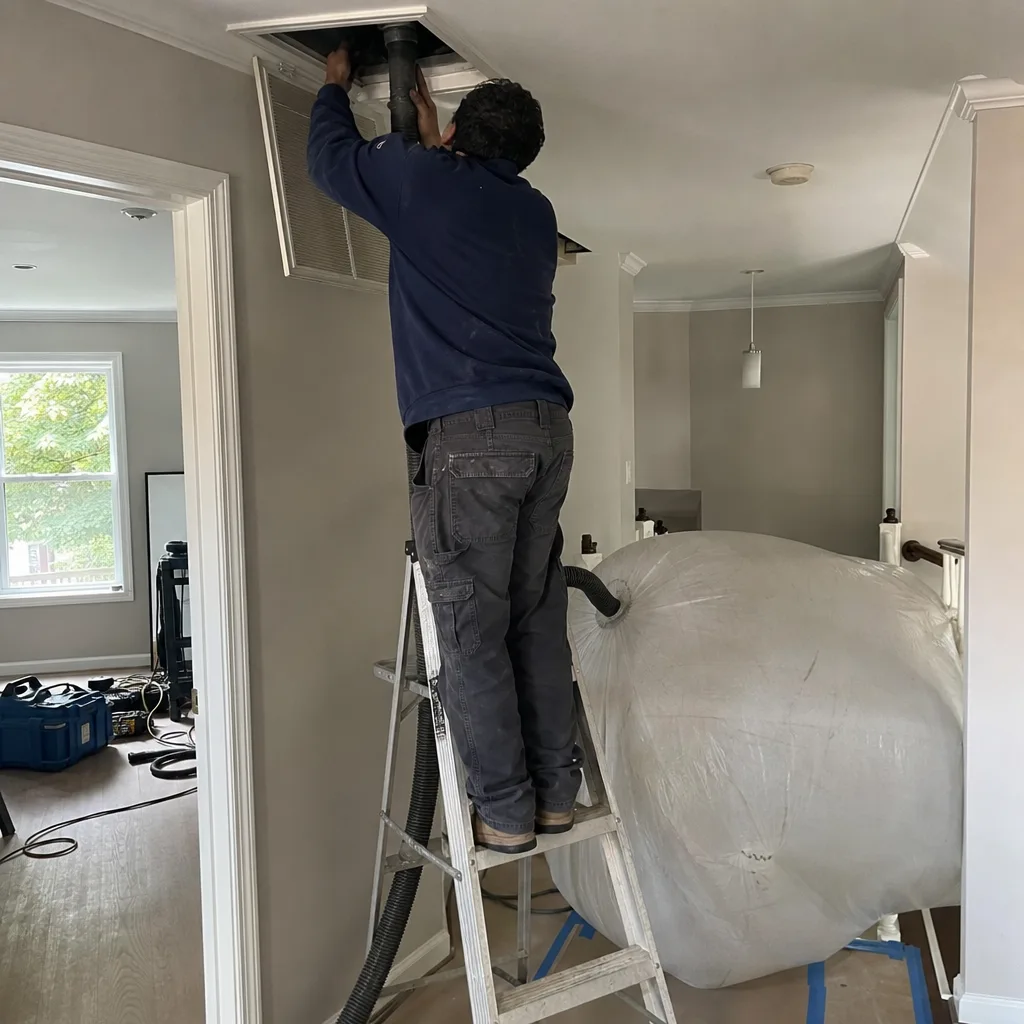
Not every additional service is an upsell. Some are standard components that belong in the base scope. Others are genuine options with specific value. A third category exists to inflate the invoice after a low entry price.
Legitimate base scope items often presented as add-ons:
- Dryer vent cleaning. A clogged dryer vent is a fire hazard and reduces appliance efficiency. In Washington’s dense housing, long vent runs through multiple floors are common, particularly in converted rowhouses. A standalone dryer vent cleaning runs $89-$150; bundled with duct cleaning, it often reduces to $75-$100. This is a separate service with its own code requirements and should be quoted separately, not sprung mid-visit. Dryer Vent Cleaning in Washington covers this in full.
- Air handler and coil cleaning. If the quote treats these as optional, the base scope is incomplete. The coil and blower are where airflow restriction actually occurs; cleaning ducts alone and leaving these fouled is cosmetic work.
Legitimate options with specific applications:
- UV-C light installation. A germicidal lamp mounted at the coil surface inhibits microbial growth in high-humidity conditions. Relevant in Washington’s summer months, particularly for systems in unconditioned attics or crawl spaces. Cost: $300-$600 installed, with annual bulb replacement. Not necessary for every home; appropriate for allergy-sensitive occupants or visible coil contamination history.
- Duct sealing (aeroseal or mastic). Reduces leakage in the duct envelope. Washington’s older housing stock often has unsealed metal duct with visible gaps at joints. A separate service from cleaning, with its own ROI calculation based on utility rates and leakage percentage. Cost: $1,200-$2,500 for typical home.
Margin chasers to question:
- “Deep” or “premium” cleaning tier. Mechanical cleaning has one standard: debris removal to NADCA criteria. Superlatives without defined scope differences are pricing theater.
- Per-vent sanitizing with unregistered products. The EPA maintains a specific list of registered antimicrobial products for HVAC systems. If the technician cannot produce the registration number, the application may be ineffective or harmful to indoor air quality.
- Filter subscriptions sold at inflated unit cost. A MERV 13 filter available for $18 retail should not be sold at $45 with “professional installation.”
CleanRun’s equipment roster includes Rotobrush for residential agitation, Nikro and Abatement Technologies for negative-air extraction, and Guardsman for protective containment - brands customers can verify independently. The estimate names what will be used and why.
How to Compare Two Quotes That Look Nothing Alike
Homeowners in Washington frequently receive estimates with different totals, different line items, and different terminology. The following steps determine whether two quotes are competing for the same job or describing different services entirely.
- Demand a register-by-register count. Quote A lists “12 supplies, 3 returns.” Quote B lists “whole house.” These are not comparable. Ask Quote B for the same count.
- Identify the zones included. Does each quote cover supply ducts, return ducts, trunk lines, plenums, air handler, and coil? Mark each zone on a checklist. A quote missing two zones is not a lower price for the same work.
- Ask about access methodology. Will the crew cut access panels where none exist? (Required by NADCA for trunk and plenum cleaning.) Will they remove and clean registers, or just vacuum around them? Will the blower assembly be removed for cleaning, or only surface-wiped in place?
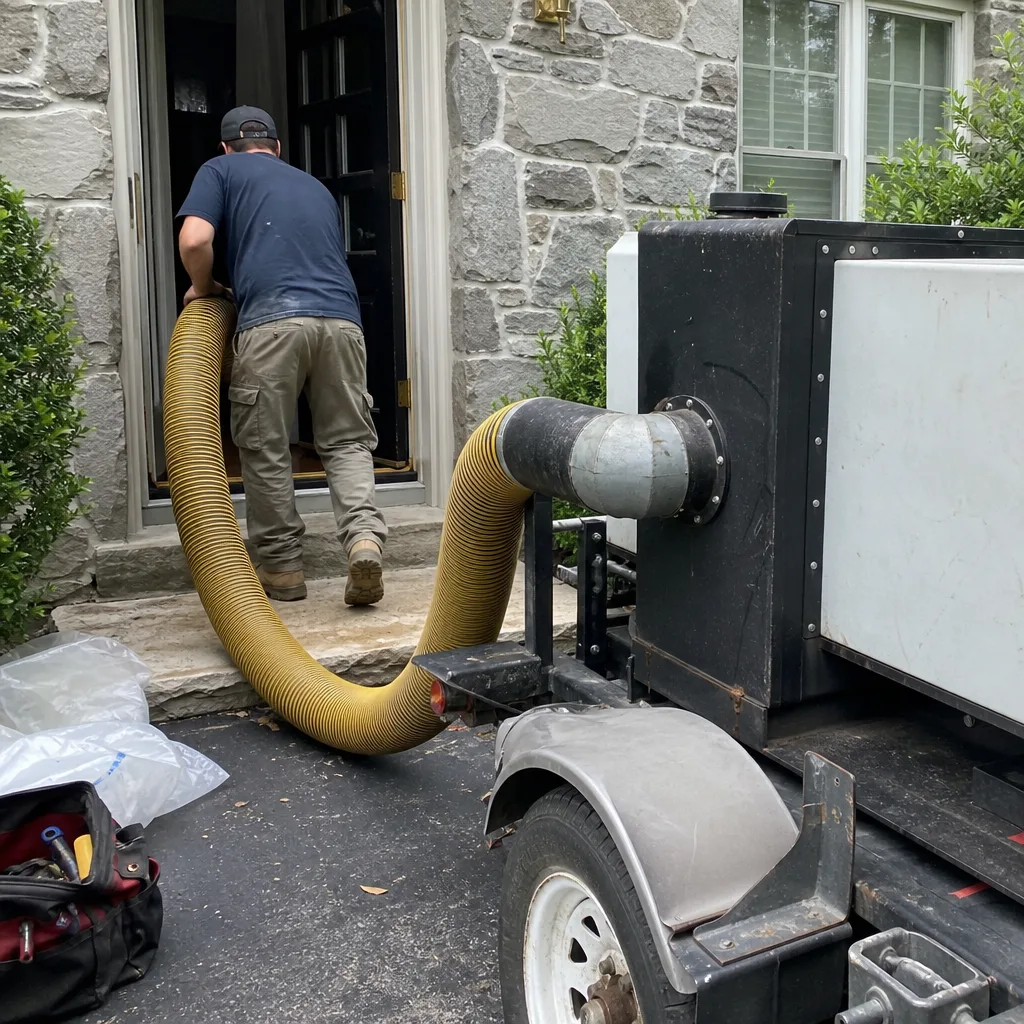
- Request equipment specification. A truck-mounted negative-air system (Nikro, Abatement Technologies) achieves different airflow than a portable shop vacuum. The equipment name should appear in the scope or be stated on request.
- Confirm documentation deliverables. Before-and-after photos of every duct run, delivered to the customer, are the only verifiable proof of completion. A quote that does not specify this is quoting an undocumented visit.
- Verify guarantee terms in writing. A “satisfaction guarantee” with no defined remedy is not a guarantee. The 365-Day Done Right Promise specifies that CleanRun returns and corrects any deficiency - backed in writing on every job, not stated in marketing copy.
A homeowner in Adams Morgan recently brought us a $299 quote and a $740 quote for the same address. The $299 quote covered 8 supply registers only, with no return cleaning, no handler access, and no photo documentation. The $740 quote covered 14 supplies, 3 returns, full handler and coil scope, and a documented photo record. The lower quote was not a better value; it was a different, partial service. Air Duct Cleaning in Washington explains our full scope methodology.
The True Cost of a Cheap Job: Callbacks, Remediation, and the 365-Day Math
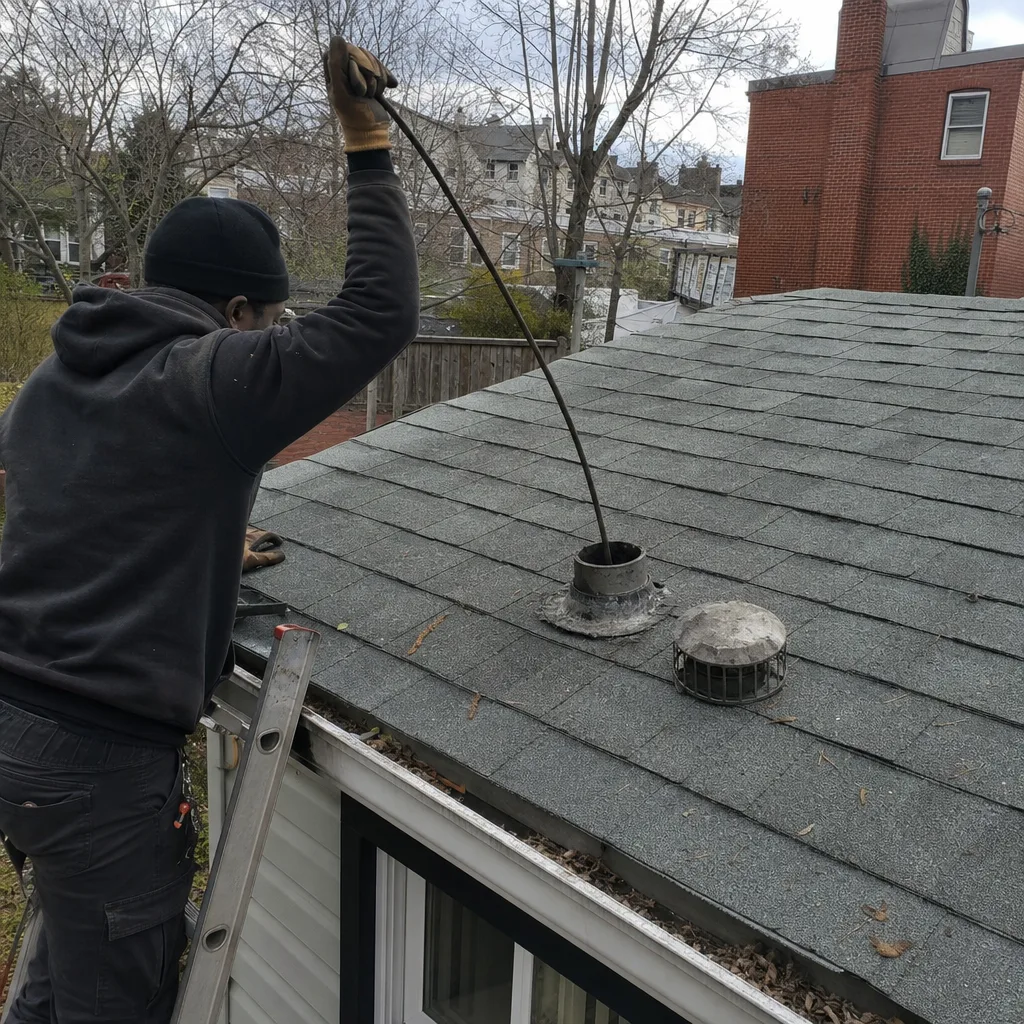
The industry average callback rate for duct cleaning is difficult to verify because most companies do not track it. Anecdotal data from NADCA member surveys suggests 15-25% of low-cost jobs result in customer complaints within 90 days, typically for visible debris remaining, odors persisting, or damage to registers or finishes.
The cost of a callback is not merely the return visit. It includes:
- Time spent identifying the original scope omission
- Scheduling a second crew, often weeks later
- Corrective work at rates that do not benefit from initial setup efficiency
- Potential damage remediation from improper initial technique
- The homeowner’s lost time and trust
A $350 job that requires a $400 callback to address missed returns and handler debris costs $750 total - more than the $650 documented job would have cost initially, with none of the disruption.
The 365-Day Done Right Promise exists because the first job should be the only job. If a CleanRun crew misses a duct run, leaves debris visible in the photo record, or fails to restore airflow to pre-cleaning baseline, we return and correct it. The guarantee is written on the invoice, not offered verbally. This is Haven Standard accountability: the price includes the work, and the work includes the follow-through.
For context, a competitor’s “satisfaction guarantee” often requires the customer to identify the specific complaint, schedule a re-inspection, and await manager approval. The 365-Day Done Right Promise requires only that the customer call; the correction is scheduled without dispute. The difference is not policy generosity. It is documentation. When every duct run is photographed, there is no disagreement about what was or was not cleaned.
What to Expect During a Documented Duct Cleaning Visit
Understanding the visit sequence helps homeowners evaluate whether the crew is performing the scoped work or rushing through a checklist.
Arrival and setup (30-45 minutes). Technicians arrive in uniform, identified by name per Haven Standard Clause 3: Verified Crews. Floor protection is laid, containment is established at the work area, and the negative-air machine is connected to the trunk line. The initial camera inspection documents pre-cleaning conditions in each duct run.
System access (varies by home). Registers are removed and cleaned separately. Access panels are cut in trunk lines where required; these are patched and sealed upon completion. In Washington rowhouses, this sometimes requires working around original architectural features; protection, not speed, is the priority.
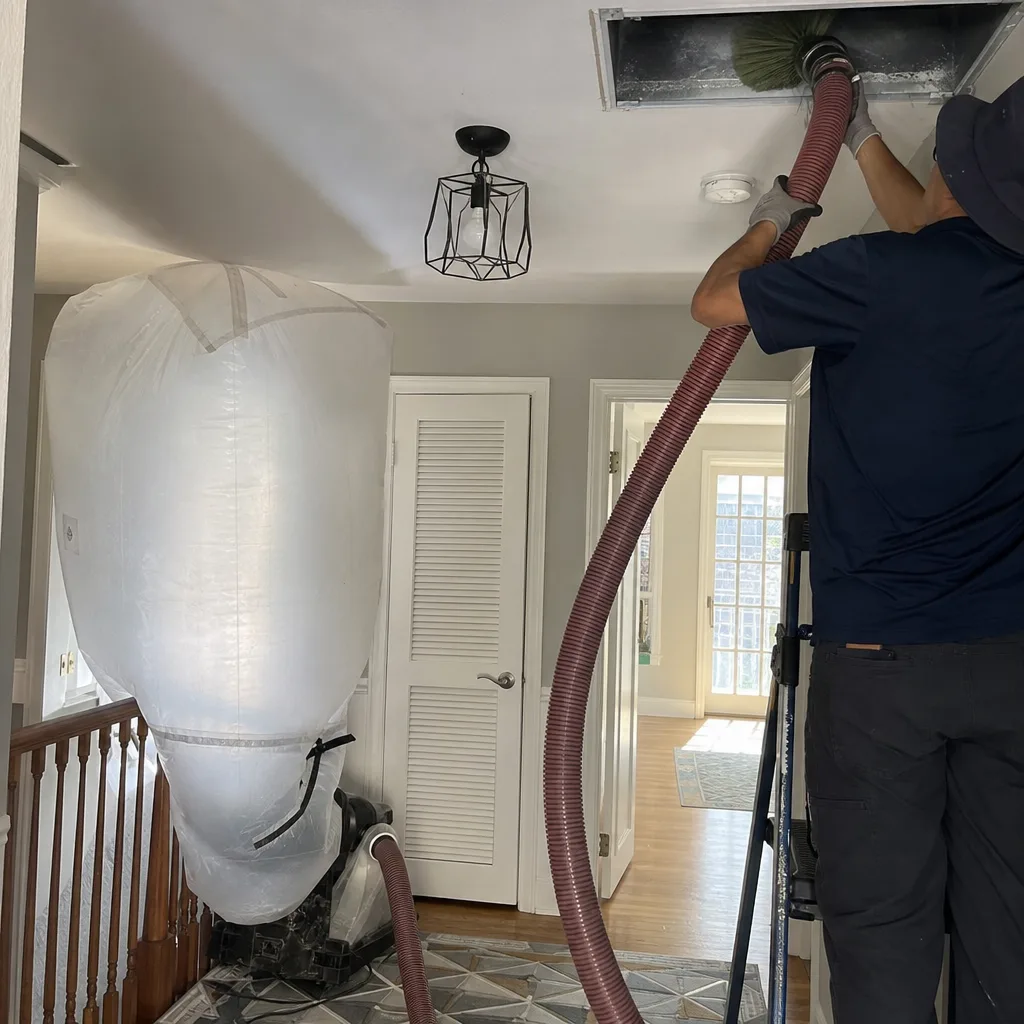
Agitation and extraction (the majority of time). Each duct run receives mechanical agitation to dislodge debris, followed by negative-pressure extraction. The Rotobrush system rotates a flexible cable with bristle head through the duct, contacting all surfaces. Simultaneous suction through the Nikro or Abatement Technologies collector prevents debris migration into the home.
Air handler and coil (if scoped). The blower assembly is removed for cleaning when accessible. The evaporator coil receives foaming cleaner, dwell time, and rinse. Drain pan and line are cleared. This work is photographed before and after.
Final documentation and walkthrough. The photo record, typically 20-40 images for a complete job, is compiled. The crew reviews findings with the homeowner, noting any structural damage, asbestos-containing materials, or recommendations for repair. The written invoice, with scope completed and guarantee terms, is delivered.
Total time for a typical Washington home: 3.5 to 6 hours. A two-hour visit for a full system is incomplete by definition.
Common Mistakes to Avoid
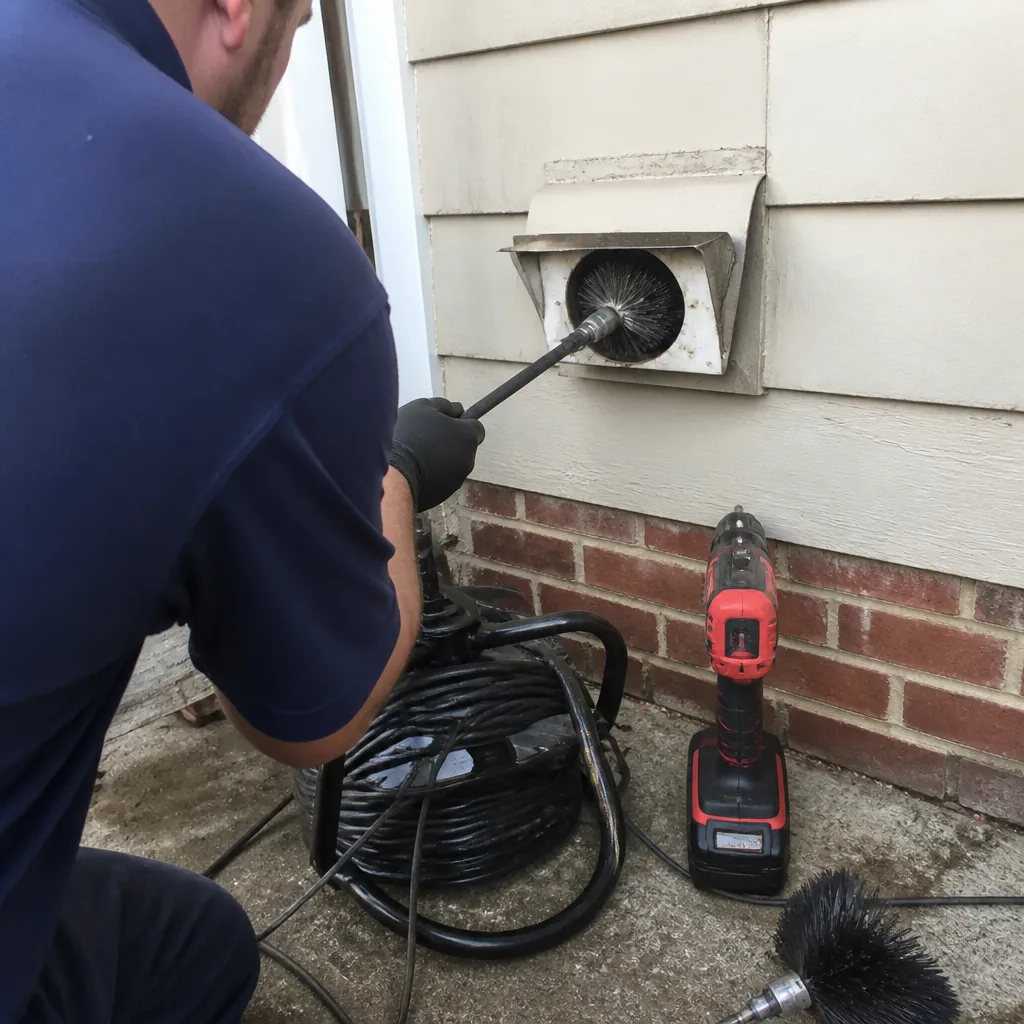
- Booking by coupon price without scope verification. The $79 offer covers two registers and a photo opportunity. Verify the register count and zones included before scheduling.
- Assuming all companies use similar equipment. A shop vacuum with a long hose is not a negative-air extraction system. Ask for the equipment brand and verify it is designed for HVAC cleaning.
- Neglecting the return side. Returns pull air - and debris - continuously. A quote that omits returns is omitting nearly half the system.
- Accepting verbal guarantees. If the promise is not on the invoice, it is not enforceable. Washington’s consumer protection laws require written contracts for home improvement work over $500; a duct cleaning guarantee should be no less documented.
- Pricing by square footage without run count. This guarantees either an inflated price or an incomplete scope. Insist on a register-by-register estimate.
- Ignoring Washington-specific access challenges. Historic homes in Georgetown, Capitol Hill, and Mount Pleasant have plaster, lath, and original finishes that require protection. A crew that does not account for this in time and materials is cutting corners.
- Skipping the photo record. Without documentation, there is no proof of completion and no basis for a callback. The photo record is not a premium service; it is the minimum standard for accountability.
When to Call a Professional
Call for an estimate when visible dust accumulation appears at registers, airflow is noticeably reduced in specific rooms, or the system has not been cleaned since the home was purchased. In Washington’s market, where 2015-2025 purchases are common, many homeowners are operating on the previous owner’s maintenance schedule - or absence of one.
Call promptly if mold odor is present, rodents or insects have been detected in ductwork, or renovation debris is suspected in the system. These conditions affect indoor air quality directly and require documented remediation, not surface cleaning.
CleanRun Air Duct Cleaning Washington offers free estimates in Washington - call (240) 363-3380. Every estimate is written, itemized, and delivered before work begins. HVAC Cleaning in Washington addresses system-wide cleaning for integrated heating and cooling equipment.
Frequently Asked Questions
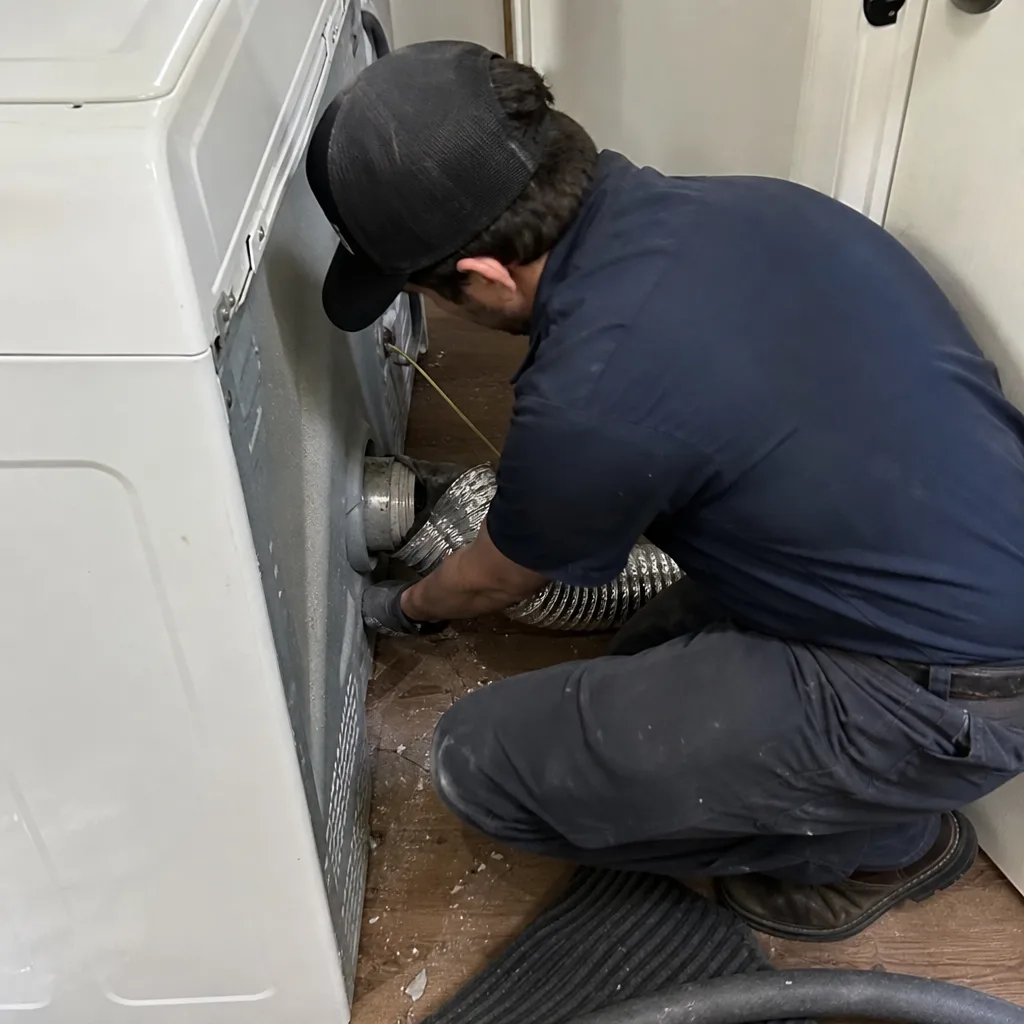
Professional air duct cleaning in Washington costs between $450 and $850 for a typical single-family home, with condominiums starting around $350 and complex rowhouse or large detached systems reaching $1,200 to $1,500. The price depends on duct run count, access difficulty, and scope completeness, not square footage. Call (240) 363-3380 for a written estimate specific to your system - estimates are free.
Low quotes typically omit the return duct system, air handler, evaporator coil, and trunk lines - cleaning only visible supply registers. A $79 to $299 quote covers approximately 30-40% of the system that a $600-$850 quote addresses completely. The cheaper job is not a discount; it is a different, partial service. Ask for a register-by-register scope comparison to identify the difference.
Request a documented photo record of every duct run, before and after, delivered as part of the standard job record. At CleanRun, this has been standard practice since 2013; the images are compiled and reviewed with the homeowner before the crew departs. Without photographic evidence, there is no verifiable proof of completion.
NADCA recommends cleaning every 3 to 5 years for typical residential systems, or more frequently if occupants have allergies, pets, or recent renovation. In Washington’s climate, with humid summers and heavy spring pollen, homeowners with respiratory sensitivity often benefit from 3-year intervals. The determining factor is visible debris accumulation in the photo record, not calendar time alone.
Moderate debris restriction in ductwork reduces system efficiency by forcing the blower to work harder; severe restriction can reduce effective capacity by 10-15%. The primary value of cleaning is indoor air quality and system longevity, with energy savings as a secondary benefit that varies with pre-cleaning contamination level. A documented inspection with airflow measurement provides the specific data for your system.
Condos in Foggy Bottom, the Wharf, or Navy Yard typically range from $350 to $550, depending on the HVAC system type. High-rise units with packaged terminal units or limited duct runs cost less than full duct systems; units with dedicated air handlers and extensive ductwork in converted buildings match single-family pricing. Access constraints in buildings with freight elevator restrictions or limited parking can add time and cost.
The Bottom Line
Air duct cleaning in Washington costs what it costs to do completely: $450 to $850 for most homes, with every dollar traceable to specific line items. The $79 coupon is not a competitive price for the same service; it is a different service entirely, scoped to create an upsell opportunity once the technician is inside. The homeowner’s protection is an itemized, written estimate that names every zone, every piece of equipment, and every deliverable - including the photo record and written guarantee - before work starts. For additional guidance on permits and regulatory requirements, read our article on Air Duct Cleaning Permits, Codes & Inspections in DC: What You Need to Know. That is Haven Standard Clause 1. That is what CleanRun has delivered since 2013.
Written by Tomas Reyes, Owner at CleanRun Air Duct Cleaning Washington, serving Washington since 2013.