
Last updated September 23, 2026
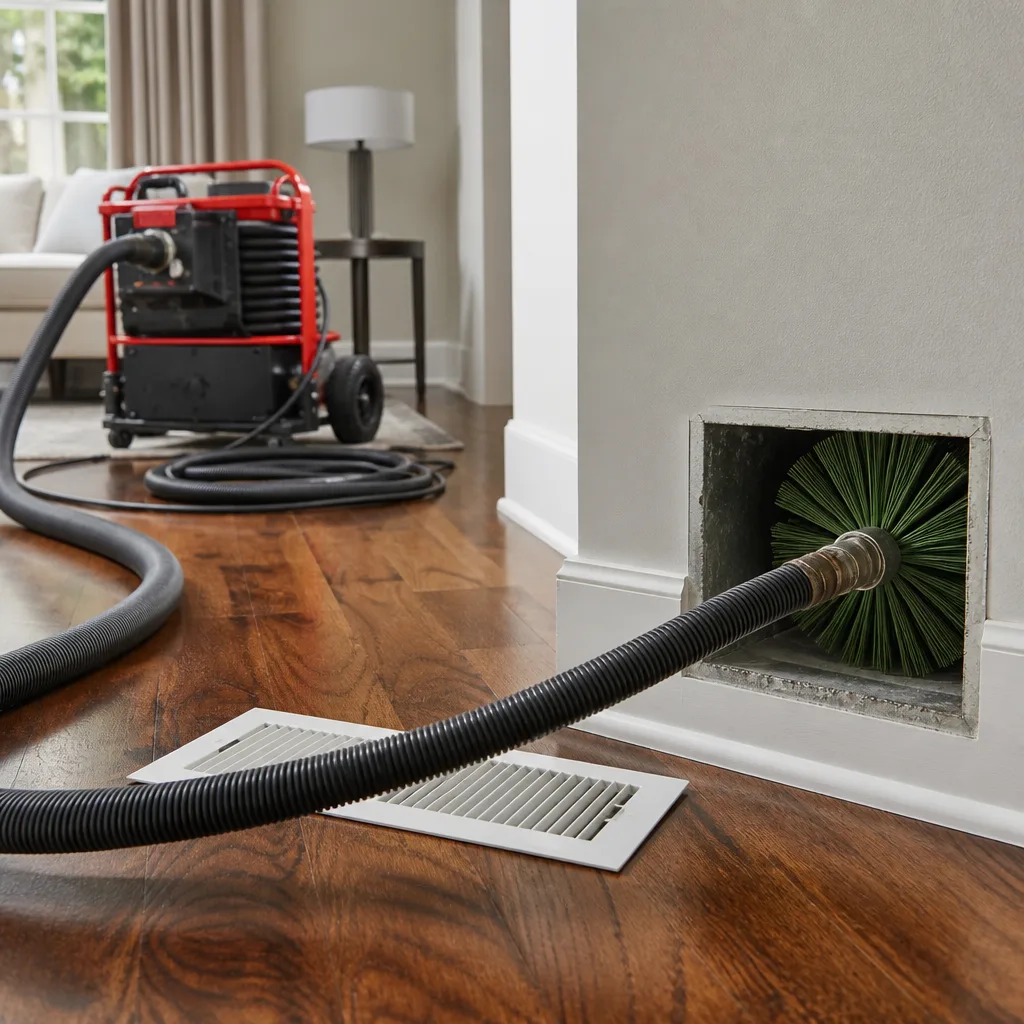
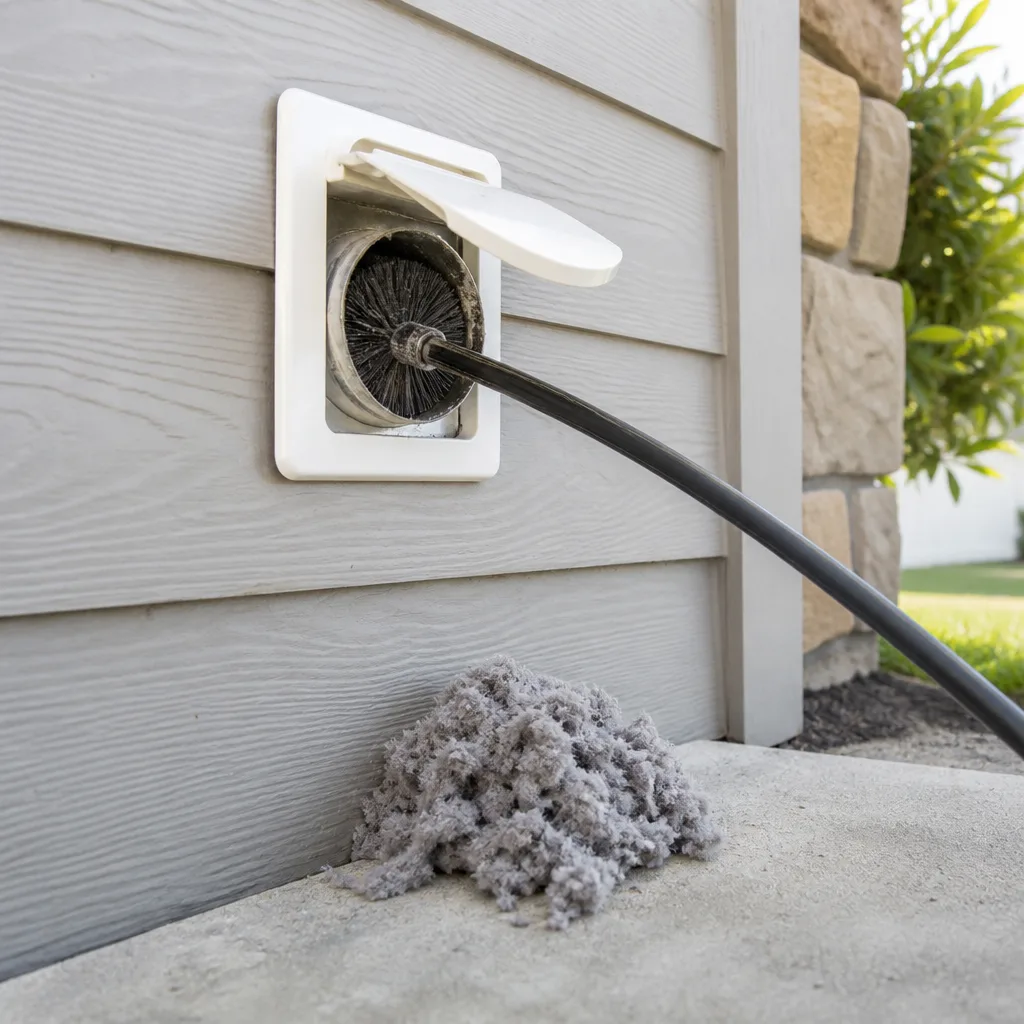
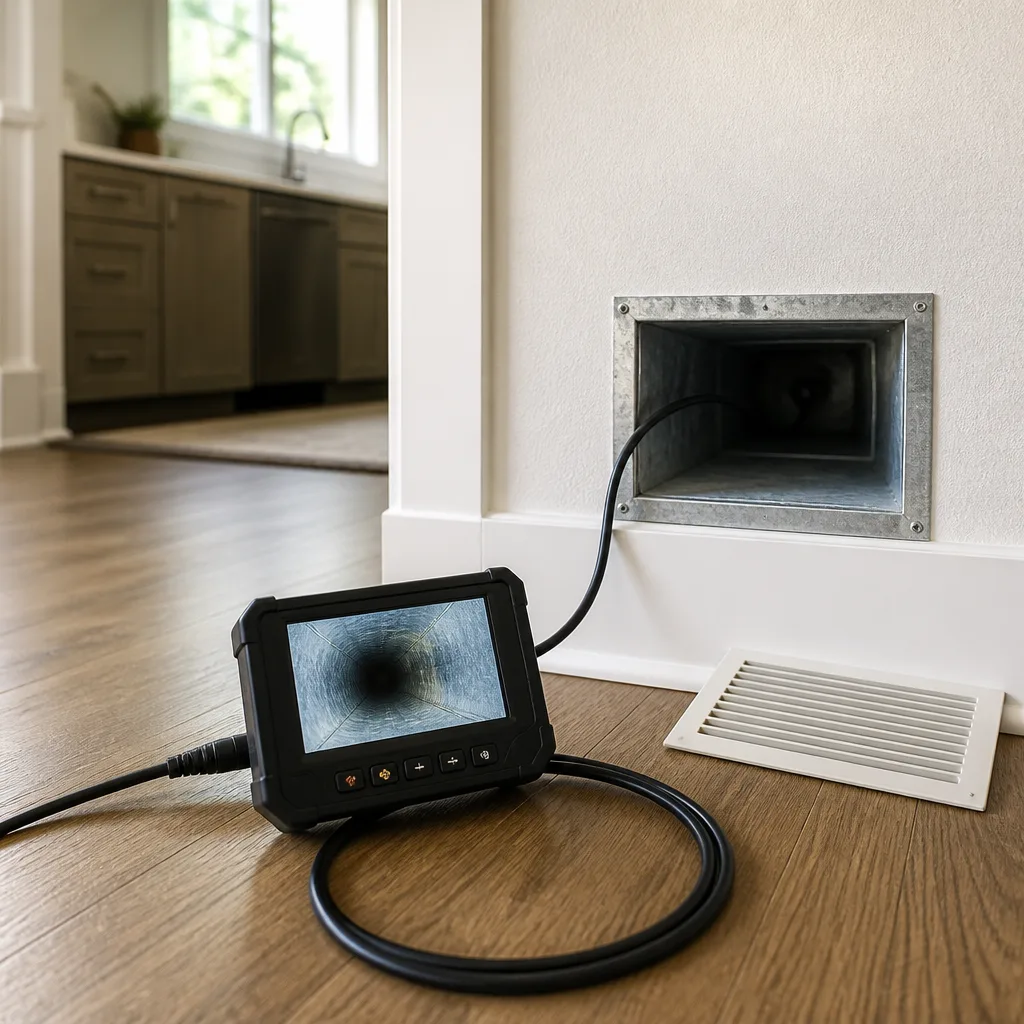
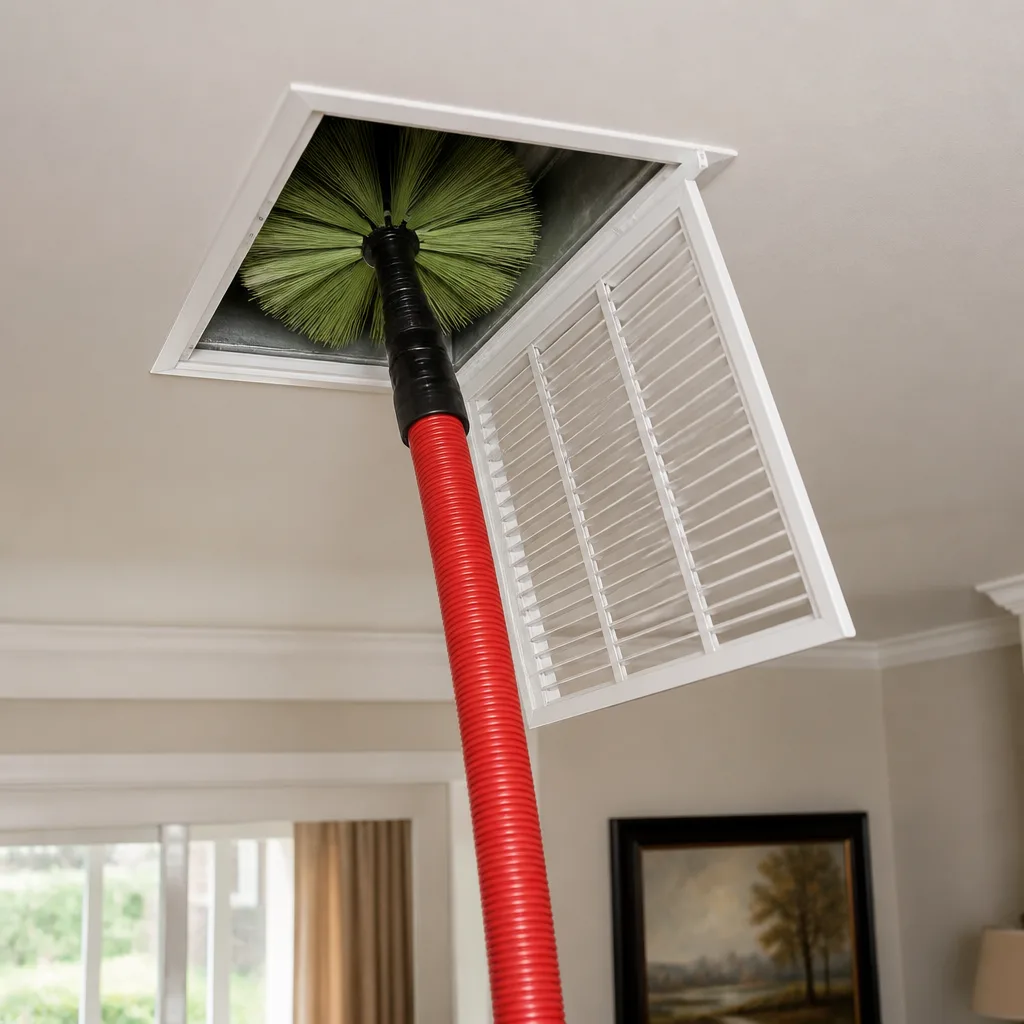
Whole-system duct and dryer vent check with before-and-after photos - you see exactly what came out of your vents
That "$99 whole-house special" is a bait ad - the real number appears once they are in your hallway, or the "clean" is a shop-vac at the register. We photograph the inside of your ducts before and after instead.
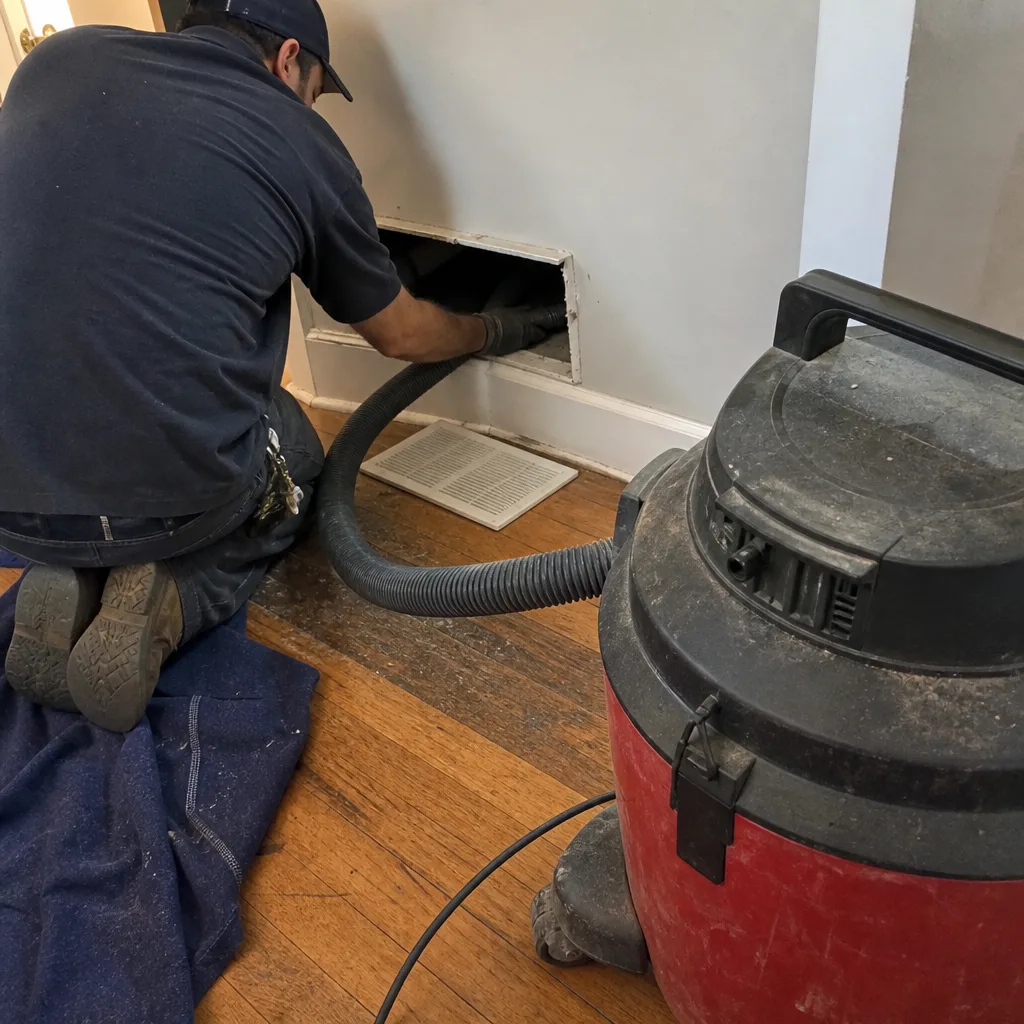 Before
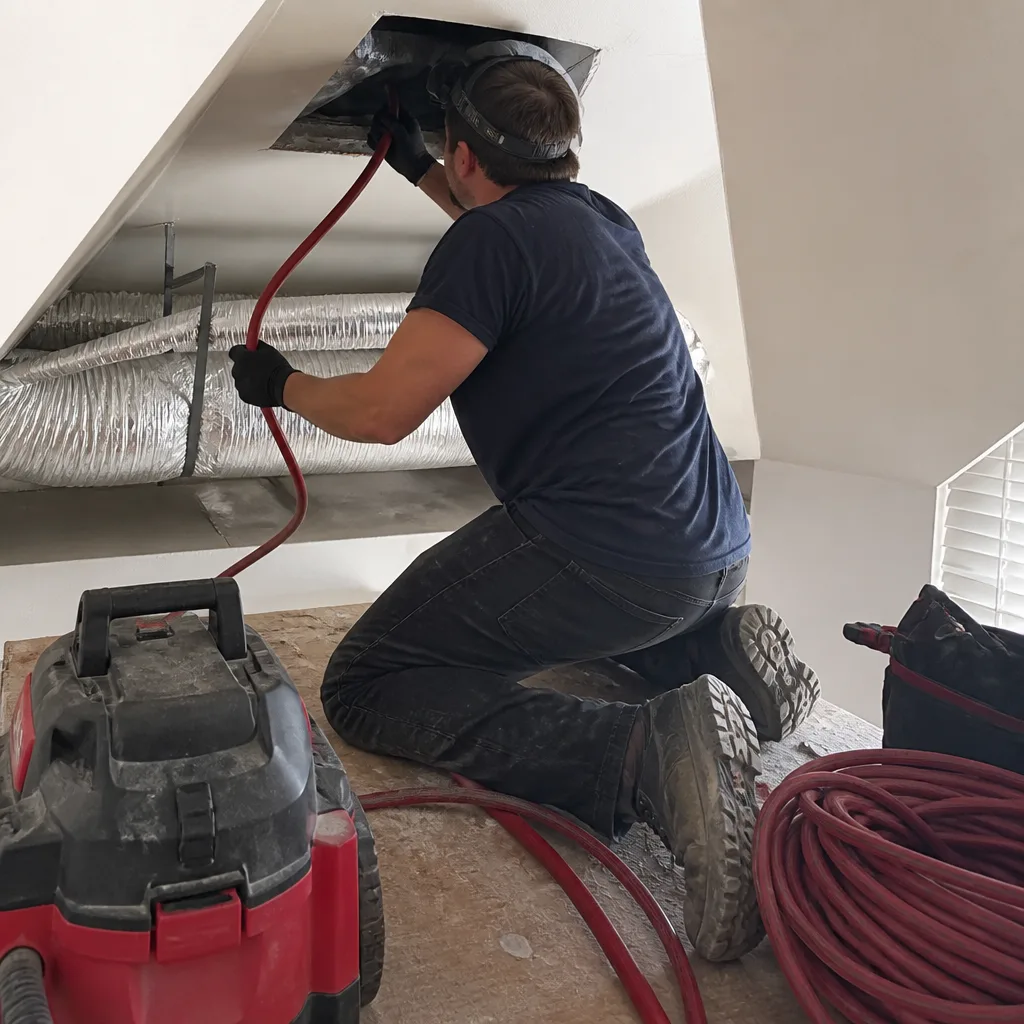 After
After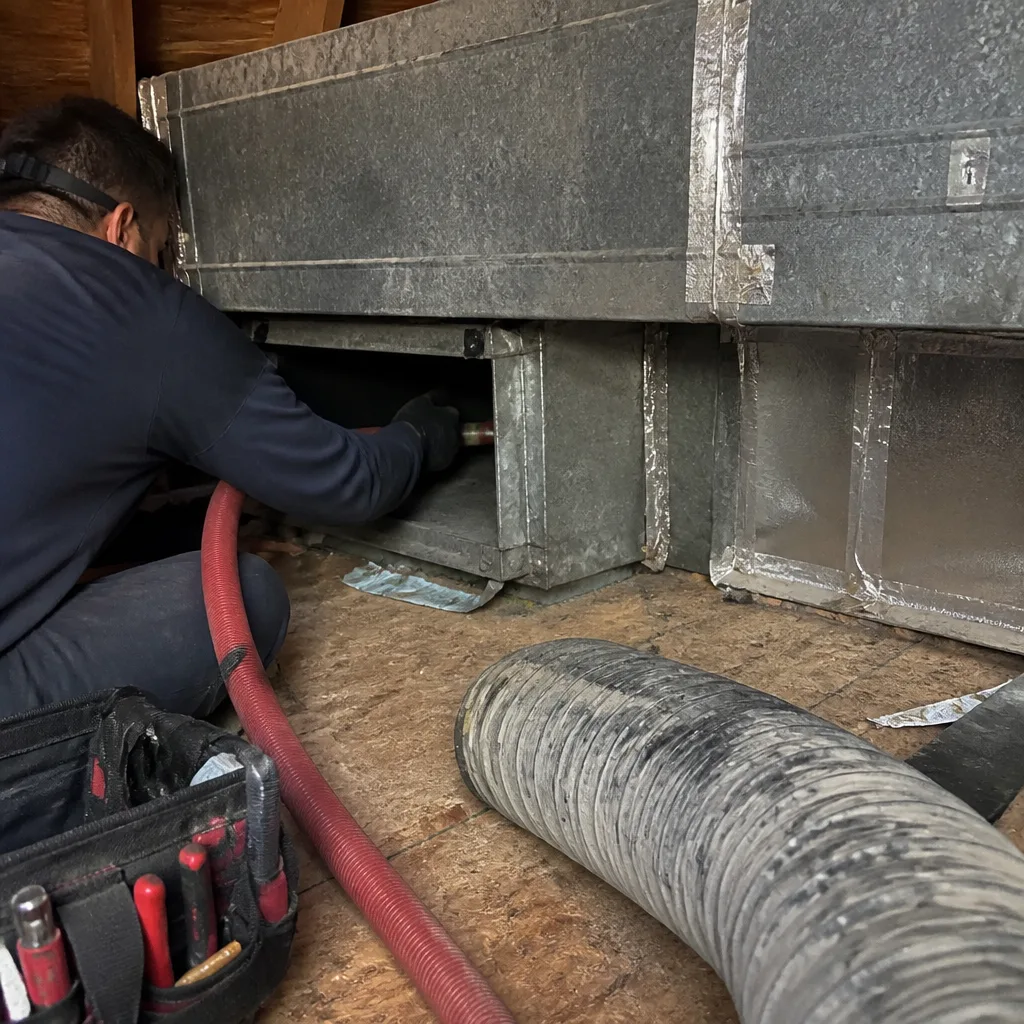 Before
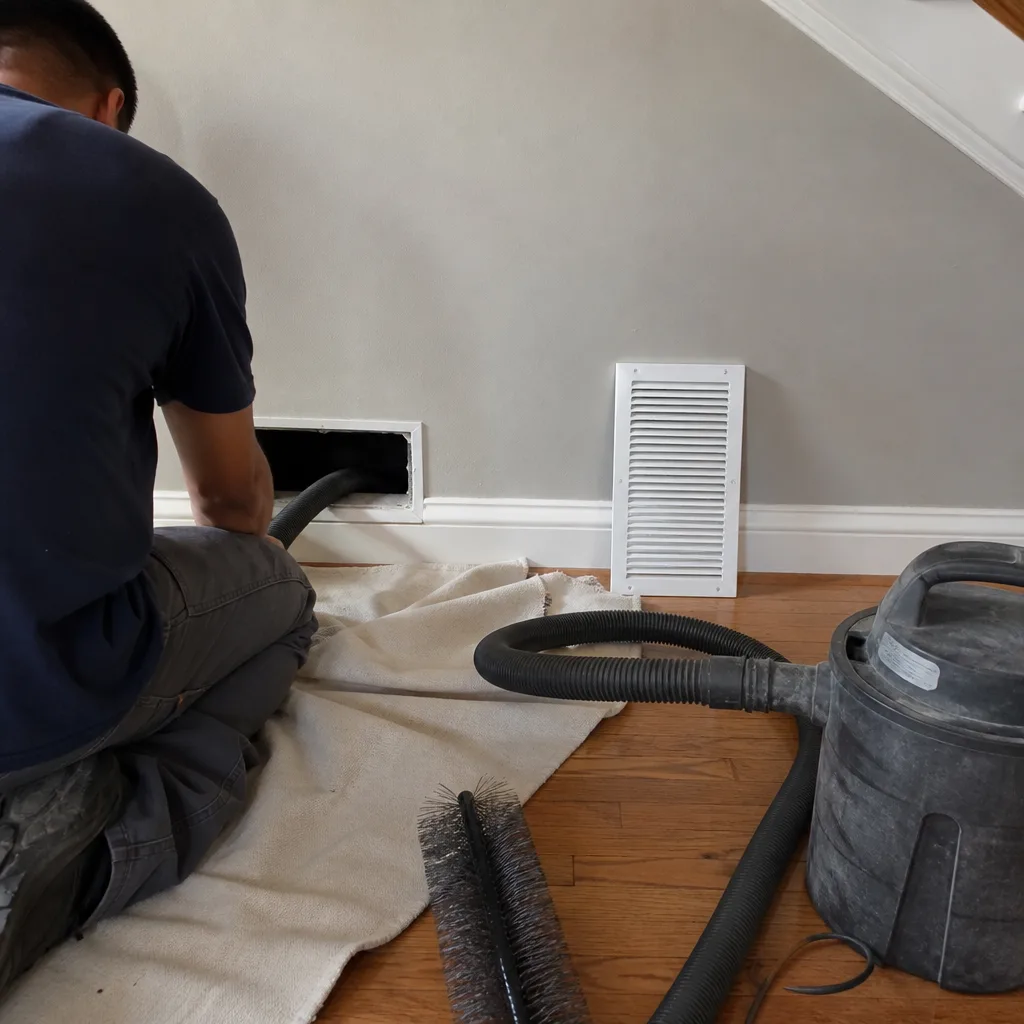 After
After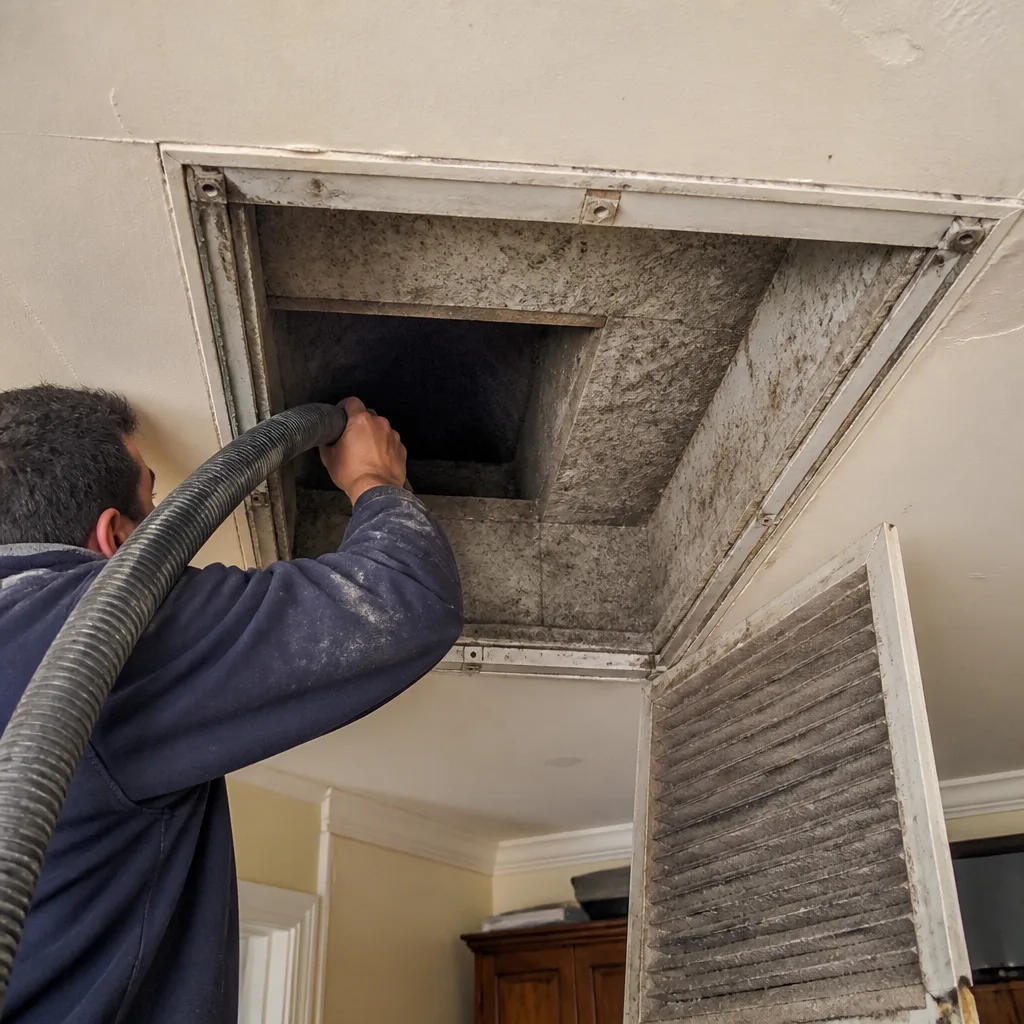 Before
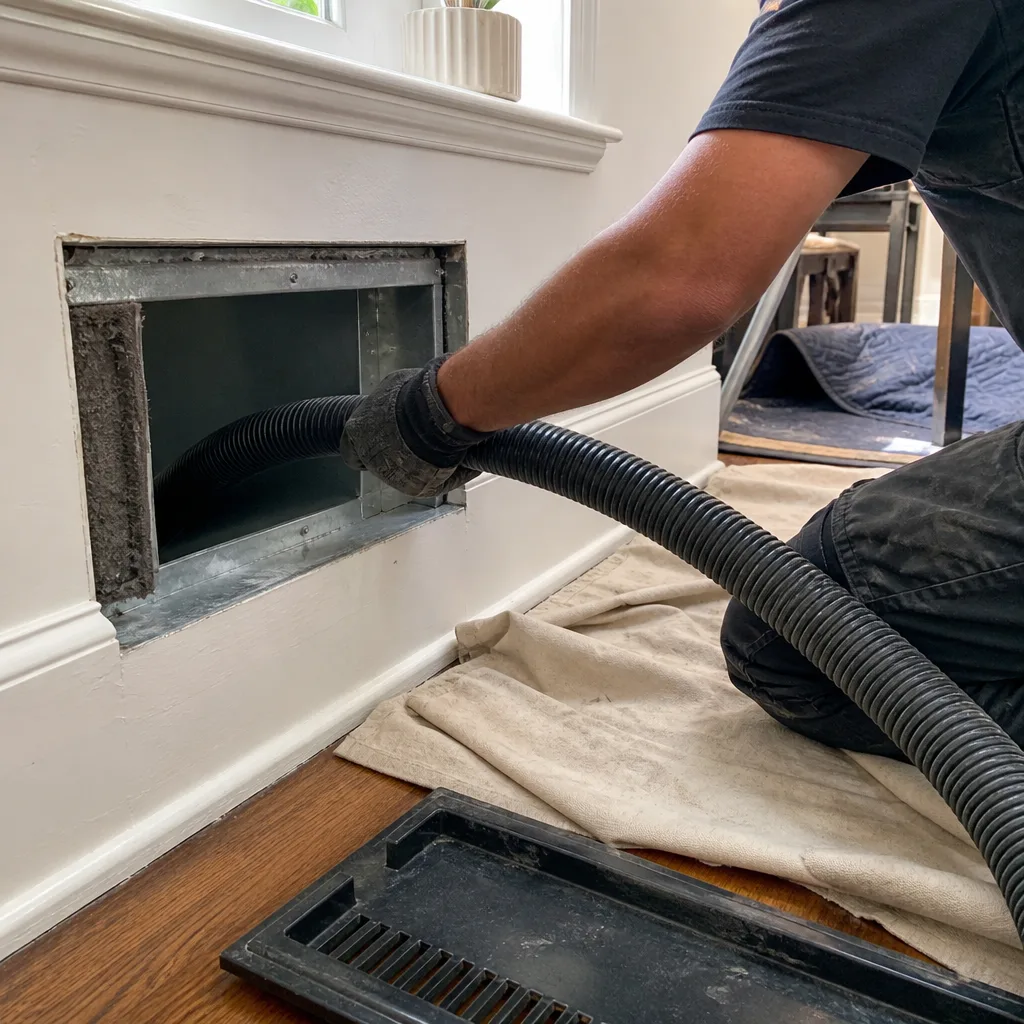 After
AfterAir Duct Cleaning Maintenance Checklist for Washington Homeowners
Changing your filter every 90 days is the advice on every HVAC box - but in a Capitol Hill rowhouse being gut-renovated next door, that interval can be meaningless within two weeks of a demo job. In Washington, we’ve photographed registers caked with construction dust while the filter tag still read “changed 12 days ago.” This guide gives you a task-by-task checklist built for what actually degrades duct systems here: the city’s relentless renovation cycle, humidity swings between Potomac watershed summers and dry forced-air winters, and the age profile of housing stock that runs from 1890s Victorians to 2010s infill. You’ll learn what to inspect, how to document it yourself, and when professional equipment is the only answer.
Quick Answer
Washington homeowners should inspect visible ductwork quarterly, change filters every 30-60 days during active construction nearby or high-humidity months, and schedule our Air Duct Cleaning services every 3-5 years - more often if your home is pre-1980, you’ve had water intrusion, or you can see debris at registers. Document your baseline with dated photos of registers and accessible duct runs so you can compare year over year without relying on a technician’s assessment alone.
Table of Contents
- Why Washington Ducts Degrade Differently
- The Quarterly Homeowner Checklist
- Filter Selection for DC Conditions
- Documenting Your Own Baseline
- DC-Specific Maintenance Triggers
- DIY Boundaries: What You Can and Cannot Do
- Common Mistakes to Avoid
- When to Call a Professional
- Frequently Asked Questions
- The Bottom Line
BeforeAfterWhy Washington Ducts Degrade Differently
Generic duct maintenance advice assumes a suburban detached home with stable surroundings. Washington’s conditions break that model in three specific ways.
Construction density and renovation dust. The District issued over 12,000 residential building permits in 2023 alone, concentrated in Capitol Hill, Shaw, Petworth, and Columbia Heights. In these neighborhoods, a single block might have three active gut renovations at any time. Demo dust is silica-heavy, fine enough to pass standard filters, and it enters your return air through gaps in window seals, attic venting, and the negative pressure your HVAC system creates when it runs. We’ve photographed 2-inch accumulations at the first elbow of return ducts in homes where the owners had no active construction themselves - the dust came from next door.
Humidity cycling. Washington’s July averages hit 85% relative humidity; January forced-air heating drops indoor humidity below 25%. That swing expands and contracts flex duct connections, loosens tape seals, and creates condensation points in unconditioned attic spaces where metal duct meets humid summer air. Mold spore counts spike in late July through September. The Potomac watershed’s microclimate means Georgetown and Foggy Bottom see more moisture intrusion than neighborhoods at higher elevation like Chevy Chase or Shepherd Park.
Housing age and duct materials. Pre-1950s homes in Washington often have original ductwork adapted from gravity furnace systems - oversized, uninsulated metal runs with decades of patchwork. Post-1970s construction used flex duct with shorter lifespans. The 2010s infill boom in NoMa and the Navy Yard installed high-velocity systems with narrow ducts that clog faster. Each era has distinct failure modes that a generic checklist misses.
This context shapes every task below. What works in a 2005 exurban build fails in a 1920s Dupont Circle apartment conversion.
The Quarterly Homeowner Checklist
Do these four tasks every three months, in March, June, September, and December - timed to catch post-winter dust load, pre-summer humidity, post-mold season, and pre-heating dry cycle.
Task 1: Register and Grille Inspection
Remove two registers per floor - one supply, one return. What you’re looking for:
- Visible debris accumulation on the backside of the grille. A thin gray film is normal; clumps, hair mats, or black streaks are not.
- Staining patterns. Brown or black radial streaks around register edges indicate air bypass - the register isn’t sealing to the duct boot, and you’re pulling attic or wall cavity air around the edges.
- Corrosion or rust on metal grilles, especially in basement-level returns. Washington’s humidity and occasional foundation seepage accelerate this.
- Odor. Musty or sharp chemical smells from the duct opening signal microbial growth or VOC off-gassing from nearby construction materials.
Photograph what you find. Date the image. This is your first documentation point.
Task 2: Filter Removal and Assessment
Pull the filter and hold it to window light. Note:
- Color gradient. Even loading across the face means proper fit; a dark stripe at one edge means air is bypassing the filter through a gap.
- Structural integrity. Collapsed pleats or torn media mean the filter has failed and unfiltered air has passed through.
- Moisture. Any dampness means condensation in the return plenum - the large metal box where return ducts meet the air handler - and potential mold risk.
Write the replacement date on the filter frame with a permanent marker before installing the new one. Don’t trust your memory or a phone app when you’re standing in a hardware aisle six months later.
Task 3: Accessible Flex Duct and Connection Points
In unfinished basement or attic spaces, inspect what you can reach without tools:
- Kinks or compression in flex duct. A flex duct bent past 90 degrees loses 30% airflow or more.
- Disconnected sleeves. The inner liner should be fully inserted into the metal collar; if you see the wire spiral exposed, the connection has failed.
- Tape condition. Foil tape that has silvered, cracked, or peeled at edges needs replacement. Duct tape - the gray cloth stuff - was never appropriate for ducts and indicates a prior amateur repair.
Do not attempt to reseal connections yourself unless you can reach them without ladder work and have confirmed the system is powered off at the breaker. The H.A.V.E.N. Standard treats accessible ductwork as part of the HVAC electrical system; Haven Standard Clause 3: Verified Crews requires lockout-tagout training for any technician working within 3 feet of powered components.
Task 4: Air Handler and Plenum Visual Check
At the furnace or air handler:
- Standing water in the condensate pan beneath the evaporator coil. Normal operation produces moisture that drains away; pooled water means a clogged drain line or improper slope.
- Dust on the blower fan blades visible through the access panel. Heavy accumulation means your filter has been undersized, bypassing, or missing.
- Rust on the plenum - the sheet metal box distributing air to duct runs. Surface rust is cosmetic; flaking or perforation means replacement is needed.
Filter Selection for DC Conditions
MERV ratings measure particle capture efficiency, but the number on the box doesn’t tell you if that filter belongs in your Washington home. Match the rating to your actual conditions, not a manufacturer’s generic recommendation.
| Condition | Recommended MERV | Rationale |
|---|---|---|
| Standard residential, no active construction, no respiratory sensitivities | 8-11 | Balances particulate capture with airflow; most Washington HVAC systems are designed for this load. |
| Active construction within 200 feet; renovation corridor (Capitol Hill, Shaw, Petworth) | 11-13 | Captures silica and fine drywall dust; check monthly and replace when pressure drop reduces airflow. |
| High humidity season (July-September); mold-sensitive occupants | 11 with antimicrobial coating | Honeywell and Aprilaire both produce coated media that resists microbial growth on the filter itself - not a substitute for duct cleaning, but a meaningful reduction in spore circulation. |
| Urban traffic corridor (14th Street, K Street, major arterial within 100 feet) | 11-13 | Diesel particulate and brake dust are sub-micron; MERV 11 captures 85% at 1.0-3.0 micron, MERV 13 reaches 90% at 0.3-1.0 micron. |
| Pre-1980 system with original blower motor | 8 maximum | Higher MERV increases static pressure; older motors lack the torque to overcome it and will fail prematurely or overheat. |
Never stack filters. A 1-inch MERV 13 taped to a 1-inch MERV 8 does not equal MERV 21; it equals a failed blower motor and ice-coated evaporator coil. We’ve documented both in Washington rowhouses where owners tried to solve construction dust by doubling up.
Filter dimensions must match the housing exactly. A 16x25x1 filter in a 16x25x2 housing leaves a 1-inch bypass gap around the perimeter. Measure the housing depth, not the old filter. Many Washington homes have non-standard sizes from retrofitted systems; if your housing is 14x24x1 or 20x20x2, order the correct size rather than forcing a close fit.
Documenting Your Own Baseline
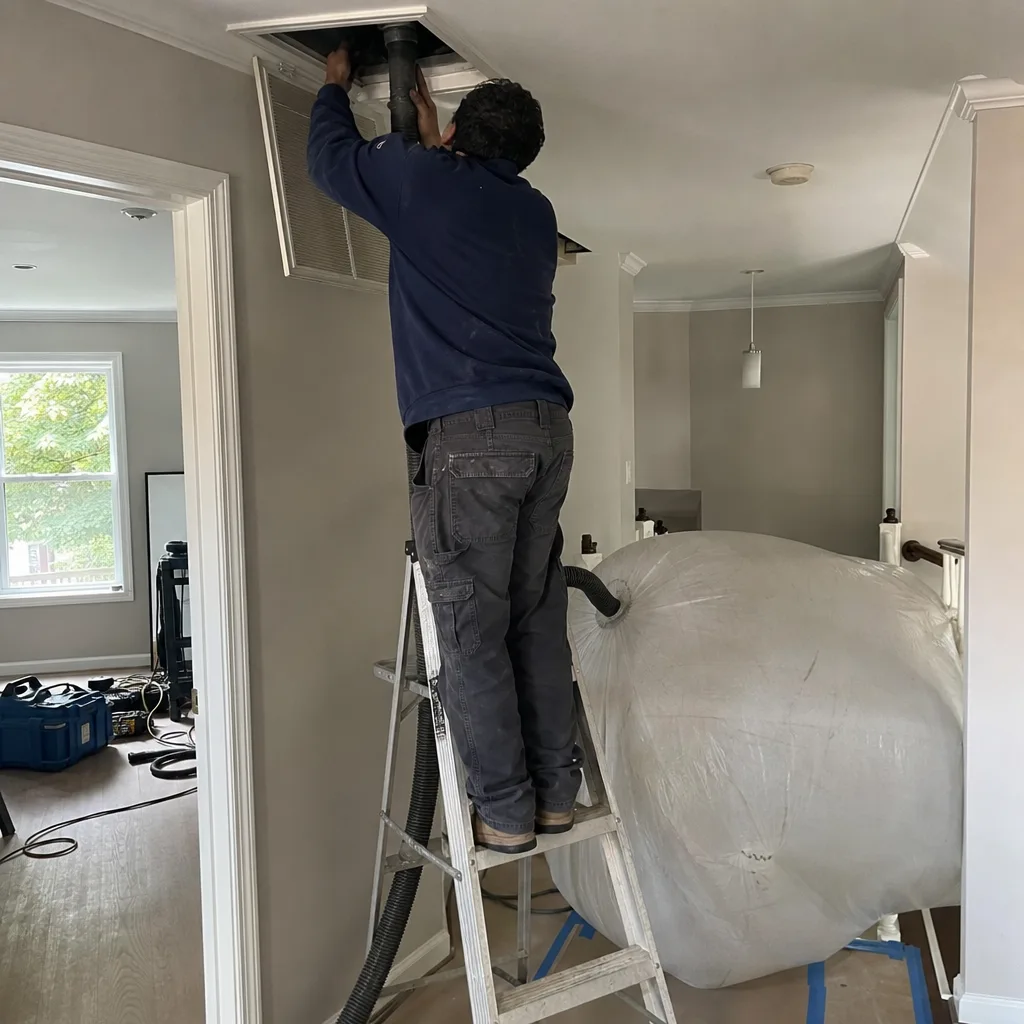
The most powerful tool in duct maintenance is a photo record you control. Technicians can describe what they found; you can verify whether it changed. CleanRun has delivered documented photo records on every visit since 2013 - over 52,000 homes - because visual evidence outperforms verbal assurance. Apply the same standard to your own maintenance.
Step 1: Establish Your Register Atlas
Number every register in your home: 1S, 2S for first-floor supply; 1R, 2R for returns. Photograph each from two angles: the room side (showing grille condition) and the duct side (showing the first 12 inches of duct interior, shot with phone flashlight). Include a dated reference - a piece of paper with the date and register number in frame, or use your phone’s timestamp with location services on.
Step 2: Photograph Accessible Duct Runs
In unfinished basement or attic, photograph:
- The plenum where duct runs originate
- Each visible connection point between flex and metal
- Any insulation condition - compression, moisture staining, or gaps
Store these in a dedicated album, not scattered in your camera roll. Cloud backup is essential; you’re building a multi-year record.
Step 3: Annual Comparison
Each year, retake the same shots from the same angles. What you’re tracking:
- Increased debris depth at register openings
- New staining or corrosion patterns
- Insulation displacement or moisture marks
- Connection point degradation - tape peeling, sagging flex
If your June 2025 register 1S photo shows clean metal and your June 2026 photo shows 1/4-inch gray buildup, you have objective evidence of accelerated loading. That might coincide with a neighbor’s renovation, a humid summer, or a filter failure. The photo tells you the what; your maintenance log helps you find the why.
This documentation also protects you in the air duct cleaning in Washington market, where $79 coupon operations may claim your ducts are “dangerously contaminated” without showing you the interior. Your baseline photos let you ask specific questions: “Show me the same register you photographed, and I’ll compare it to mine.”
DC-Specific Maintenance Triggers
Certain events and conditions in Washington should accelerate your maintenance schedule or prompt professional inspection regardless of your quarterly calendar. For more guidance, see our Air Duct Cleaning Warning Signs: A Washington Homeowner’s Reference Guide.
Nearby Construction Permits
Check DC’s Office of Zoning permit map for your block. Active demo, foundation work, or masonry grinding within 200 feet means filter changes every 30 days until completion, not 90. We’ve found silica dust in return ducts three houses away from active construction; the particles are small enough to remain airborne for hours and enter through any building envelope gap.
Post-Flood or Water Intrusion
Washington’s combined sewer system backs up during heavy rains; basement flooding in Bloomingdale, LeDroit Park, and parts of Capitol Hill is documented and recurring. Any water reaching ductwork - even flex duct suspended in a damp basement - requires professional inspection within 72 hours. Mold colonization in fiberglass duct liner begins within 48-72 hours of moisture contact. The EPA’s guidance on flood-damaged HVAC systems recommends replacement of porous materials; we follow this with photographic documentation of affected runs before any work begins.
HVAC System Age Milestones
| System Age | Inspection Priority | What to Check |
|---|---|---|
| 0-5 years | Standard quarterly | Filter fit, register debris, flex duct integrity at installation points |
| 5-10 years | Add annual professional visual | Blower fan accumulation, evaporator coil condition, plenum corrosion |
| 10-15 years | Professional inspection every 2 years | Duct run integrity, insulation R-value degradation, static pressure test |
| 15+ years | Professional inspection annually | Full system assessment including duct sizing adequacy for current load |
Pre-1980 systems in Washington often have asbestos-containing duct tape or insulation. Do not disturb these materials yourself. Professional assessment with appropriate sampling is required; disturbance without containment is a DC Department of Energy and Environment violation. See Air Duct Cleaning Permits, Codes & Inspections in DC: What You Need to Know for regulatory details.
Seasonal Humidity Events
When indoor relative humidity exceeds 60% for more than 48 consecutive hours - common in Washington from late July through August - inspect basement and crawl space ductwork for condensation. Cold supply air meeting humid ambient air produces sweating on metal ducts. Sustained sweating saturates surrounding insulation and creates mold habitat. A dehumidifier in the basement is often the correct response, not duct cleaning; but if you find mold on duct surfaces, cleaning without addressing the moisture source wastes your money.
DIY Boundaries: What You Can and Cannot Do
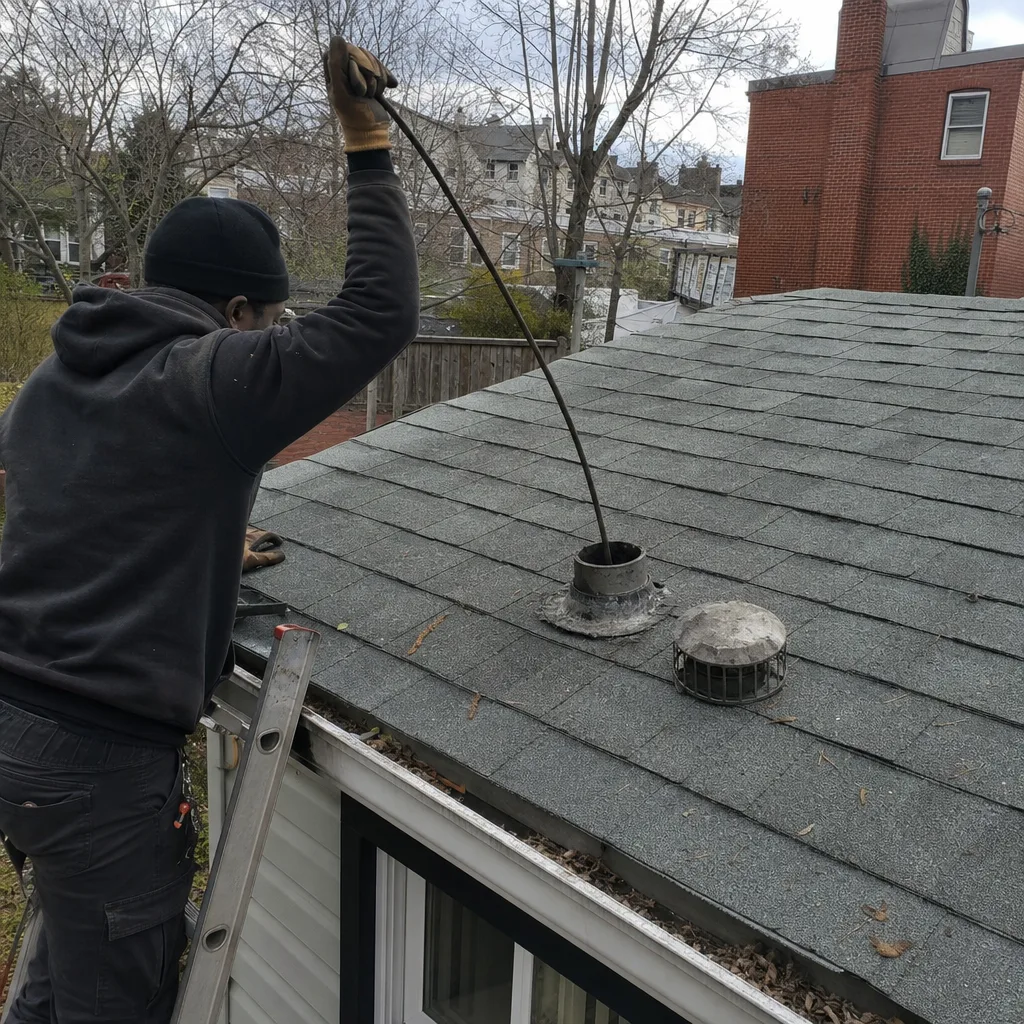
Honest assessment of homeowner capability prevents damage and injury. Here’s the line we draw based on 52,000 home visits.
What You Can Do Safely
- Register removal and cleaning. Soak metal grilles in warm water with mild detergent; scrub with a brush. Vacuum the first 6-12 inches of duct opening with a household vacuum and brush attachment. This removes surface debris and improves airflow at the terminal point.
- Filter replacement. Straightforward on most systems; note the airflow direction arrow on the filter frame, which must point toward the blower motor (typically up or toward the interior).
- Condensate drain flush. Pour a cup of white vinegar down the PVC drain line from the access port near the air handler. This reduces algae buildup that causes clogs. Do not use bleach; it corrodes fittings and is hazardous if the drain connects to a shared line.
- Visual inspection of accessible components. Everything described in the quarterly checklist above.
What Requires Professional Equipment and Training
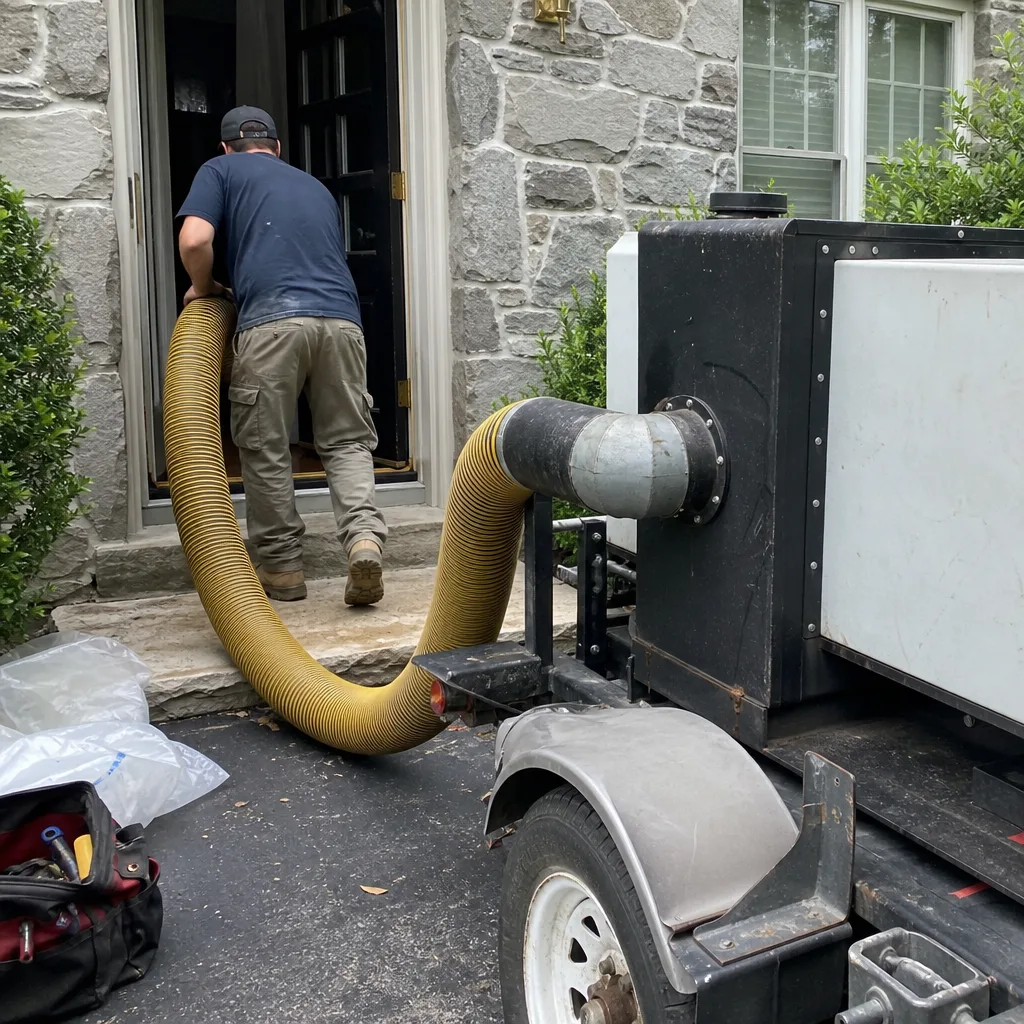
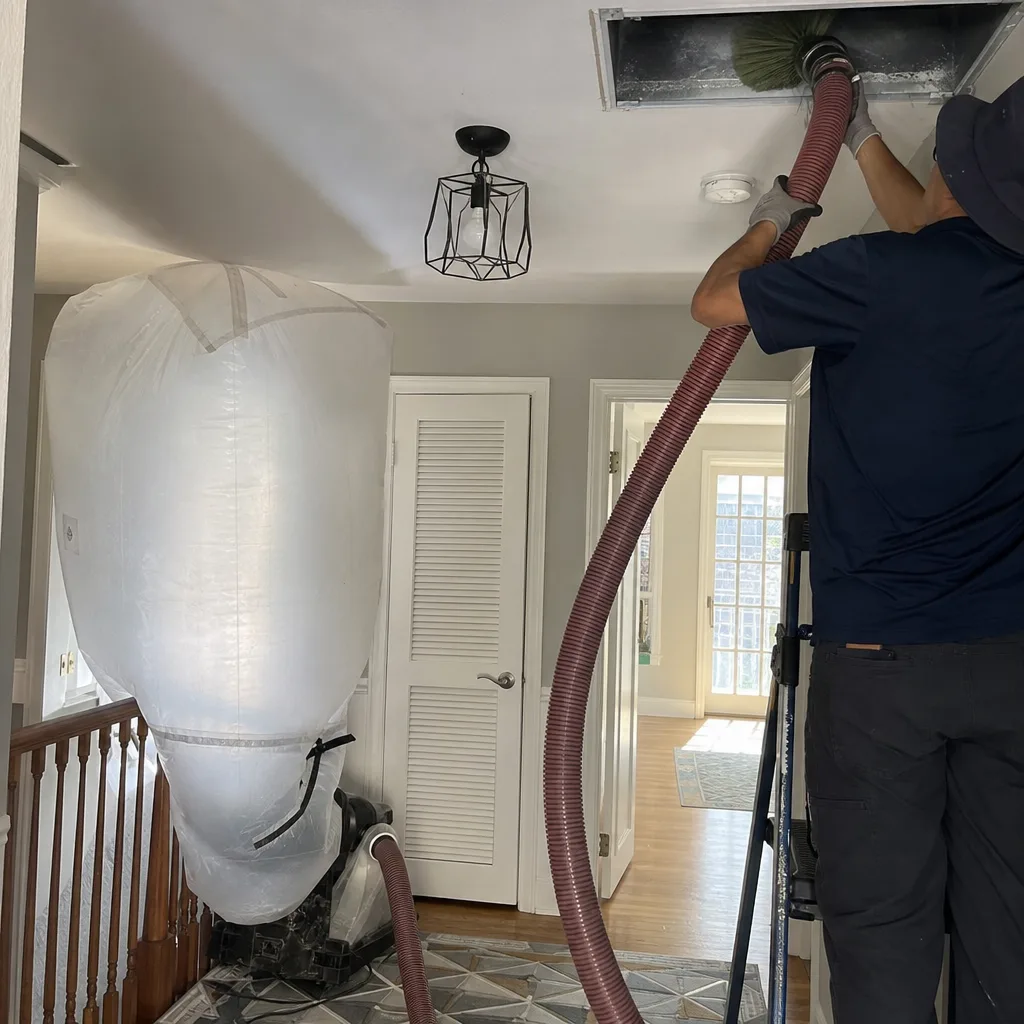
- Negative-pressure extraction. Real duct cleaning requires a vacuum system that pulls 4,000-6,000 CFM at the duct run, creating suction that prevents debris from entering occupied space during agitation. Household vacuums operate at 100-200 CFM. The equipment CleanRun deploys includes Nikro and Abatement Technologies negative-pressure machines - truck-mounted or portable HEPA-filtered units that maintain containment.
- Mechanical agitation inside duct runs. Rotating brushes, air whips, or compressed air tools that travel past the first elbow require training in duct material identification (flex, fiberglass, sheet metal) to avoid puncture or dislodgment.
- Evaporator coil cleaning. The coil sits in the plenum and is easily bent. Fin damage reduces efficiency permanently. Professional-grade foaming cleaners and low-pressure rinse equipment prevent this.
- Sealant application. Mastic sealant and aerosol duct sealing (Aeroseal and similar) require pressure testing before and after to verify results. Unmeasured sealing is guesswork.
- Any work involving the air handler electrical compartment. Capacitors store lethal charge even with power off. Haven Standard Clause 3: Verified Crews requires electrical lockout training for this reason.
The $79 coupon operations in Washington typically perform only register vacuuming and blower fan brushing - the tasks you can do yourself - while claiming to have “cleaned your ducts.” Ask for the photo record. If they cannot show you the interior of every duct run before and after, you received a surface cleaning, not a duct cleaning.
Common Mistakes to Avoid
- Assuming new construction means clean ducts. Washington’s 2010s infill in NoMa, Navy Yard, and the Ballpark District often has construction debris - drywall chunks, wood scraps, fastener drops - in duct runs from build-out. We find this in homes where owners assumed “new means clean.” Inspect within the first year of occupancy.
- Buying the highest MERV filter available. MERV 16 filters belong in hospitals, not residential systems without blower motor upgrades. The restriction starves your system of return air, freezes coils, and cracks heat exchangers. Match the filter to your system’s design static pressure.
- Ignoring return duct leaks. Supply ducts push conditioned air; return ducts pull unconditioned air from wherever they can. A leaky return in a moldy basement circulates spores through every room. Homeowners focus on supply registers because they feel the air; returns are where the contamination enters.
- Scheduling cleaning without specifying scope. “Clean the ducts” means nothing. A written scope should specify: number of supply runs, number of return runs, whether the plenum and blower are included, whether the evaporator coil is included, and whether before/after documentation is provided. CleanRun’s written scope under Haven Standard Clause 1 includes all of this before any work starts.
- Using ozone or chemical foggers as DIY mold treatment. EPA-registered antimicrobial application requires ventilation control, PPE, and post-application air sampling. Ozone generators at consumer concentrations do not kill mold in ductwork and produce harmful byproducts. We’ve been called to remediate homes where ozone treatment made occupants ill without addressing the mold.
- Waiting for visible dust at registers. By the time debris reaches the register, the duct run is heavily loaded. The register is the end of the line; the problem started at the plenum or first elbow months earlier.
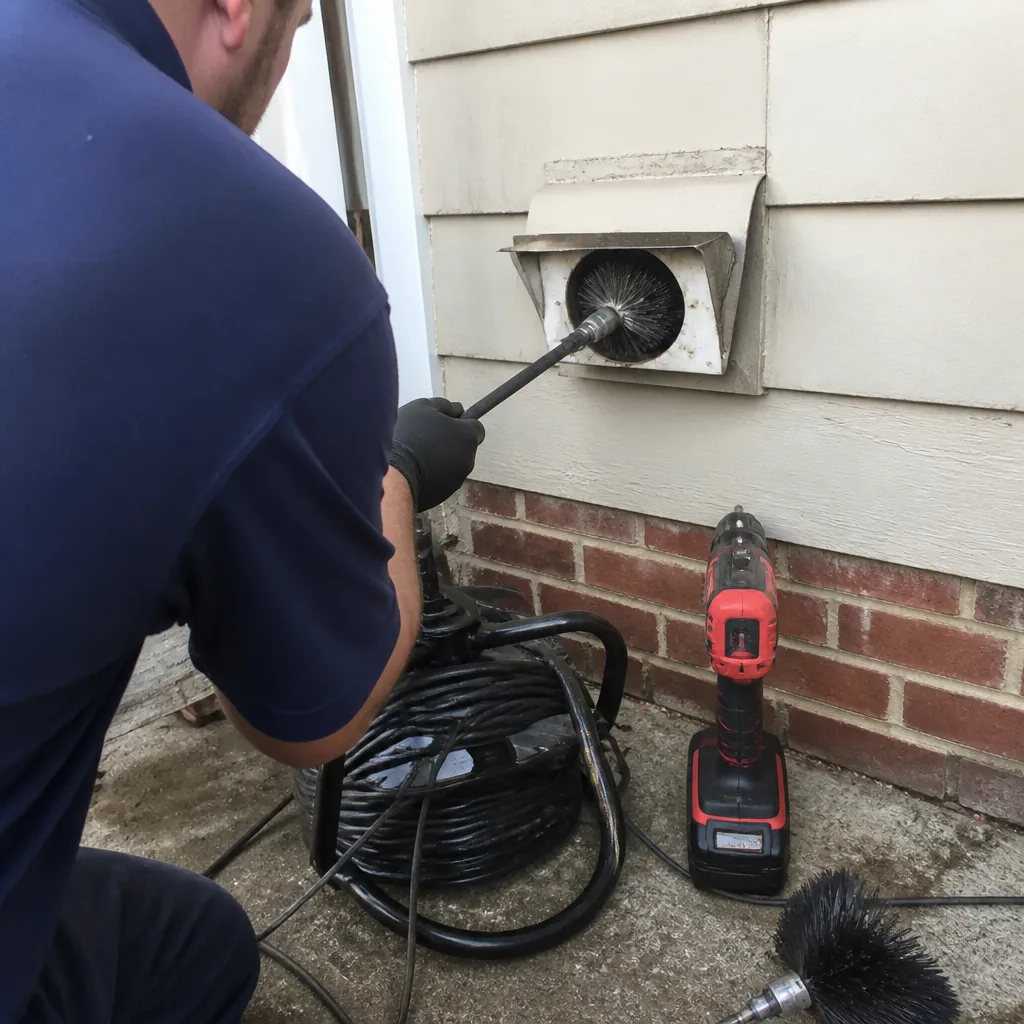
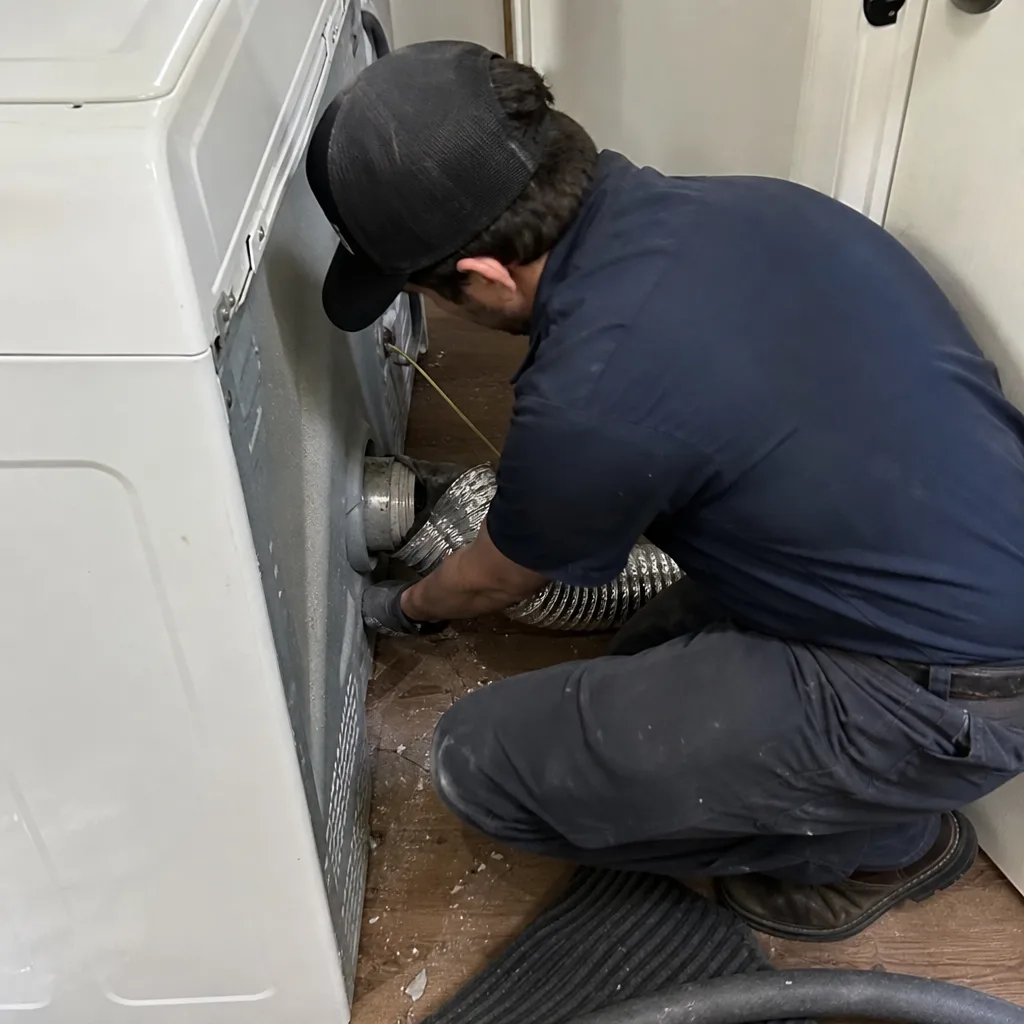
- Neglecting dryer vent maintenance alongside duct cleaning. The dryer vent is part of the same air management system and presents a fire hazard independent of duct contamination. Dryer vent cleaning in Washington should be on the same maintenance calendar, typically annually for heavy-use households.
When to Call a Professional
Call for inspection, not cleaning, when you observe: moisture or mold odor from registers; visible mold on any duct surface; pest evidence (droppings, nesting material) in ductwork; post-flood water contact with any duct component; or system airflow reduction exceeding 20% from your baseline (measure with a $20 anemometer at a register, compare to prior readings). Cleaning without diagnosing the cause wastes money and may mask a problem that returns within weeks.
Call for cleaning when: your documentation shows progressive debris accumulation over two years; you’ve completed renovation work in the home; you’re experiencing unexplained respiratory symptoms that correlate with HVAC runtime; or your system has reached the age milestones above without prior professional service.
CleanRun Air Duct Cleaning Washington home offers free estimates in Washington. Every estimate includes a written scope and price before any work begins - Haven Standard Clause 1 - and every completed job delivers a Documented Photo Record of every duct run. Call (240) 363-3380.
Frequently Asked Questions
Whole-system air duct cleaning in Washington typically ranges from $450 to $850 for a standard single-family home, depending on the number of duct runs, system accessibility, and whether the evaporator coil and blower are included. Be wary of any quote below $300; it generally excludes the plenum, coil, or documentation, and often involves equipment no more powerful than a shop vacuum. CleanRun provides a written price before any work starts, with no per-vent add-ons or post-arrival upsells. Call (240) 363-3380 for an exact quote - estimates are free.
Low quotes typically reflect limited scope: register vacuuming only, no plenum or coil access, no mechanical agitation inside duct runs, and no documentation. The $79-$149 price point covers roughly 45 minutes of labor with portable equipment that cannot create negative pressure in the duct system. A proper cleaning with negative-pressure extraction, rotating brush agitation, and HEPA containment takes 3-5 hours for a standard home. The difference is not negotiability; it’s whether the work actually reaches the interior of the duct runs. Ask any low-quote provider to specify, in writing, exactly which components are included and whether before/after photos of every run are provided.
Require a documented photo record showing the interior of every duct run before and after cleaning, with identifying markers (register numbers, dated reference cards) visible in frame. Without this, you have only the technician’s word. CleanRun has delivered these records on every job since 2013 - over 52,000 homes - because visual evidence is the only verification that matters. If a company cannot or will not provide this, the cleaning may have been superficial.
For most Washington homes, every 3-5 years with quarterly homeowner maintenance in between. Accelerate to every 2-3 years if: your home is pre-1980; you live in a high-construction corridor (Capitol Hill, Shaw, Petworth, Columbia Heights); you’ve had water intrusion or basement flooding; or occupants have asthma or immune compromise. New construction should be inspected within 12 months of occupancy. The Potomac watershed humidity and urban particulate load mean Washington systems accumulate debris faster than comparable homes in drier, less dense markets.
You can clean register surfaces and the first 6-12 inches of duct opening, which removes visible debris and improves terminal airflow. You cannot clean past the first elbow or create negative pressure to prevent debris dispersal during agitation. A shop vacuum operates at 100-200 CFM; professional negative-pressure equipment runs 4,000-6,000 CFM with HEPA filtration. Attempting to snake a brush into duct runs without containment risks lodging debris deeper, puncturing flex duct, or dislodging connections you cannot see or reach. The boundary is: if you cannot see it and reach it without tools or ladder work, it requires professional equipment.
MERV 11 with antimicrobial coating, provided your system is designed for that static pressure load. The coating - available from Honeywell and Aprilaire among others - resists microbial growth on the filter media itself during high-humidity months when mold spore counts peak. This is not a substitute for duct cleaning if mold is already present in the system, but it reduces spore circulation between professional services. Check the filter monthly in July through September; humidity increases particle adhesion and pressure drop, shortening effective filter life. If your system is pre-1980 with original blower motor, cap at MERV 8 to prevent motor strain.
The Bottom Line
Effective duct maintenance in Washington requires a checklist specific to this city’s conditions: construction dust density, Potomac watershed humidity cycling, and housing stock that spans 130 years of building practices. Explore more guides & resources for deeper dives into each topic. Quarterly homeowner inspection - registers, filters, accessible connections, air handler - catches problems before they propagate. Annual photo documentation gives you objective evidence of change, independent of any contractor’s assessment. Filter selection matched to actual local conditions, not generic box recommendations, protects system performance. And honest boundaries about what homeowners can do versus what requires negative-pressure extraction and mechanical agitation prevent wasted effort and unsafe DIY attempts. The goal is not perpetual cleanliness; it’s documented, accountable maintenance that keeps your system performing as designed.
Written by Tomas Reyes, Owner at CleanRun Air Duct Cleaning Washington, serving Washington since 2013.