
Last updated September 23, 2026
Whole-system duct and dryer vent check with before-and-after photos - you see exactly what came out of your vents
That "$99 whole-house special" is a bait ad - the real number appears once they are in your hallway, or the "clean" is a shop-vac at the register. We photograph the inside of your ducts before and after instead.
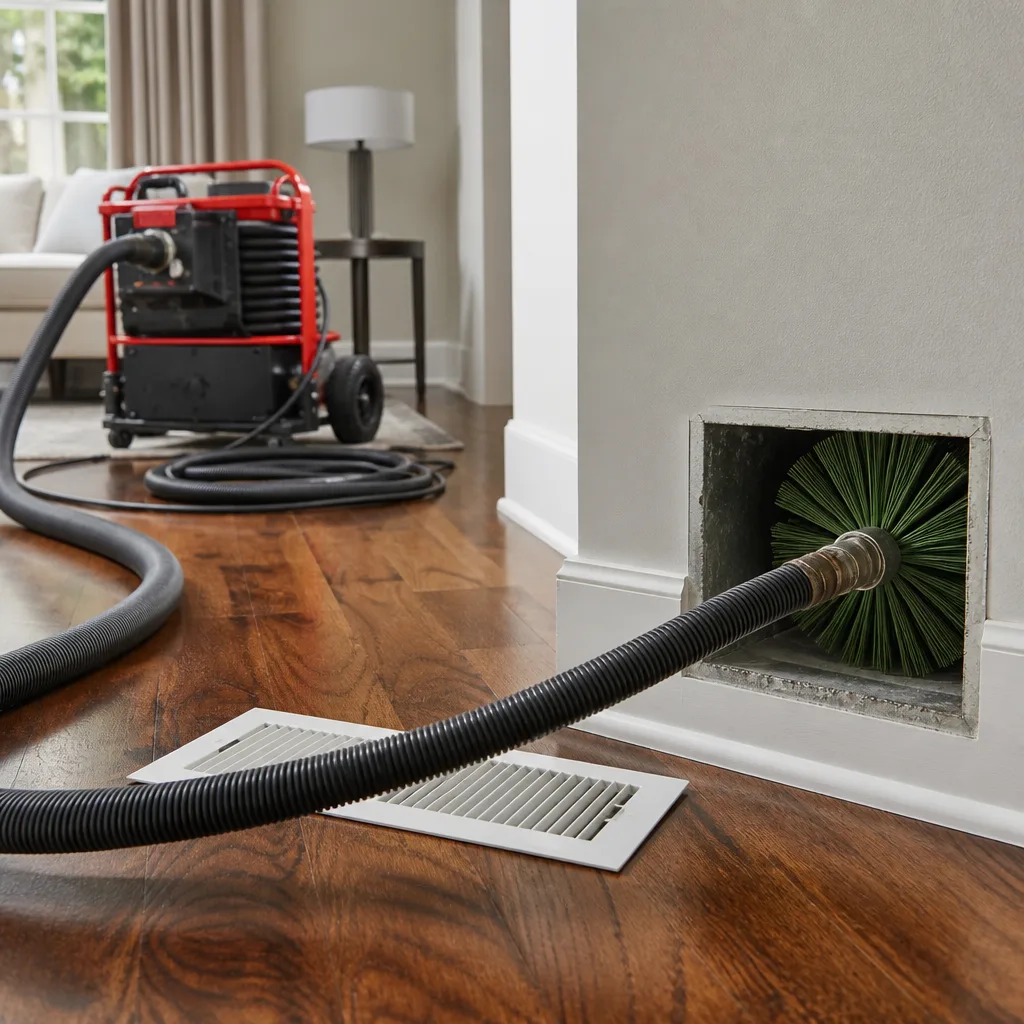
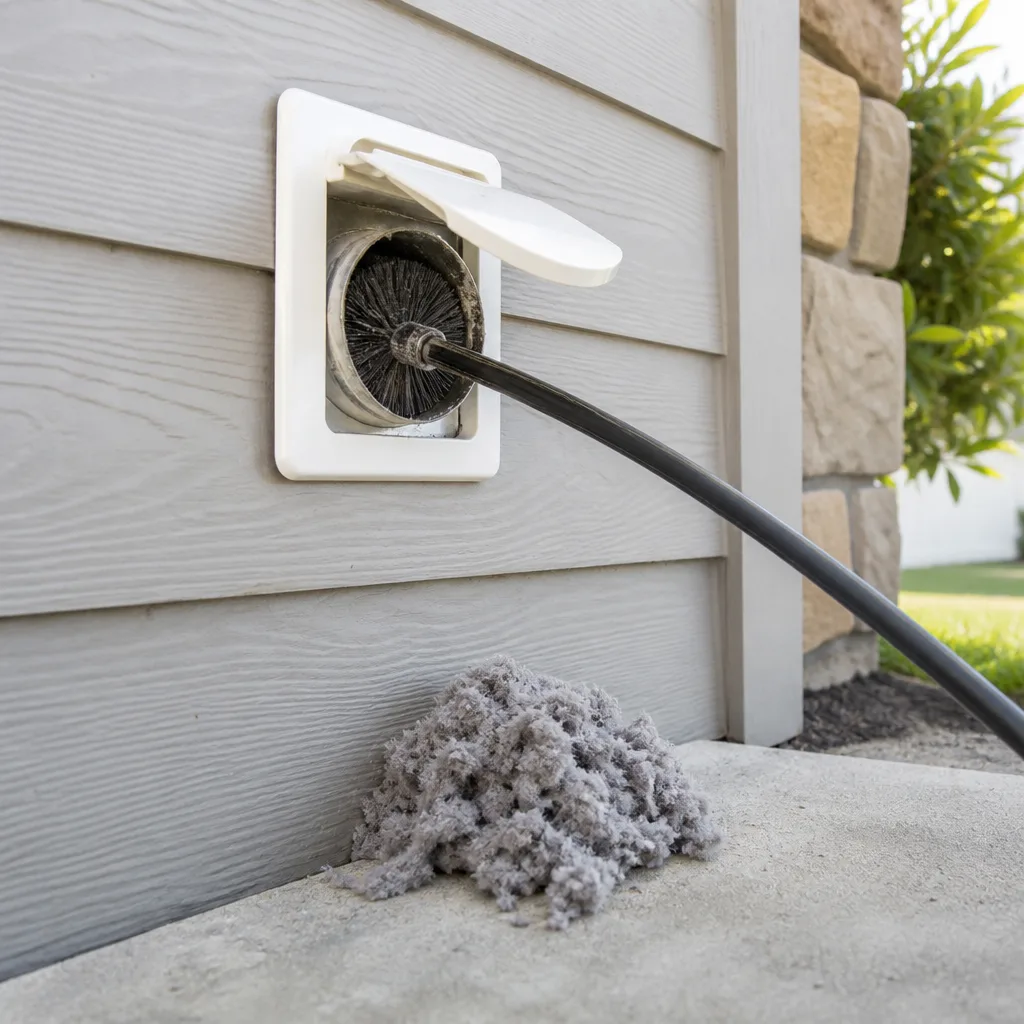
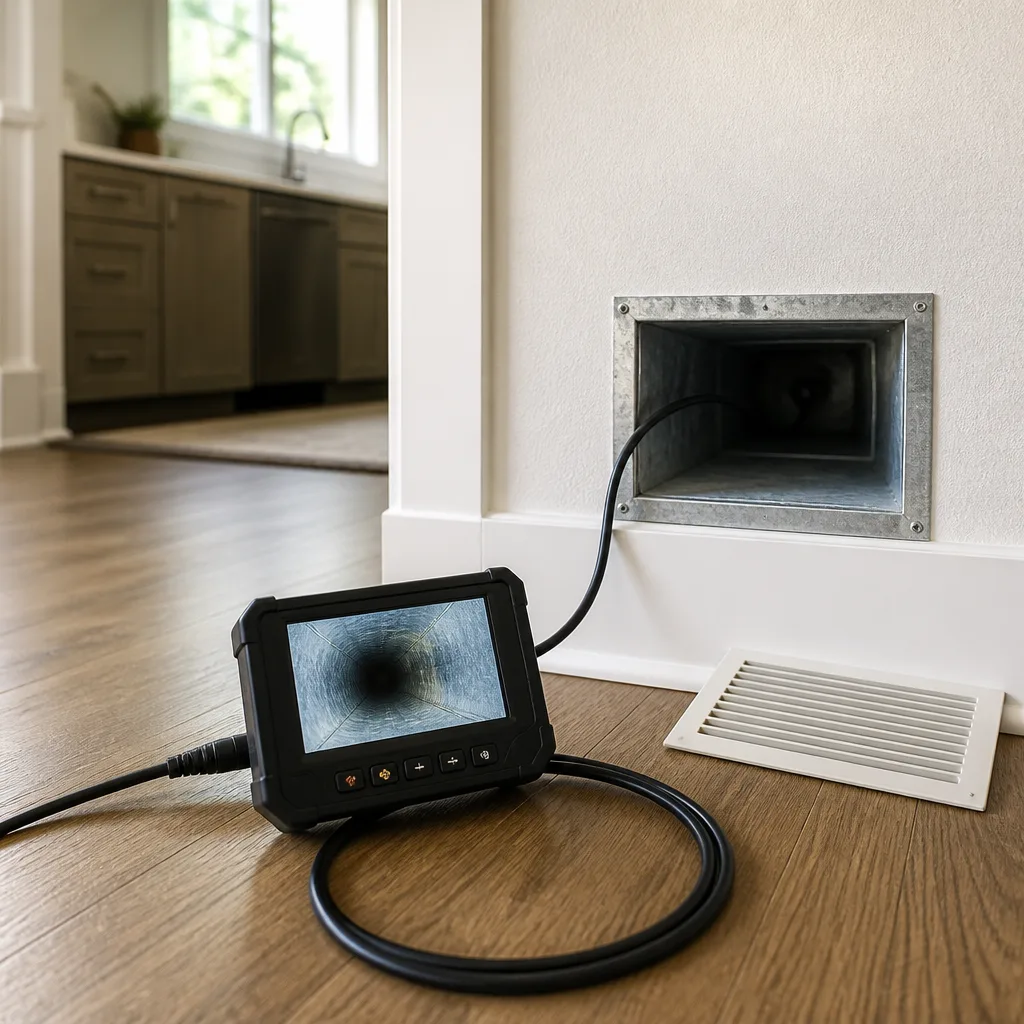
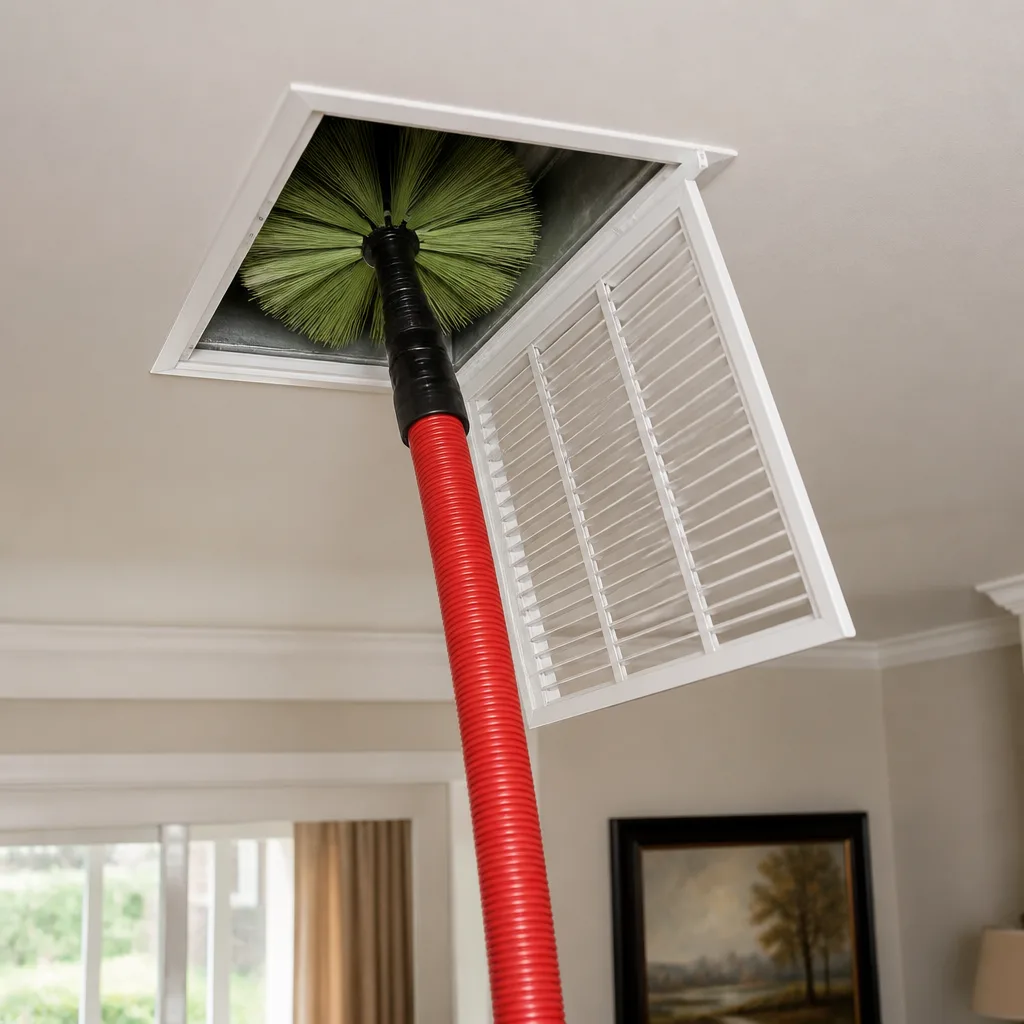
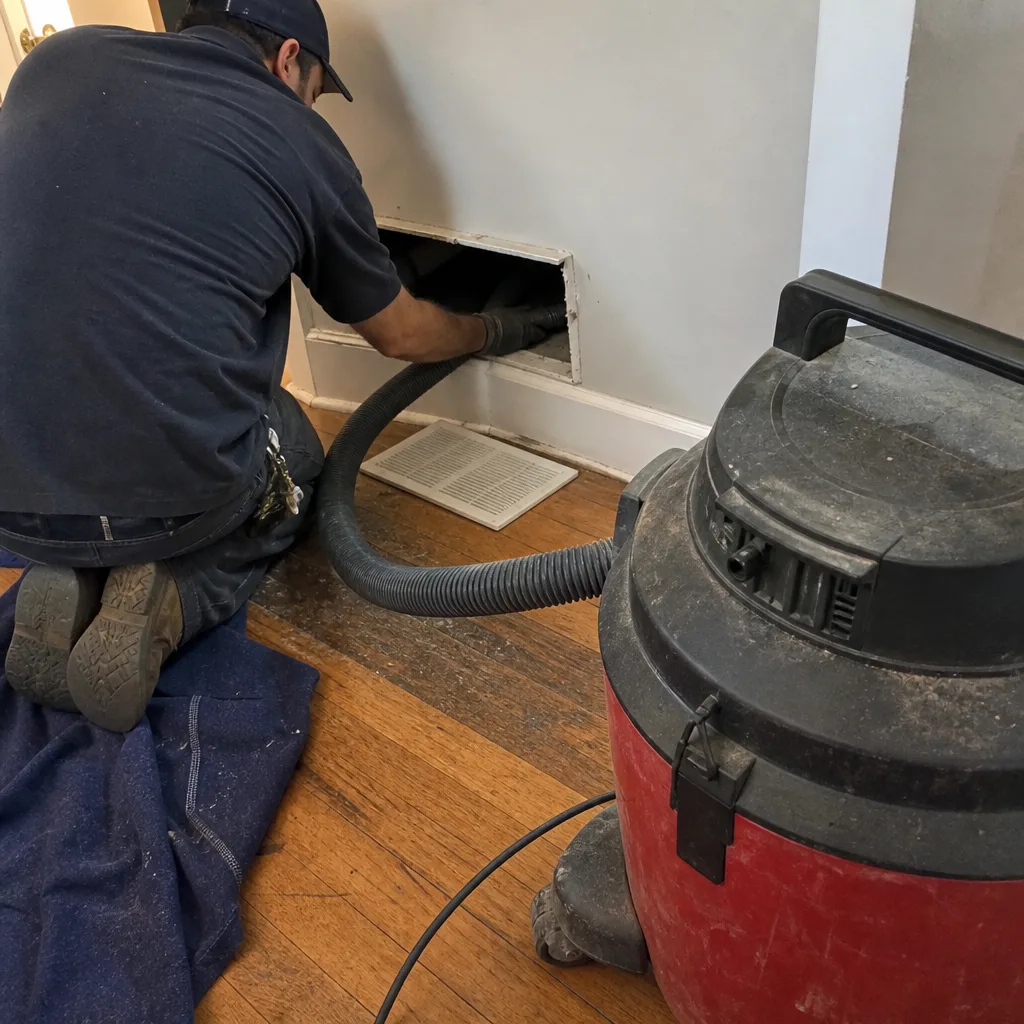 Before
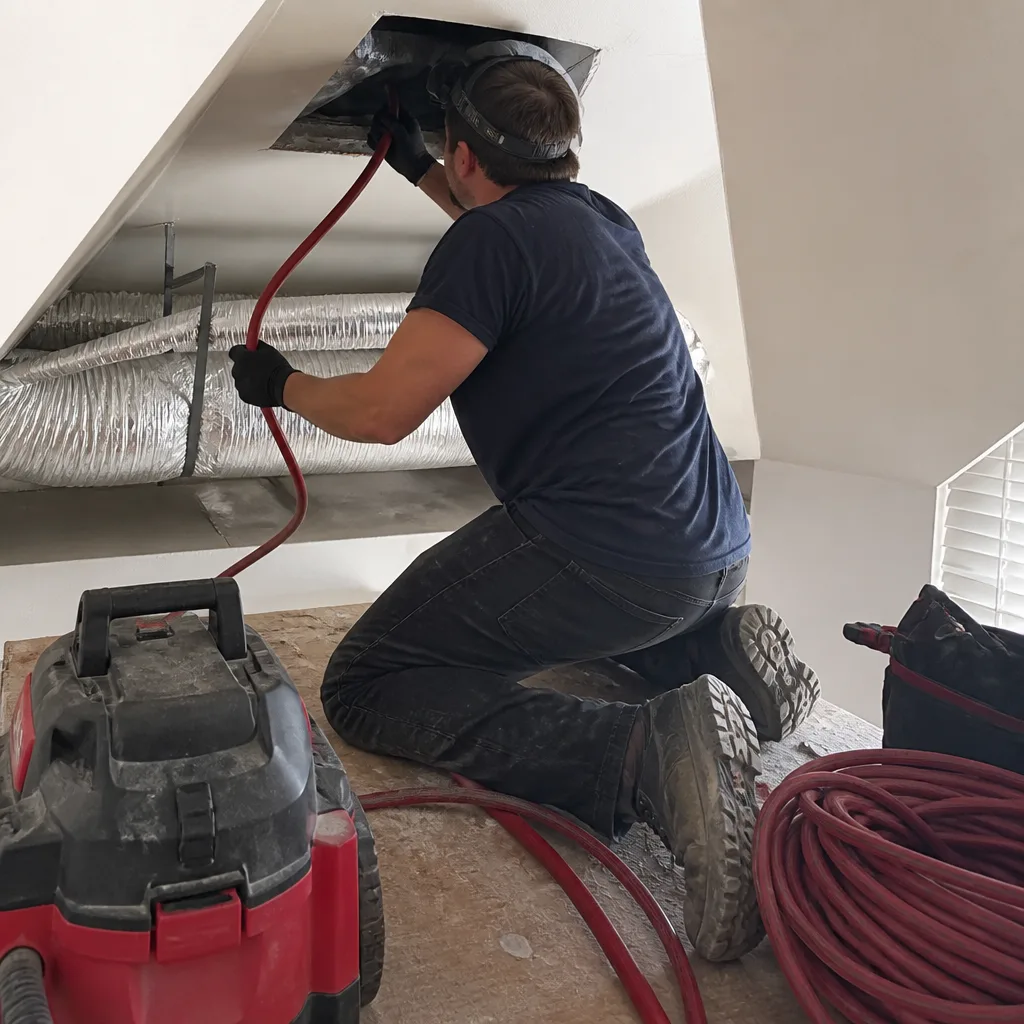 After
After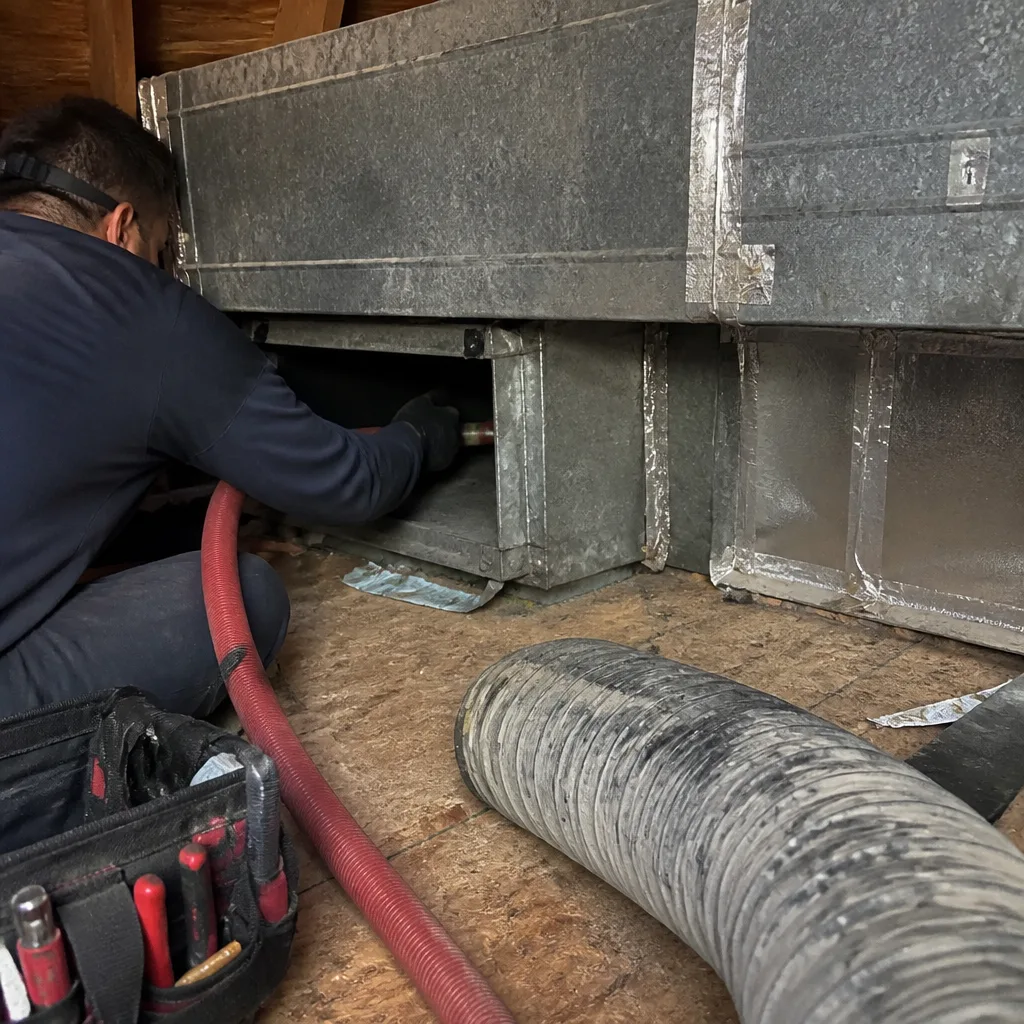 Before
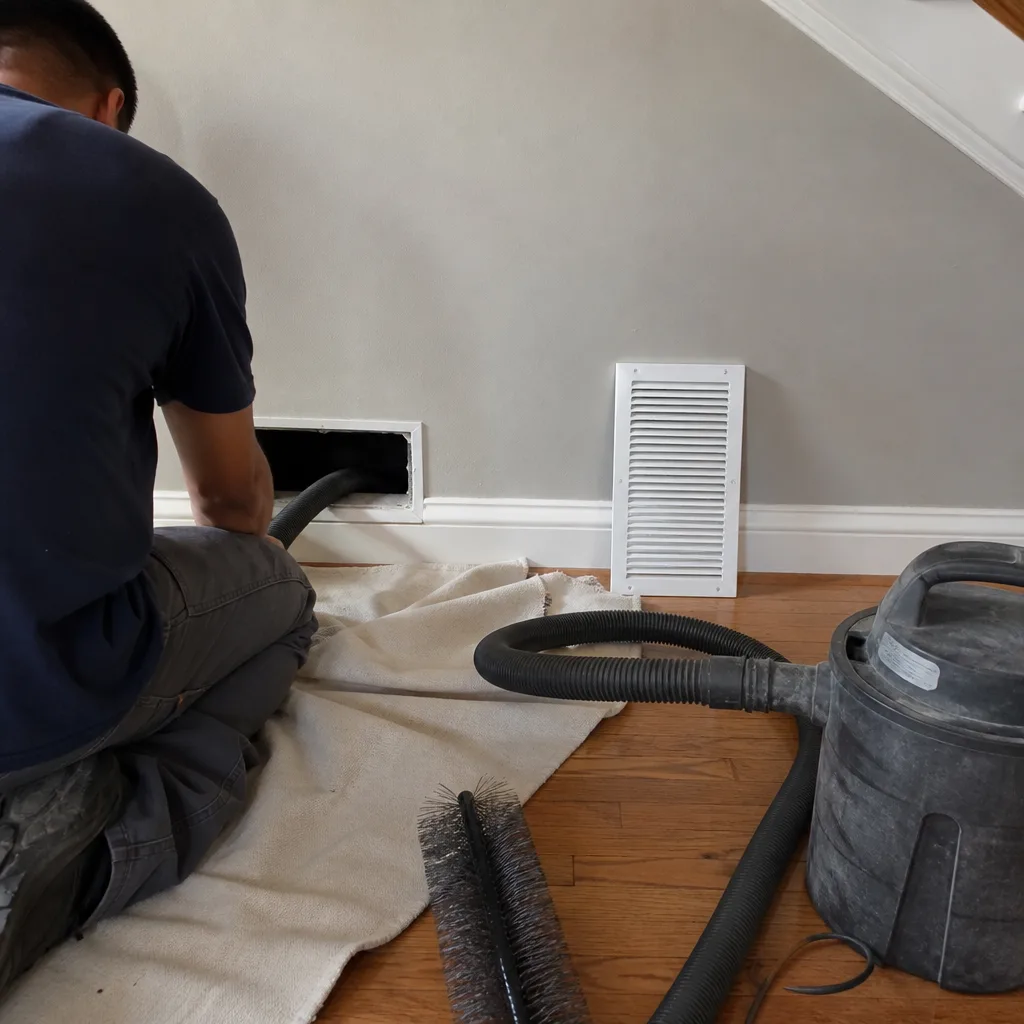 After
After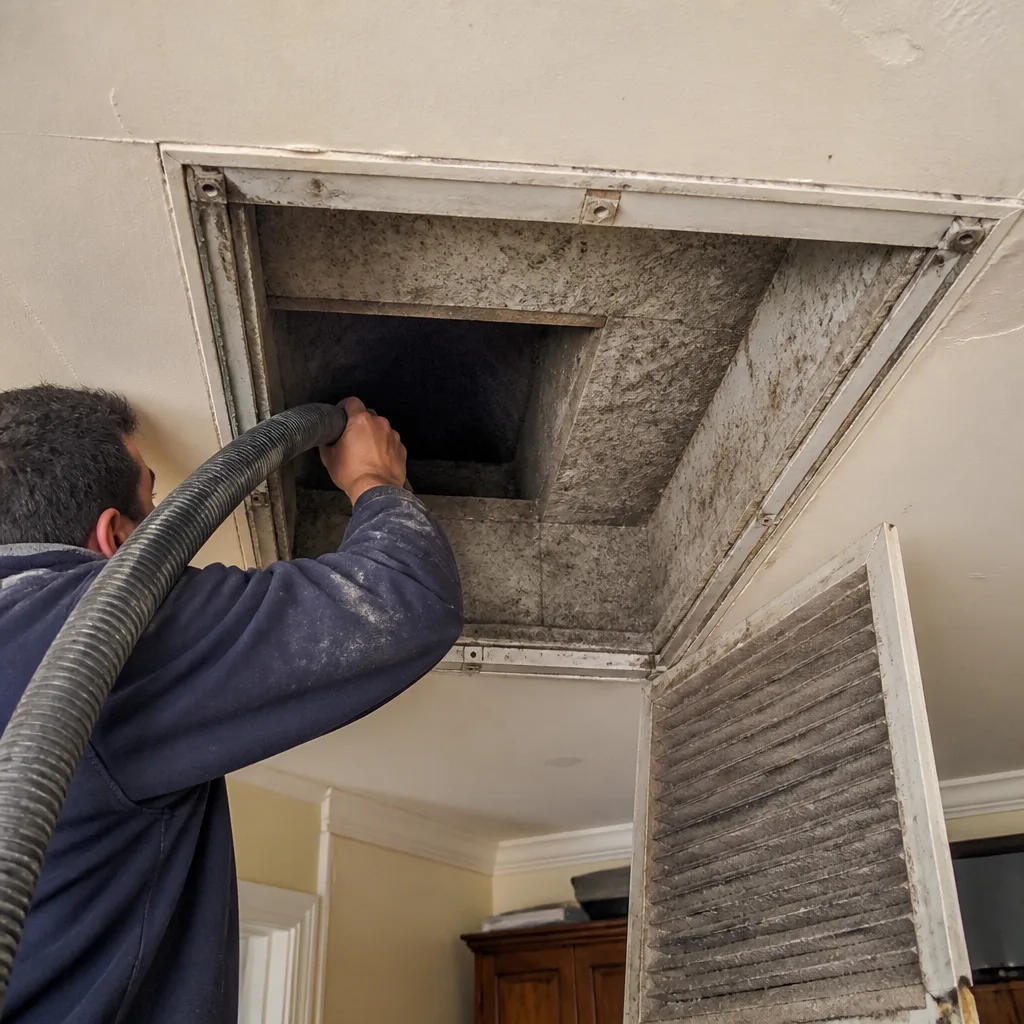 Before
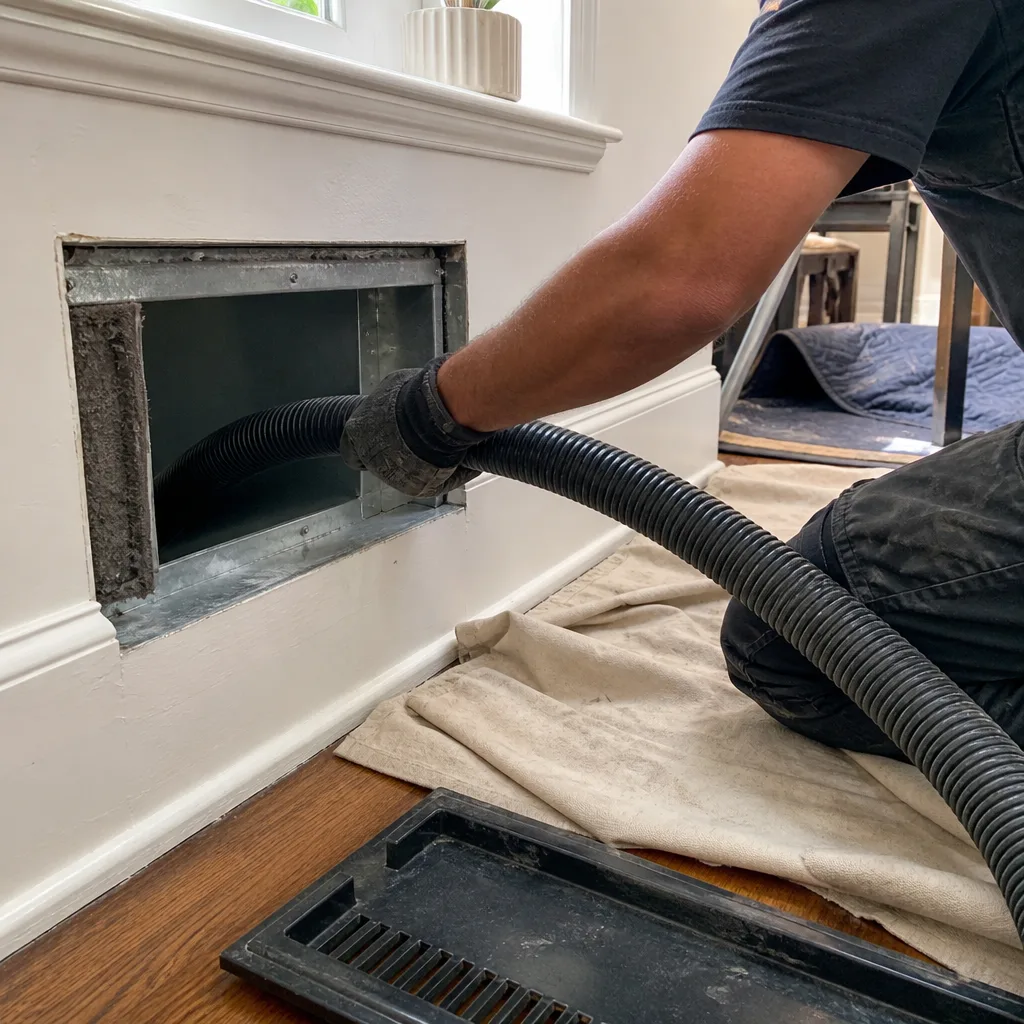 After
AfterAir Duct Cleaning Permits, Codes & Inspections in DC: What You Need to Know
Here’s a situation we’ve encountered dozens of times in Washington homes: a crew finishes a standard duct cleaning, the camera shows a disconnected return duct dumping conditioned air into a wall cavity between the dining room and kitchen, and the homeowner asks us to seal it that same afternoon. We can, but if that repair involves cutting drywall and modifying ductwork in DC, unpermitted work can surface as a flagged item during a future home sale, a refinance appraisal, or an insurance claim. Most homeowners assume duct cleaning is purely maintenance, and it usually is. The gap between “cleaning” and “repair” is where permits live, and it’s narrower than most people realize. In The Complete Guide to Air Duct Cleaning in Washington, we’ll walk through exactly where DC’s Department of Consumer and Regulatory Affairs (DCRA) draws that line, what questions to ask any contractor who proposes repair work after an inspection, and how to verify that the person doing the work holds the right license for the job.
Quick Answer
Air duct cleaning itself - the mechanical removal of debris from existing duct runs using negative-pressure extraction (suction that pulls contaminants out while the system is sealed) - does not require a permit in Washington, DC. However, duct repair, replacement, or modification that alters the building’s mechanical system, involves cutting into walls or ceilings, or changes airflow capacity can trigger DCRA mechanical permit requirements. The critical distinction is between maintenance (cleaning) and construction (repair or replacement), and many homeowners only learn the difference - sometimes too late - when a buyer’s home inspector flags unpermitted ductwork during a sale. For earlier warning, see Air Duct Cleaning Warning Signs: A Washington Homeowner’s Reference Guide.
Table of Contents
- Duct Cleaning vs. Duct Repair: Where DC Draws the Line
- DCRA Mechanical Permits: What Triggers Requirements
- “Like-for-Like” Replacement: The Gray Area Homeowners Miss
- DC Energy Code: When Repairs Trigger Upgrade Obligations
- How to Verify a DC Mechanical Contractor License
- What to Ask Before Authorizing Any Duct Repair
- How Unpermitted Ductwork Complicates Home Sales
- How CleanRun Handles Duct Inspection Findings
BeforeAfterDuct Cleaning vs. Duct Repair: Where DC Draws the Line
DC’s building code framework separates maintenance activities from construction activities, and the distinction matters for permits, inspections, and liability. Understanding which category your work falls into before the truck arrives saves time, money, and future headaches.
What Qualifies as Maintenance (No Permit Required)
Standard air duct cleaning falls under routine HVAC maintenance. This includes:
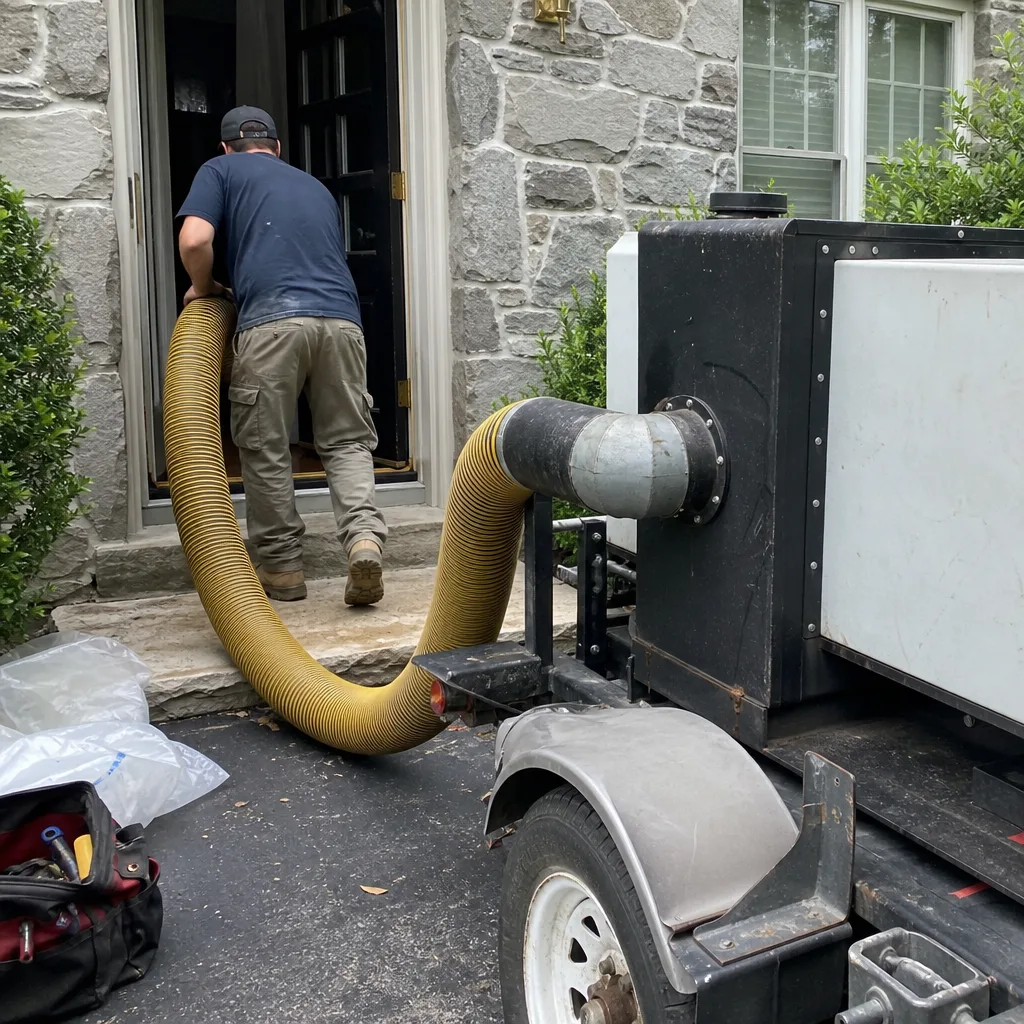
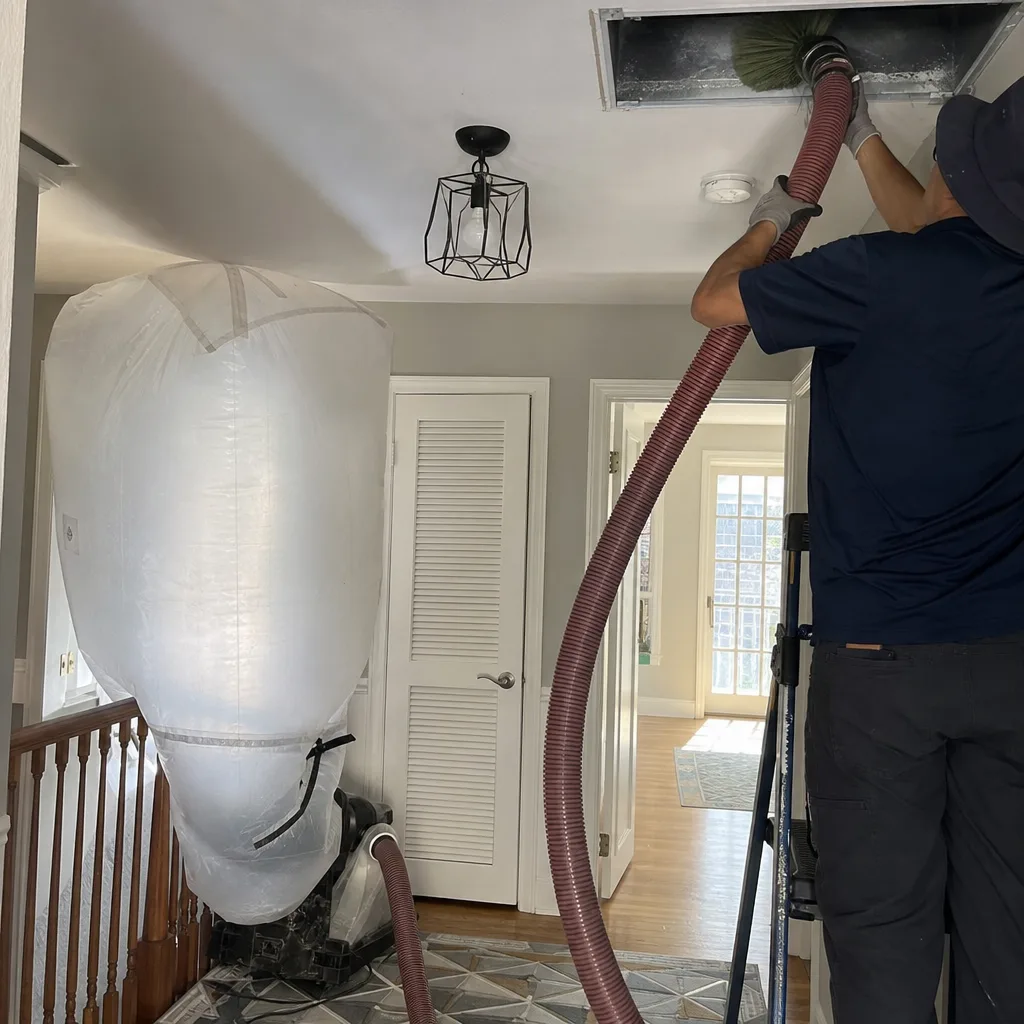
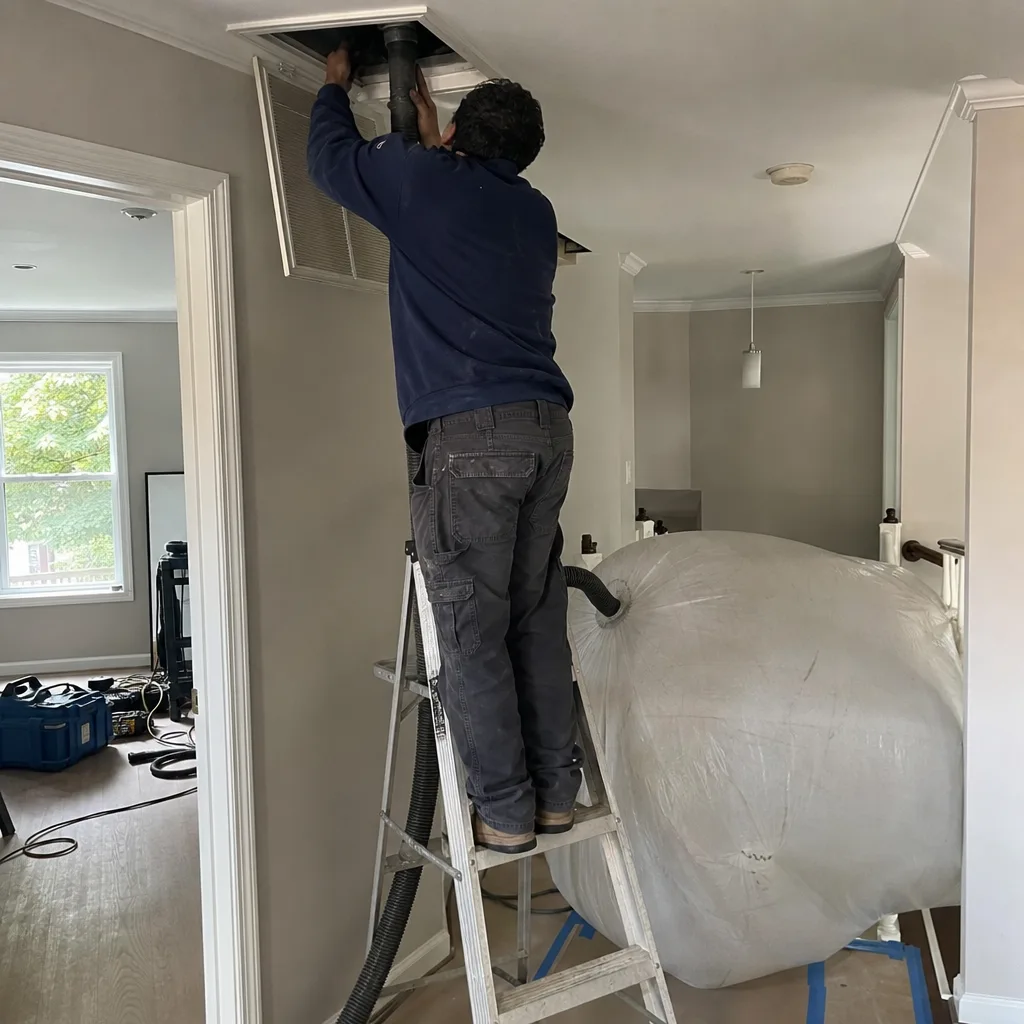
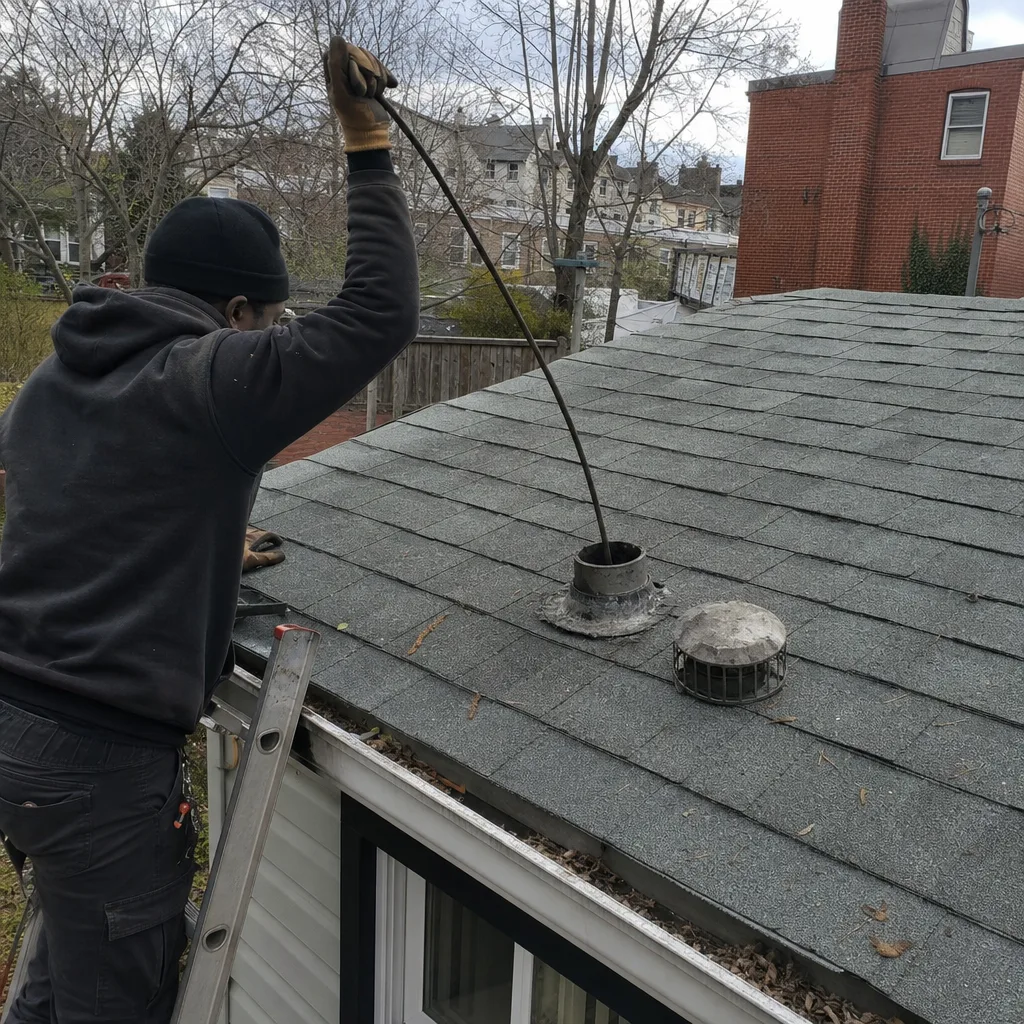
- Mechanical agitation and negative-pressure extraction of debris from existing duct runs (the enclosed pathways that carry air from your HVAC unit to each room)
- Cleaning of registers, grilles, and the plenum (the central distribution box connected to your furnace or air handler)
- Application of EPA-registered sanitizers to interior duct surfaces, provided no physical modification occurs
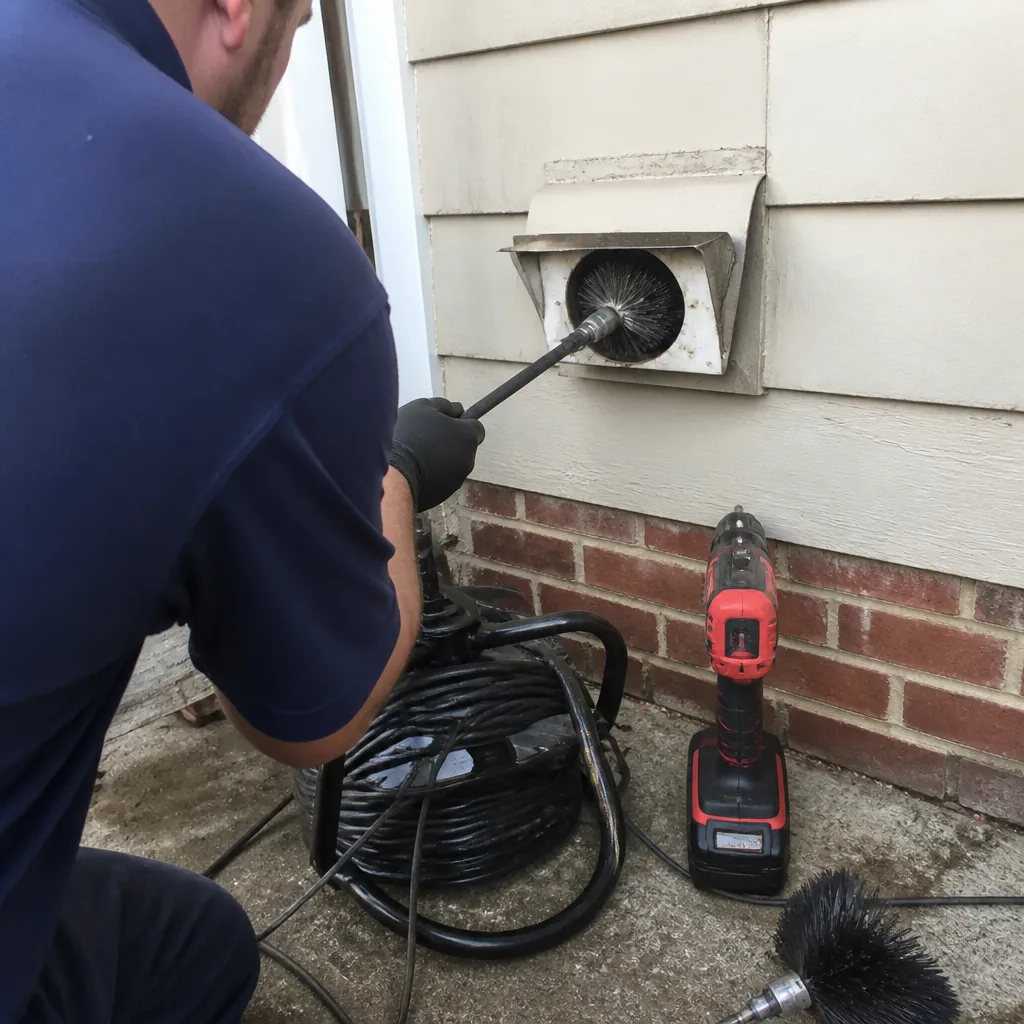
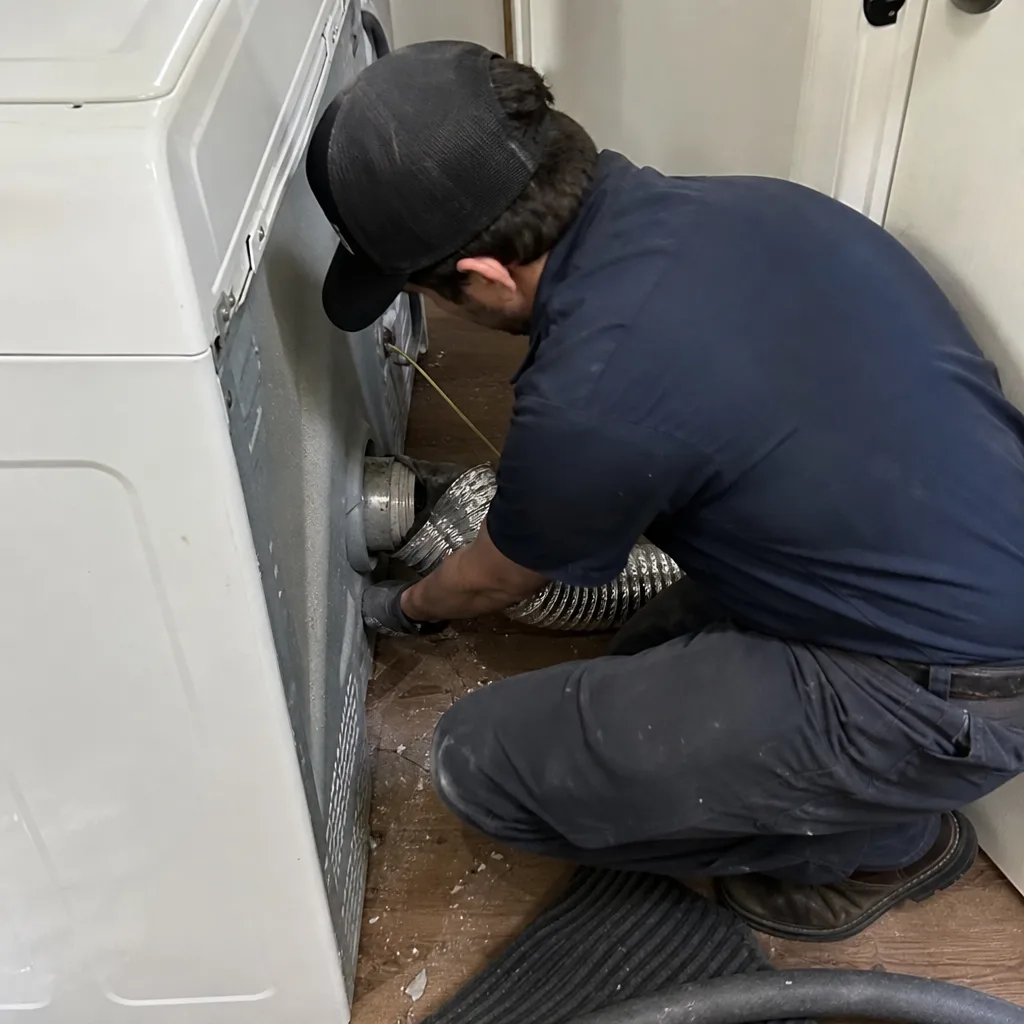
- Dryer vent cleaning from the appliance to the exterior termination point
We’ve performed thousands of these maintenance cleanings in Washington since 2013, from Capitol Hill rowhouses to newer builds in NoMa and the Wharf. The work is documented with before-and-after photos of every duct run, but no permit is filed because the building’s mechanical system remains unchanged.
What Crosses into Construction (Permit May Be Required)
The line crosses when physical modification occurs. In our experience, this happens most often when cleaning reveals underlying damage that was hidden until the camera went in. Common trigger scenarios include:
- Replacing collapsed or deteriorated flex duct with new material, even if the routing stays identical
- Sealing disconnected duct sections that require cutting into drywall or plaster to access the joint
- Modifying plenum connections to accommodate a new furnace or air handler
- Adding, removing, or relocating supply or return registers
- Installing inline duct fans or other mechanical components that alter system airflow capacity
The key factor is not the size of the job. It’s whether the work changes the building’s mechanical configuration or requires opening finished surfaces. A small repair inside a wall can require more regulatory attention than a whole-system cleaning.
Why the Confusion Costs Homeowners Money
Many Washington homeowners receive a low our Air Duct Cleaning services quote, then face a surprise upsell for “necessary repairs” once the camera is inside. The technician may present this as an extension of the cleaning service. If that repair actually constitutes regulated mechanical work, and the contractor lacks a DC mechanical license or skips the permit, the homeowner pays twice: once for the repair, and again later to remediate the unpermitted work.
We’ve been called to homes in Columbia Heights and Petworth where a previous “cleaning” included duct sealing that was later flagged by a home inspector. The seller had to hire a licensed mechanical contractor to pull a retroactive permit, open walls for inspection, and close everything back up. The original “savings” evaporated.
DCRA Mechanical Permits: What Triggers Requirements
The District of Columbia Department of Consumer and Regulatory Affairs (DCRA) issues mechanical permits for work on heating, ventilation, and air conditioning systems. Not all duct-related work triggers this requirement, but enough does that homeowners should know the thresholds.
When DCRA Requires a Mechanical Permit
Based on DCRA’s published guidance and the DC Construction Codes, mechanical permits are required for:
- New ductwork installation - any addition of duct runs, plenums, or registers that did not previously exist
- Ductwork modification that alters system capacity - changes to duct diameter, length, or configuration that affect the cubic feet per minute (CFM) of air the system can move
- Replacement of ductwork in excess of “like-for-like” scope - see the next section for how this term is defined
- Work that requires opening structural elements - cutting into load-bearing walls, floors, or ceilings to access or modify ducts
- Integration with new HVAC equipment - connecting ductwork to a new furnace, heat pump, or air handler that itself requires permitting
When No Permit Is Needed
Conversely, DCRA does not require mechanical permits for:
- Routine cleaning and maintenance of existing ductwork
- Filter replacement or upgrade
- Register and grille replacement that does not modify the duct opening
- Sealing of accessible duct joints using mastic or tape from the outside, without opening walls
- Diagnostic testing and airflow measurement
The Inspection Process for Permitted Work
When a mechanical permit is pulled, DCRA requires inspection at rough-in and final stages. The rough-in inspection occurs after old materials are removed and new ductwork is placed but before walls are closed. The inspector verifies proper materials, supports, clearances from combustibles, and compliance with the International Mechanical Code as adopted by DC. Final inspection confirms that the system operates as designed and that all access openings are properly sealed.
Washington’s older housing stock complicates this process. Homes in Georgetown, Dupont Circle, and Logan Circle often have original plaster walls, narrow chase ways, and asbestos-containing materials in older duct insulation. These conditions don’t exempt a project from permitting, but they can extend the timeline and require additional specialized inspections.
“Like-for-Like” Replacement: The Gray Area Homeowners Miss
The most misunderstood concept in DC ductwork regulation is “like-for-like replacement.” This term appears in DCRA guidance as an exception to full permitting, but its boundaries are narrower than most contractors admit.
What “Like-for-Like” Actually Means
Under DC’s interpretation of the International Mechanical Code, like-for-like replacement means:
- The new material matches the old in type, size, and routing
- No additional duct runs are added
- No registers are relocated or added
- The system’s total airflow capacity is unchanged
- The work does not require opening finished surfaces beyond the immediate access needed to reach the damaged section
A practical example: if a 6-inch diameter flex duct run from the plenum to a bedroom register has collapsed and you replace it with another 6-inch flex duct along the identical path, accessed through an existing basement ceiling panel, this may qualify as like-for-like. But if that same repair requires cutting open a second-floor hallway wall because the duct was originally installed before the wall was closed, the scope has likely exceeded the exception.
Where Contractors Often Overstep
We’ve reviewed competitor proposals in Washington where “like-for-like” was stretched to include:
- Replacing metal duct with flex duct, or vice versa, which changes airflow characteristics
- Upgrading from uninsulated to insulated duct in an unconditioned attic, which is sensible efficiency work but alters the system’s thermal properties
- Rerouting a duct to avoid a known obstruction, even if the register location stays the same
- Replacing multiple sections in a single continuous run, which some DCRA inspectors treat as de facto new installation
The contractor’s convenience is not a factor in whether the exception applies. What matters is whether the finished system is materially identical to what existed before, and whether the means of installation required more invasive work than simple removal and replacement.
Documentation Protects Both Parties
When CleanRun encounters damage during a cleaning that we believe qualifies as like-for-like replacement, we document the pre-existing condition with photos, note the exact materials and routing to be used, and provide a written scope that specifies no modification to system capacity. This protects the homeowner if questions arise later. Haven Standard Clause 1, our written price guarantee, applies to this documentation: the scope and price are fixed before work begins, so there is no ambiguity about what was agreed to.
DC Energy Code: When Repairs Trigger Upgrade Obligations
Washington adopted the 2021 International Energy Conservation Code (IECC) with DC-specific amendments, and this code layer adds complexity that many homeowners and some contractors overlook. The energy code does not regulate cleaning, but it can regulate repairs in ways that affect your total project cost.
The “50 Percent Rule” and Its Implications
DC’s energy code contains provisions that require efficiency upgrades when certain thresholds of repair or replacement are met. While the exact percentage triggers vary by building type and system component, the principle is consistent: extensive repair work on an older system may obligate compliance with current efficiency standards for the affected components.
In practical terms, this most often affects Washington homeowners in these situations:
- Homes built before 1980 with original ductwork - if repair work exceeds threshold levels, the new materials may need to meet higher insulation R-values than what was originally installed
- Systems with significant leakage - the energy code mandates duct sealing standards that exceed what was common in older installations, and repairs may trigger whole-system testing
- Integration with equipment replacement - if duct repairs coincide with a new furnace or air conditioner, the combined project must meet current efficiency minimums
Climate-Specific Considerations for Washington
Washington’s climate zone designation under the IECC is Zone 4, with hot, humid summers and cold winters. This dual loading means ductwork in unconditioned spaces, attics and crawlspaces are common in Washington’s older homes, faces significant thermal stress. The energy code recognizes this by requiring higher insulation levels for ducts in unconditioned spaces than in conditioned spaces.
We’ve photographed collapsed flex duct in Capitol Hill attics where summer heat degradation was the primary cause of failure, not age or physical damage. When we recommend replacement in these cases, we specify insulated flex duct with the R-value appropriate for unconditioned installation, even if the original was uninsulated. This is not upselling. It’s building to code that may be triggered by the repair scope, and documenting that compliance protects the homeowner from future liability.
The Interaction Between Energy Code and Mechanical Permits
When a mechanical permit is required for ductwork, DCRA’s inspectors verify energy code compliance as part of the inspection process. This means:
- The permit application must include specifications that meet current energy code requirements
- The inspector will check insulation values, sealing methods, and accessibility for future maintenance
- Failed inspections require correction and re-inspection, adding time and cost
A contractor who proposes to skip permitting to “save you time” is also skipping this compliance verification. The savings are temporary; the liability transfers to you.
How to Verify a DC Mechanical Contractor License
Not every person with a truck and a duct vacuum holds the license required for permitted work. Washington homeowners should verify credentials before authorizing any repair that might cross the regulatory line.
The License Types That Matter
DCRA issues several license categories relevant to ductwork:
- Mechanical Contractor (Master) - authorized to perform all mechanical work, including ductwork modification, and to pull mechanical permits
- Mechanical Contractor (Limited) - may perform specific categories of mechanical work within defined scope limitations
- Home Improvement Contractor (HIC) - authorized for general residential repairs and improvements, but not for regulated mechanical work that requires a mechanical permit
The critical distinction: an HIC license allows someone to clean your ducts, replace a register, or even patch accessible ductwork from the outside. It does not authorize them to pull a mechanical permit or perform work that requires one. If a contractor with only an HIC license proposes to open walls and replace ductwork, they are operating outside their license scope.
How to Check a License
- Visit the DCRA CorpOnline portal at corponline.dcra.dc.gov
- Search by business name or individual name
- Verify that the license status is “Active” and check the expiration date
- Click through to view the license type and any endorsements or limitations
- For mechanical work, confirm the license specifically includes “Mechanical” in the trade category, not just “Home Improvement”
We publish our license number on every page, not buried in a footer, because we want customers to verify it. Haven Standard Clause 3, Verified Crews, requires that every technician’s credentials match the work they are assigned. Background checks and uniformed arrival are part of this, but so is license verification for any task beyond routine maintenance.
Insurance and Bonding Verification
Beyond the license, ask for:
- Certificate of insurance showing general liability coverage, with you listed as additional insured for the project duration if permitted work is involved
- Proof of workers’ compensation coverage for all employees who will be on site
- Surety bond information, which DCRA requires for licensed contractors
CleanRun carries general liability, workers’ compensation, and the required surety bond. We provide documentation on request, and we carry it because permitted work exposes homeowners to liability if the contractor is uninsured and a worker is injured or property is damaged.
What to Ask Before Authorizing Any Duct Repair
When a cleaning inspection reveals damage, most homeowners feel pressure to authorize immediate repair. The technician is already there, the problem is visible on camera, and the discomfort of knowing conditioned air is leaking into a wall cavity creates urgency. Resist that pressure long enough to ask these questions.
The Six Essential Questions
- “Will this work require a DCRA mechanical permit, and will you pull it?” - A contractor who cannot answer immediately, or who suggests “we don’t need permits for small jobs,” is a red flag. The correct answer depends on scope, but the contractor should know the thresholds and commit to compliance.
- “What is your DC mechanical contractor license number, and what type of license is it?” - Write it down and verify it before work begins. “We’re working under someone else’s license” is not acceptable for permitted work.
- “Will this repair trigger any energy code upgrade requirements?” - An informed contractor can explain whether your home’s age, the repair scope, or the materials involved will require efficiency upgrades beyond simple replacement.
- “What happens if DCRA requires an inspection and the inspector finds issues?” - The contractor should clearly state who pays for re-inspection, correction work, and any schedule delays.
- “Will you provide a written scope and fixed price before starting, and will that scope include permit costs?” - Haven Standard Clause 1 requires this of our own work. Any contractor who will not commit to a written price before starting is asking you to accept open-ended liability.
- “What documentation will I receive when the work is complete?” - For CleanRun, this includes the Documented Photo Record of every duct run, before and after, plus the written scope, the final invoice matching the agreed price, and for permitted work, copies of the permit and inspection approvals. A contractor who delivers only a credit card receipt is not providing accountability.
Red Flags in Contractor Responses
Watch for these specific evasions, which we’ve heard reported by Washington homeowners:
- “Permits just slow things down and cost you money” - compliance protects your resale value and insurance coverage
- “We’ve been doing this for years without permits” - past non-compliance does not legitimize future non-compliance
- “The homeowner pulls the permit to save on our costs” - a licensed mechanical contractor must pull their own permits; this arrangement may indicate the contractor lacks proper licensing
- “This is just maintenance, not construction” - when applied to wall-opening duct replacement, this is simply false
How Unpermitted Ductwork Complicates Home Sales
The moment when most Washington homeowners discover unpermitted work is during a real estate transaction. Buyer’s agents in the District have become increasingly diligent about permit history, and title companies routinely flag work that appears in inspection reports but not in DCRA records.
How Unpermitted Work Surfaces
Common discovery paths include:
- Buyer’s home inspection - the inspector notes new ductwork, recent wall patches, or modified registers and asks for permit documentation
- Appraisal for refinancing - the appraiser observes mechanical work and requires permit verification for the valuation to proceed
- Insurance claim - a fire, water damage, or HVAC failure leads the insurer to investigate whether unpermitted work contributed to the loss
- Neighbor complaint to DCRA - less common, but possible if work was visibly extensive and noisy
The Cost of Remediation
When unpermitted ductwork is discovered, the homeowner typically faces:
- Hiring a licensed mechanical contractor to assess the work and determine what needs inspection
- Applying for a retroactive permit, which DCRA may or may not grant depending on the work’s age and accessibility
- Opening walls or ceilings to expose the work for inspection, even if they were previously closed
- Correcting any code deficiencies found during inspection
- Paying for re-inspection and final approval
- Repairing the opened surfaces
We’ve consulted on retroactive permit projects in Washington where the total cost exceeded the original repair by 300 percent. The original contractor was long gone, unresponsive, or out of business. The homeowner bore the full burden.
Disclosure Obligations
Washington, DC requires sellers to disclose known material defects and code violations. Unpermitted mechanical work falls into this category if the seller knows about it. Failure to disclose can lead to post-sale litigation, even years after closing. A documented permit history, by contrast, becomes a selling point: the work was done correctly, inspected, and approved.
How CleanRun Handles Duct Inspection Findings
Our approach to findings during cleaning inspections is governed by the H.A.V.E.N. Standard, which structures how we document, communicate, and execute any work beyond routine maintenance.
Step One: Document Everything
When our camera shows damage, disconnected duct, or conditions that may require repair, we photograph the finding from multiple angles, record the location by room and approximate distance from the plenum, and note any accessibility constraints. This documentation becomes part of the customer’s job record, delivered with the final invoice.
We use professional-grade inspection cameras and, for accessible work, Rotobrush and Nikro equipment that we name specifically so customers can research the tools independently. Our equipment roster also includes Abatement Technologies, Honeywell, Aprilaire, and Guardsman systems for air quality and sanitizing work. For more guides & resources on maintaining healthy indoor air, explore our blog. We do not invent performance claims beyond manufacturer specifications.
Step Two: Separate Cleaning from Repair
We complete the cleaning scope as originally quoted, unless the customer directs otherwise. The cleaning and any proposed repair are priced separately, with distinct written scopes. This prevents the bait-and-switch pattern common in our industry, where a low cleaning quote becomes a vehicle for unexpected repair charges.
Our Air Duct Cleaning in Washington service is priced as a complete system clean, not per vent, with the full price written before work starts. If repair is needed, it is quoted as a separate item with its own scope and, if applicable, its own permit requirements.
Step Three: Transparent Permit Guidance
If we believe repair work will require a mechanical permit, we say so explicitly in the written scope. We identify whether we hold the appropriate license for that work, or whether the customer should engage a licensed mechanical contractor directly. We do not perform work outside our license scope, and we do not ask customers to pull permits on our behalf.
For work that qualifies as like-for-like replacement, we document why we believe the exception applies, including photos of the pre-existing condition, the replacement materials to be used, and the installation method. This documentation protects the customer if questions arise later.
Step Four: Written Price, Documented Result
Every job, cleaning or repair, concludes with:
- The written scope and price agreed to before work started
- The Documented Photo Record of every duct run, before and after, showing what was found and what was done
- The 365-Day Done Right Promise, backed in writing, not subject to manager approval
Since our first job in 2013, we’ve served over 52,000 homes with this protocol. Every one received a written price before work started and a documented photo record when the crew left. No exceptions.
For Dryer Vent Cleaning in Washington and HVAC Cleaning in Washington, the same standards apply. These are maintenance services that do not require permits, and they are documented with the same photo record and written scope.
Common Mistakes to Avoid
- Assuming all duct work is maintenance. The legal distinction between cleaning and construction is specific, and treating repair as maintenance can leave you with unpermitted work that complicates a future sale in Washington’s active real estate market.
- Accepting verbal promises about permits. A contractor who says “I’ll take care of it” but does not show you the permit application or the approved permit card before work begins has not taken care of it. Permits are public record; verify directly with DCRA.
- Hiring based on the lowest cleaning quote without checking repair credentials. The $79 coupon model often depends on finding repair work to make the job profitable. If the contractor lacks a mechanical license, any repair they propose is suspect regardless of the camera footage.
- Authorizing wall-opening work without confirming insurance coverage. If a technician damages electrical, plumbing, or structural elements while accessing ductwork, and the contractor lacks adequate insurance, your homeowner’s policy may not cover the damage.
- Ignoring energy code implications in older homes. Washington’s pre-1980 housing stock is extensive in neighborhoods like Georgetown, Capitol Hill, and Mount Pleasant. Repairs in these homes are more likely to trigger upgrade obligations that affect total project cost.
- Failing to request documentation of completed work. Without photos, a written scope, and permit records where applicable, you have no evidence that work was performed to code if questions arise later.
- Confusing a home improvement contractor license with a mechanical contractor license. These are distinct credentials with distinct scopes. The former does not authorize permitted mechanical work, and contractors who blur this distinction are either uninformed or deliberately misleading.
When to Call a Professional
Call a licensed professional when your duct cleaning inspection reveals damage that requires more than surface-accessible sealing, when you are unsure whether proposed repair work requires a permit, or when you need a documented assessment for a pending real estate transaction. The cost of proper licensing, permitting, and documentation is always lower than the cost of remediation after unpermitted work is discovered.
CleanRun Air Duct Cleaning Washington offers free estimates in Washington, and we provide a Free Second Opinion on any written estimate from a competitor. Bring us their quote; we’ll put our own number next to it in writing, with a clear scope that specifies what requires permitting and what does not. Call (240) 363-3380 to schedule.
Frequently Asked Questions
No. Standard air duct cleaning, including mechanical debris removal, register cleaning, and EPA-registered sanitizer application, is classified as routine maintenance and does not require a DCRA permit. The permit threshold is crossed only when physical modification, replacement, or system capacity changes occur.
Permitted work typically costs 15 to 30 percent more upfront due to permit fees, inspection scheduling, and the documentation requirements of licensed contractors. However, unpermitted work that is later discovered can cost three to four times the original price to remediate through retroactive permitting, wall opening, and correction. The documented, permitted route is the lower total cost in virtually every case.
Verify through DCRA’s CorpOnline portal using the contractor’s license number. Confirm the status is “Active,” check the expiration date, and verify the trade category includes “Mechanical” rather than only “Home Improvement.” For permitted ductwork, a mechanical contractor license is required.
Consult a licensed mechanical contractor to assess the scope of unpermitted work and advise whether retroactive permitting is feasible. In Washington, DCRA may grant retroactive permits for accessible, code-compliant work, but requires opening finished surfaces for inspection if the work is not visible. Document the contractor’s assessment before proceeding, as this informs your disclosure obligations if you plan to sell.
Properly performed cleaning with professional equipment does not damage sound ductwork. However, cleaning can reveal pre-existing damage, deterioration, or poor original installation that was hidden by debris. In our experience in Washington homes, we most often find disconnected flex duct, collapsed sections in unconditioned attics, and deteriorated sealing at plenum connections. These conditions existed before cleaning; the cleaning made them visible. We document this distinction in our photo record so customers understand what was found versus what was caused.
We price cleaning and repair as separate, fixed-price items with distinct written scopes. The cleaning price is quoted before we arrive, under Haven Standard Clause 1. If inspection reveals repair needs, we provide a separate written quote for that scope, including whether a permit is required and what documentation you will receive. We do not combine these into a single ambiguous figure, and we do not proceed with repair work without your written authorization of the specific scope and price.
The Bottom Line
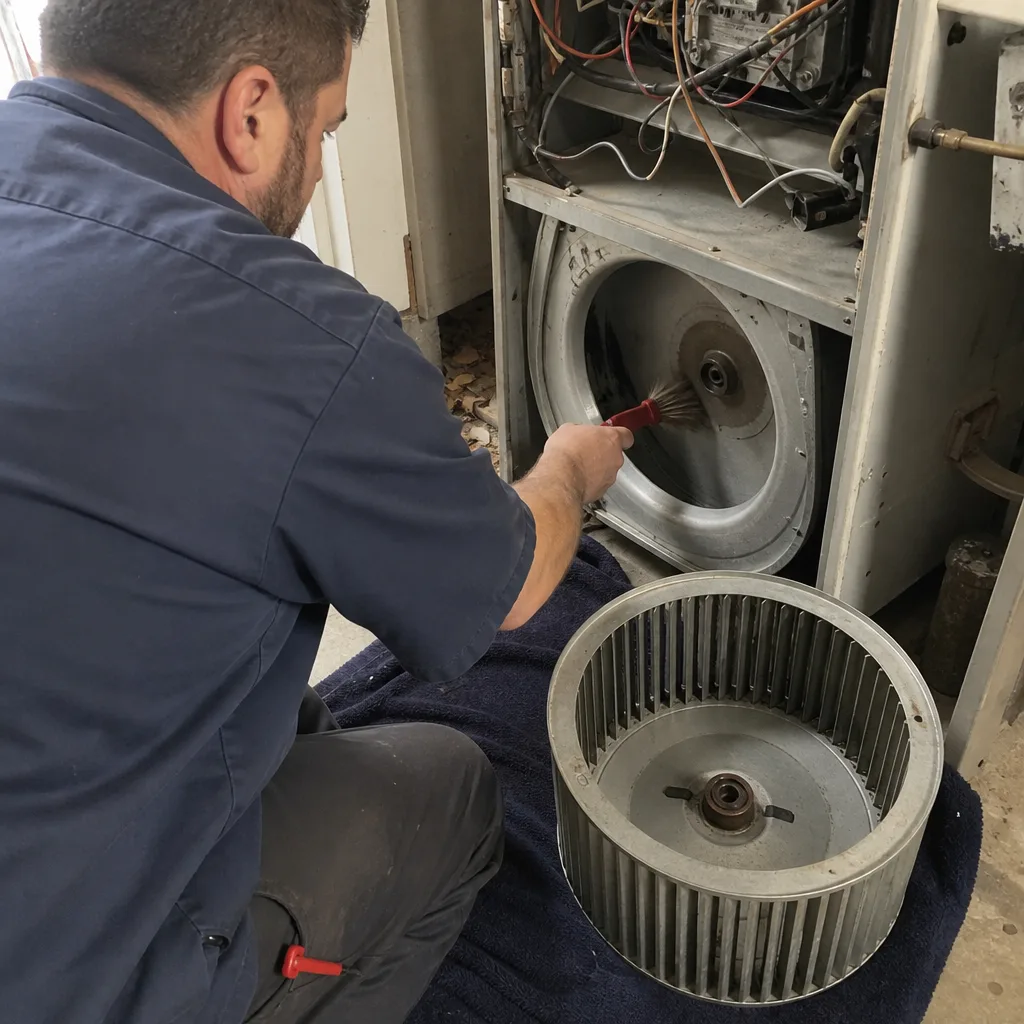
Air duct cleaning in Washington requires no permit, but the repair work that often follows inspection can, and the distinction between maintenance and construction is narrower than most homeowners realize. DC’s DCRA mechanical permit requirements, the energy code’s upgrade triggers for older homes, and the real consequences of unpermitted work on home sales all point to the same practice: verify credentials before authorizing repair, demand written documentation of scope and price, and confirm permit status for any work that modifies your mechanical system. The contractors who resist this transparency are not saving you time or money. They are transferring risk to you, and that risk surfaces at the worst possible moment, when you are trying to sell, refinance, or file an insurance claim. Documented work, properly permitted, is the only kind that holds its value.
Written by Tomas Reyes, Owner at CleanRun Air Duct Cleaning Washington, serving Washington since 2013.